
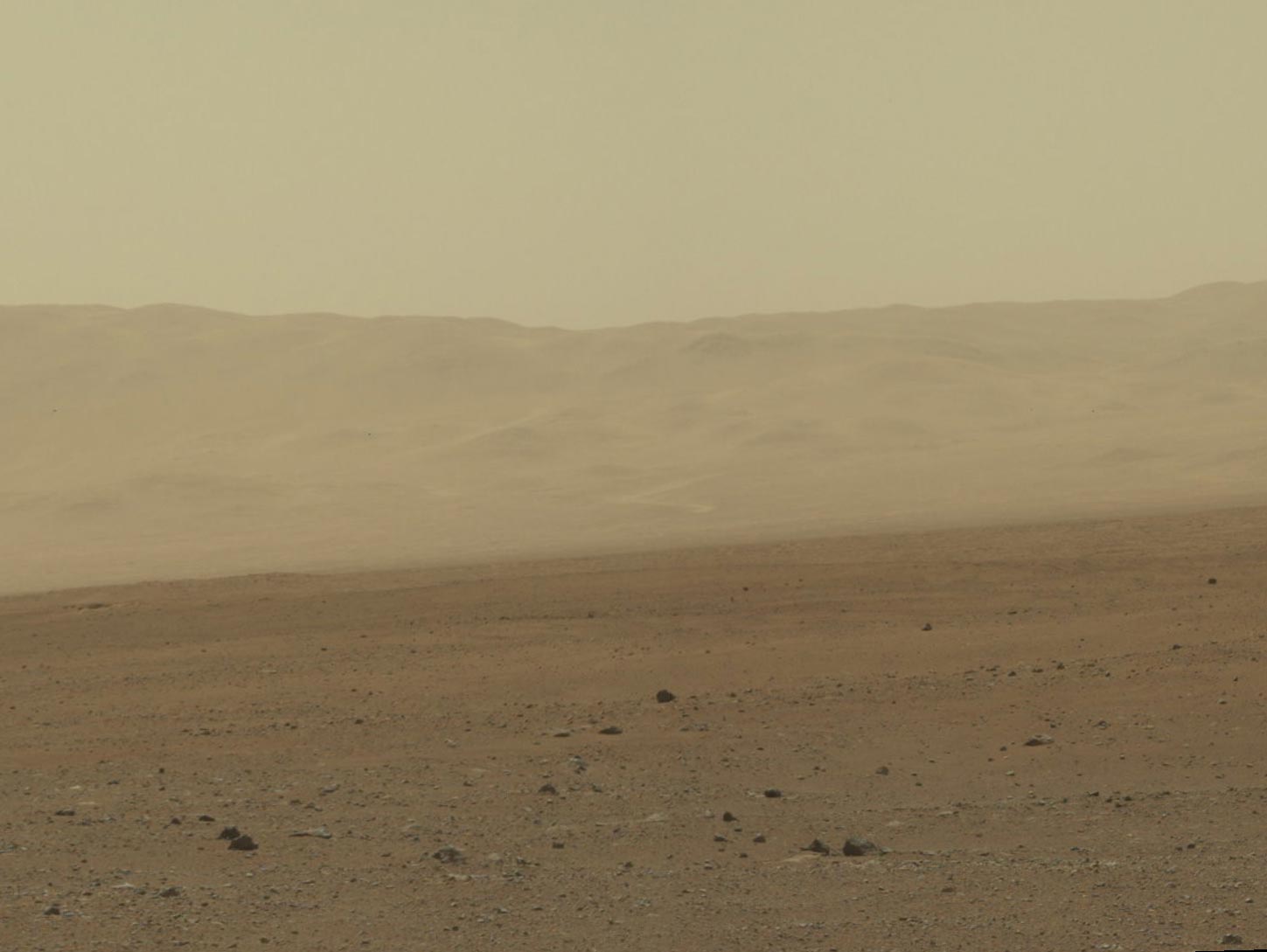
Texas A&M researchers found that Mars has undergone wet and dry periods and salt lakes formed similar to some found in South America.
Mars once had salt lakes that are similar to those on Earth and has gone through wet and dry periods, according to an international team of scientists that includes a Texas A&M University College of Geosciences researcher.
Marion Nachon, a postdoctoral research associate in the Department of Geology and Geophysics at Texas A&M, and colleagues have had their work published in the current issue of Nature Geoscience.
The team examined Mars’ geological terrains from Gale Crater, an immense 95-mile-wide (150-km-wide) rocky basin that is being explored with the NASA Curiosity rover since 2012 as part of the MSL (Mars Science Laboratory) mission.
The results show that the lake that was present in Gale Crater over 3 billion years ago underwent a drying episode, potentially linked to the global drying of Mars.
Gale Crater formed about 3.6 billion years ago when a meteor hit Mars and created its large impact crater.
“Since then, its geological terrains have recorded the history of Mars, and studies have shown Gale Crater reveals signs that liquid water was present over its history, which is a key ingredient of microbial life as we know it,” Nachon said. “During these drying periods, salt ponds eventually formed. It is difficult to say exactly how large these ponds were, but the lake in Gale Crater was present for long periods of time – from at least hundreds of years to perhaps tens of thousands of years,” Nachon said.
So what happened to these salt lakes?
Nachon said that Mars probably became dryer over time, and the planet lost its planetary magnetic field, which left the atmosphere exposed to be stripped by solar wind and radiation over millions of years.
“With an atmosphere becoming thinner, the pressure at the surface became lesser, and the conditions for liquid water to be stable at the surface were not fulfilled anymore,” Nachon said. “So liquid water became unsustainable and evaporated.”
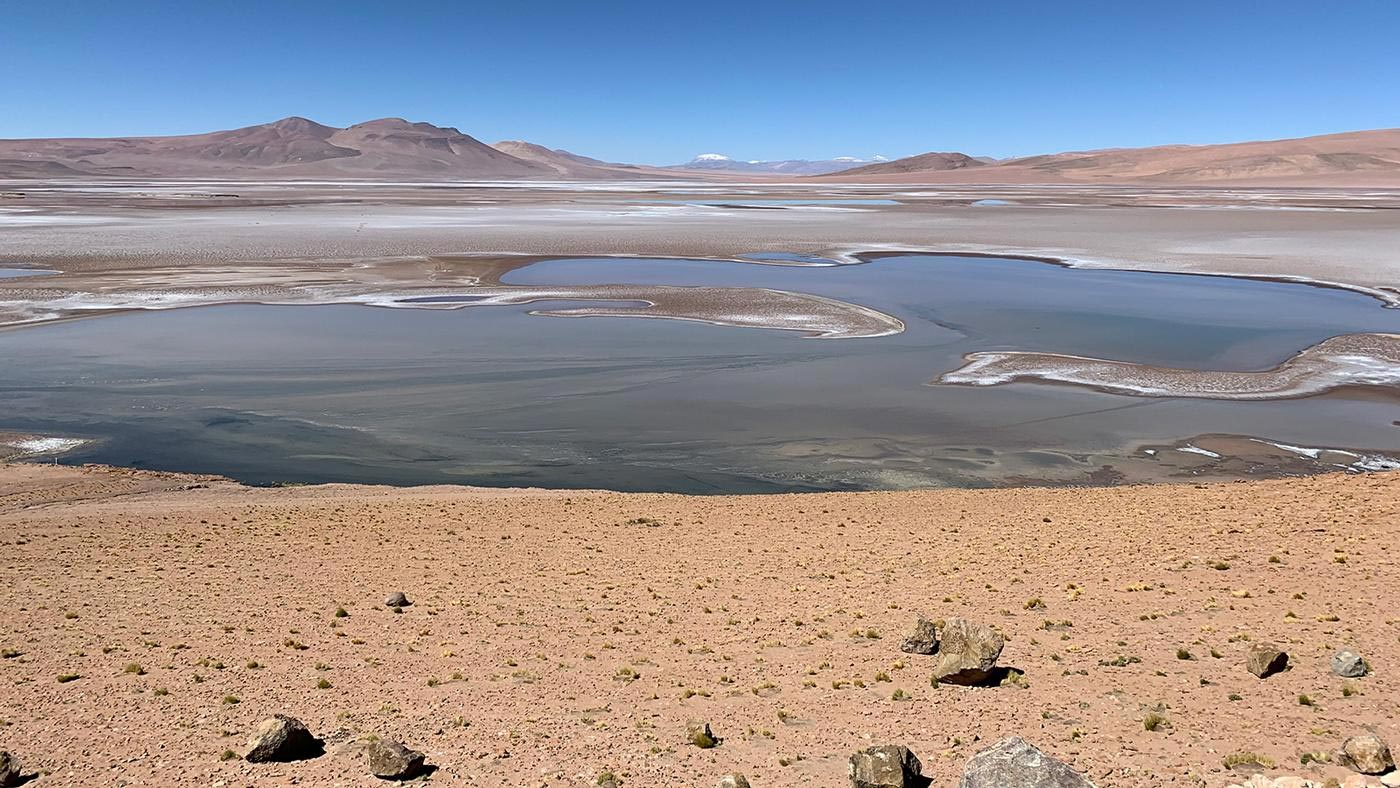
The salt ponds on Mars are believed to be similar to some found on Earth, especially those in a region called Altiplano, which is near the Bolivia-Peru border.
Nachon said the Altiplano is an arid, high-altitude plateau where rivers and streams from mountain ranges “do not flow to the sea but lead to closed basins, similar to what used to happen at Gale Crater on Mars,” she said. “This hydrology creates lakes with water levels heavily influenced by climate. During the arid periods, Altiplano lakes become shallow due to evaporation, and some even dry up entirely. The fact that the Atliplano is mostly vegetation-free makes the region look even more like Mars,” she said.”
Nachon added that the study shows that the ancient lake in Gale Crater underwent at least one episode of drying before “recovering.” It’s also possible that the lake was segmented into separate ponds, where some of the ponds could have undergone more evaporation.
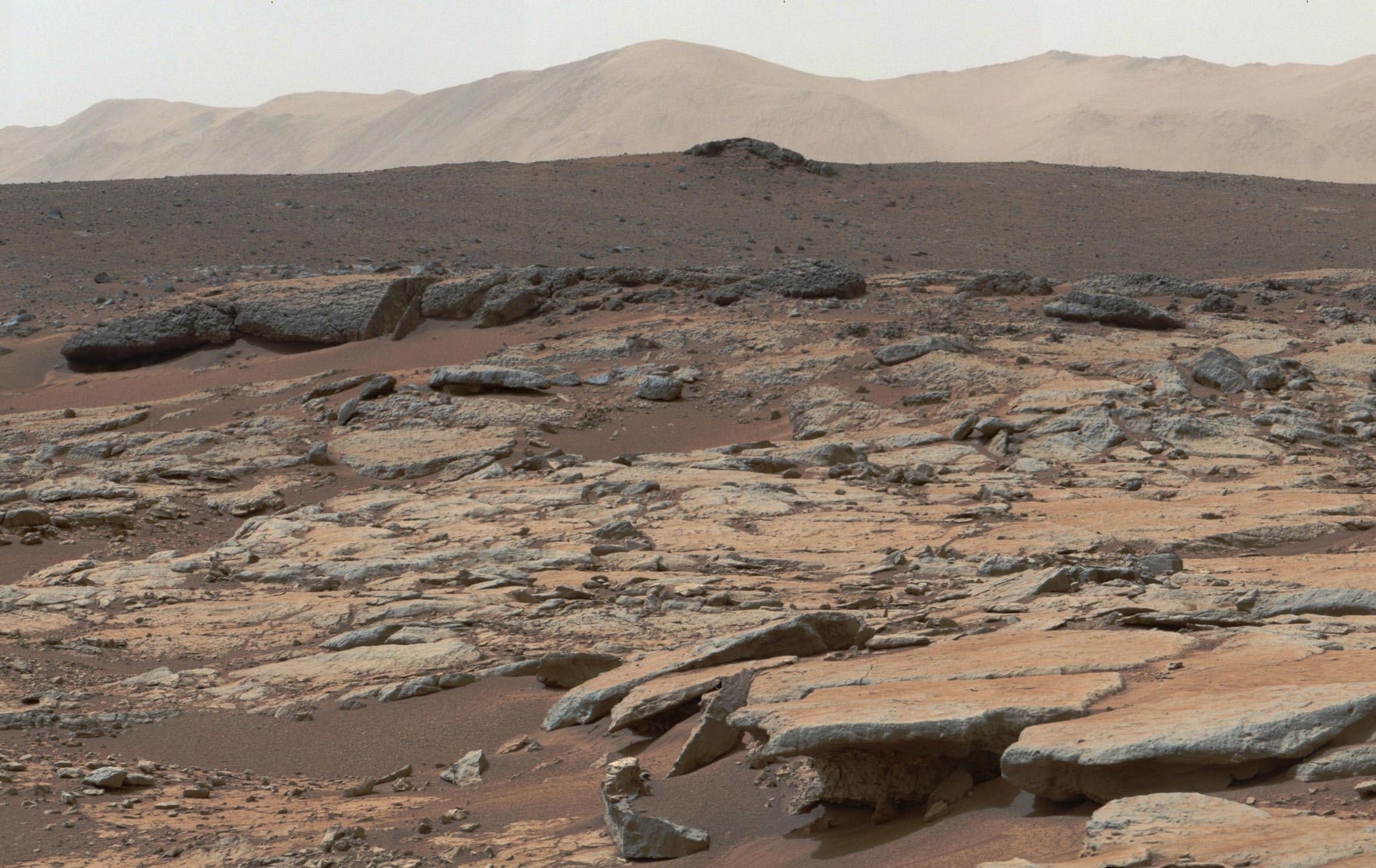
Because up to now only one location along the rover’s path shows such a drying history, Nachon said it might give clues about how many drying episodes the lake underwent before Mars’s climate became as dry as it is currently.
“It could indicate that Mars’s climate ‘dried out’ over the long term, in a way that still allowed for the cyclical presence of a lake,” Nachon said. “These results indicate a past Mars climate that fluctuated between wetter and drier periods. They also tell us about the types of chemical elements (in this case sulfur, a key ingredient for life) that were available in the liquid water present at the surface at the time, and about the type of environmental fluctuations Mars life would have had to cope with, if it ever existed.”
Reference: “An interval of high salinity in ancient Gale crater lake on Mars” by W. Rapin, B. L. Ehlmann, G. Dromart, J. Schieber, N. H. Thomas, W. W. Fischer, V. K. Fox, N. T. Stein, M. Nachon, B. C. Clark, L. C. Kah, L. Thompson, H. A. Meyer, T. S. J. Gabriel, C. Hardgrove, N. Mangold, F. Rivera-Hernandez, R. C. Wiens and A. R. Vasavada , 7 October 2019, Nature Geoscience.
DOI: 10.1038/s41561-019-0458-8
Never miss a breakthrough: Join the SciTechDaily newsletter.
Follow us on Google and Google News.
7 Comments
Life? No article that I’ve read here at scitechdaily explains its mysterious origins.
NASA is always ‘searching for life’ out there in the cosmos while they destroy it here, polluting the environment with 100’s of tons of rocket soot with each and every launch.
What is life? How did it come to be from a soup of organic molecules? Doesn’t life always come from a previous lifeform, an unbroken thread?
Looking for signs of life on Mars is ludicrous and a GIANT waste of taxpayer resources, better spent here at home, cleaning up the ongoing chemical ecocide that NASA is doing to our environment, all under the guise of ‘searching for life’.
What an oxymoron to destroy living systems here, to look for life ‘out there’, which they haven’t found one example of in ALL of their searches. But the lie is perpetrated, riding on the shoulders of brainwashed, baby boomers who grew up watching Star Trek, and are now in charge.
Mars is a dead planet with no magnetic field and no tectonic plate shift. Period. The cosmic radiation there is like nano-wrecking balls to any living organism, hardly able to be shielded.
Yet hundreds of billion$ are being sunk into looking for life, when NASA hasn’t yet sent ONE microorganism into deep space, or to the surface of Mars to test, in ALL of their missions into deep space??
And why is that? Because, they already know the answer, that life is unique to Earth, and Earth alone, and are milking this ‘conquest of space’ pipe dream for all it’s worth.
what is the source of the article
it is yes
no its yes
no its not it yes
sey sti on
Mr Selby`s comments are shallow and lack any semblance of intelligent thought processes. You know, too, that the fuel is liquid hydrogen. Combustion of which produces that nasty water soot.