
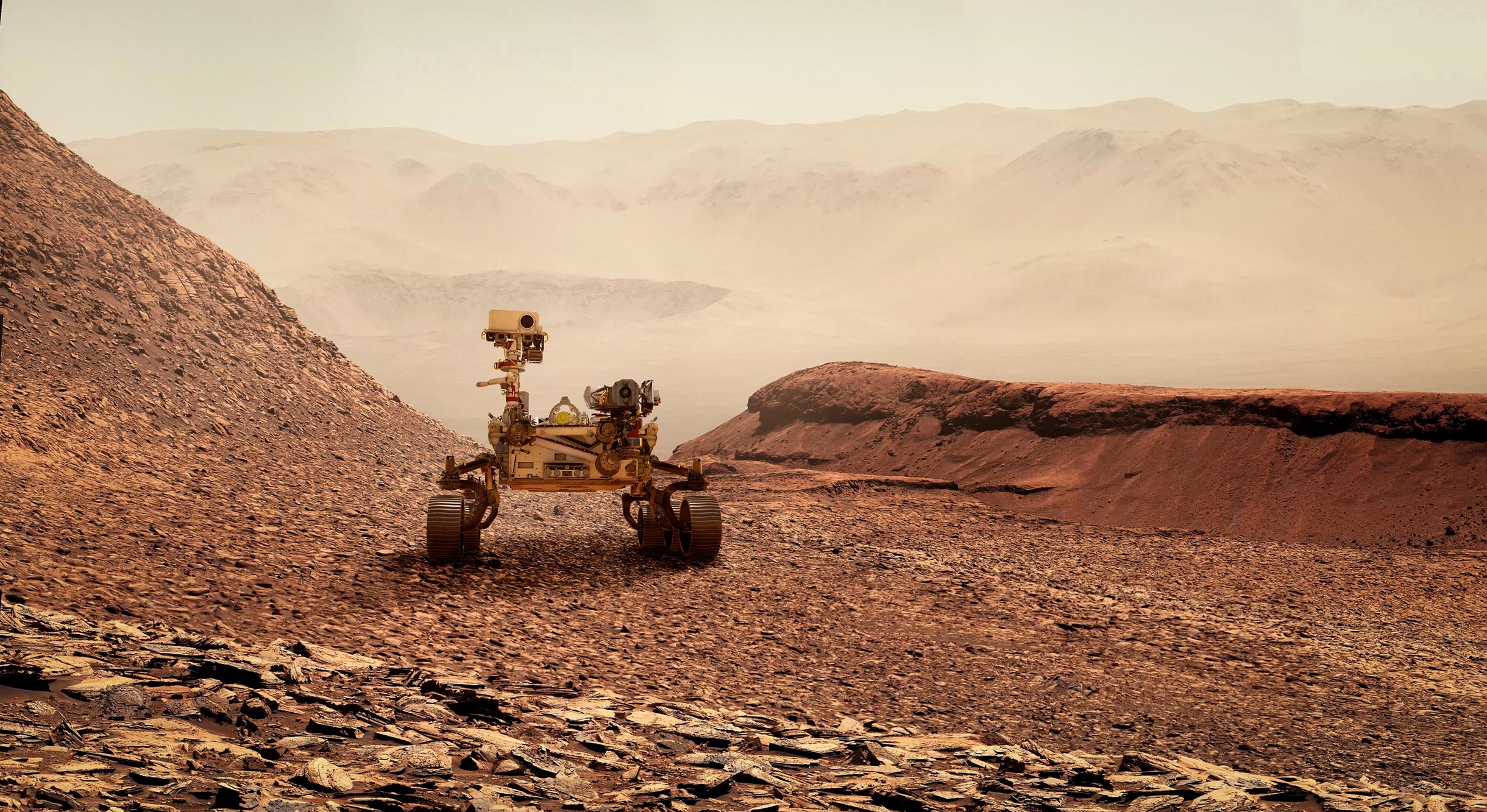
Researchers at NYU Abu Dhabi have uncovered evidence that water once flowed beneath Martian sand dunes — suggesting that the Red Planet may have once had conditions capable of supporting life.
Scientists at New York University Abu Dhabi (NYUAD) have identified new signs that water once moved beneath the Martian surface, suggesting the planet may have supported habitable conditions for far longer than researchers once believed.
According to a study published in the Journal of Geophysical Research – Planets, ancient dunes in Gale Crater, the area examined by NASA’s Curiosity rover, slowly hardened into rock after long-term contact with subsurface water billions of years ago.
The investigation was led by Dimitra Atri, Principal Investigator of NYUAD’s Space Exploration Laboratory, with research assistant Vignesh Krishnamoorthy. Their team compared Curiosity rover observations with naturally cemented dune formations in the UAE desert that developed under comparable environmental conditions on Earth.
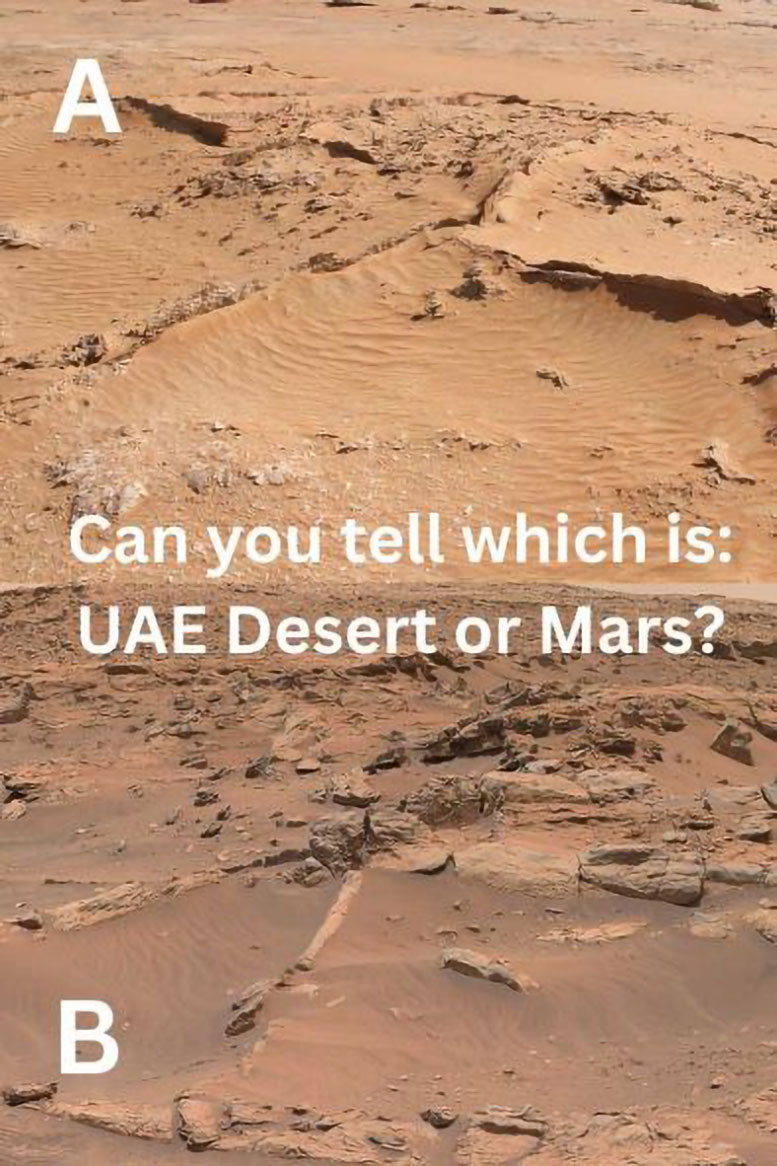
They found that water from a nearby Martian mountain once seeped into the dunes through tiny cracks, soaking the sand from below and leaving behind minerals such as gypsum, the same mineral found in Earth’s deserts. These minerals can trap and preserve traces of organic material, making them valuable targets for future missions seeking evidence of past life.
Implications for Martian Habitability
“Our findings show that Mars didn’t simply go from wet to dry,” said Atri. “Even after its lakes and rivers disappeared, small amounts of water continued to move underground, creating protected environments that could have supported microscopic life.”

The discovery provides new insight into how Mars evolved over time and highlights the potential of subsurface environments as promising sites to search for signs of ancient life.
Reference: “Aeolian Sediment Lithification From Late-Stage Aqueous Activity in the Gale Crater: Implications for Habitability on Mars” by Vigneshwaran Krishnamoorthi, Dimitra Atri, James Weston, Marieh B. Al-Handawi and Panče Naumov, 10 November 2025, Journal of Geophysical Research: Planets.
DOI: 10.1029/2024JE008804
Supported by the NYUAD Research Institute, the study was conducted at NYUAD’s Center for Astrophysics and Space Science, which leads innovative research to advance understanding of the universe and contribute to the UAE’s growing role in global space exploration. This study was conducted in collaboration with James Weston of NYUAD’s Core Technology Platform and Panče Naumov’s research group.
Never miss a breakthrough: Join the SciTechDaily newsletter.
Follow us on Google and Google News.
2 Comments
So? It’s dead, now.
We don’t know that. The subsurface may be habitable.