

New fossil evidence suggests that after the Great Dying, Earth’s deadliest mass extinction, the collapse of tropical forests was the key driver behind a five-million-year global heatwave.
Around 252 million years ago, Earth experienced the Permian–Triassic Mass Extinction, also known as the “Great Dying.” This catastrophic event wiped out a vast number of marine species and caused sharp declines in plant and animal life on land.
Scientists have long connected this mass extinction to extreme global warming triggered by massive volcanic eruptions in Siberia, a region known as the Siberian Traps. However, one mystery remained: why did the planet stay so intensely hot for another five million years after the eruptions ended?
Fossil Evidence Reveals Carbon Trap
New fossil data may finally offer answers. An international research team, led by scientists from the University of Leeds and the China University of Geosciences in Wuhan, found evidence that the collapse of tropical forests, and the very slow pace of their recovery, severely weakened Earth’s ability to absorb carbon dioxide. This process, known as carbon sequestration, typically allows plants, soils, or minerals to capture and store CO2 from the atmosphere.
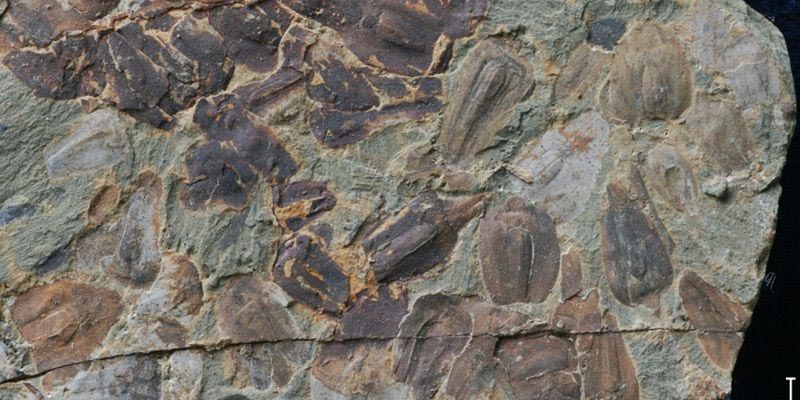
To reach this conclusion, the team conducted detailed fieldwork and used a new method to analyze fossil records alongside ancient climate clues preserved in rock layers. Their work allowed them to map how plant productivity changed during the time of the extinction.
“There is a warning here about the importance of Earth’s present day tropical forests.”
Professor Benjamin Mills, University of Leeds School of Earth and Environment
The findings, published in Nature Communications, revealed that widespread loss of vegetation significantly reduced carbon capture. As a result, CO2 levels remained high for millions of years.
Tropical Collapse: A Climate Tipping Point
The paper’s lead author, Dr. Zhen Xu, from the School of Earth and Environment, University of Leeds, said: “The causes of such extreme warming during this event have been long discussed, as the level of warming is far beyond any other event.
“Critically, this is the only high temperature event in Earth’s history in which the tropical forest biosphere collapses, which drove our initial hypothesis. Now, after years of fieldwork, analysis and simulations, we finally have the data which supports it.”
The researchers believe their results reinforce the idea that thresholds, or ‘tipping points’ exist in Earth’s climate-carbon system which, when reached, mean that warming can be amplified.
China’s Rock Record Speaks
China is home to the most complete geological record of the Permian-Triassic Mass Extinction, and this work leverages an incredible archive of fossil data that has been gathered over decades by three generations of Chinese geologists.
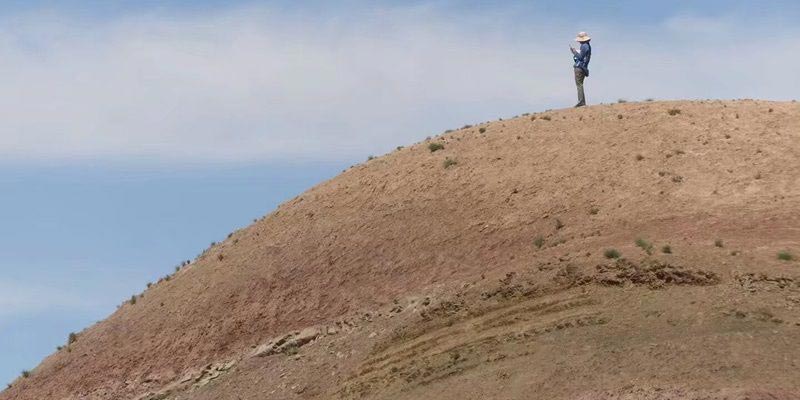
The lead author Dr. Zhen Xu is the youngest of these and is continuing the work begun by Professor Hongfu Yin and Professor Jianxin Yu, who are also authors of the study. Since 2016, Zhen and her colleagues have travelled throughout China from subtropical forests to deserts, including visiting areas accessible only by boat or on horseback.
Zhen came to the University of Leeds in 2020 to work with Professor Benjamin Mills on simulating the extinction event and assessing the climate impacts of the loss of tropical vegetation, which is shown by the fossil record. Their results confirm that the change in carbon sequestration suggested by the fossils is consistent with the amount of warming that occurred afterwards.
Modern Warning for Tropical Forests
Professor Mills added, “There is a warning here about the importance of Earth’s present-day tropical forests. If rapid warming causes them to collapse in a similar manner, then we should not expect our climate to cool to preindustrial levels even if we stop emitting CO2.
“Indeed, warming could continue to accelerate in this case even if we reach zero human emissions. We will have fundamentally changed the carbon cycle in a way that can take geological timescales to recover, which has happened in EPaleontology’s Call to Actionarth’s past.”
Paleontology’s Call to Action
Reflecting on the study’s broader mission, Professor Hongfu Yin and Professor Jianxin Yu of the China University of Geosciences, underscored the urgency of blending tradition with innovation: “Paleontology needs to embrace new techniques—from numerical modelling to interdisciplinary collaboration—to decode the past and safeguard the future,” explained Professor Yin.
Professor Yu added: “Let’s make sure our work transcends academia: it is a responsibility to all life on Earth, today and beyond. Earth’s story is still being written, and we all have a role in shaping its next chapter.”
Reference: “Early Triassic super-greenhouse climate driven by vegetation collapse” by Zhen Xu, Jianxin Yu, Hongfu Yin, Andrew S. Merdith, Jason Hilton, Bethany J. Allen, Khushboo Gurung, Paul B. Wignall, Alexander M. Dunhill, Jun Shen, David Schwartzman, Yves Goddéris, Yannick Donnadieu, Yuxuan Wang, Yinggang Zhang, Simon W. Poulton and Benjamin J. W. Mills, 2 July 2025, Nature Communications.
DOI: 10.1038/s41467-025-60396-y
Never miss a breakthrough: Join the SciTechDaily newsletter.
Follow us on Google and Google News.
2 Comments
New fossil evidence suggests that after the Great Dying, Earth’s deadliest mass extinction, the collapse of tropical forests was the key driver behind a five-million-year global heatwave.
Very good!
However, the changes in Earth’s climate may be far more complex than we can see. The superposition of cosmic vortex field and Earth’s spin vortex field is one of the main reasons affecting Earth’s climate. Paleoclimate data and hydrodynamic simulations validate the critical role of vortex axial deviation in global energy redistribution, offering a new paradigm for climate prediction.
If researchers are interested in this, please visit https://zhuanlan.zhihu.com/p/1916783850291466914.
It seems that many, if not most, of the researchers working on the PTME event are working with intellectual blinders. The unstated assumption is that the Earth had a uniform temperature, as stated here, a 5-million year hothouse. Yet, the Earth’s lapse rate controls the temperature with respect to elevation. That is, temperature varies laterally because the elevations vary laterally. There is a good chance that the higher elevation fossils have been removed by erosion and the remaining fossils are biased towards low-elevation temperatures. A recent article [ https://scitechdaily.com/ancient-life-oasis-in-china-survived-earths-deadliest-mass-extinction/ ] suggests that there was at least one refugium that didn’t suffer the terrestrial extinctions and probably didn’t experience the post-eruptions heat wave. How did that happen when the assumed cause of the heat wave was the well-mixed carbon dioxide? Might sample bias impact conclusions?
Henry’s Law predicts that warm water will dissolve less CO2 than cold water. Therefore, it wasn’t just the collapse of tropical forests that removed a significant sink for CO2, but the warm oceans would also cease to sequester as much CO2. Once the Siberian Traps released large quantities of CO2, it would not only remain elevated until it cooled because photosynthetic withdrawal was reduced, but as the noxious volcanic gases killed life in the oceans and on land, bacteria would decompose it, releasing more CO2. How long does it take for losses in the food chain to work its way through the entire ecosystem? The unstated assumption is that CO2 warmed the entire Earth, when the CO2 may just be a symptom of much greater problems.
Some interesting field work has been done. However, I think that they need to stop treating the Earth as being flat and start thinking in three dimensions.