
Close Menu
    Facebook X (Twitter) Instagram
    SciTechDaily
    • Biology
    • Chemistry
    • Earth
    • Health
    • Physics
    • Science
    • Space
    • Technology
    Facebook X (Twitter) Pinterest YouTube RSS
    SciTechDaily
    Home»Health»Mayo Clinic: Nurses Think About Suicide More Than Other Workers
    Health

    Mayo Clinic: Nurses Think About Suicide More Than Other Workers

    By Mayo ClinicOctober 22, 2021No Comments3 Mins Read
    Facebook Twitter Pinterest Telegram LinkedIn WhatsApp Email Reddit
    Share
    Facebook Twitter LinkedIn Pinterest Telegram Email Reddit
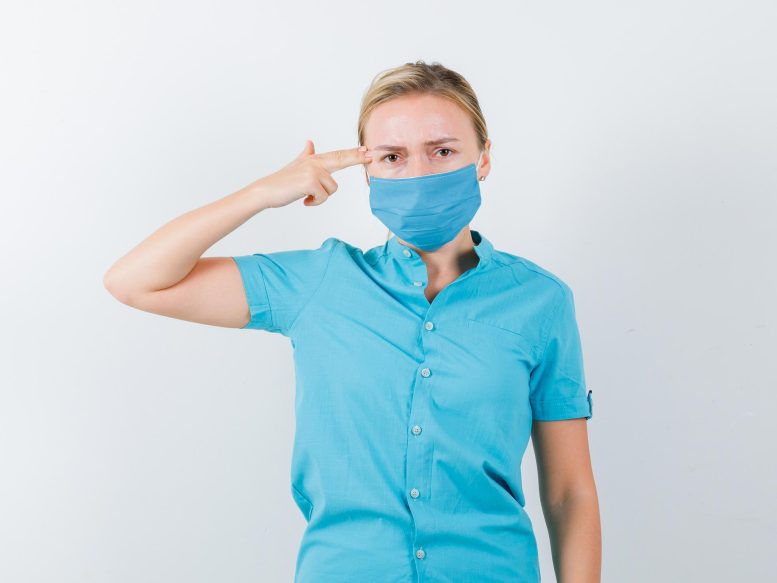
    Woman Nurse Suicide Concept
    U.S. nurses experience higher rates of suicidal thoughts and are less likely to seek help.

    Nurses face higher rates of suicidal ideation than other workers, underscoring the need for urgent systemic support.

    Mayo Clinic researchers report that nurses in the U.S. experience suicidal ideation in greater numbers than other general workers and those who do are less likely to tell anyone about it. The findings appear in the American Journal of Nursing.

    More than 7,000 nurses responded to a national survey on well-being, with questions ranging from burnout to depression. More than 400 nurses reported having suicidal ideation within the past year. That’s 5½% of the respondents, which is nearly 1% higher than the general workforce sample at 4.3%.

    Those who reported suicidal ideation also said they were less likely than other respondents to seek professional help for their emotional issues. More than one-third of the nurses had at least one symptom of burnout and 40% screened positive for symptoms of depression.

    The researchers say their findings indicate that the situation needs urgent attention, and systems- and practice-based interventions need to be developed and implemented to address burnout and suicidal ideation.

    It’s important to note that this survey was conducted, beginning in late 2017, with data collection in 2018, before any of these nurses were confronted with effects of the COVID-19 pandemic.

    “While the findings of our study are serious enough, we recognize the impact of the current pandemic has dramatically compounded the situation,” says Liselotte Dyrbye, M.D., a Mayo Clinic internist and the senior author. “The need for system-level interventions to improve the work lives of nurses and other members of the health care team is greater than ever before.”

    The questionnaire was sent in November 2017 to 86,858 nurses and a sample of 5,198 general workforce members.

    Reference: “Original Research: Suicidal Ideation and Attitudes Toward Help Seeking in U.S. Nurses Relative to the General Working Population” by Kelsey, Elizabeth A. DNP, APRN, CNP; West, Colin P. MD, PhD; Cipriano, Pamela F. PhD, RN, NEA-BC, FAAN; Peterson, Cheryl MSN, RN; Satele, Daniel BS; Shanafelt, Tait MD; Dyrbye and Liselotte N. MD, MHPE, 22 October 2021, AJN American Journal of Nursing.
    DOI: 10.1097/01.NAJ.0000798056.73563.fa

    The other authors are Elizabeth Kelsey, D.N.P., Mayo Clinic; Colin West, M.D., Ph.D., Mayo Clinic; Daniel Satele, Mayo Clinic; Pamela Cipriano, Ph.D., University of Virginia; Cheryl Peterson, American Nurses Association; and Tait Shanafelt, M.D., Stanford University.

    Funding for this study was provided by the Mayo Clinic Program on Physician Well-Being and the American Nurses Association. This study was based on work partially supported by National Science Foundation grant No. 2041339. Any opinions, findings, and conclusions or recommendations expressed in this article are those of the authors and do not necessarily reflect the views of the National Science Foundation. Funding sources had no role in study design; collection, analysis and interpretation of data; or writing and publication of this article.

    Never miss a breakthrough: Join the SciTechDaily newsletter.
    Follow us on Google and Google News.

    Depression Mayo Clinic Mental Health Nursing Suicide
    Share. Facebook Twitter Pinterest LinkedIn Email Reddit

    Related Articles

    Reported vs. Real: Are Teen Suicidal Behaviors Increasing or Are We Just Noticing More?

    Unseen Impact of the Pandemic: Youth Mental Health Emergencies on the Rise

    Columbia Study: Casual Cannabis Use Greatly Increases Teens’ Risk of Depression, Suicidality

    Melatonin Sleep Aid May Reduce Self-Harm in Young People With Anxiety and Depression

    Excessive Screen Time in Preteens Linked to Suicidal Behavior

    High Rate of Possible Undiagnosed Autism Discovered in People Who Died by Suicide

    Ketamine Therapy Quickly Reduces Depression and Suicidal Thoughts

    Lithium in Public Drinking Water May Have an Anti-suicidal Effect – “Magic Ion” Has Potential to Improve Community Mental Health

    Don’t Ignore Chronic Itch – Risk of Depression, Suicidal Thoughts and Psychological Stress

    Leave A Reply Cancel Reply

    • Facebook
    • Twitter
    • Pinterest
    • YouTube

    Don't Miss a Discovery

    Subscribe for the Latest in Science & Tech!

    Trending News

    1.4-Million-Year-Old Footprints Reveal a Giant Human Relative

    Astronomers May Have Found the First Moon Beyond Our Solar System

    Underwater Cameras Expose the Secret Lives of Whale Sharks

    Why Dreaming Leaves the Brain Running Low on Energy

    CERN Experiments Detect Signs of the Universe’s Primordial Matter

    Study Finds a Surprising Link Between Gut Microbes and Aging

    Frequent Cannabis Users Wake Up With More “Stress Hormone”

    Scientists Reveal Hidden DNA Traces in the Shroud of Turin

    Follow SciTechDaily
    • Facebook
    • Twitter
    • YouTube
    • Pinterest
    • Newsletter
    • RSS
    SciTech News
    • Biology News
    • Chemistry News
    • Earth News
    • Health News
    • Physics News
    • Science News
    • Space News
    • Technology News
    Recent Posts
    • Scientists Discover Extreme Acceleration Inside a Nuclear Fireball
    • Giant Plasma Waves May Be Stripping Away Mars’ Atmosphere
    • A Daily Multivitamin May Help Older Adults Stay Active
    • Blood Test May Reveal Alzheimer’s Risk Years Before Symptoms
    • Scientists Thought SuperAgers Had Lucky Genes. They Were Wrong
    Copyright © 1998 - 2026 SciTechDaily. All Rights Reserved.
    • Science News
    • About
    • Contact
    • Editorial Board
    • Privacy Policy
    • Terms of Use

    Type above and press Enter to search. Press Esc to cancel.