
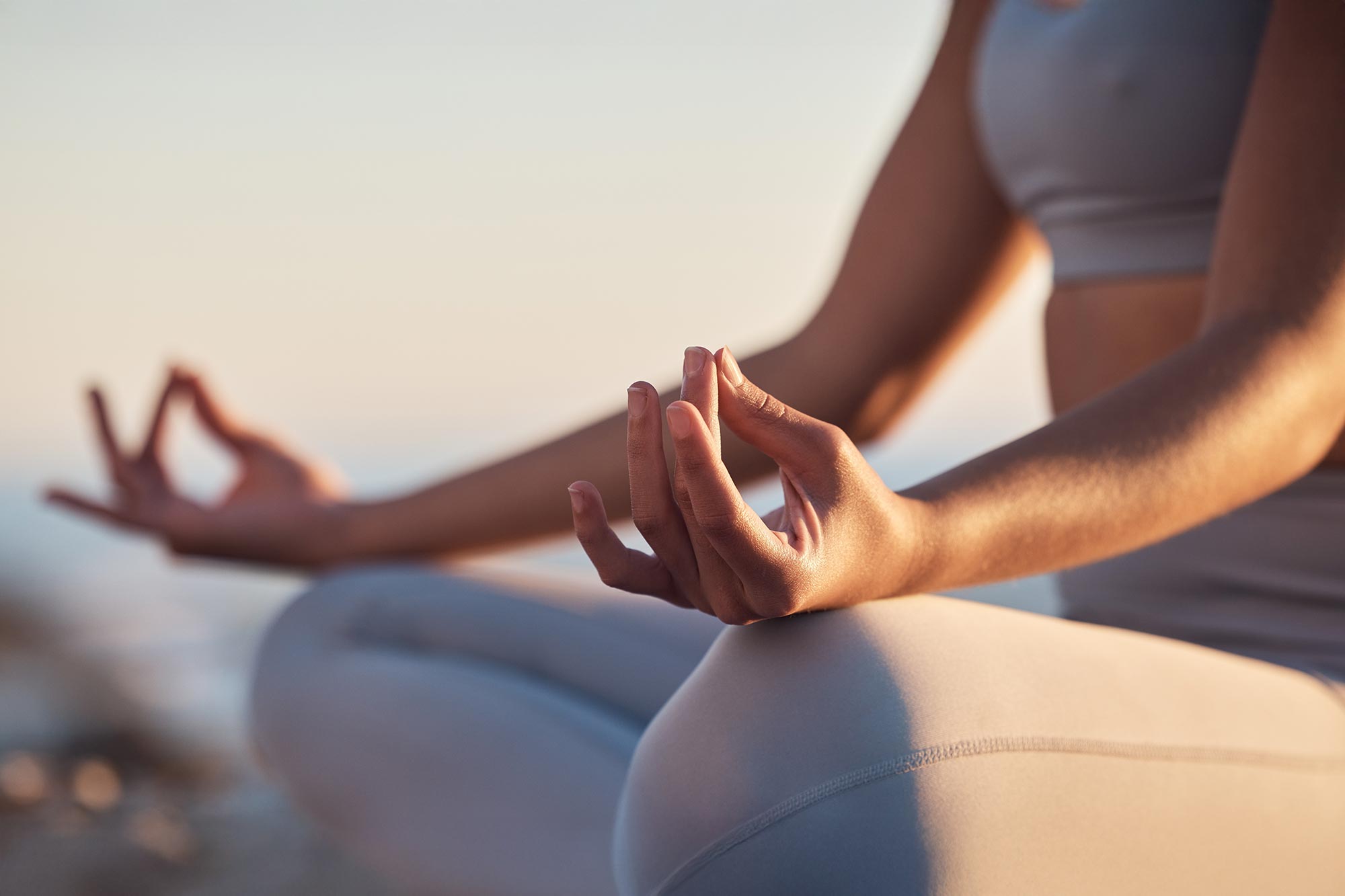
A new study reveals that meditation, though often beneficial, can cause side effects for many practitioners.
Meditation has become a popular tool for everything from reducing stress to boosting productivity, often viewed as a universal solution for improving mental health.
However, when any practice is considered for clinical or medical use, several important questions need to be asked. How much exposure or “dose” is required to achieve benefits? And just as importantly, could there be any negative or unintended effects?
“This is the kind of research that is done at the very beginning of developing any new treatment intervention program,” said Nicholas Van Dam, a psychologist at the University of Melbourne. “And for various complex reasons, with mindfulness-based programs in particular, that just didn’t happen.”
Over time, scientists have discovered that while meditation can be beneficial for many, it is not without risks. Some individuals experience negative reactions such as panic attacks, the resurfacing of traumatic memories (related to post-traumatic stress disorder), or in more severe cases, feelings of depersonalization and dissociation. Yet, as Van Dam noted, the scientific findings on how often these effects occur are far from consistent. Certain studies report that only about 1% of meditators experience side effects (Wong et al., 2018), while others suggest the rate may be as high as two thirds (Britton et al., 2021).
A New Study Seeks Clarity
To better understand these conflicting findings, Van Dam led a study published in Clinical Psychological Science that explored how frequently people who meditate experience side effects. The researchers also sought to determine whether certain factors might increase the likelihood of these effects occurring.
For the study, Van Dam and his team recruited nearly 900 adults from across the United States. Using data from the Centers for Disease Control and Prevention, they identified what the national population of meditators typically looked like and structured their sample to reflect that demographic profile.
The researchers also recruited meditators from a wide range of skill levels, from beginner to advanced, “such that we could kind of get a sense of the full sample of people who engage in meditation within the U.S.,” Van Dam said.
When it came to characterizing adverse effects, Van Dam said, “The devil is in the details,” meaning that how a researcher asks about side effects affects the resulting answers. For instance, side effects are often posed as an open question, also known as spontaneous reporting, he explained. But sometimes respondents don’t know if their experience should be considered adverse and may not bring it up.
So for the new study, Van Dam and his colleagues chose to use a 30-item checklist to assess the side effects of meditation. For each item, participants rated the intensity of the effect they experienced, whether the experience was positive or negative, and whether it disrupted their day-to-day life.
What the Study Found
As a result, the study found that nearly 60% of U.S. meditators experienced at least one side effect on the provided checklist (i.e., feeling anxious, feeling disembodied, etc.). Further, roughly 30% reported effects that were challenging or distressing, and 9% reported an effect that caused functional impairment.
As for risk factors, those who experienced mental health symptoms or psychological distress less than 30 days prior to meditating were more likely to experience side effects. But to determine a causal relationship, Van Dam noted that a prospective longitudinal study would be needed to understand the nuances and connections between these factors. The researchers also found that meditators who participated in residential meditation retreats, which are often long and intense experiences, were more likely to have at least one side effect that caused functional impairment.
Balancing Awareness and Fear
However, these results should not discourage meditators from continuing or trying the practice. “Our conclusions are not that people should be terrified, or people should not try meditation. It’s really that we think that we should do a better job of providing informed consent,” Van Dam said.
With other treatments, like medical surgery or exposure therapy, clinicians often give a preamble on what a patient may expect. This way, they can understand any potential risks and choose to consent to the treatment and their potential experience of it.
In meditation, that conversation is often missed. “We have to find a way to have that conversation and navigate that space,” Van Dam said. He said that clinicians should find ways to communicate that discomfort is not necessarily a bad thing. Instead, uneasy experiences such as questioning your sense of self and the world around you can be normal with meditation. But distress that disrupts your daily life is a red flag.
“These practices are not for everyone,” he said. “If they’re not working, it’s not necessarily because the person is doing something wrong. It might be because it’s just not a good match.”
References: “Incidence and Predictors of Meditation-Related Unusual Experiences and Adverse Effects in a Representative Sample of Meditators in the United States” by Nicholas T. Van Dam, Jessica Targett, Jonathan N. Davies, Alex Burger and Julieta Galante, 1 May 2025, Clinical Psychological Science.
DOI: 10.1177/21677026241298269
“Defining and Measuring Meditation-Related Adverse Effects in Mindfulness-Based Programs” by Willoughby B. Britton, Jared R. Lindahl, David J. Cooper, Nicholas K. Canby and Roman Palitsky, 31 October 2021, Clinical Psychological Science.
DOI: 10.1177/2167702621996340
“The Safety of Mindfulness-Based Interventions: a Systematic Review of Randomized Controlled Trials” by Samuel Y. S. Wong, Joyce Y. C. Chan, Dexing Zhang, Eric K. P. Lee and Kelvin K. F. Tsoi, 2 February 2018, Mindfulness.
DOI: 10.1007/s12671-018-0897-0
Never miss a breakthrough: Join the SciTechDaily newsletter.
Follow us on Google and Google News.
4 Comments
Yes, it’s called the purification process. The Christian mystics called it dark night of the soul. Some people need to go thru this, it’s beneficial. That’s why some people need teachers who have been through the process.
That trauma comes up because it’s never been dealt with. Telling people to avoid uncomfortable moments in meditation is akin to telling them to just “stuff it all back in.” Big pharma would rather you stop all that meditation nonsense so they can sell you an anti-depressant.
There are thousands of studies everyday, The big question is where did these “scientist” get their funging? Why was it done? And who benifits from it financially?
Totally unscientific