
Close Menu
    Facebook X (Twitter) Instagram
    SciTechDaily
    • Biology
    • Chemistry
    • Earth
    • Health
    • Physics
    • Science
    • Space
    • Technology
    Facebook X (Twitter) Pinterest YouTube RSS
    SciTechDaily
    Home»Health»Mediterranean Diet May Be the Ultimate Weapon Against Prostate Cancer
    Health

    Mediterranean Diet May Be the Ultimate Weapon Against Prostate Cancer

    By University of South AustraliaMarch 15, 2023No Comments4 Mins Read
    Facebook Twitter Pinterest Telegram LinkedIn WhatsApp Email Reddit
    Share
    Facebook Twitter LinkedIn Pinterest Telegram Email Reddit
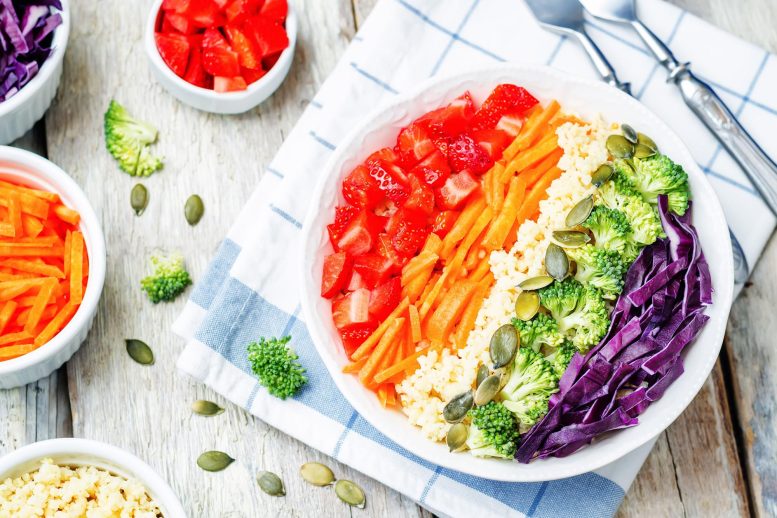
    Rainbow Millet Vegetable Salad
    Men who regularly consume a variety of colorful fruits and vegetables have a lower risk of being diagnosed with prostate cancer, according to two studies by University of South Australia researchers. These studies found that a Mediterranean or Asian diet, which includes a range of micronutrients, can help prevent prostate cancer and aid in recovery from radiation treatment for the disease. The research showed that low levels of certain micronutrients, such as lycopene and selenium, were associated with increased risk of prostate cancer and increased DNA damage after radiation exposure.

    Rainbow of Fruit and Veg the Best Prevention Against Prostate Cancer

    Men who consume colorful fruits and vegetables on a regular basis are less likely to be diagnosed with prostate cancer (PC), according to new research by University of South Australia scientists.

    A rainbow of foods rich in certain micronutrients helps to prevent prostate cancer (PC) as well as speed up recovery among men who undergo radiation treatment for the disease.

    The findings, from two studies published in the journal Cancers, highlight the importance of a Mediterranean or Asian diet that includes these foods.

    Key Nutritional Deficiencies Linked to Prostate Cancer

    Researchers compared micronutrient plasma concentrations of prostate cancer patients with a healthy control group, revealing low levels of lutein, lycopene, alpha-carotene, and selenium in PC patients and high levels of iron, sulfur, and calcium in the same group, relative to controls.

    Increased DNA damage after radiation exposure was also associated with low lycopene and selenium in blood plasma.

    Men with plasma concentrations lower than 0.25 micrograms (ug) per milliliter (mL) for lycopene and/or lower than 120ug/L for selenium have an increased risk of prostate cancer and are likely to be more sensitive to the damaging effects of radiation.

    Foods Rich in Lycopene and Selenium

    Foods that are rich in lycopene include tomatoes, melons, papayas, grapes, peaches, watermelons, and cranberries. Selenium-rich foods include white meat, fish, shellfish, eggs, and nuts.

    Study co-author  Dr. Permal Deo says eating foods that are naturally rich in lycopene and selenium is preferable to taking supplements, where the benefits are limited, according to previous studies.

    “Our recommendation is to adopt a Mediterranean diet enlisting the help of a dietician because people absorb nutrients in different ways, depending on the food, the digestive system, the person’s genotype, and possibly their microbiome,” Dr. Deo says.

    Risk Factors Beyond Nutrition

    Prostate cancer remains one of the most common and fatal cancers in men, but the nutritional deficiencies associated with it remain largely unknown, hence this study.

    Other risk factors, such as ethnicity, family history, and age have previously been linked to prostate cancer.

    “There is strong evidence that being overweight and tall increases the risk of prostate cancer. Diets high in dairy products and low in vitamin E may also increase the risk but the evidence is less clear.”

    Vitamin E is found in plant-based oils, nuts, seeds, fruits, and vegetables.

    The research is the first to evaluate plasma concentrations of micronutrients and trace elements with respect to prostate cancer in the South Australian population.

    References:

    “Plasma Micronutrient Profile of Prostate Cancer Cases Is Altered Relative to Healthy Controls—Results of a Pilot Study in South Australia” by Varinderpal S. Dhillon, Permal Deo and Michael Fenech, 23 December 2022, Cancers.
    DOI: 10.3390/cancers15010077

    “Effect of Selenium and Lycopene on Radiation Sensitivity in Prostate Cancer Patients Relative to Controls” by Varinderpal S. Dhillon, Permal Deo and Michael Fenech, 3 February 2023, Cancers.
    DOI: 10.3390/cancers15030979

    These papers are authored by Dr. Varinderpal Dhillon, Dr. Permal Deo, and Professor Michael Fenech, all based in UniSA’s Clinical and Health Sciences unit.

    Never miss a breakthrough: Join the SciTechDaily newsletter.
    Follow us on Google and Google News.

    Cancer Mediterranean Diet Nutrition Prostate Cancer University of South Australia
    Share. Facebook Twitter Pinterest LinkedIn Email Reddit

    Related Articles

    New UCLA Research: Omega-3 Rich Diet Could Be Key to Slowing Cancer Progression

    How Diet and Lifestyle Modifications May Lower Risk of Lethal Prostate Cancer

    Eating White Button Mushrooms Could Slow Progression of Prostate Cancer

    Mediterranean Diet May Help Men With Prostate Cancer

    New MIND Diet May Significantly Lower Risk of Alzheimer’s Disease

    Greater Adherence to the Mediterranean Diet Has Impact on Aging

    Mediterranean Diet Significantly Reduces the Risk of Suffering a Cardiovascular Death

    Study Links Dietary Glycemic Load and Colon Cancer

    Daily Multivitamin Usage Cut Cancer Risk By 8% in Men

    Leave A Reply Cancel Reply

    • Facebook
    • Twitter
    • Pinterest
    • YouTube

    Don't Miss a Discovery

    Subscribe for the Latest in Science & Tech!

    Trending News

    Even Occasional Binge Drinking May Triple Liver Damage Risk

    Liftoff! NASA’s Artemis II Launch Sends Astronauts Around the Moon for First Time in 50 Years

    Scientists Discover New Way To Eliminate “Zombie Cells” Driving Aging

    This New Quantum Theory Could Change Everything We Know About the Big Bang

    This One Vitamin May Help Protect Your Brain From Dementia Years Later

    Stopping Weight-Loss Drugs Like Ozempic Can Quickly Erase Heart Benefits

    A 500-Million-Year-Old Surprise Is Forcing Scientists to Rethink Spider Evolution

    Coffee and Blood Pressure: What You Need To Know Before Your Next Cup

    Follow SciTechDaily
    • Facebook
    • Twitter
    • YouTube
    • Pinterest
    • Newsletter
    • RSS
    SciTech News
    • Biology News
    • Chemistry News
    • Earth News
    • Health News
    • Physics News
    • Science News
    • Space News
    • Technology News
    Recent Posts
    • Tiny 436-Million-Year-Old Fish Fossil Rewrites the Origins of Vertebrates
    • 1,800 Miles Down: Scientists Uncover Mysterious Movements at the Edge of Earth’s Core
    • Scientists Uncover Earth’s Hidden “Gold Kitchen” Beneath the Ocean Floor
    • You Don’t Need To Be Rich: New Study Reveals a Simple Life Is the Real Secret to Happiness
    • “Crazy Dice” Help Scientists Prove Only One 150-Year-Old Theory About Randomness Works
    Copyright © 1998 - 2026 SciTechDaily. All Rights Reserved.
    • Science News
    • About
    • Contact
    • Editorial Board
    • Privacy Policy
    • Terms of Use

    Type above and press Enter to search. Press Esc to cancel.