
Close Menu
    Facebook X (Twitter) Instagram
    SciTechDaily
    • Biology
    • Chemistry
    • Earth
    • Health
    • Physics
    • Science
    • Space
    • Technology
    Facebook X (Twitter) Pinterest YouTube RSS
    SciTechDaily
    Home»Space»Meteorite Hunters Discover Extraordinary 17-Pound Space Rock in Antarctica
    Space

    Meteorite Hunters Discover Extraordinary 17-Pound Space Rock in Antarctica

    By Field MuseumJanuary 25, 2023No Comments4 Mins Read
    Facebook Twitter Pinterest Telegram LinkedIn WhatsApp Email Reddit
    Share
    Facebook Twitter LinkedIn Pinterest Telegram Email Reddit
    Researchers With 17-Pound Meteorite
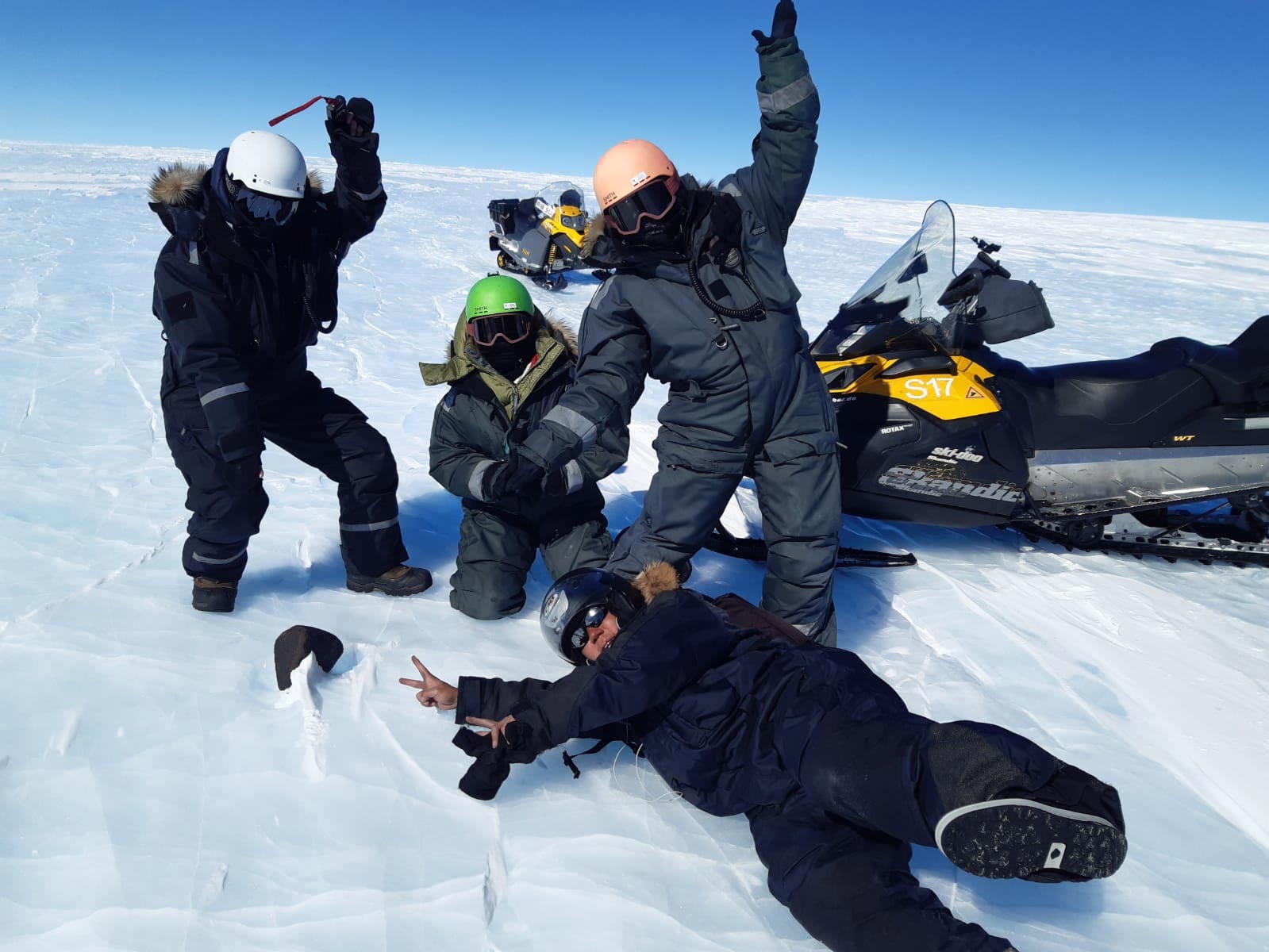
    The researchers with their 16.7-pound find. White helmet: Maria Schönbächler. Green helmet: Maria Valdes. Black helmet: Ryoga Maeda. Orange helmet: Vinciane Debaille. Credit: Photo courtesy of Maria Valdes

    Antarctica is a tough place to work, for obvious reasons— it’s bitterly cold, remote, and wild. However, it’s one of the best places in the world to hunt for meteorites. That’s partly because Antarctica is a desert, and its dry climate limits the degree of weathering the meteorites experience. On top of the dry conditions, the landscape is ideal for meteorite hunting: the black space rocks stand out clearly against snowy fields. Even when meteorites sink into the ice, the glaciers’ churning motion against the rock below helps re-expose the meteorites near the surface of the continent’s blue ice fields.

    An international team of researchers who just got back from Antarctica can attest to the continent’s meteorite-hunter-friendliness: they returned with five new meteorites, including one that weighs 16.7 pounds (7.6 kg).
    17-Pound Meteorite
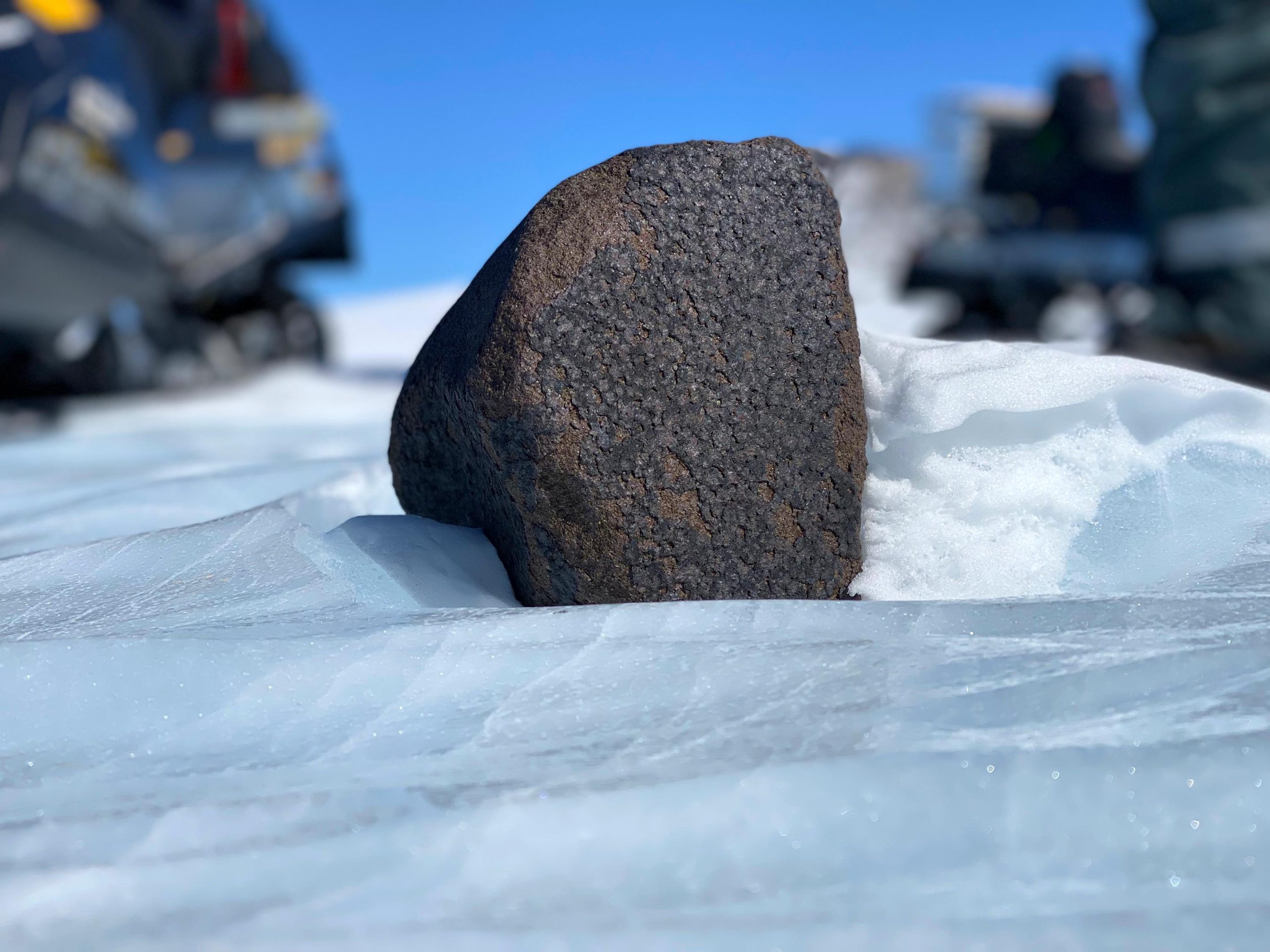
    The 17-pound meteorite. Credit: Courtesy of Maria Valdes

    Maria Valdes, a research scientist at the Field Museum and the University of Chicago, estimates that of the roughly 45,000 meteorites retrieved from Antarctica over the past century, only about a hundred or so are this size or larger. “Size doesn’t necessarily matter when it comes to meteorites, and even tiny micrometeorites can be incredibly scientifically valuable,” says Valdes, “but of course, finding a big meteorite like this one is rare, and really exciting.”

    17-Pound Meteorite Tents
    The team’s tents when in the field. Credit: Courtesy of Maria Valdes

    Valdes was one of four scientists on the mission, led by Vinciane Debaille of the Université Libre de Bruxelles (FNRS-ULB); the research team was rounded out by Maria Schönbächler (ETH-Zurich) and Ryoga Maeda (VUB-ULB). The researchers were the first to explore potential new meteorite sites mapped using satellite imagery by Veronica Tollenaar, a thesis student in glaciology at the ULB.
    17-Pound Meteorite Ice Field
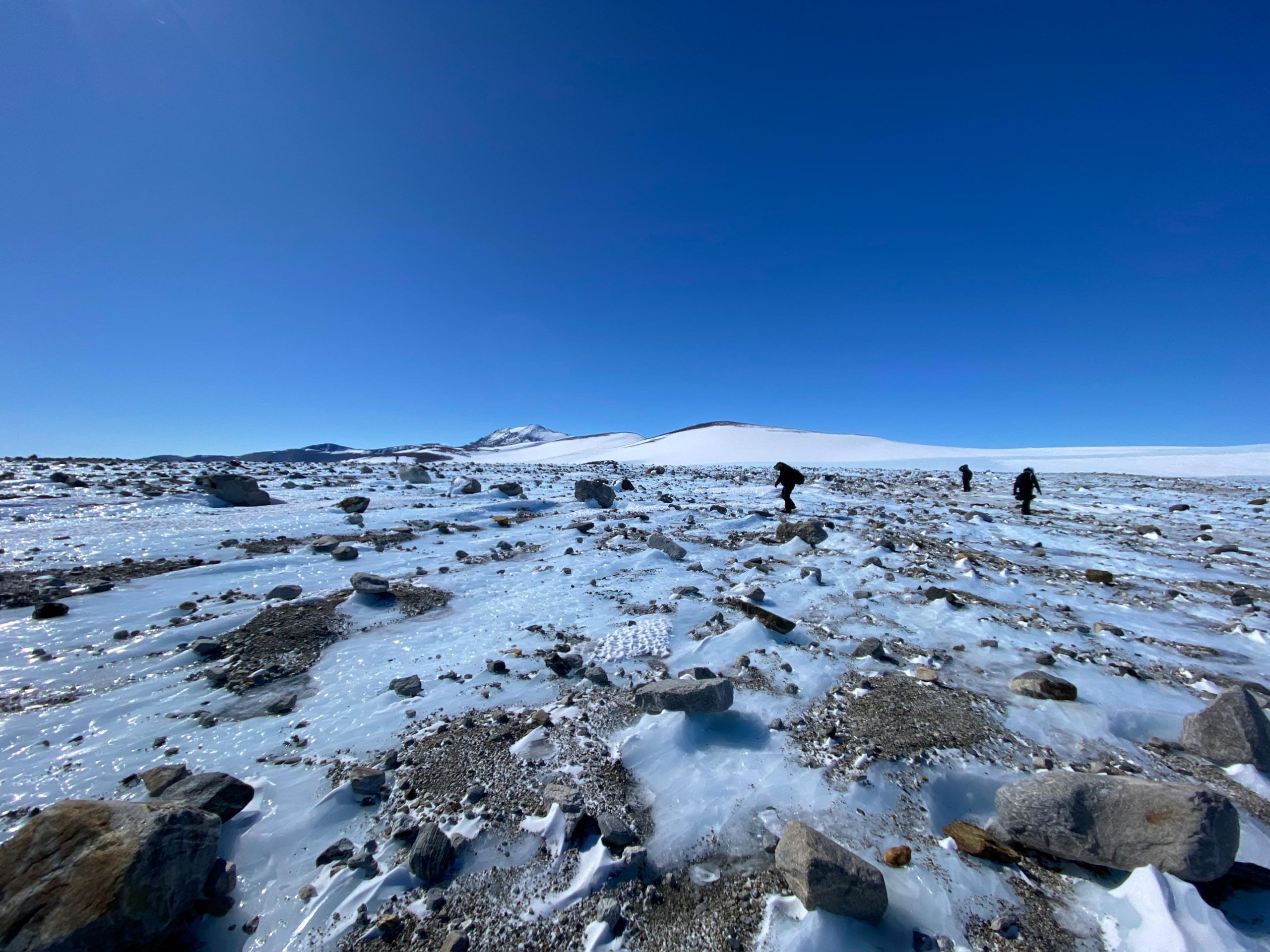
    Rocks strewn across an ice field, with the scientists searching for meteorites in the background. Credit: Courtesy of Maria Valdes

    “Going on an adventure exploring unknown areas is exciting,” says Debaille, “but we also had to deal with the fact that the reality on the ground is much more difficult than the beauty of satellite images.” Despite timing their trip for Antarctica’s summertime in late December, temperatures hovered around 14° F (-10° C). Valdes notes that some days during their trip, it was actually colder in Chicago than it was in Antarctica, but spending days riding snowmobiles and trekking through ice fields and then sleeping in a tent made the Antarctic weather feel more extreme.
    17-Pound Meteorite Ice Cliffs
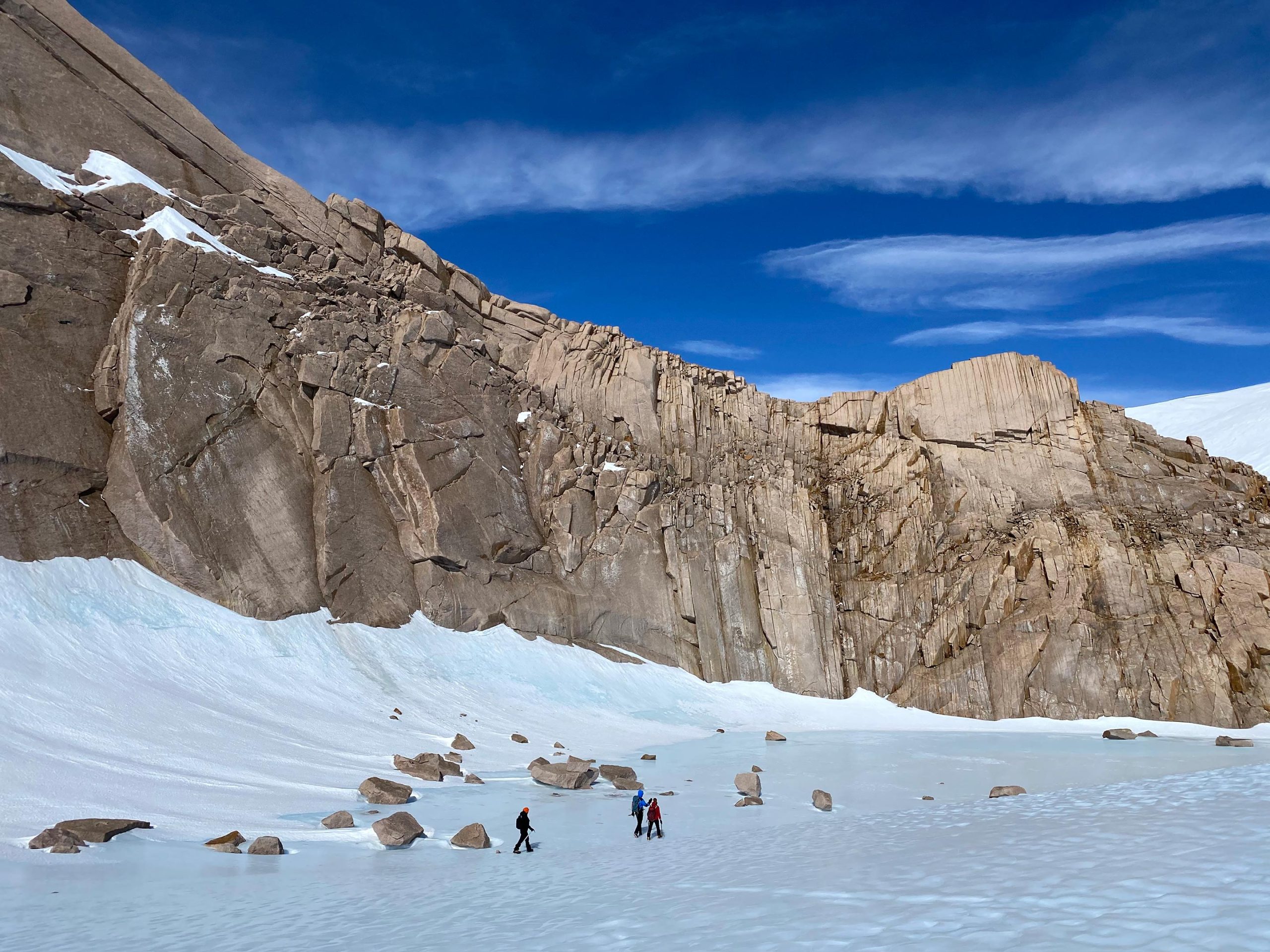
    The team hiking past rock formations in Antarctica. Credit: Courtesy of Maria Valdes

    The five meteorites recovered by the team will be analyzed at the Royal Belgian Institute of Natural Sciences; meanwhile, sediment potentially containing tiny micrometeorites was divided among the researchers for study at their institutions.

    Valdes says she’s eager to see what the analyses of the meteorites reveal, because “studying meteorites helps us better understand our place in the universe. The bigger a sample size we have of meteorites, the better we can understand our Solar System, and the better we can understand ourselves.”

    17-Pound Meteorite Snowy Field
    A snowy field in Antarctica. Credit: Courtesy of Maria Valdes

    The team was guided by Manu Poudelet of the International Polar Guide Association and assisted by Alain Hubert. They were supported in part by the Belgian Science Policy. Valdes’s work is supported by the Field Museum’s Robert A. Pritzker Center for Meteoritics and Polar Studies, the TAWANI Foundation, and the Meeker family.

    Never miss a breakthrough: Join the SciTechDaily newsletter.
    Follow us on Google and Google News.

    Antarctica Field Museum Meteorites Popular
    Share. Facebook Twitter Pinterest LinkedIn Email Reddit

    Related Articles

    Pristine Extraterrestrial Organic Compounds Discovered in “Fireball” Meteorite

    Oldest Material on Earth Discovered: 7-Billion-Year-Old Stardust Found in Meteorite

    New Clues to Origin of Life on Earth From Meteorite Discovery

    Diamonds Provide Evidence of a Lost Planet That Once Roamed Our Solar System

    NASA TV Will Broadcast Perseid Meteor Shower Program

    Scientists Discover Evidence of Methane in Martian Meteorites

    Martian Meteorites Yield Clues to the Planet’s Early Atmosphere

    Scientists Discover Evidence of Water in Martian Meteorite

    High-Energy UV Radiation Triggers Methane on Mars

    Leave A Reply Cancel Reply

    • Facebook
    • Twitter
    • Pinterest
    • YouTube

    Don't Miss a Discovery

    Subscribe for the Latest in Science & Tech!

    Trending News

    Scientists Uncover Potential Brain Risks of Popular Fish Oil Supplements

    Scientists Discover a Surprising Way To Make Bread Healthier and More Nutritious

    After 60 Years, Scientists Uncover Unexpected Brain Effects of Popular Diabetes Drug Metformin

    New Research Uncovers Hidden Side Effects of Popular Weight-Loss Drugs

    Scientists Rethink Extreme Warming After Surprising Ocean Discovery

    Landmark Study Links Never Marrying to Significantly Higher Cancer Risk

    Researchers Discover Unknown Beetle Species Just Steps From Their Lab

    Largest-Ever Study Finds Medicinal Cannabis Ineffective for Anxiety, Depression, PTSD

    Follow SciTechDaily
    • Facebook
    • Twitter
    • YouTube
    • Pinterest
    • Newsletter
    • RSS
    SciTech News
    • Biology News
    • Chemistry News
    • Earth News
    • Health News
    • Physics News
    • Science News
    • Space News
    • Technology News
    Recent Posts
    • Researchers Have Discovered a THC-Free Cannabis Compound That May Replace Opioids
    • Common Blood Pressure Drug Shows Surprising Power Against Deadly Antibiotic-Resistant Superbug
    • Students Build Dark Matter Detector and Set New Experimental Limits
    • Scientists Discover Caffeine Can Repair Key Memory Circuits After Sleep Loss
    • Strange 65-Foot Dinosaur Discovered in Argentina
    Copyright © 1998 - 2026 SciTechDaily. All Rights Reserved.
    • Science News
    • About
    • Contact
    • Editorial Board
    • Privacy Policy
    • Terms of Use

    Type above and press Enter to search. Press Esc to cancel.