
Close Menu
    Facebook X (Twitter) Instagram
    SciTechDaily
    • Biology
    • Chemistry
    • Earth
    • Health
    • Physics
    • Science
    • Space
    • Technology
    Facebook X (Twitter) Pinterest YouTube RSS
    SciTechDaily
    Home»Technology»MIT Joins White House Supercomputing Effort to Speed Search for COVID-19 Solutions
    Technology

    MIT Joins White House Supercomputing Effort to Speed Search for COVID-19 Solutions

    By Jennifer Chu, Massachusetts Institute of TechnologyMarch 24, 2020No Comments3 Mins Read
    Facebook Twitter Pinterest Telegram LinkedIn WhatsApp Email Reddit
    Share
    Facebook Twitter LinkedIn Pinterest Telegram Email Reddit
    MIT COVID 19 Supercomputing
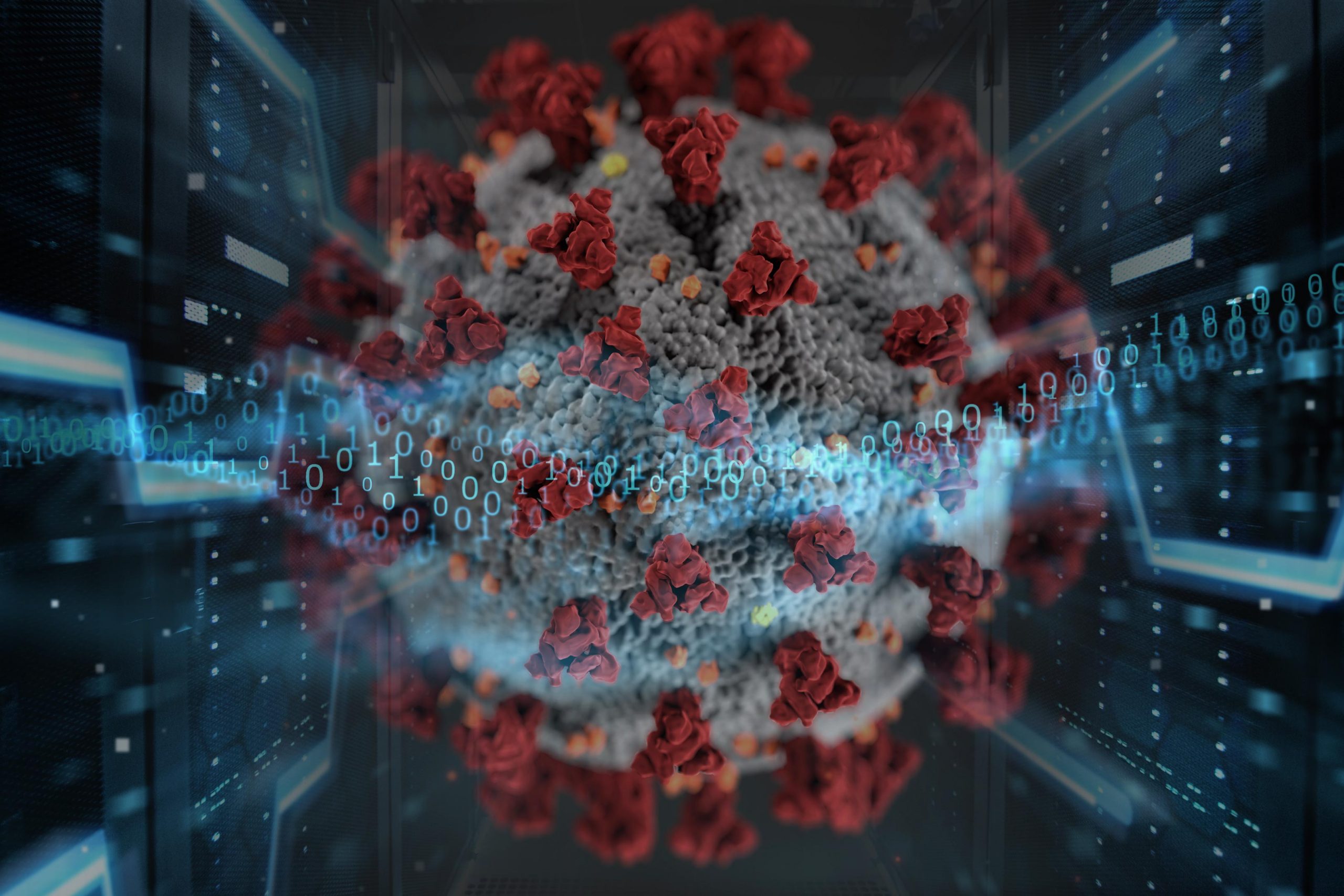
    MIT joins a consortium of supercomputing resources to help speed the search for Covid-19 solutions. Credit: CDC, MIT News, SciTechDaily

    The White House has announced the launch of the COVID-19 High Performance Computing Consortium, a collaboration among various industry, government, and academic institutions which will aim to make their supercomputing resources available to the wider research community, in an effort to speed up the search for solutions to the evolving COVID-19 pandemic.

    MIT has joined the consortium, which is led by the U.S. Department of Energy, the National Science Foundation, and NASA.

    MIT News spoke with Christopher Hill, principal research scientist in MIT’s Department of Earth, Atmospheric, and Planetary Sciences, who is serving on the new consortium’s steering committee, about how MIT’s computing power will aid in the fight against COVID-19.

    Q: How did MIT become a part of this consortium? 

    A: IBM, which has longstanding computing relationships with both the government and MIT, approached the Institute late last week about joining. The Department of Energy owns IBM’s Summit supercomputer, located at Oak Ridge National Laboratory, which was already working on finding pharmaceutical compounds that might be effective against this coronavirus. In addition to its close working relationship with MIT, IBM also had donated the Satori supercomputer as part of the launch of the MIT Schwarzman College of Computing. We obviously want to do everything we can to help combat this pandemic, so we jumped at the chance to be part of a larger effort.

    Q: What is MIT bringing to the consortium?

    A: We’re primarily bringing two systems to the effort: Satori and Supercloud, which is an unclassified system run by Lincoln Laboratory. Both systems have very large numbers of the computing units — known as GPUs — that enable the machines to process information far more quickly, and they also have extra large memory. That makes the systems slightly different from other machines in the consortium in ways that may be helpful for some types of problems.

    For example, MIT’s two systems seem to be especially helpful at examining images from cryo-electron microscopy, which entails use of an electron microscope on materials at ultralow temperatures. Ultralow temperatures slow the motion of atoms, making the images clearer. In addition to the hardware, MIT faculty and staff have already expressed interest in assisting outside researchers who are using MIT equipment.

    Q: How will MIT operate as part of the consortium?   

    A: The consortium will receive proposals through a single portal being run in conjunction with the NSF. A steering committee will decide which proposals are accepted and where to route them.  The steering committee will be relying on guidance from a larger technical review committee, which will include the steering committee members and additional experts. Both committees are made of researchers from the participating institutions. I will serve on both committees for MIT, and we’ll be appointing a second person to serve on the technical review committee. 

    Four individuals at MIT — Ben Forget, Nick Roy, Jeremy Kepner (Lincoln Lab), and myself (Christopher Hill) ­— will oversee the work at the Institute. The goal of the consortium is to focus on projects where computing is likely to produce relevant advances in one week to three months —though some projects, like those related to vaccines — may take longer.

    Never miss a breakthrough: Join the SciTechDaily newsletter.
    Follow us on Google and Google News.

    COVID-19 MIT Supercomputing
    Share. Facebook Twitter Pinterest LinkedIn Email Reddit

    Related Articles

    MIT Quantum COVID Sensor May Offer Faster, Cheaper, and More Accurate Detection of SARS-CoV-2

    MIT Mechanical Engineers Develop Solutions to Help Slow and Stop the Spread of COVID-19

    MIT’s New Center to Advance Predictive Simulation Research Will Focus on Exascale Simulation of Materials in Hypersonic Flow Environments

    Robot Takes Contact-Free Measurements of COVID-19 Patients’ Vital Signs

    MIT Using Artificial Intelligence to Help Put an End to the COVID-19 Pandemic

    Air Cleared So Much During COVID-19 Shutdown, It Actually Increased Solar Power Output

    In the Fight Against Coronavirus, Supercomputers & Giant Accelerators Lend a Hand

    MIT Will Post Free Plans Online for an Emergency Ventilator That Can Be Built for $100

    Lawrence Livermore Lab Uses Artificial Intelligence and Supercomputers in Global Fight Against COVID-19

    Leave A Reply Cancel Reply

    • Facebook
    • Twitter
    • Pinterest
    • YouTube

    Don't Miss a Discovery

    Subscribe for the Latest in Science & Tech!

    Trending News

    Scientists Discover How Coffee Impacts Memory, Mood, and Gut Health

    Why Did the Neanderthals Disappear? Scientists Reveal Humans Had a Hidden Advantage

    Physicists Propose Strange Experiment Where Time Goes Quantum

    Magnesium Magic: New Drug Melts Fat Even on a High-Fat, High-Sugar Diet

    Weight-Loss Drugs Like Ozempic May Come With an Unexpected Cost

    Mezcal “Worm” in a Bottle Mystery: DNA Testing Reveals a Surprise

    New Research Reveals That Your Morning Coffee Activates an Ancient Longevity Switch

    This Is What Makes You Irresistible to Mosquitoes

    Follow SciTechDaily
    • Facebook
    • Twitter
    • YouTube
    • Pinterest
    • Newsletter
    • RSS
    SciTech News
    • Biology News
    • Chemistry News
    • Earth News
    • Health News
    • Physics News
    • Science News
    • Space News
    • Technology News
    Recent Posts
    • Harvard Scientists Reveal Secret Structure Behind How You Smell
    • Scientists Just Discovered the Hidden Trick That Keeps Your Cells Alive
    • This Simple Movement Could Be Secretly Cleaning Your Brain
    • Male Birth Control Breakthrough: Scientists Find Way To Turn Sperm Production Off and Back On
    • A Common Vitamin Could Hold the Key to Treating Fatty Liver Disease
    Copyright © 1998 - 2026 SciTechDaily. All Rights Reserved.
    • Science News
    • About
    • Contact
    • Editorial Board
    • Privacy Policy
    • Terms of Use

    Type above and press Enter to search. Press Esc to cancel.