
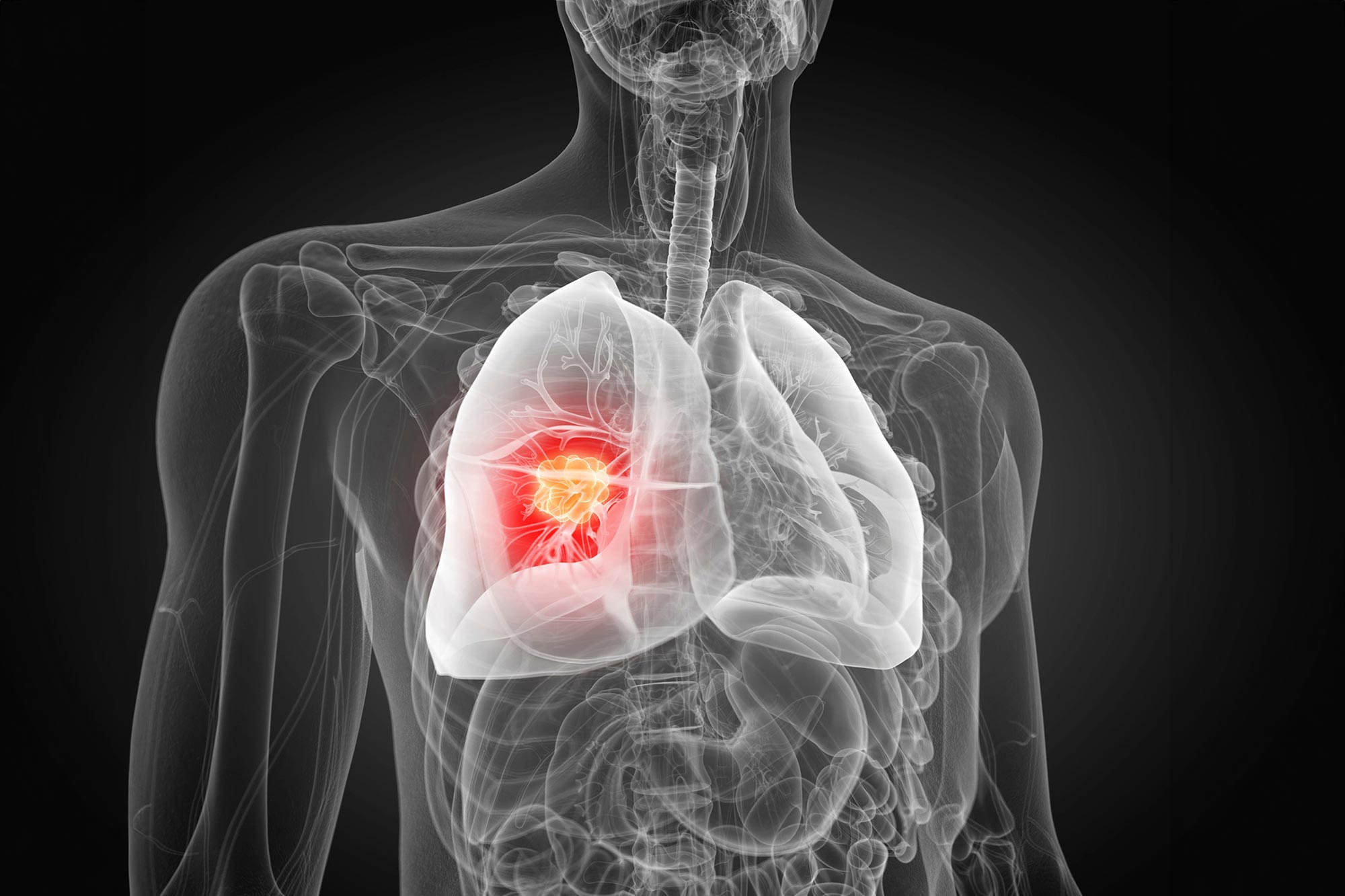
Researchers have discovered the reason why targeted treatment for non-small cell lung cancer fails to work for some patients, particularly those who have never smoked.
The study shows that lung cancer cells with two particular genetic mutations are more likely to double their genome, which helps them to withstand treatment and develop resistance to it. Conducted by researchers from UCL, the Francis Crick Institute, and AstraZeneca, the study is published today (June 13) in the journal Nature Communications.
Epidemiology and Genetic Factors of NSCLC
In the UK, lung cancer is the third most common type of cancer and the leading cause of cancer death. Around 85% of patients with lung cancer have non-small cell lung cancer (NSCLC), and this is the most common type found in patients who have never smoked. Considered separately, ‘never smoked’ lung cancer is the fifth most common cause of cancer death in the world.
The most common genetic mutation found in NSCLC is in the epidermal growth factor receptor gene (EGFR), which enables cancer cells to grow faster. It is found in about 10-15% of NSCLC cases in the UK, particularly in patients who have never smoked.
Challenges of Current Treatments
Survival rates vary depending on how advanced the cancer is, with only around a third of patients with Stage IV NSCLC and an EGFR mutation surviving for up to three years.
Lung cancer treatments that target this mutation, known as EGFR inhibitors, have been available for over 15 years. However, while some patients see their cancer tumors shrink with EGFR inhibitors, other patients, particularly those with an additional mutation in the p53 gene (which plays a role in tumor suppression), fail to respond and experience far worse survival rates. But scientists and clinicians have so far been unable to explain why this is the case.
Insights From New Research
To find the answer, the researchers re-analyzed data from trials of the newest EGFR inhibitor, Osimertinib, developed by AstraZeneca. They looked at baseline scans and first follow-up scans taken a few months into treatment for patients with either EGFR-only or with EGFR and p53 mutations.
The team compared every tumor on the scans, far more than were measured in the original trial. They found that for patients with just the EGFR mutations, all tumors got smaller in response to treatment. But for patients with both mutations, while some tumors had shrunk others had grown, providing evidence of rapid drug resistance. This pattern of response, when some but not all areas of a cancer are shrinking in response to a drug treatment within an individual patient, is known as a ‘mixed response’ and is a challenge for oncologists caring for patients with cancer.
Study Findings and Future Implications
To investigate why some tumors in these patients might be more prone to drug resistance, the team then studied a mouse model with both the EGFR and p53 mutation. They found that within resistant tumors in these mice, far more cancer cells had doubled their genome, giving them extra copies of all their chromosomes.
The researchers then treated lung cancer cells in the lab, some with just the single EGFR mutation and some with both mutations, with an EGFR inhibitor. They found that within five weeks of exposure to the drug, a significantly higher percentage of cells with both the double mutation and double genomes had multiplied into new drug-resistant cells.
Toward Better Diagnostic Tools
Professor Charles Swanton, from UCL Cancer Institute and the Francis Crick Institute, said: “We’ve shown why having a p53 mutation is associated with worse survival in patients with non-smoking related lung cancer, which is the combination of EGFR and p53 mutations enabling genome doubling. This increases the risk of drug-resistant cells developing through chromosomal instability.”
Non-small cell lung cancer patients are already tested for EGFR and p53 mutations, but there is currently no standard test to detect the presence of whole genome doubling. The researchers are already looking to develop a diagnostic test for clinical use.
Clinical Applications and Future Research
Dr. Crispin Hiley, from UCL Cancer Institute and a Consultant Clinical Oncologist at UCLH, said: “Once we can identify patients with both EGFR and p53 mutations whose tumours display whole genome doubling, we can then treat these patients in a more selective way. This might mean more intensive follow up, early radiotherapy or ablation to target resistant tumors, or early use of combinations of EGFR inhibitors, such as Osimertinib, with other drugs including chemotherapy.”
Reference: “Mixed responses to targeted therapy driven by chromosomal instability through p53 dysfunction and genome doubling” by Sebastijan Hobor, Maise Al Bakir, Crispin T. Hiley, Marcin Skrzypski, Alexander M. Frankell, Bjorn Bakker, Thomas B. K. Watkins, Aleksandra Markovets, Jonathan R. Dry, Andrew P. Brown, Jasper van der Aart, Hilda van den Bos, Diana Spierings, Dahmane Oukrif, Marco Novelli, Turja Chakrabarti, Adam H. Rabinowitz, Laila Ait Hassou, Saskia Litière, D. Lucas Kerr, Lisa Tan, Gavin Kelly, David A. Moore, Matthew J. Renshaw, Subramanian Venkatesan, William Hill, Ariana Huebner, Carlos Martínez-Ruiz, James R. M. Black, Wei Wu, Mihaela Angelova, Nicholas McGranahan, Julian Downward, Juliann Chmielecki, Carl Barrett, Kevin Litchfield, Su Kit Chew, Collin M. Blakely, Elza C. de Bruin, Floris Foijer, Karen H. Vousden, Trever G. Bivona, TRACERx consortium, Robert E. Hynds, Nnennaya Kanu, Simone Zaccaria, Eva Grönroos and Charles Swanton, 13 June 2024, Nature Communications.
DOI: 10.1038/s41467-024-47606-9
This work was supported by the Francis Crick Institute, which receives its core funding from Cancer Research UK, the UK Medical Research Council, and Wellcome.
Never miss a breakthrough: Join the SciTechDaily newsletter.
Follow us on Google and Google News.