
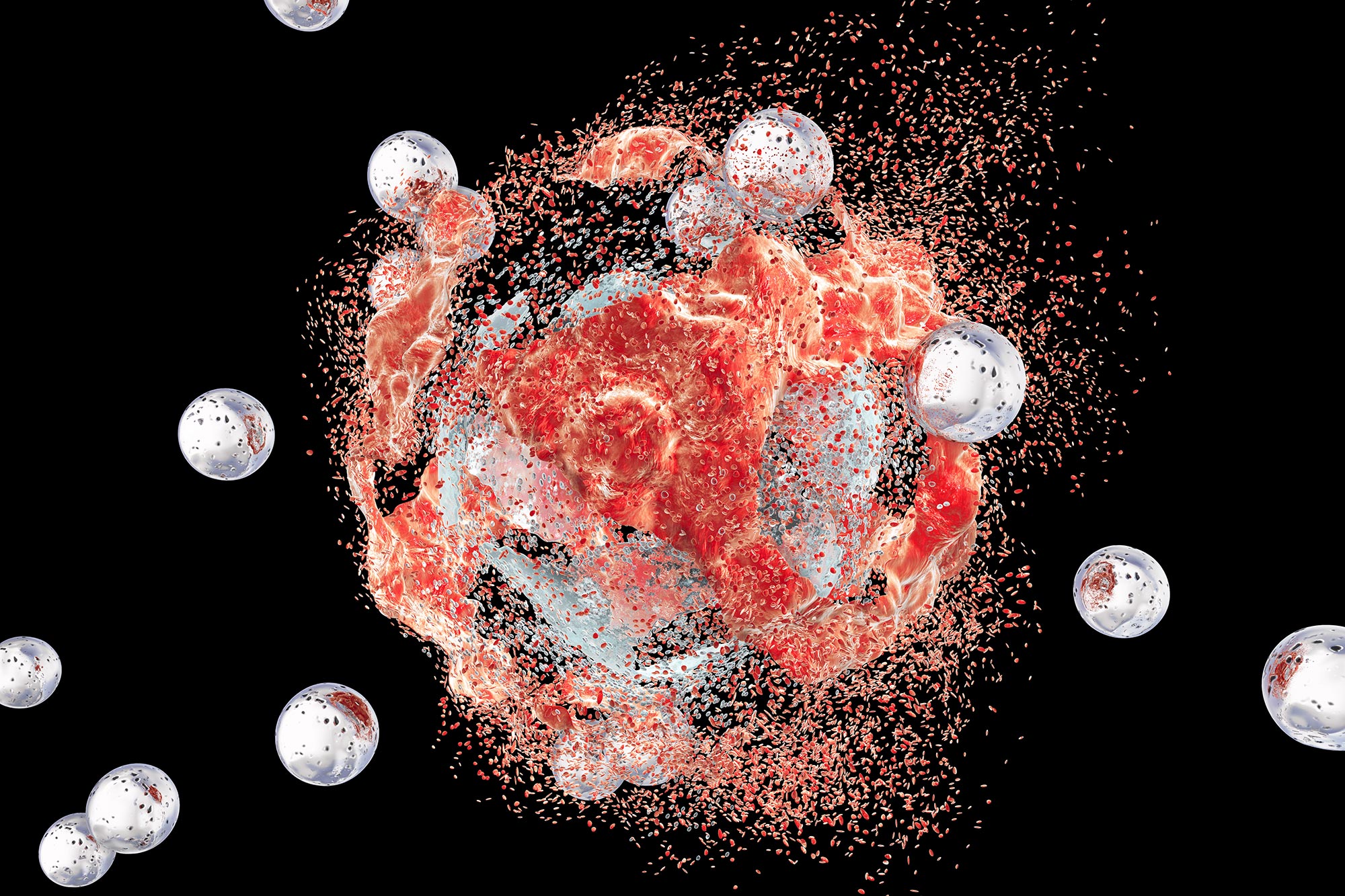
Australian scientists have uncovered a powerful new way to slow the growth of some of the most aggressive and hard-to-treat cancers—by targeting a little-known genetic process called minor splicing.
In a major breakthrough published in EMBO Reports, researchers found that blocking this tiny RNA process can dramatically reduce tumor growth in liver, lung, and stomach cancers. Even more promising, healthy cells are mostly unaffected.
The study, led by the WEHI medical research institute, used both animal models and human cancer cells to show that this strategy is especially effective against tumors driven by common cancer-causing mutations. The findings open a new path toward treatments that are more precise and potentially less harmful than conventional therapies.
At a Glance
- Blocking minor splicing sharply slows tumor growth in liver, lung, and stomach cancers.
- Especially effective against KRAS-driven cancers, which are among the most common and aggressive types.
- Works across multiple cancer types, showing strong potential as a new, broad-spectrum treatment strategy.
Minor Splicing: A Tiny but Crucial Cellular Process
Cells rely on a process called splicing to transform long strands of RNA into messenger RNA, the form needed to build proteins.
Most of this work, about 99.5 percent, is handled by what’s known as major splicing. But the remaining 0.05 percent of genes depend on a second, much smaller system called minor splicing. Although this process only affects around 700 of the 20,000 human genes, its role is essential.
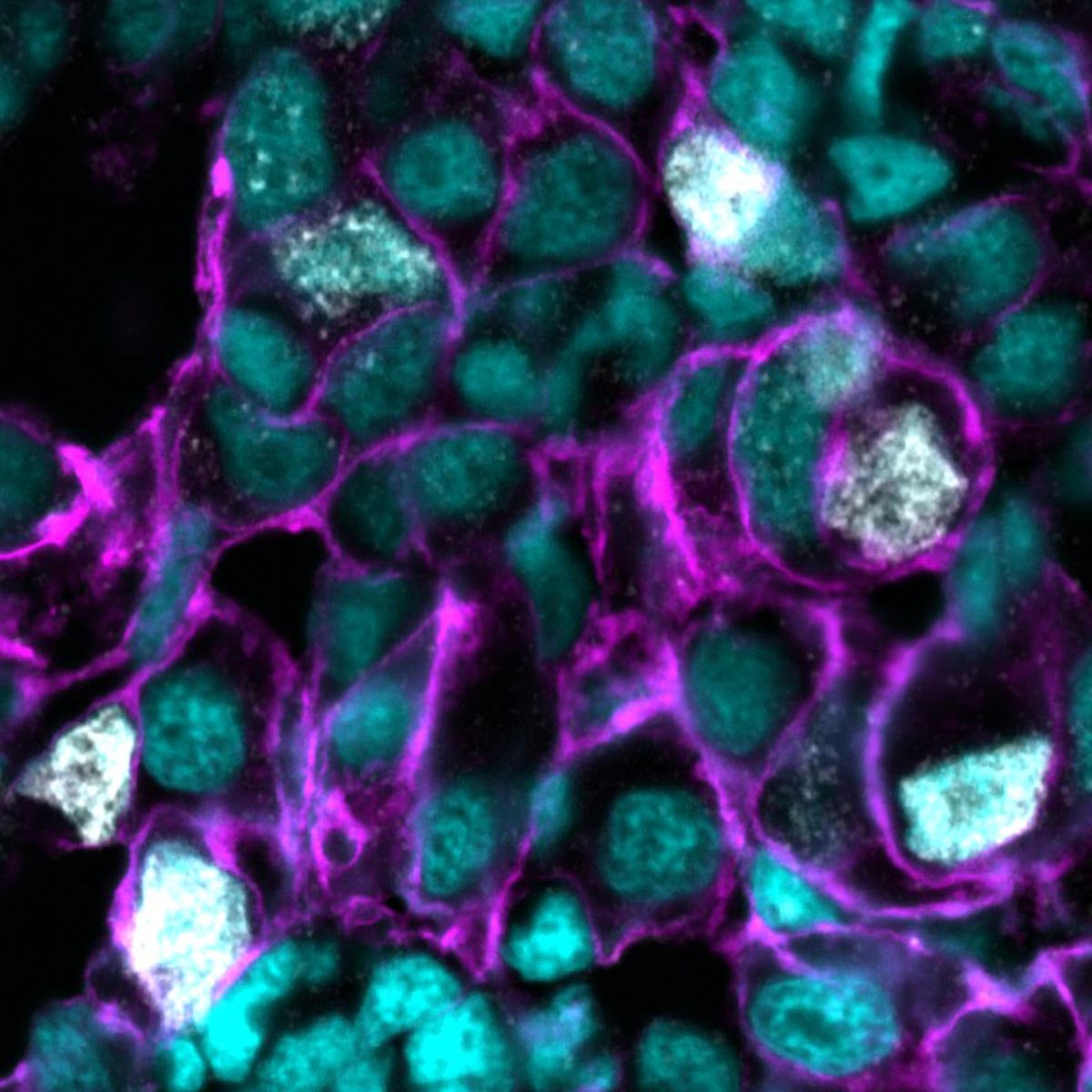
New research has found that when minor splicing is blocked, DNA damage builds up in cancer cells, triggering a natural tumor-suppressing response that leads those cells to die. What’s especially promising is that healthy cells appear to be largely unaffected by this disruption.
Cancer’s Dependency on a Genetic Weak Spot
Even though minor splicing influences only a small portion of genes, it plays a vital role in regulating those that control how cells grow and divide. This makes it a promising target for stopping cancer.
Many of the genes controlled by minor splicing are hijacked by cancers driven by KRAS mutations, which are among the most common genetic changes in solid tumors.
WEHI laboratory head Professor Joan Heath said scientists have long known that KRAS is central to many aggressive cancers, but have struggled to turn that knowledge into broadly effective treatments.
“KRAS mutations come in a variety of flavours, making them extremely hard to treat, so even with decades of scientific effor,t there has been only limited progress so far,” Prof Heath said.
A New Strategy for Treating Resistant Tumors
“But our approach is different. Instead of trying to target specific mutations that may only apply to a subset of patients, we’re disrupting a fundamental process that these fast-growing cancers rely on.
“This research offers a new way to tackle a problem that’s long resisted conventional approaches, with the potential to help a much wider group of patients.”
Using zebrafish and mouse models, as well as human lung cancer cells, the WEHI-led research is the first to demonstrate the impact of inhibiting minor splicing in in vivo models of solid tumors.

Powerful Results from Disrupting RNPC3
The study found reducing the activity of a protein encoded by the RNPC3 gene – an essential component of the minor splicing machinery – significantly slows tumor growth in liver, lung and stomach cancers.
“Just by halving the amount of this protein, we were able to significantly reduce tumor burden,” said Dr. Karen Doggett, first author of the study.
“That’s a striking result, especially given how resilient these cancers usually are.”
The study also revealed that disrupting minor splicing triggers the p53 tumor suppressor pathway, a critical defence mechanism in the body’s fight against cancer.
Exploiting the p53 Pathway for Selective Cancer Killing
Dubbed the ‘guardian of the genome’, the p53 protein responds to DNA damage by stalling cell division, initiating DNA repair or triggering cell death. This well-known pathway is frequently mutated or disabled in many cancers, allowing these cells to grow unchecked.
“Blocking minor splicing leads to DNA damage and activates this critical defensive response, which means cancers with a functional p53 pathway are likely to be especially vulnerable to this strategy,” Dr. Doggett said.
“This opens the door to treatments that could be both more effective and less toxic, offering hope for patients with aggressive cancers that currently have limited options.”
Hunting for Drugs That Block Minor Splicing
To search for compounds that might inhibit minor splicing, the research team turned to the National Drug Discovery Centre headquartered at WEHI, with a screen of over 270,000 drug-like molecules identifying several promising hits.
“We’ve validated minor splicing as a compelling therapeutic target – now the challenge is to develop a drug compound that can safely and effectively inhibit it,” Prof Heath said.
The research draws on WEHI’s deep expertise in gene discovery and cancer biology, showcasing the power of collaboration across multiple labs and technologies.
Broad Potential Across Multiple Cancer Types
“One of the strengths of this study is the breadth of models and tumor types we used,” Prof Heath said.
“We didn’t just test one kind of cancer or use one analysis method. This diversity in our approach gives us confidence that our strategy could be relevant across many forms of cancer, and not just in a narrow set of conditions.”
Reference: “Inhibition of the minor spliceosome restricts the growth of a broad spectrum of cancers” by Karen Doggett, Kimberly J Morgan, Anouk M Olthof, Stephen Mieruszynski, Benjamin B Williams, Alexandra L Garnham, Michael J G Milevskiy, Lachlan Whitehead, Janine Coates, Michael Buchert, Robert J J O’Donoghue, Thomas E Hall, Tracy L Putoczki, Matthias Ernst, Kate D Sutherland, Rahul N Kanadia and Joan K Heath, 7 July 2025, EMBO Reports.
DOI: 10.1038/s44319-025-00511-8
The research was supported by the National Health and Medical Research Council of Australia (NHMRC), Ludwig Institute for Cancer Research, and the National Institute of Neurological Disorders and Stroke.
Never miss a breakthrough: Join the SciTechDaily newsletter.
Follow us on Google and Google News.