
Close Menu
    Facebook X (Twitter) Instagram
    SciTechDaily
    • Biology
    • Chemistry
    • Earth
    • Health
    • Physics
    • Science
    • Space
    • Technology
    Facebook X (Twitter) Pinterest YouTube RSS
    SciTechDaily
    Home»Science»Mysterious Metal Depositions in Bronze Age Europe Were “The Most Ordinary Thing in the World”
    Science

    Mysterious Metal Depositions in Bronze Age Europe Were “The Most Ordinary Thing in the World”

    By Tom Janssen, Leiden UniversityJanuary 5, 2022No Comments3 Mins Read
    Facebook Twitter Pinterest Telegram LinkedIn WhatsApp Email Reddit
    Share
    Facebook Twitter LinkedIn Pinterest Telegram Email Reddit
    Bronze Age Metal Depositions
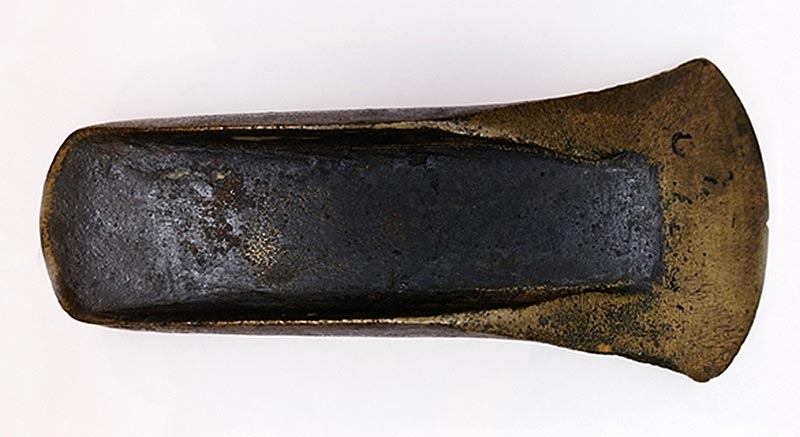
    In Bronze Age Europe, numerous bronze items like axes, swords, and jewels were intentionally deposited at specific sites in the landscape. Credit: Leiden University

    Bronze Age Europeans deliberately deposited valuable bronze objects in the landscape as a routine practice, according to Marieke Visser’s research. She compares this to modern practices like throwing coins into a fountain, suggesting a symbolic connection with the landscape and community networks.

    In Bronze Age Europe many bronze objects such as axes, swords, and jewels were deliberately left at specific spots in the landscape. PhD research by Leiden archaeologist Marieke Visser shows that these practices were expressions of people’s relationship with the world around them. “It was a completely normal practice, which we shouldn’t label as irrational.”

    Researchers have been trying since the 19th century to explain the motives behind selective metal depositions. But these are still shrouded in mystery. “Archaeologists have become stuck in very strict interpretation models,” says Visser. “Certain criteria were drawn up and boxes ticked per find. The assumption was that there were religious and non-religious depositions. I find this approach problematic because the data often don’t fit in these boxes. You can’t simply project the modern idea of religion onto the Bronze Age.”

    Clear Patterns

    From a modern perspective it is illogical to throw away valuable objects, but thousands of years ago this was “the most ordinary thing in the world,” says Visser. “It seems to have been something you just did.” Visser compares it with throwing coins in a fountain. “There you also deliberately throw away something of value at a certain place. You throw a coin in a fountain, not in the bin.”

    To gain a better understanding of these human actions, Visser focuses her research not on the motives, but rather on the actions themselves. “An incredible number of depositions have been found from throughout the Bronze Age. If you systematically research these, look at which object in which place, you discover the conventions. That shows that these objects weren’t lost by accident. There are clear patterns. This was deliberate.”

    “People wanted to express that their communities belonged to intraregional networks.”

    In the area where Visser did her research, metals did not occur naturally and were very valuable. “They had to be imported from far away. These trade networks were important. People wanted to express that their communities belonged to intraregional networks. Depositions were a way for people to relate to the world around them and their place within it.”

    Visser gives the example of a find in Denmark where one depot contained objects from Denmark, Central Europe, and Great Britain. “It was actually a map of the networks and contacts people had at the time that is represented in that depot.”

    National Borders

    Visser studied an area (Denmark, Northwest Germany, and the Northern Netherlands) that had never been studied before as a whole. “In the past studies were carried out within national borders. The finds in these three countries are very similar in nature. But they were looked at from different angles of interpretation, also from the country’s history. This means similarities are lost.”

    Visser has built up a database of finds dating from a long period and from a very wide area, which makes it easy to recognise similarities and patterns. “I hope that these data will also be used by archaeologists after me.”

    Never miss a breakthrough: Join the SciTechDaily newsletter.
    Follow us on Google and Google News.

    Anthropology Archaeology History Leiden University
    Share. Facebook Twitter Pinterest LinkedIn Email Reddit

    Related Articles

    Indiscriminate Killing Revealed in Genetic Analysis of Ancient Massacre

    Medieval Injuries: Inequality in Cambridge Was “Recorded on the Bones” of Its Residents

    When Good Governments Go Bad: History Shows That Societies Collapse When Leaders Undermine Social Contracts

    Defining Moment in Human Evolution: Turbulent Era Sparked Leap in Human Behavior, Technology 320,000 Years Ago

    Vast Stone Monuments Discovered in Saudi Arabia Were Constructed in 7,000 Years Ago

    Grape Seeds Reveal Collapse of Ancient Economy in the Grip of Plague and Climate Change

    29,000 Years of Aboriginal History: Uncovering New Layers of River Murray Occupation

    Hidden Murray River Rockshelter Reveals Aboriginal Art, Frontier Conflict and a Swastika

    How Ancient Poop Debunked Myth of Native American Lost Civilization

    Leave A Reply Cancel Reply

    • Facebook
    • Twitter
    • Pinterest
    • YouTube

    Don't Miss a Discovery

    Subscribe for the Latest in Science & Tech!

    Trending News

    AI Could Detect Early Signs of Alzheimer’s in Under a Minute – Far Before Traditional Tests

    What if Dark Matter Has Two Forms? Bold New Hypothesis Could Explain a Cosmic Mystery

    This Metal Melts in Your Hand – and Scientists Just Discovered Something Strange

    Beef vs. Chicken: Surprising Results From New Prediabetes Study

    Alzheimer’s Breakthrough: Scientists Discover Key Protein May Prevent Toxic Protein Clumps in the Brain

    Quantum Reality Gets Stranger: Physicists Put a Lump of Metal in Two Places at Once

    Scientists May Have Found the Key to Jupiter and Saturn’s Moon Mystery

    Scientists Uncover Brain Changes That Link Pain to Depression

    Follow SciTechDaily
    • Facebook
    • Twitter
    • YouTube
    • Pinterest
    • Newsletter
    • RSS
    SciTech News
    • Biology News
    • Chemistry News
    • Earth News
    • Health News
    • Physics News
    • Science News
    • Space News
    • Technology News
    Recent Posts
    • Students Found an Ancient Star That Shouldn’t Be in the Milky Way
    • Astronomers Solve 50-Year Mystery and Reveal Hidden Culprit Behind Strange X-Ray Emissions
    • One of the Universe’s Largest Stars May Be Getting Ready To Explode
    • Scientists Discover Enzyme That Could Supercharge Ozempic-Like Weight Loss Drugs
    • Asthma and Depression Don’t Mix the Way Scientists Expected
    Copyright © 1998 - 2026 SciTechDaily. All Rights Reserved.
    • Science News
    • About
    • Contact
    • Editorial Board
    • Privacy Policy
    • Terms of Use

    Type above and press Enter to search. Press Esc to cancel.