

Researchers using the James Webb Space Telescope have discovered three massive galaxies from the early universe, revealing them to be as massive as the Milky Way and forming stars with surprising efficiency.
This finding, which contradicts earlier models of slow stellar formation, suggests that star formation in the early universe was much more productive than previously believed.
Three Galactic “Red Monsters” Discovered in the Early Universe
An international research team, led by the University of Geneva (UNIGE), has discovered three ultra-massive galaxies, each nearly as large as the Milky Way, that existed within the first billion years after the Big Bang. This unexpected finding was made using the James Webb Space Telescope’s FRESCO program, which leverages the NIRCam/grism spectrograph to precisely measure the distances and stellar masses of galaxies.
The results suggest that star formation in the early Universe was significantly more efficient than previously believed, challenging established models of galaxy formation. These findings were published in Nature on November 13.
Challenge to Conventional Galaxy Formation Theories
According to the prevailing scientific model, galaxies gradually form within vast halos of dark matter, which draw in gas (atoms and molecules) to form gravitationally bound structures. Typically, only about 20% of this gas converts into stars within galaxies. However, the new observations from UNIGE’s team, utilizing NASA’s James Webb Space Telescope (JWST), question this view. The data indicate that massive galaxies in the early Universe may have formed stars at a much higher rate than later galaxies, growing far more rapidly than once thought.
“Our findings are reshaping our understanding of galaxy formation in the early Universe.” Dr. Mengyuan Xiao
Unveiling the “Red Monsters”
JWST’s unparalleled capabilities have allowed astronomers to systematically study galaxies in the very distant and early Universe, providing insights into massive and dust-obscured galaxies. By analyzing galaxies in the FRESCO survey, scientists found that most sources fit existing models.
However, they also found three surprisingly massive galaxies, with stellar masses comparable to today’s Milky Way. These are forming stars nearly twice as efficiently as their lower-mass counterparts and galaxies at later times. Due to their high dust content, which gives them a distinct red appearance in JWST images, they have been named the three “Red Monsters.”
“Our findings are reshaping our understanding of galaxy formation in the early Universe,” says Dr. Mengyuan Xiao, lead author of the new study and postdoctoral researcher in the Department of Astronomy at UNIGE Faculty of Science. “The massive properties of these ‘Red Monsters’ were hardly determined before JWST, as they are optically invisible due to dust attenuation,” says Dr. David Elbaz, director of research at CEA Paris-Saclay.
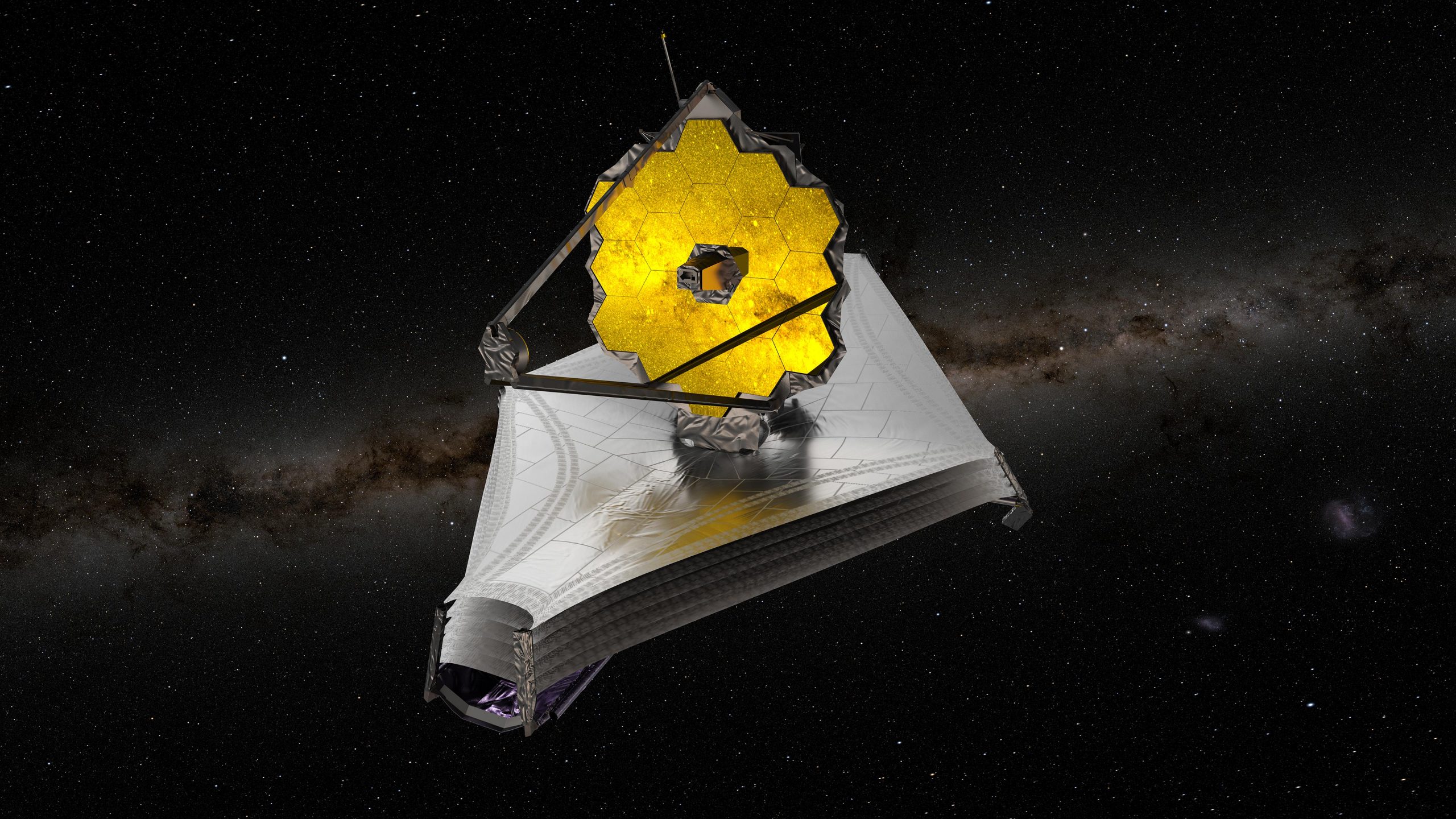
New Frontiers in Galactic Exploration
The international team has developed a new program with the JWST to systematically analyze a complete sample of emission-line galaxies within the first billion years of cosmic history. This approach enabled the team to achieve precise distance estimates and reliable stellar mass measurements for the full galaxy sample.
“Our findings highlight the remarkable power of NIRCam/grism spectroscopy,” explains Pascal Oesch, associate professor in the Department of Astronomy at the UNIGE Faculty of Science, principal investigator of this observation program. “The instrument on board the space telescope allows us to identify and study the growth of galaxies over time, and to obtain a clearer picture of how stellar mass accumulates over the course of cosmic history.”
“Too Many, Too Massive” Galaxies in the Early Universe
While these findings do not conflict with the standard cosmological model, they raise new questions for galaxy formation theories, specifically the issue of “too many, too massive” galaxies in the early Universe. Current models may need to consider unique processes that allowed certain early massive galaxies to achieve such efficient star formation and thus form very rapidly, very early in the Universe. Future observations with JWST and the Atacama Large Millimeter Array (ALMA) will provide further insights into these ultra-massive “Red Monsters” and reveal larger samples of such sources.
“These results indicate that galaxies in the early Universe could form stars with unexpected efficiency,” Dr. Mengyuan Xiao concludes. “As we study these galaxies in more depth, they will offer new insights into the conditions that shaped the Universe’s earliest epochs. The ‘Red Monsters’ are just the beginning of a new era in our exploration of the early Universe.”
Reference: “Accelerated formation of ultra-massive galaxies in the first billion years” by Mengyuan Xiao, Pascal A. Oesch, David Elbaz, Longji Bing, Erica J. Nelson, Andrea Weibel, Garth D. Illingworth, Pieter van Dokkum, Rohan P. Naidu, Emanuele Daddi, Rychard J. Bouwens, Jorryt Matthee, Stijn Wuyts, John Chisholm, Gabriel Brammer, Mark Dickinson, Benjamin Magnelli, Lucas Leroy, Daniel Schaerer, Thomas Herard-Demanche, Seunghwan Lim, Laia Barrufet, Ryan Endsley, Yoshinobu Fudamoto, Carlos Gómez-Guijarro, Rashmi Gottumukkala, Ivo Labbé, Dan Magee, Danilo Marchesini, Michael Maseda, Yuxiang Qin, Naveen A. Reddy, Alice Shapley, Irene Shivaei, Marko Shuntov, Mauro Stefanon, Katherine E. Whitaker and J. Stuart B. Wyithe, 13 November 2024, Nature.
DOI: 10.1038/s41586-024-08094-5
Never miss a breakthrough: Join the SciTechDaily newsletter.
Follow us on Google and Google News.
8 Comments
NOTE 2411160416Source1.Analyzed_[n]
1. What did you find? Red Monster
The mystery is Webb’s discovery of a huge early galaxy that shouldn’t exist. The three Red Monsters are the incredibly huge, dusty galaxies of the first billion years after the Big Bang.
Researchers using the James Webb Space Telescope have discovered [1] three massive galaxies in the early universe, revealing that they are star-forming remarkably efficiently and as huge as our own galaxy. The findings contradict previous models of slow star formation, suggesting that star formation in the early universe was much more productive than previously thought.
_[1]Those three galaxies were originally discovered among 672 galaxies, or there are four 1s in example 1. One(?) seems to be an oms4_-1 superposition that allows for faster msbase4.672 galaxy formation even if omitted. Uh-huh.
View 1.
1000
0001
0100
The location where 0000? 1 is omitted can be known if you know the concept of magicsum. This omission gives a basic micro constant, Monster 3, which is very fast in making msbase. Uh-huh.
2. How do you find it?
An international team of researchers led by the University of Geneva (UNIGE) has discovered three supergiant galaxies as large as the Milky Way that existed within a billion years after the Big Bang. This unexpected discovery was made using the FRESCO program of the James Webb Space Telescope, which uses the [2]NIRCam/grism spectrometer to accurately measure the galaxy’s distance and star mass.
_[2]If I use another FRESCO program, won’t it flip again??
3. Anyway, what did you get? What?
The results suggest that star formation in the early universe was much more efficient than previously believed, challenging existing models for galaxy formation.
3-1. Challenges to the existing theory of galaxy formation.
3-1-1. The existing theory is
According to the dominant scientific model, galaxies gradually form in the halo of huge dark matter, which attracts gases (atoms and molecules) to form a gravitationally coupled structure. Typically only about 20% of this gas is converted to stars within the galaxy.
3-1-1-1.1. However, this new perspective is questioned. The data indicate that a large galaxy in the early universe may have formed a star much faster than the later galaxy, [3] growing much faster than once thought. The findings are reconstructing our understanding of galaxy formation in the early universe. Data different from previous knowledge is provided by Webb.
_[3]It becomes very fast when the principle is applied. And once a puzzle is completed, it makes it successful repeatedly in the same path. This way, I was able to find msbase4.672graph in early 1980. It seems like Elon Musk is looking for a genius idea to cut the second Trump US budget, just as he succeeded in counterpropulsion rocket technology that dramatically reduces the cost of launching rockets. I don’t have a salary, but I think there will be a reward. The idea may require the qpeoms theory. Huh.
ㅡㅡㅡㅡㅡㅡㅡㅡㅡㅡㅡㅡ
Source 1
https://scitechdaily.com/mystery-of-the-red-monsters-webb-finds-massive-early-galaxies-that-shouldnt-exist/
Mystery of “Red Monster”: Webb discovers giant early galaxies that shouldn’t exist
As a side note they were able to test LCDM cosmology:
“In this case, we do not find any galaxy with [efficiency (ϵ) of converting baryons into stars] ϵ > 1, suggesting that our sample does not present significant tension with the Λ cold dark-matter model (ΛCDM, where Λ is the cosmological constant).”
That adds to the SPT microwave background radiation polarization survey, that has prefers LCDM, increases the tension with supernova higher Hubble rate estimates to over 5 sigma, and increases the rejection of an inverted neutrino mass hierarchy. https://phys.org/news/2024-11-latest-south-pole-telescope-bolster.html
“has prefers” := prefers.
…and God laughs.
Why is it that scientists are surprised when their models are wrong when they already know their models are approximations and science is still in it’s infancy? Most of the universe – the mass and energy is completely unknown to us, we can dimly detect that it’s there only because our models don’t work without them. You’d think that would be humbling, but the arrogance of scientists continues, unabated by discoveries that continue to shock them by showing how wrong they are.
In my experience, scientists involved in frontline work are not “surprised” or “shocked” when they obtain new insights – much rather they are excited and happy for having had the opportunity. And such opportunities are indeed humbling experiences. You will never find emotionalizing wording in the original scientific publications. This dimension is added only by the next tier of reporting aggregated information.
Unfortunately, such inappropriate / inaccurate wording is an often chosen mode of sensationalizing when reporting in popular science summaries. Everyone is fighting for attention and the methods are not always ok. Lots of phrases used do not reflect what actually goes on. Other examples are “… unveiling …” (as though some insight was purposely covered up beforehand), “… rewriting the textbook …” (speaks for itself as nonsense), and many similar wordings whose only objective is to raise eyebrows of non-experts, albeit for the wrong reasons.
Science is almost always an incremental effort involving many participants. Insights are gained in steps. Sometimes these steps involve improvements, corrections or extensions to understanding and models, which is a “normal” affair in science and which is the source of exitement and motivation for scientists themselves. Such insights must be shared with the rest of humanity since science is effectively an overall societal effort. Sadly, such sharing is sometimes phrased inappropriately in emotionalizing language.
These scientists keep finding more and more evidence there’s something massively wrong in their models, but they ING to the Big Bang Theory like it’s the only possibility there is. They also keep ignoring the dust/dimming problem with Red Shift that could incorrectly measure distances as if it doesn’t exist when it’s based on an incorrect assumption the universe is mostly empty across billions of lightyears. This alone could potentially account for the irregular shapes of large galaxies if they’re getting incorrect measurements at vast distances.
The universe could simply be much older than we thought. They never consider the background microwave radiation could have been caused by some other cosmological event other than the Big Bang (say a collision of the edge of our universe with another one like two bubbles bumping into one another, creating a Mini-bang that did not necessarily involve the entire universe as we can only see a limited part of it and there are vast stretches of space with reduced radiation they have a hard time explaining too).
I may not be the math wizard needed to disprove some of these things, but it’s not hard to see what kind of mindset is involved in these types of possible mistakes.
Look at Alzheimers and how much bleeping time they’ve wasted chasing amyloid plaques while people are suffering. They just REFUSE to admit they’re on the wrong track. You have 5 IQ people of 125 that all agree with each other on amyloid plaques and pat each other on the shoulder. You get one person with an IQ of 155 and he thinks it’s caused by viruses like shingles or herpes doing damage and the plaques are a result of the human immune system trying to stop the infection (half the people with a lot of plaques do not have Alzheimers either!) and he gets ZERO funding while more drugs to stop the plaques get all the money even though they don’t bleeping work! 25 years of suffering while they have a peeing contest!!!
All Climatologists that disagree about the causes or disaster predictions of climate change get FIRED. That is why they all now agree! Tow the political BS line or lose your job!
They said UFOs were crazy people’s overactive imaginations for decades and now the Pentagon has admitted those Tic-Tac UFO videos are authentic.
The problem with humans is the Bell Curve. Majority rules doesn’t work well when the vast majority of humans are dumb as wood. People like Elon Musk get called names like dip$hit for skipping (clearly autistic behavior; he was happy and felt like skipping. I relate. I used to flap my hands when I was happy. It generated endorphins! My my mom yelled at me. I looked retar&ed, she said. My IQ is 139! They’d call it Autism now. I could learn not to flap because it bothered others, but it’s sad we live in a civilization that’s intolerant of behavior that doesn’t match the “normal” (their word for behaving like the 100 IQ types that follow orders because they can’t think for themselves).
They don’t understand you; therefore, you’re the one who’s wrong. Been there, done that, got the lecture. Now go outside and smile at the universe. It’ll smile back.