
Close Menu
    Facebook X (Twitter) Instagram
    SciTechDaily
    • Biology
    • Chemistry
    • Earth
    • Health
    • Physics
    • Science
    • Space
    • Technology
    Facebook X (Twitter) Pinterest YouTube RSS
    SciTechDaily
    Home»Space»NASA Air Pollution Instrument Completes Satellite Integration
    Space

    NASA Air Pollution Instrument Completes Satellite Integration

    By NASAJuly 9, 2022No Comments2 Mins Read
    Facebook Twitter Pinterest Telegram LinkedIn WhatsApp Email Reddit
    Share
    Facebook Twitter LinkedIn Pinterest Telegram Email Reddit
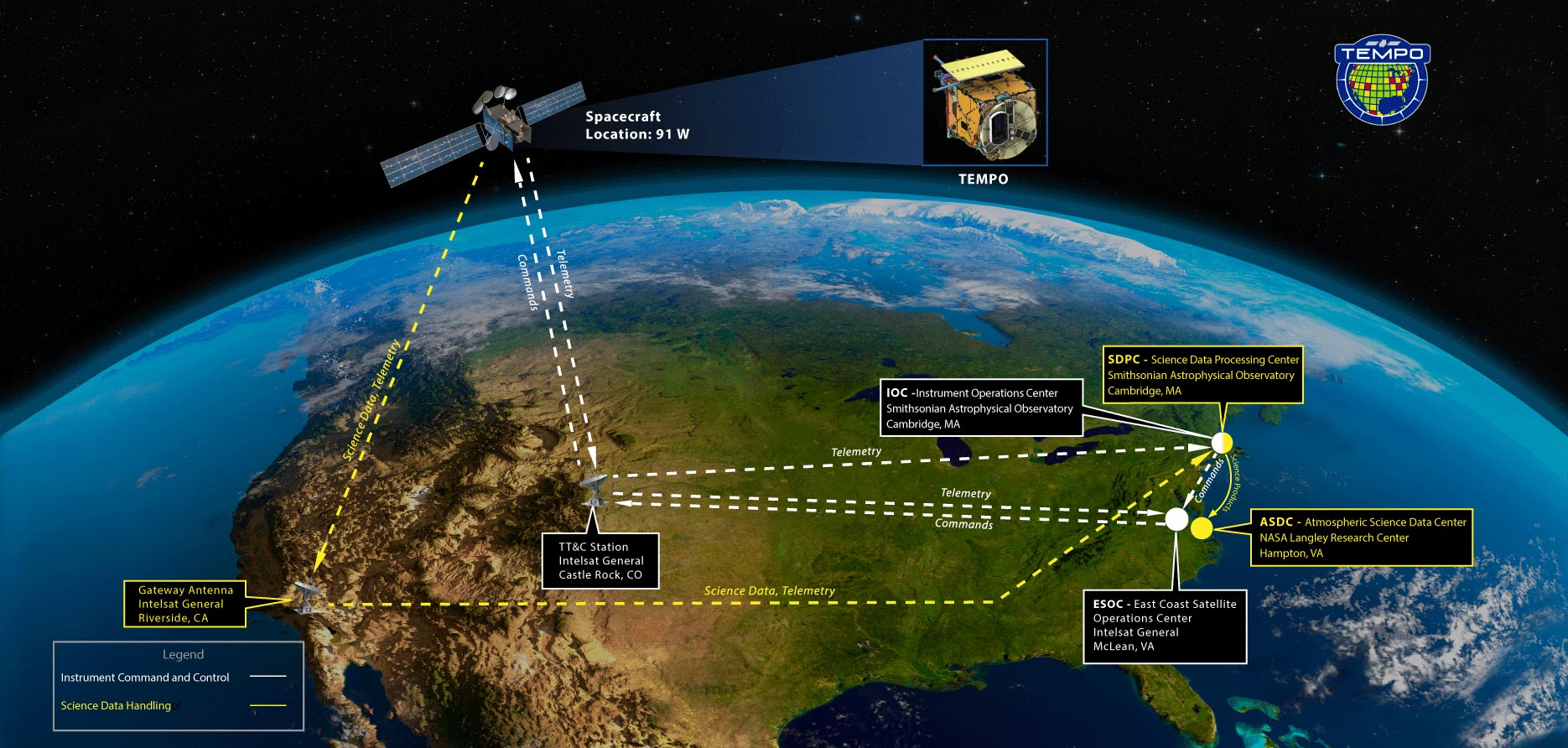
    TEMPO Operations Architecture
    TEMPO operations architecture. Credit: NASA

    Crews successfully completed the first fully integrated powered testing of the Tropospheric Emissions: Monitoring of Pollution (TEMPO) instrument on Intelsat IS40e on June 30. This testing at Maxar Technologies’ satellite manufacturing facility in Palo Alto, California, marks the completion of the TEMPO Instrument integration with the IS40e satellite.

    From its geostationary orbit (geosynchronous equatorial orbit) — a high Earth orbit that allows satellites to match Earth’s rotation — TEMPO will take hourly daytime air quality observations at an unprecedented spatial resolution. Its measurements will encompass the entire lower 48 United States, reaching from Puerto Rico and Mexico to northern Canada, and from the Atlantic to the Pacific.

    “The completion of TEMPO Instrument integration with its host satellite will allow Intelsat IS40e to transition into environmental testing, which brings us one significant and exciting step closer to launch,” said Kevin Daugherty, TEMPO project manager at NASA’s Langley Research Center in Hampton, Virginia.
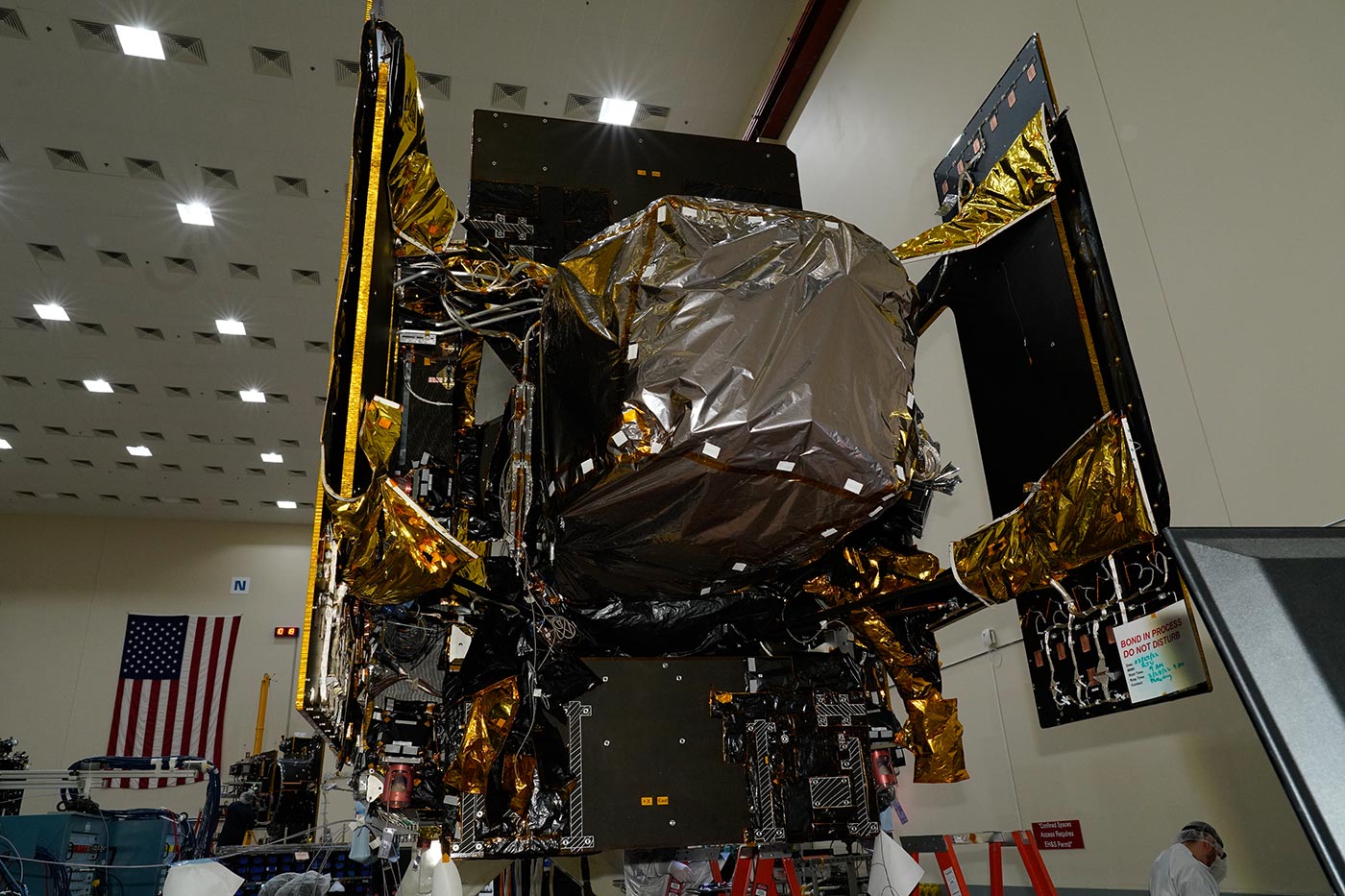
    TEMPO Testing
    Crews recently completed the first fully integrated powered testing of the Tropospheric Emissions: Monitoring of Pollution (TEMPO), instrument on Intelsat IS40e at Maxar Technologies’ satellite manufacturing facility in Palo Alto, California. Credit: Image courtesy of Maxar Technologies

    Environmental testing will include thermal vacuum, dynamics and electromagnetic interference/electromagnetic compatibility. These tests will ensure the spacecraft will successfully endure conditions it will be exposed to during launch and in the harsh environment of space. TEMPO is currently targeted to launch aboard a SpaceX Falcon-9 rocket in January 2023.

    From its geostationary orbit TEMPO will also form part of an air quality satellite “virtual constellation” that will track pollution around the Northern Hemisphere.

    Kelly Chance, of the Center for Astrophysics | Harvard & Smithsonian in Cambridge, Massachusetts, is the principal investigator for TEMPO. Ball Aerospace built the TEMPO instrument.

    Never miss a breakthrough: Join the SciTechDaily newsletter.
    Follow us on Google and Google News.

    NASA TEMPO
    Share. Facebook Twitter Pinterest LinkedIn Email Reddit

    Related Articles

    NASA’s Artemis II Cleared for Moon Flight As Orion Prepares for Critical Engine Burn

    NASA Artemis II Crew Scrambles To Fix Unexpected Toilet Failure in Space

    Liftoff! NASA’s Artemis II Launch Sends Astronauts Around the Moon for First Time in 50 Years

    Scientists Propose a Radical New Method To Find Alien Life

    NASA’s Psyche Could Reveal the Secret Inside This Metal World

    Mars Was Once Warm and Wet. NASA’s ESCAPADE Is About to Learn What Went Wrong

    NASA’s Curiosity Rover Discovers Spiderweb Ridges on Mars That Hint at Ancient Water

    NASA’s DART Impact Actually Changed an Asteroid System’s Orbit Around the Sun

    “At First, We Thought Something Was Wrong” – NASA DART Mission Reveals a Cosmic Snowball Fight

    Leave A Reply Cancel Reply

    • Facebook
    • Twitter
    • Pinterest
    • YouTube

    Don't Miss a Discovery

    Subscribe for the Latest in Science & Tech!

    Trending News

    Could Low Vitamin D Be Making Your Pain Worse?

    Scientists Discover Once-Weekly Workout That Melts Belly Fat Surprisingly Effectively

    Scientists Just Tested a Thruster Powerful Enough for Human Missions to Mars

    Doctors Say Your Ice Pack Might Be Making Injuries Worse

    Scientists Discover 43-Foot Sea Reptile Twice the Size of a Great White Shark

    Bees and Birds Are Drinking Alcohol From Flowers

    Scientists Discover How Obesity May Trigger Alzheimer’s Disease

    Scientists Confirm Alcohol Causes Widespread Health Damage

    Follow SciTechDaily
    • Facebook
    • Twitter
    • YouTube
    • Pinterest
    • Newsletter
    • RSS
    SciTech News
    • Biology News
    • Chemistry News
    • Earth News
    • Health News
    • Physics News
    • Science News
    • Space News
    • Technology News
    Recent Posts
    • A Tiny Bright-Blue Octopus Found in the Galápagos Is Completely New to Science
    • Scientists Stop Pancreatic Cancer Before It Starts in Landmark Preclinical Study
    • Scientists Discover Surprising Anti-Aging Power Hidden in Aged Garlic
    • Just Minutes of Intense Exercise Could Slash Disease Risk by 50%
    • People Who Stop Ozempic Often Don’t Gain the Weight Back
    Copyright © 1998 - 2026 SciTechDaily. All Rights Reserved.
    • Science News
    • About
    • Contact
    • Editorial Board
    • Privacy Policy
    • Terms of Use

    Type above and press Enter to search. Press Esc to cancel.