

Using NASA’s Lunar Reconnaissance Orbiter data, scientists have identified evidence of extensive caves beneath the Moon’s surface, akin to Earth’s lava tubes.
These findings, derived from a decade-old radar survey, hint at significant underground formations that could support future astronaut missions by providing natural shelter.
Discovery of Subsurface Lunar Caves
An international team of scientists using data from NASA’s LRO (Lunar Reconnaissance Orbiter) has discovered evidence of caves beneath the Moon’s surface.
In re-analyzing radar data collected by LRO’s Mini-RF (Miniature Radio-Frequency) instrument in 2010, the team found evidence of a cave extending more than 200 feet from the base of a pit. The pit is located 230 miles northeast of the first human landing site on the Moon in Mare Tranquillitatis. The full extent of the cave is unknown, but it could stretch for miles beneath the mare.

Scientists have suspected for decades that there are subsurface caves on the Moon, just like there are on Earth. Pits that may lead to caves were suggested in images from NASA’s lunar orbiters that mapped the Moon’s surface before NASA’s Apollo human landings. A pit was then confirmed in 2009 from images taken by JAXA’s (Japan Aerospace Exploration Agency) Kaguya orbiter, and many have since been found across the Moon through images and thermal measurements of the surface taken by LRO.
NASA Spacecraft Finds Pits on the Moon That Always Hover Around a Comfortable Temperature
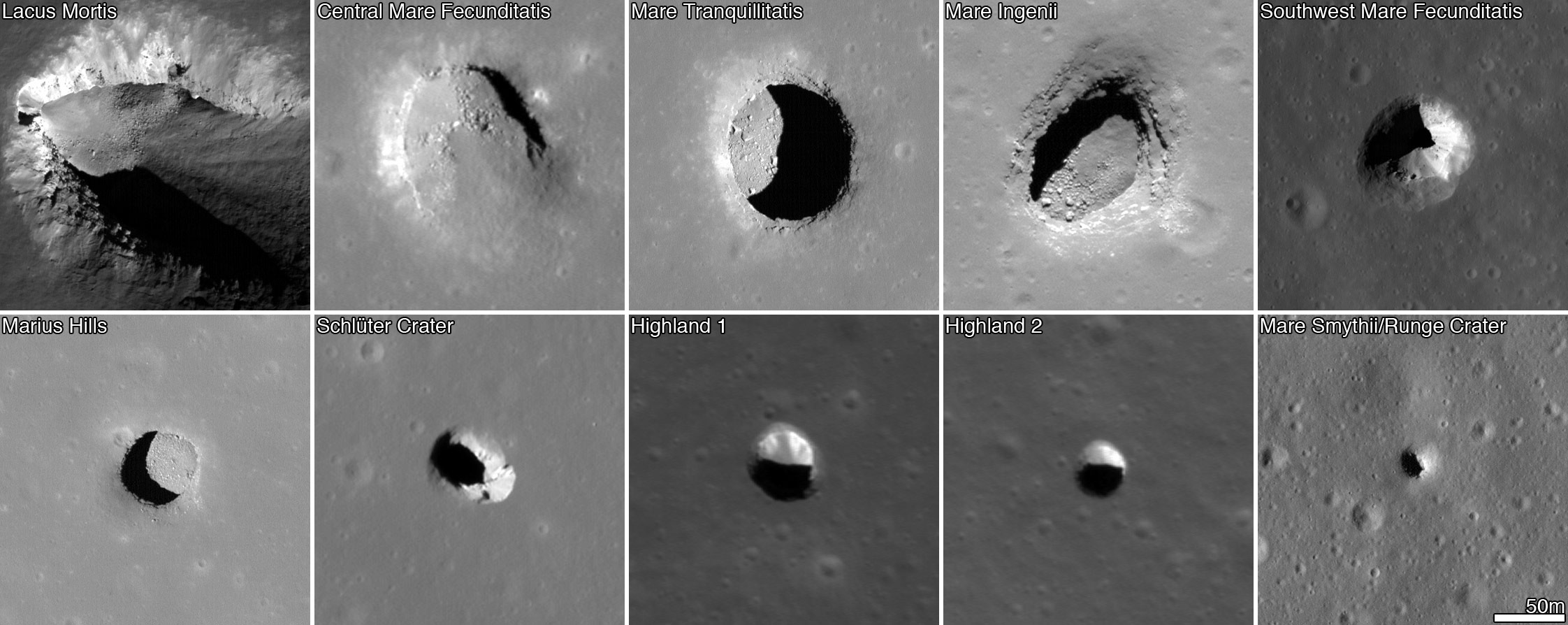
Lunar Pits: Potential Havens for Astronauts
“Now the analysis of the Mini-RF radar data tells us how far these caves might extend,” said Noah Petro, LRO project scientist based at NASA’s Goddard Space Flight Center in Greenbelt, Maryland.
LRO Reveals Lunar Pits Could Support Human Activity on the Lunar Surface
Like “lava tubes” found here on Earth, scientists suspect that lunar caves formed when molten lava flowed beneath a field of cooled lava, or a crust formed over a river of lava, leaving a long, hollow tunnel. If the ceiling of a solidified lava tube collapses, it opens a pit, like a skylight, that can lead into the rest of the cave-like tube.
For more on this discovery, see NASA’s Lunar Orbiter Reveals Hidden Tunnels on the Moon.
An intricate, winding network of channels could exist just below the surface of the Moon. These lava tubes, produced by underground flowing magma from ancient volcanoes, are shielded from solar radiation and may hold secrets to the history of our solar system. Credit: NASA 360
Reference: “Radar evidence of an accessible cave conduit on the Moon below the Mare Tranquillitatis pit” by Leonardo Carrer, Riccardo Pozzobon, Francesco Sauro, Davide Castelletti, Gerald Wesley Patterson and Lorenzo Bruzzone, 15 July 2024, Nature Astronomy.
DOI: 10.1038/s41550-024-02302-y
The Miniature Radio Frequency (Mini-RF) instrument and the Lunar Reconnaissance Orbiter (LRO) are integral components of NASA’s mission to enhance our understanding of the Moon. Mini-RF is operated by The Johns Hopkins Applied Physics Laboratory located in Laurel, Maryland. This instrument plays a crucial role in radar imaging and analysis, contributing significantly to lunar geological research.
The LRO is a comprehensive lunar exploration satellite managed by NASA’s Goddard Space Flight Center in Greenbelt, Maryland. This management is conducted under the oversight of the Science Mission Directorate at NASA Headquarters in Washington, D.C. Since its launch on June 18, 2009, LRO has been equipped with seven powerful instruments, gathering a vast array of data that has deeply enriched scientific knowledge of the Moon’s surface, resources, and potential for human habitation.
LRO’s mission has been pivotal in mapping the lunar surface in unprecedented detail, aiding in both scientific research and preparation for future human missions. NASA plans to leverage the insights gained from LRO and partners, both commercial and international, to expand human presence in space, exploring new frontiers and opening up fresh opportunities. The partnership aims to not only revisit the Moon but also to establish a sustainable human presence there, ushering in a new era of lunar exploration and utilization.
Never miss a breakthrough: Join the SciTechDaily newsletter.
Follow us on Google and Google News.
21 Comments
When is the government going to start tell us the truth! I understand now why other countries hate the US so much.
I reckon these have been created by the Mysterons. They probably got bored of hiding on Mars.
They should send Captain Scarlet to investigate,
These findings, from a decade-old radar survey, suggest significant underground formations that could offer natural shelter for future astronaut missions.
Discovery of Subsurface Lunar Caves
An international team of scientists has uncovered evidence of caves beneath the Moon’s surface using data from NASA’s Lunar Reconnaissance PrepaidGiftBalance
Orbiter (LRO). By re-analyzing radar data collected by the Mini-RF instrument in 2010, the team discovered a cave extending more than 200 feet from the base of a pit.
NASA’s recent discovery of extensive caves beneath the Moon’s surface, revealed through the Lunar Reconnaissance Orbiter, is thrilling for future astronaut missions. These natural shelters could not only support lunar research but also lead to exciting new ventures, perhaps like crafting gourmet pizzas in Papa’s Pizzeria but on the Moon! Imagine the culinary experiences awaiting in those mysterious lunar caves!
This information has been available for many years, I am not certain why this is being presented as a new finding
One of the most interesting aspects of this is that since the moon has 1/6th gravity of Earth, the lunar lava tubes will be about six times as high as those on Earth, which would allow for substantial habitat when sealed all of that fine, sharp lunar regolith is cleaned up
Awful article
Wow, this is amazing! The idea of extensive caves on the Moon, potentially like Earth’s lava tubes, is incredibly cool. The thought of them providing shelter for astronauts is fantastic. I’m excited about the possibilities for future lunar research!
Wow, this is fascinating! The idea of potential caves on the Moon, discovered using data from the Lunar Reconnaissance Orbiter, is super cool. Imagine these caves as possible shelters for astronauts – a great natural solution for future lunar missions!
Wow, this is fascinating! The idea of potential caves on the moon for astronaut shelters is incredibly cool. I’m also really interested in how they used the Lunar Reconnaissance Orbiter data to discover these underground formations. Definitely need to watch that video!
Wow, this is fascinating! The idea of potential caves on the Moon, discovered using data from the Lunar Reconnaissance Orbiter, is super cool. Imagine the shelter those could provide for astronauts! I’m really intrigued by the possibility of using them for future missions.
Wow, this is fascinating! The idea of potential caves on the Moon, discovered using old data, is amazing. I love the idea of using these formations for astronaut shelter and future research. It makes the Moon seem even more intriguing!
Wow, this is fascinating! The idea of undiscovered caves on the Moon, potentially like Earth’s lava tubes, is incredibly cool. Imagine using them as astronaut shelters! I’m really intrigued by the decade-old radar survey that led to this discovery.
Wow, this is fascinating! The idea of extensive cave networks on the Moon is mind-blowing. I’m particularly intrigued by the possibility of using these caves as natural shelters for future astronauts. What a game-changer for lunar research!
Wow, this is fascinating! The idea of underground caves on the Moon offering shelter for astronauts is incredible. I’m really intrigued by the mention of lava tubes and how they were identified using the Lunar Reconnaissance Orbiter data. So cool!
Wow, this is fascinating! The idea of extensive caves on the Moon is mind-blowing. I’m really intrigued by the possibility of using them as shelters for future astronauts. Lunar lava tubes sound like something out of a sci-fi movie!
Wow, this is fascinating! The idea of extensive caves on the Moon is mind-blowing. The potential for using them as shelters for astronauts is a game-changer for future lunar missions. I’m excited to see what further research reveals!
Wow, this is fascinating! The idea of extensive cave networks on the Moon, similar to Earth’s lava tubes, is incredibly cool. It’s especially valuable to know these could provide natural shelter for future astronaut missions. Great use of decade-old LRO data to uncover such significant formations!
Wow, this is fascinating! The discovery of a ‘mysterious network of caves’ on the Moon, akin to Earth’s lava tubes, is incredible. I especially found the potential for these extensive underground formations to provide natural shelter for future astronaut missions to be a game-changer. So exciting for lunar exploration!
This is so cool! The idea of extensive lunar caves akin to Earth’s lava tubes is fascinating. It’s great they could offer natural shelter for future astronauts and research. Finding this potential from a decade-old radar survey is also quite interesting. Imagine the possibilities for exploration!
This is so cool! The idea that the Moon has a network of caves similar to lava tubes on Earth is mind-blowing. It’s especially interesting that these could be used as natural shelters for future astronauts. Thanks for sharing this fascinating find from NASA!
This is so cool! The idea that the Moon might have extensive caves similar to Earth’s lava tubes is fascinating. Using them as natural shelters for future astronauts is such a practical and exciting possibility. It really makes a future lunar base seem more achievable.