
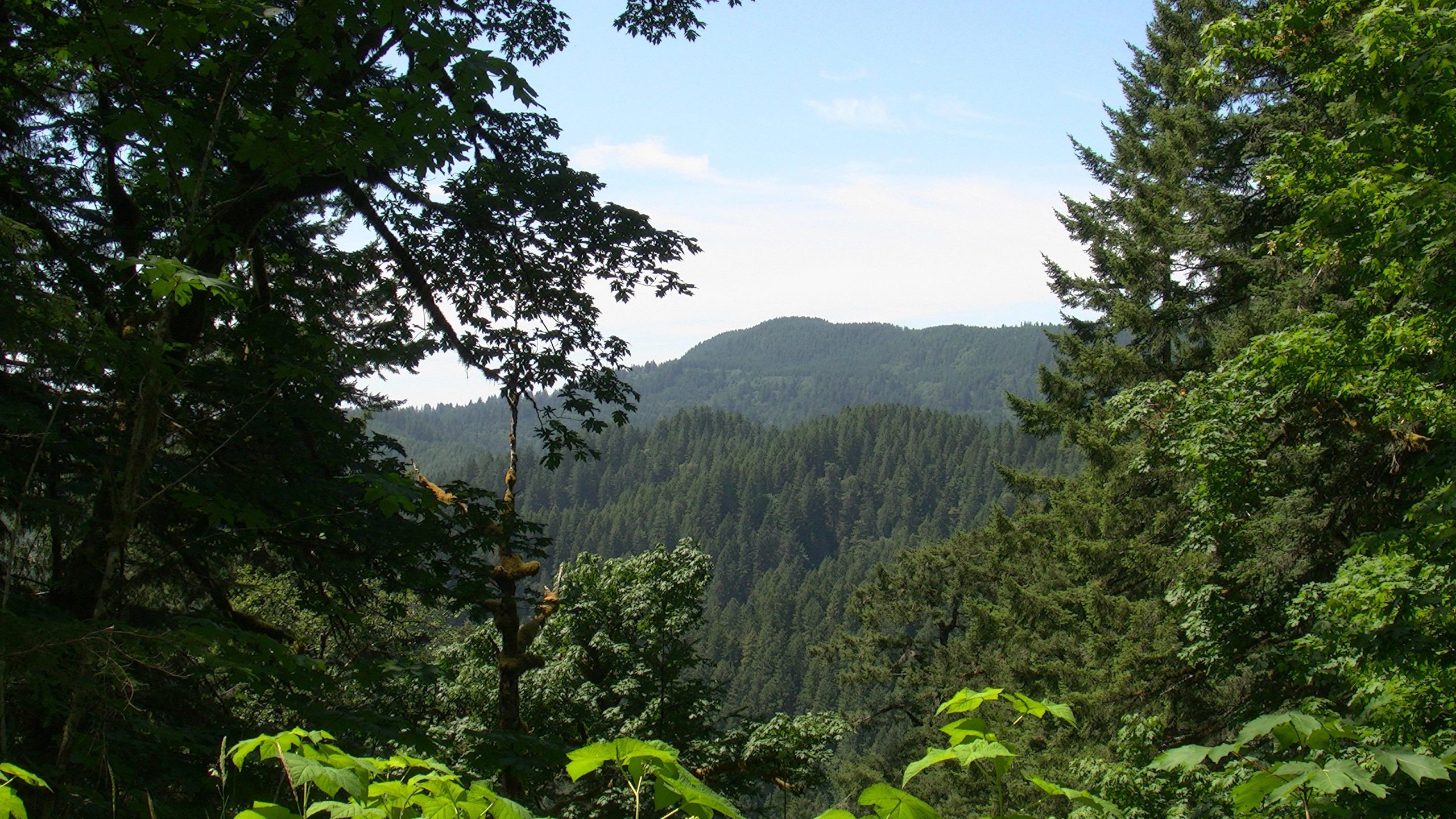
NASA’s GEDI mission has reached a major milestone with the release of its newest data product, which provides the first near-global estimate of aboveground forest biomass and the carbon it stores – filling a key gap in climate research.
The data enables research into how Earth’s forests are changing, what role they play in mitigating climate change, and the regional and global impacts of planting and cutting down trees.
With the new data product from GEDI, the Global Ecosystem Dynamics Investigation, ecosystem and climate researchers can quickly locate their regions of interest and study forest structure and carbon content with greater precision than in the past.
The new biomass product release comes as GEDI is within a one-year mission extension and represents the culmination of critical advancements in spaceborne lidar (a type of laser) research.
Counting Carbon in Earth’s Forests
GEDI is a high-resolution lidar instrument designed specifically to measure vegetation. From its vantage point aboard the International Space Station, GEDI rapidly bounces laser pulses off the trees and shrubs below to create detailed 3D maps of forests and land formations. The resulting data product, processed and gridded at a 1-km (0.39-square mile) resolution, allows researchers to study questions about forest ecosystems, animal habitats, carbon content, and climate change.
In its first three years in orbit, GEDI has captured billions of measurements between 51.6 degrees north and south latitudes (approximately the latitudes of London and the Falkland Islands, respectively).
The new data product combines data from GEDI with airborne and ground-based lidars to construct a global biomass map that reveals the amount of vegetation contained in an area.
“One big area of uncertainty is that we don’t know how much carbon is stored in the Earth’s forests,” said Ralph Dubayah, GEDI’s principal investigator and a professor of geographical sciences at the University of Maryland. Trees pull carbon from the atmosphere to fuel their growth. But scientists need to know how much carbon forests store so they can predict how much will be released by deforestation or wildfires. Approximately half of plant biomass is composed of carbon.
The Global Ecosystem Dynamics Investigation (GEDI) is a full-waveform lidar instrument that produces detailed observations of the three-dimensional structure of the Earth’s surface. GEDI precisely measures forest canopy height, canopy vertical structure, and surface elevation which enhances our understanding of global carbon and water cycle processes, biodiversity, and habitat. Credit: NASA
GEDI’s new product is not the first global biomass product, but it is the first to include well-described uncertainty for its estimates using advanced statistical models. This means GEDI’s biomass estimates also come with a sense of how accurate those measurements are. “That is, for each 1-kilometer estimate of average biomass, the mission knows how confident that estimate is,” Dubayah said.
The GEDI team has compared their results to forest inventories from the Food and Agriculture Organization of the United Nations and U.S. Forest Service Forest Inventory and Analysis data, and found that GEDI’s biomass estimates compared favorably to both. Cases where the GEDI product differed from the inventories highlight opportunities for further study and calibration.
“We can apply this framework to estimate biomass for entire countries – for example, many countries in the pan-tropical regions don’t have national forest inventories,” said John Armston, GEDI’s lead for validation and calibration and an associate research professor at the University of Maryland. “Now we have the means to provide an estimate of aboveground biomass with known uncertainty that can be used to support climate reporting and a broad range of applications.”
In many countries of the world, Armston said, there is big interest in using GEDI to examine forest and woodland definitions for carbon monitoring, but also to characterize ecosystem structure for biodiversity assessments.
“Resolving the structure of different forest and woodland ecosystems with much more certainty will benefit, not only carbon stock estimation, but also our understanding of their ecological condition and the impact of different land management practices,” he said.
Laying a Foundation for Future Missions
The team will continue to refine its biomass estimates going forward, and has extended the mission to January 2023, providing time to collect even more data. Additionally, the International Space Station recently adjusted its orbit from 262 miles (421 kilometers) above Earth’s surface to about 258 miles (417 kilometers). The lower orbit will allow GEDI to have more uniform coverage, meaning fewer gaps in its data from east to west, giving the mission a more complete view of Earth’s temperate and tropical forests.
“With GEDI being able to collect data all the way to 2023, we’re getting closer to collecting data at the same time as the next generation of lidar and radar missions – like NISAR (NASA-ISRO SAR, launching in 2024),” said Laura Duncanson, an assistant professor at the University of Maryland and one of GEDI’s research scientists. “Eventually, the best products won’t just be based on GEDI, but on a combination of satellite data sources.”
Never miss a breakthrough: Join the SciTechDaily newsletter.
Follow us on Google and Google News.