
Close Menu
    Facebook X (Twitter) Instagram
    SciTechDaily
    • Biology
    • Chemistry
    • Earth
    • Health
    • Physics
    • Science
    • Space
    • Technology
    Facebook X (Twitter) Pinterest YouTube RSS
    SciTechDaily
    Home»Earth»NASA IceBridge Flight Spots Massive Antarctic Iceberg B-46
    Earth

    NASA IceBridge Flight Spots Massive Antarctic Iceberg B-46

    By Kate Ramsayer and Patrick Lynch, NASA's Goddard Space Flight CenterNovember 11, 20183 Comments3 Mins Read
    Facebook Twitter Pinterest Telegram LinkedIn WhatsApp Email Reddit
    Share
    Facebook Twitter LinkedIn Pinterest Telegram Email Reddit
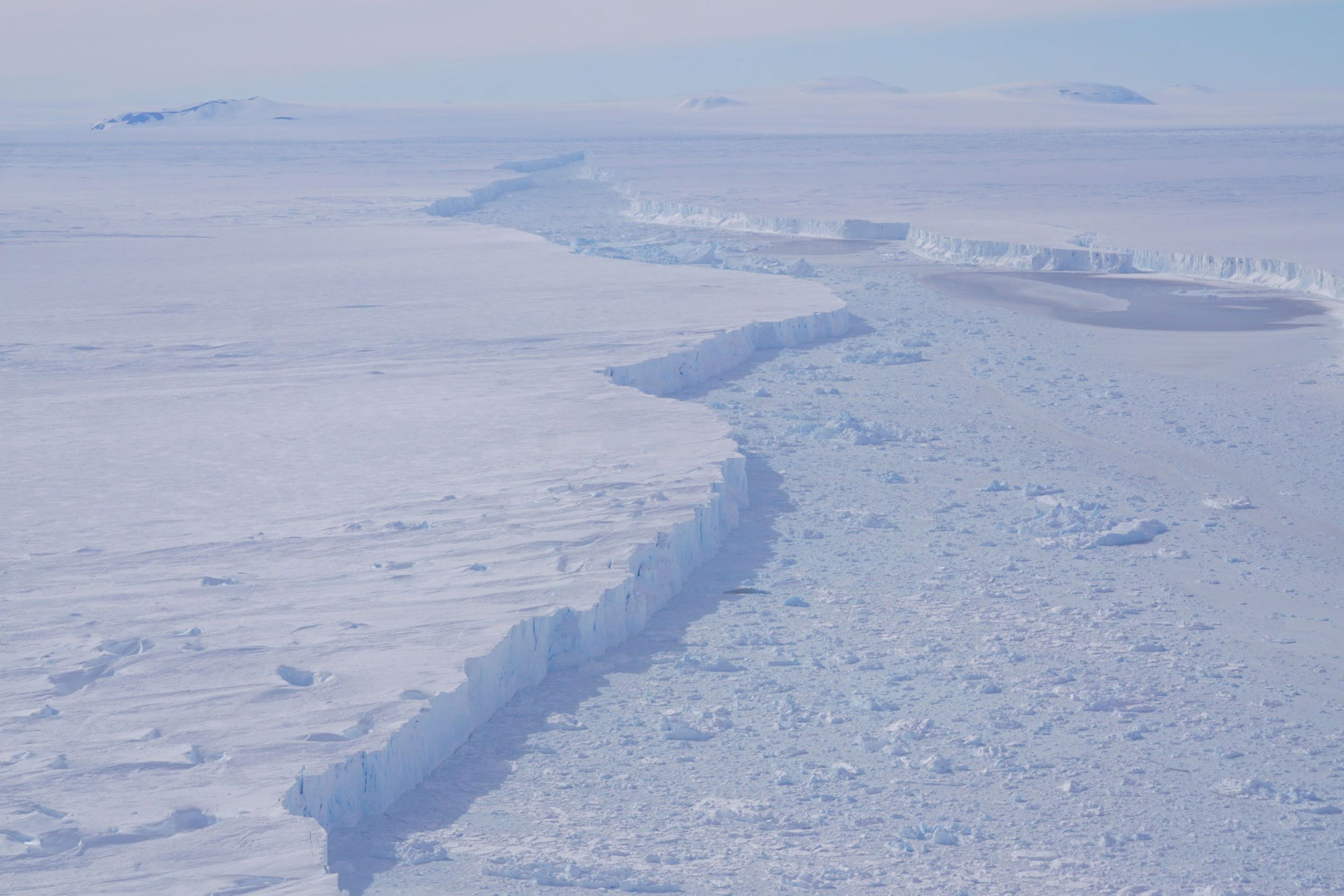
    Massive Antarctic Iceberg Spotted on NASA IceBridge Flight
    A close-up view of the rift separating Pine Island Glacier and iceberg B-46, as seen on an Operation IceBridge flight on November 7, 2018. Credit: NASA/ Brooke Medley

    NASA’s Operation IceBridge on Wednesday, November 7, flew over an iceberg that is three times the size of Manhattan – the first time anyone has laid eyes on the giant iceberg, dubbed B-46 by the U.S. National Ice Center, that broke off from Pine Island Glacier in late October.

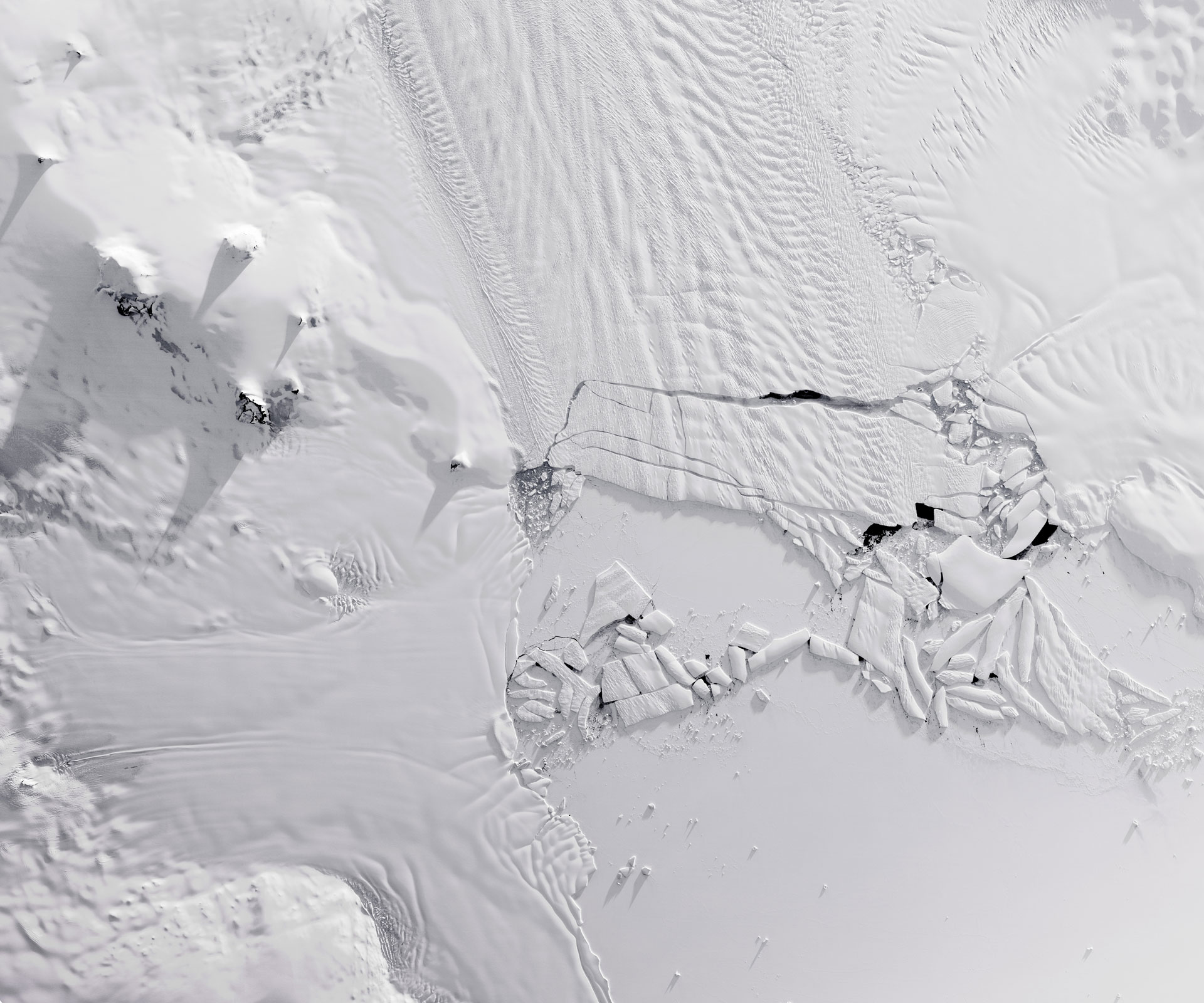
    Pine Island Glacier
    Pine Island Glacier in West Antarctica is known for dispensing icebergs into the Amundsen Sea, but the frequency of such events appears to be on the rise. The Operational Land Imager (OLI) on Landsat 8 acquired this image of the new iceberg on November 7, 2018.
    Massive Antarctic Iceberg
    For comparison, the second OLI image shows the same area on September 17, 2018, before a rift quickly propagated across the glacier and spawned the bergs.

    Wednesday’s flight plan took the IceBridge team over Pine Island Glacier as part of the long-running campaign to collect year-over-year measurements of sea ice, glaciers, and critical regions of Earth’s ice sheets. As NASA’s DC-8 flew its pre-determined flight pattern, the new iceberg that calved in late October also came into view.

    On October 29, the National Ice Center, which tracks icebergs for navigation purposes, estimated the surface area of B-46 at 66 square nautical miles, though satellite imagery and the IceBridge flight showed that the main iceberg is already beginning to break up.

    Ice shelves, floating glacial ice areas that surround much of Antarctica, calve icebergs as part of the natural process of ice flowing out to sea. But scientists are also watching closely to see if the frequency of calving events is changing over time. In late 2016, IceBridge saw a crack beginning across the ~ approximately 22-mile-wide (35-kilometer-wide) trunk of Pine Island Glacier. It took a year for the rift to fully form and the iceberg named B-44 to break away in September 2017. The crack that would become B-46 was first noticed in late September 2018 and the iceberg broke away about a month later. Pine Island has now calved major icebergs in 2013, 2015, 2017, and 2018. Prior to that stretch, the glacier was experiencing major calving events about every six years.

    Pine Island and nearby Thwaites Glacier alone are contributing about 1 millimeter per decade to global sea level rise, as their flow of ice to the sea has accelerated in recent years, according to NASA research.
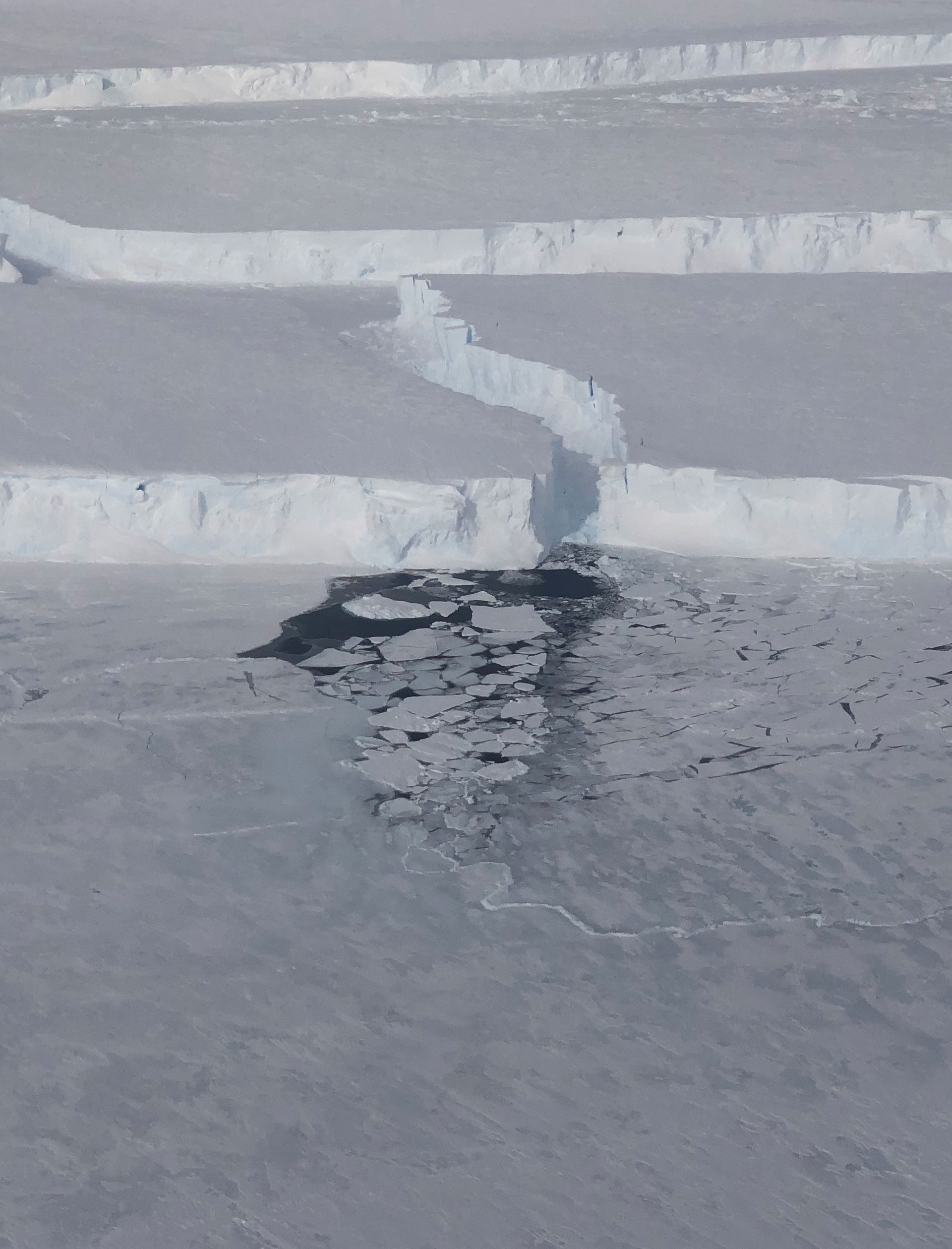
    Rift Created in B 46 Iceberg
    New sea ice formed in a rift created when the B-46 iceberg broke off from Pine Island Glacier. Credit: NASA/Kate Ramsayer

    Never miss a breakthrough: Join the SciTechDaily newsletter.
    Follow us on Google and Google News.

    Earth Science Iceberg Operation IceBridge
    Share. Facebook Twitter Pinterest LinkedIn Email Reddit

    Related Articles

    New Discovery Signals Rapid Decay in Antarctic Glacier

    NASA Discovers a Massive Crater Under Greenland Ice

    Operation IceBridge Spots 2 Strangely Shaped Icebergs

    Image of an Icy Heart for Valentine’s Day

    NASA Image of an Iceberg from Pine Island Glacier

    Operation IceBridge Spots the Bluest of Ice

    Delaware Sized Iceberg Splits Off From Antarctica’s Larsen C Ice Shelf

    Tropical Oceans Role in Climate Change

    Defects in Mantle Rocks Slow Down the Passage of Seismic Waves

    3 Comments

    1. David Jackson on November 12, 2018 8:58 am

      It appears to me that you have the OLI images reversed – before and after.

      Reply
    2. Jongo on January 27, 2020 2:34 pm

      Floating ice shelves cannot add anything to the water level on which they are floating, no matter how much breaks away. The only ice that can affect sea levels is that breaking off glaciers still on land.

      Reply
    3. kamir bouchareb st on November 15, 2020 11:26 pm

      very good

      Reply
    Leave A Reply Cancel Reply

    • Facebook
    • Twitter
    • Pinterest
    • YouTube

    Don't Miss a Discovery

    Subscribe for the Latest in Science & Tech!

    Trending News

    AI Could Detect Early Signs of Alzheimer’s in Under a Minute – Far Before Traditional Tests

    What if Dark Matter Has Two Forms? Bold New Hypothesis Could Explain a Cosmic Mystery

    This Metal Melts in Your Hand – and Scientists Just Discovered Something Strange

    Beef vs. Chicken: Surprising Results From New Prediabetes Study

    Alzheimer’s Breakthrough: Scientists Discover Key Protein May Prevent Toxic Protein Clumps in the Brain

    Quantum Reality Gets Stranger: Physicists Put a Lump of Metal in Two Places at Once

    Scientists May Have Found the Key to Jupiter and Saturn’s Moon Mystery

    Scientists Uncover Brain Changes That Link Pain to Depression

    Follow SciTechDaily
    • Facebook
    • Twitter
    • YouTube
    • Pinterest
    • Newsletter
    • RSS
    SciTech News
    • Biology News
    • Chemistry News
    • Earth News
    • Health News
    • Physics News
    • Science News
    • Space News
    • Technology News
    Recent Posts
    • A Medieval Japanese Diary Just Helped Scientists Detect a Dangerous Solar Event
    • Humans Returned to Britain 500 Years Earlier Than Scientists Thought
    • 250-Million-Year-Old Egg Solves One of Evolution’s Biggest Mysteries
    • Living With Roommates Might Be Changing Your Gut Microbiome Without You Knowing
    • Simple and Cheap Blood Test Could Detect Cancer and Other Diseases Before Symptoms Appear
    Copyright © 1998 - 2026 SciTechDaily. All Rights Reserved.
    • Science News
    • About
    • Contact
    • Editorial Board
    • Privacy Policy
    • Terms of Use

    Type above and press Enter to search. Press Esc to cancel.