
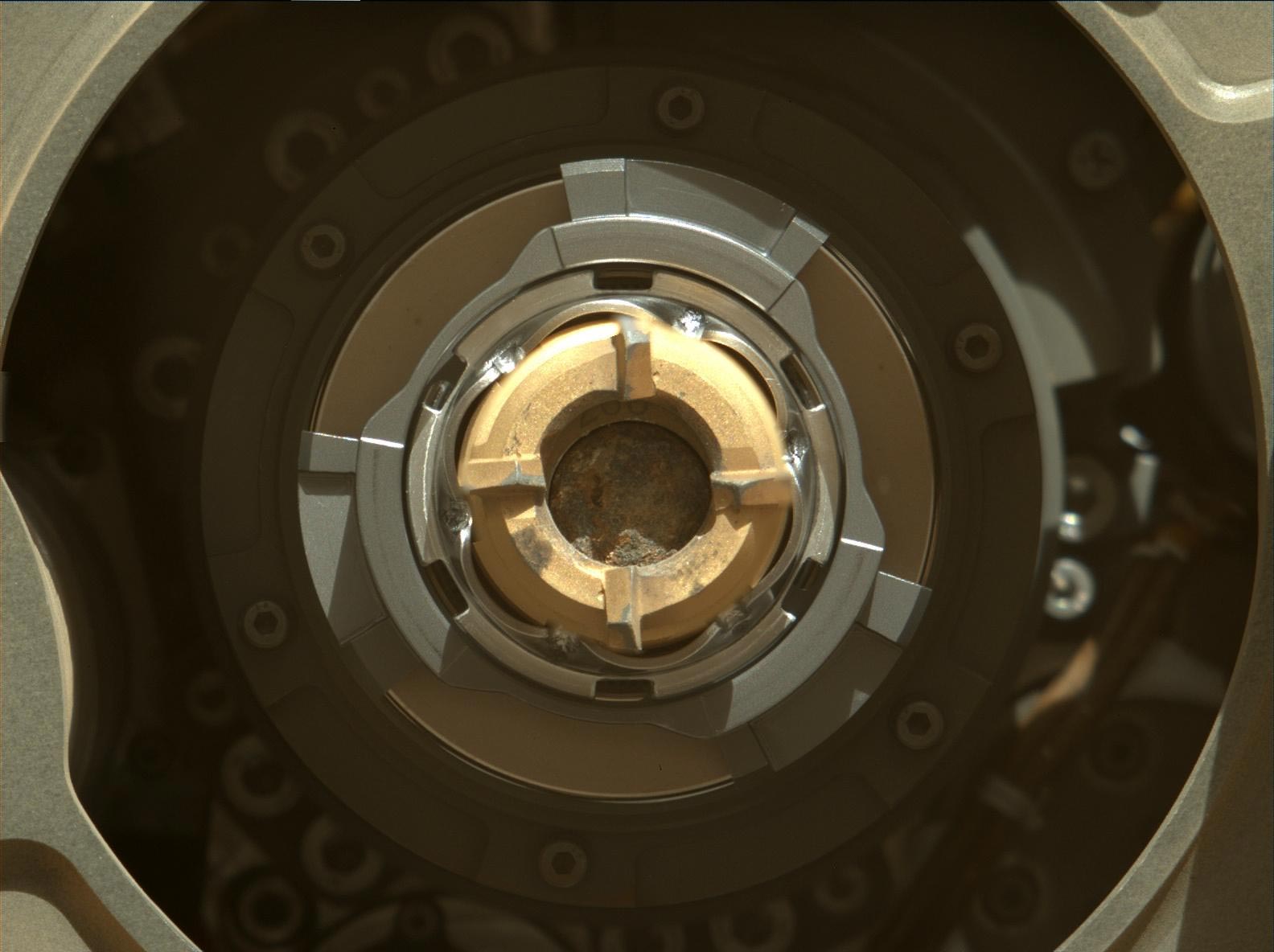
Mars Perseverance Rover Gathers Rock Sample
This Mastcam-Z image shows a sample of Mars rock inside the sample tube on September 1, 2021 – the 190th sol, or Martian day, of the mission. The image was taken after coring concluded but prior to an operation that vibrates the drill bit and tube to clear the tube’s lip of any residual material.
The bronze-colored outer-ring is the coring bit. The lighter-colored inner-ring is the open end of the sample tube, and inside is a rock core sample slightly thicker than a pencil. A portion of the tube’s serial number – 266 – can be seen on the top side of the tube’s wall.
Additional images taken after the arm completed sample acquisition were inconclusive due to poor sunlight conditions. Another round of images with better lighting will be taken before the sample processing continues.
Obtaining additional imagery prior to proceeding with the sealing and storing of Mars rock sample is an extra step the team opted to include based on its experience with the rover’s sampling attempt on August 5. Although the Perseverance mission team is confident that the sample is in the tube, images in optimal lighting conditions will confirm its presence.
A key objective for Perseverance’s mission on Mars is astrobiology, including the search for signs of ancient microbial life. The rover will characterize the planet’s geology and past climate, pave the way for human exploration of the Red Planet, and be the first mission to collect and cache Martian rock and regolith (broken rock and dust).
Subsequent NASA missions, in cooperation with the European Space Agency, would send spacecraft to Mars to collect these sealed samples from the surface and return them to Earth for in-depth analysis.
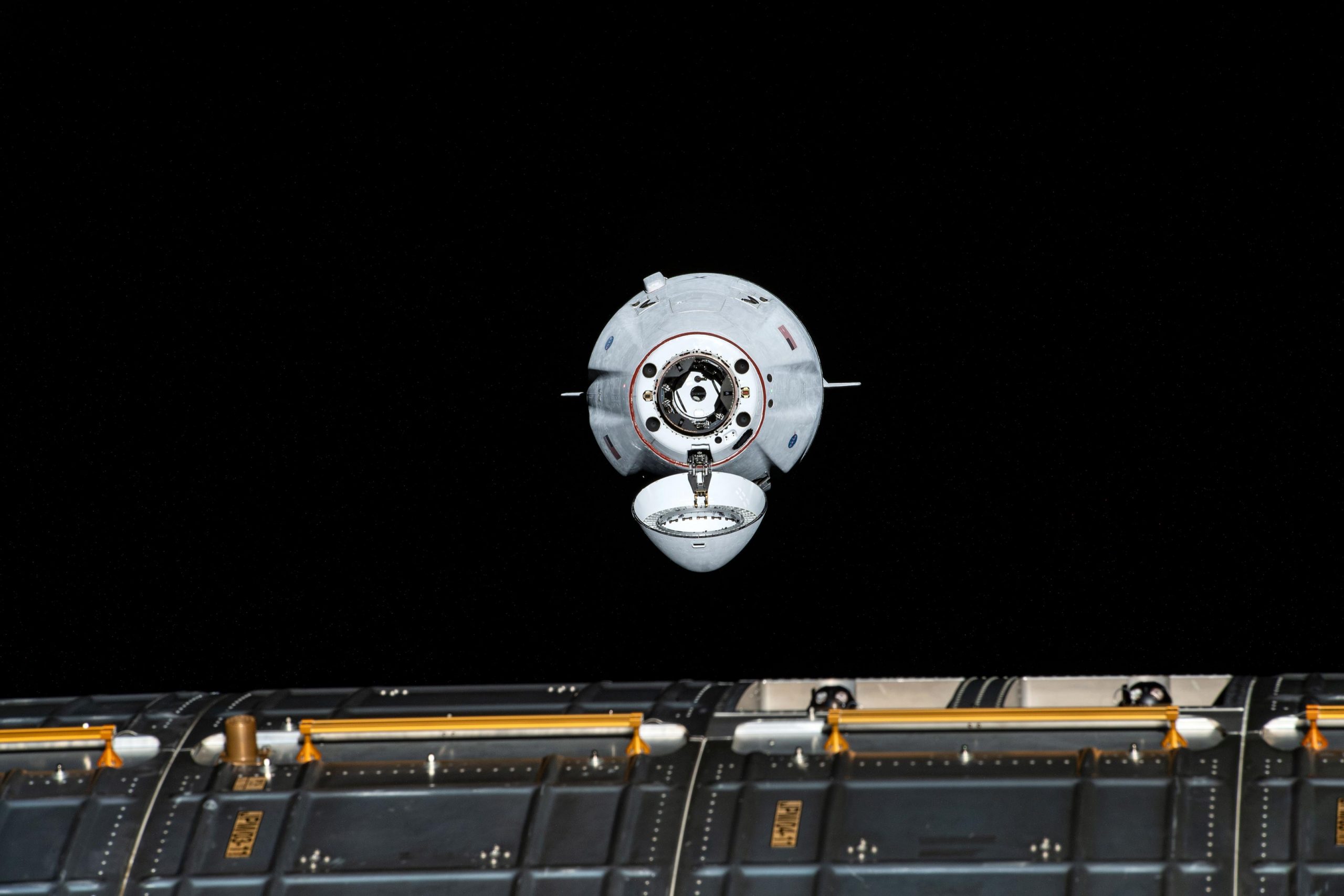
On Approach to the Space Station
In this image from August 30, 2021, the SpaceX Cargo Dragon vehicle approaches the International Space Station for an autonomous docking to the Harmony module’s forward international docking adapter.

Johanna Lucht: Engineer Extraordinaire
According to Dictionary.com, extraordinaire means: outstanding or remarkable in a particular capacity – an apt description of engineer Johanna Lucht.
“My ‘extraordinary’ is finding efficient ways to improve how we gather and evaluate aviation data,” said Lucht.
Lucht, who was born deaf, never thought she would work for NASA. Born in Germany, where resources for deaf people were limited at the time, Johanna developed an understanding of mathematics before she acquired language. It was that passion for math and the ability to face challenges that led to her eventual study of computer science, and paved her road to NASA. After an internship at NASA’s Armstrong Flight Research Center, she was offered a position.
In 2017, Johanna became the first deaf engineer to carry out an active role in a NASA control center during a crewed research flight. As the systems II engineer for the flight, she was responsible for observing and evaluating data related to the aircraft’s GPS and navigation systems, as well as analyzing inflight data, to monitor how well the aircraft was performing in flight. She worked with an interpreter who conveyed communications to her—and she excelled in the role. She believes the challenges she faced growing up as a deaf person in the hearing world in part prepared her for her role.

Hurricane Ida As a Category 4 Storm
Taken on August 29, 2021, this image shows Hurricane Ida as a category 4 storm nearing the southeast Louisiana coast from the International Space Station. In the foreground, is the Northrop Grumman Cygnus space freighter attached to the station’s Unity module.
Since this image was taken, Ida has been downgraded to a tropical depression.
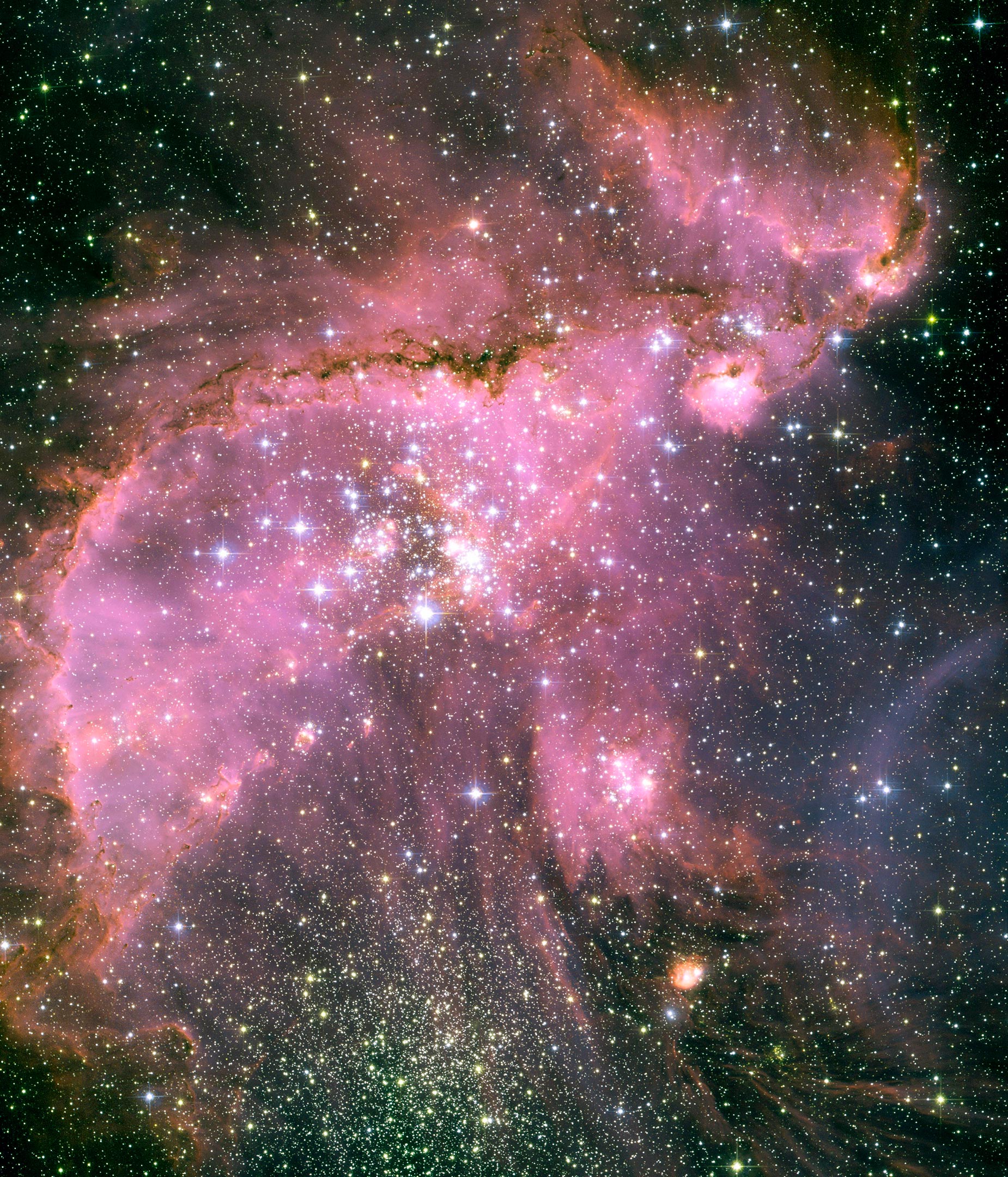
Brilliant, Hot, Young Stars Shine in the Small Magellanic Cloud
The Small Magellanic Cloud (SMC), located 210,000 light-years away, is one of the most dynamic and intricately detailed star-forming regions in space. At the center of the region is a brilliant star cluster called NGC 346. A dramatic structure of arched, ragged filaments with a distinct ridge surrounds the cluster.
A torrent of radiation from the cluster’s hot stars eats into denser areas creating a fantasy sculpture of dust and gas. The dark, intricately beaded edge of the ridge, seen in silhouette by Hubble, is particularly dramatic. It contains several small dust globules that point back towards the central cluster, like windsocks caught in a gale.
Energetic outflows and radiation from hot young stars are eroding the dense outer portions of the star-forming region, formally known as N66, exposing new stellar nurseries. The diffuse fringes of the nebula prevent the energetic outflows from streaming directly away from the cluster, leaving instead a trail of filaments marking the swirling path of the outflows.
The NGC 346 cluster at the center of this image from the Hubble Space Telescope contains dozens of hot, blue, high-mass stars, more than half of the known high-mass stars in the entire SMC galaxy. A myriad of smaller, compact clusters is also visible throughout the region.
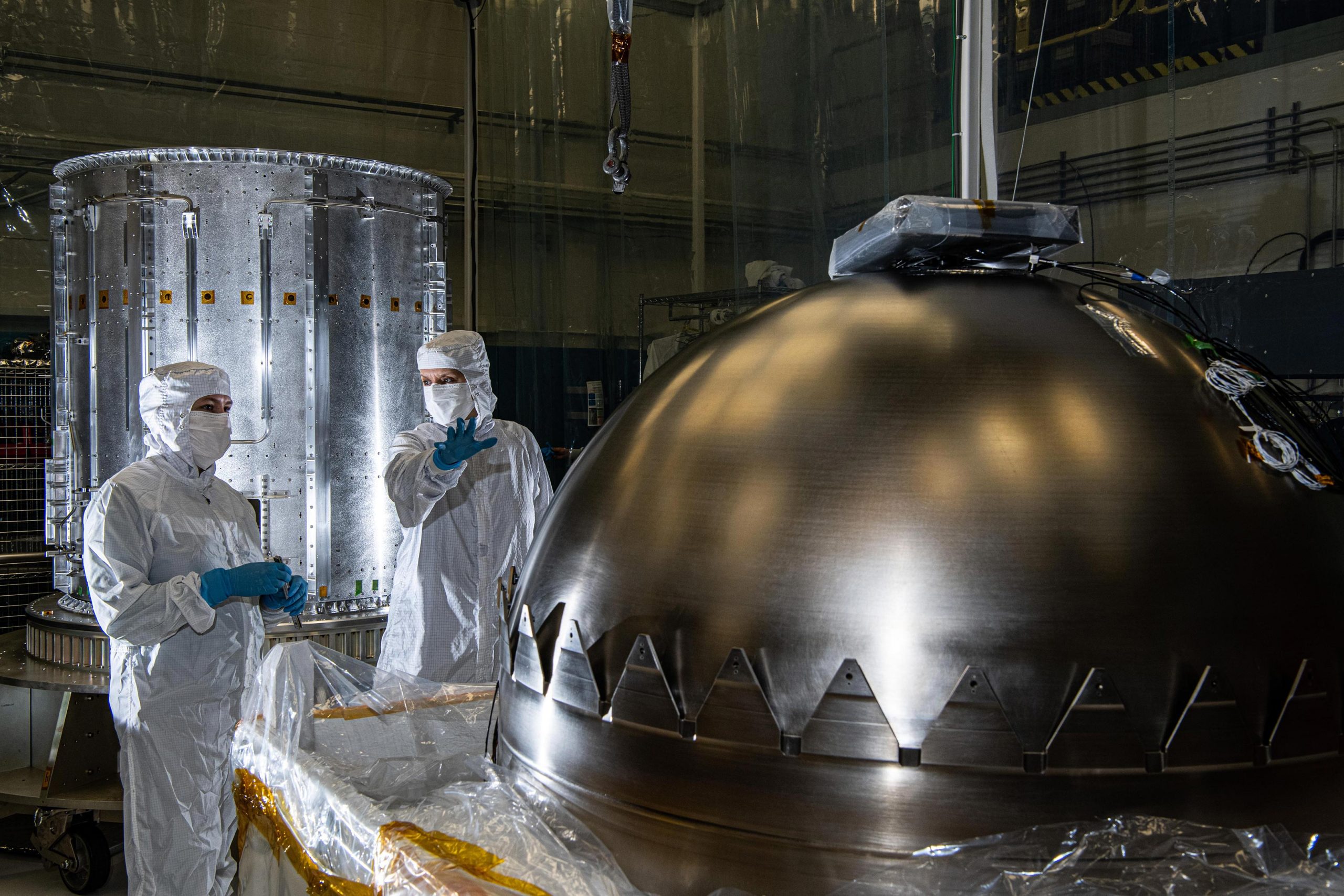
Prepping the Europa Clipper’s Propulsion Tanks
Contamination control engineers in a clean room at the Goddard Space Flight Center evaluate a propellant tank before it is installed in our Europa Clipper spacecraft. The tank is one of two that will be used to hold the spacecraft’s propellant. It will be inserted into the cylinder seen at left in the background, one of two cylinders that make up the propulsion module.
With an internal global ocean under a thick layer of ice, Jupiter’s moon Europa may have the potential to harbor existing life. Europa Clipper will swoop around Jupiter on an elliptical path, dipping close to the moon on each flyby to collect data. Understanding Europa’s habitability will help scientists better understand how life developed on Earth and the potential for finding life beyond our planet. Europa Clipper is set to launch in 2024.
Never miss a breakthrough: Join the SciTechDaily newsletter.
Follow us on Google and Google News.