
Close Menu
    Facebook X (Twitter) Instagram
    SciTechDaily
    • Biology
    • Chemistry
    • Earth
    • Health
    • Physics
    • Science
    • Space
    • Technology
    Facebook X (Twitter) Pinterest YouTube RSS
    SciTechDaily
    Home»Earth»NASA Satellite Captures a Monumental Dust Wall Over the Korean Peninsula
    Earth

    NASA Satellite Captures a Monumental Dust Wall Over the Korean Peninsula

    By Adam Voiland, NASA Earth ObservatoryApril 29, 2024No Comments3 Mins Read
    Facebook Twitter Pinterest Telegram LinkedIn WhatsApp Email Reddit
    Share
    Facebook Twitter LinkedIn Pinterest Telegram Email Reddit
    Wall of Dust Over Korean Peninsula 2024 Annotated
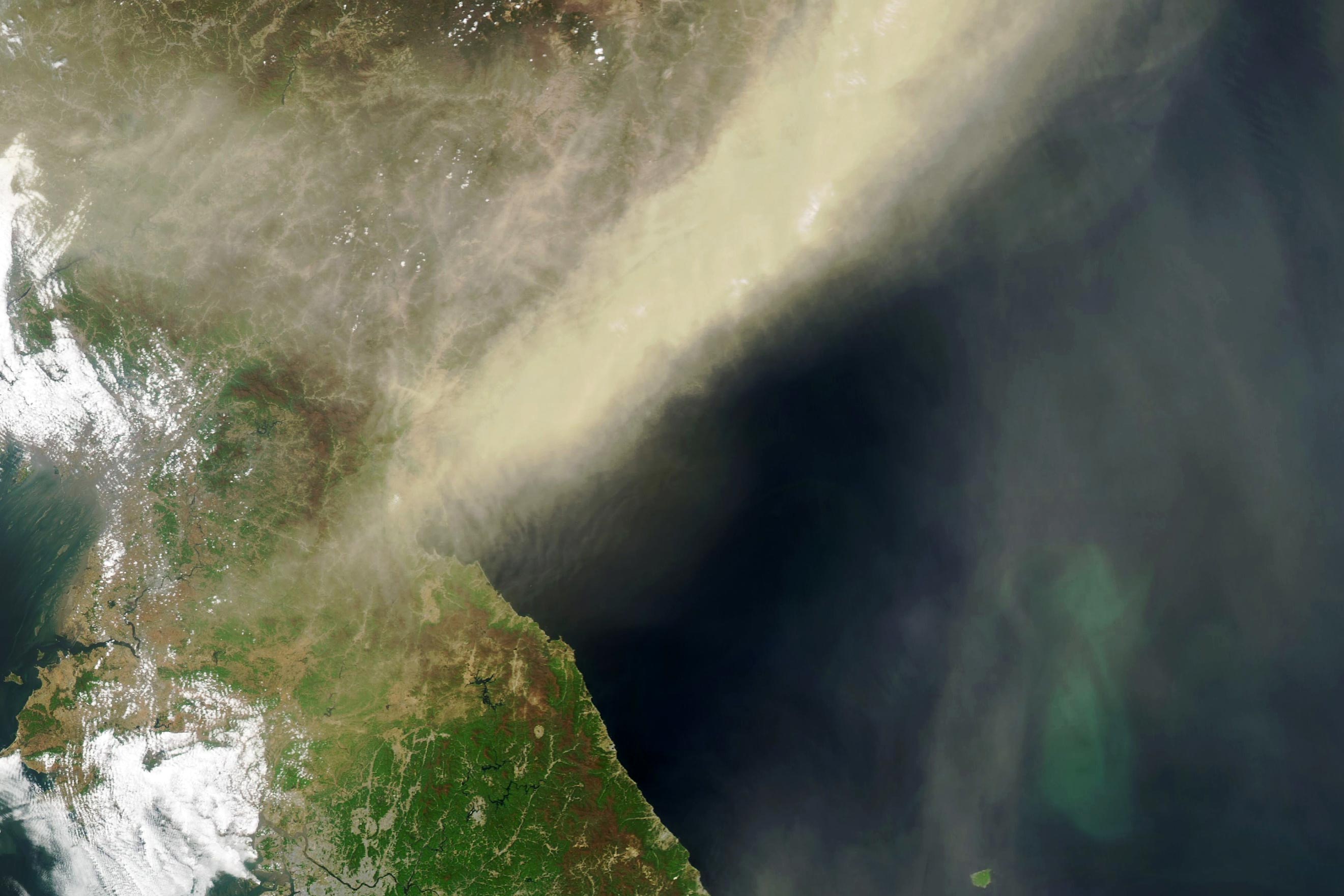
    Satellite image of a wall of dust moving across the Korean Peninsula. Captured on April 25, 2024, by the Moderate Resolution Imaging Spectroradiometer sensor on NASA’s Aqua satellite.

    Every spring, satellites observe massive plumes of dust streaming from the Gobi Desert over East Asia. These thick dust storms negatively affect millions by worsening air quality and increasing health risks.

    In East Asia, the arrival of spring means warming temperatures, greening vegetation, and blooming flowers. But March and April also bring another guest: vast plumes of dust that stream east from the Gobi and Taklamakan deserts and across parts of eastern China, the Korean Peninsula, and southern Japan.

    Satellite Observations of Dust Movement

    The MODIS (Moderate Resolution Imaging Spectroradiometer) sensor on NASA’s Aqua satellite captured this image of a wall of dust moving across the Korean Peninsula on April 25, 2024. Images collected on April 24 from South Korea’s GEO-KOMPSAT-2A satellite and from NASA’s Terra and Aqua satellites show the source of much of the dust to be the Gobi Desert of Inner Mongolia. A phytoplankton bloom, partially obscured by dust, is also visible east of the Korean Peninsula.

    Dust Impact on Air Quality and Health

    Winds sometimes loft the region’s dust high in the atmosphere, at times above the clouds, allowing dust particles to cross the Pacific Ocean and settle over North America. Other times, the lofted particles stay close to the surface and degrade air quality for millions of people in East Asia, one of the most densely populated regions in the world.

    Breathing significant amounts of dust can exacerbate cardiovascular and respiratory disease. One team of NASA scientists based at NASA’s Goddard Space Flight Center has estimated that exposure to high levels of fine particulate matter (PM2.5) contributes to nearly 3 million premature deaths per year globally, with about a fifth of those deaths linked specifically to dust.

    Changes in Dust Activity

    NASA researchers have picked up on some changes in dust activity in the Gobi and Taklamakan deserts. A past analysis of nearly two decades of data from the Terra and Aqua satellites found that this was the only region in the world where levels of atmospheric dust have declined since the start of the study period in 2003.

    The reasons for this decline are unclear, but it is likely related to the weakening of surface winds since 2001, according to one analysis. Other research has emphasized land management and greening of the landscape as being important factors.

    NASA Earth Observatory image by Michala Garrison, using MODIS data from NASA EOSDIS LANCE and GIBS/Worldview.

    Never miss a breakthrough: Join the SciTechDaily newsletter.
    Follow us on Google and Google News.

    Climate Science Geography NASA NASA Earth Observatory Weather
    Share. Facebook Twitter Pinterest LinkedIn Email Reddit

    Related Articles

    Hydrological Anomaly: Death Valley’s Persistent Lake Explored

    California Reservoirs Reflect Deepening Drought – Worst They Have Been Since the 1970s

    Mesoscale Convective Weather System Sends Massive African Dust Cloud Into Europe

    Wild Swings in Great Lakes Ice Captured From Space

    A Deadly Torrent of Debris Flows From a Himalayan Mountain

    Trading Surfboards for Snowboards: Storms Have Left Abundant Snow Atop Hawaii’s Tallest Volcanic Mountains

    Massive Snowfall Blankets Spain – Heaviest Snowfall in the Region in 50 Years

    California Cool Yule Tule

    Incredible Rare Peek at Patagonia in Winter

    Leave A Reply Cancel Reply

    • Facebook
    • Twitter
    • Pinterest
    • YouTube

    Don't Miss a Discovery

    Subscribe for the Latest in Science & Tech!

    Trending News

    Millions Take These IBS Drugs, But a New Study Finds Serious Risks

    Scientists Unlock Hidden Secrets of 2,300-Year-Old Mummies Using Cutting-Edge CT Scanner

    Bread Might Be Making You Gain Weight Even Without Eating More Calories

    Scientists Discover Massive Magma Reservoir Beneath Tuscany

    Europe’s Most Active Volcano Just Got Stranger – Here’s Why Scientists Are Rethinking It

    Alzheimer’s Symptoms May Start Outside the Brain, Study Finds

    Millions Take This Popular Supplement – Scientists Discover a Concerning Link to Heart Failure

    The Universe Is Expanding Too Fast and Scientists Can’t Explain Why

    Follow SciTechDaily
    • Facebook
    • Twitter
    • YouTube
    • Pinterest
    • Newsletter
    • RSS
    SciTech News
    • Biology News
    • Chemistry News
    • Earth News
    • Health News
    • Physics News
    • Science News
    • Space News
    • Technology News
    Recent Posts
    • Simple Blood Test May Predict Alzheimer’s Years Before Brain Scans Show Signs
    • Scientists Say Adding This Unusual Seafood to Your Diet Could Reverse Signs of Aging
    • U.S. Waste Holds $5.7 Billion Worth of Crop Nutrients
    • Scientists Say a Hidden Structure May Exist Inside Earth’s Core
    • Doctors Surprised by the Power of a Simple Drug Against Colon Cancer
    Copyright © 1998 - 2026 SciTechDaily. All Rights Reserved.
    • Science News
    • About
    • Contact
    • Editorial Board
    • Privacy Policy
    • Terms of Use

    Type above and press Enter to search. Press Esc to cancel.