
Close Menu
    Facebook X (Twitter) Instagram
    SciTechDaily
    • Biology
    • Chemistry
    • Earth
    • Health
    • Physics
    • Science
    • Space
    • Technology
    Facebook X (Twitter) Pinterest YouTube RSS
    SciTechDaily
    Home»Space»NASA Satellites Launch Aboard Virgin Orbit’s LauncherOne Rocket
    Space

    NASA Satellites Launch Aboard Virgin Orbit’s LauncherOne Rocket

    By NASAJanuary 15, 2022No Comments4 Mins Read
    Facebook Twitter Pinterest Telegram LinkedIn WhatsApp Email Reddit
    Share
    Facebook Twitter LinkedIn Pinterest Telegram Email Reddit
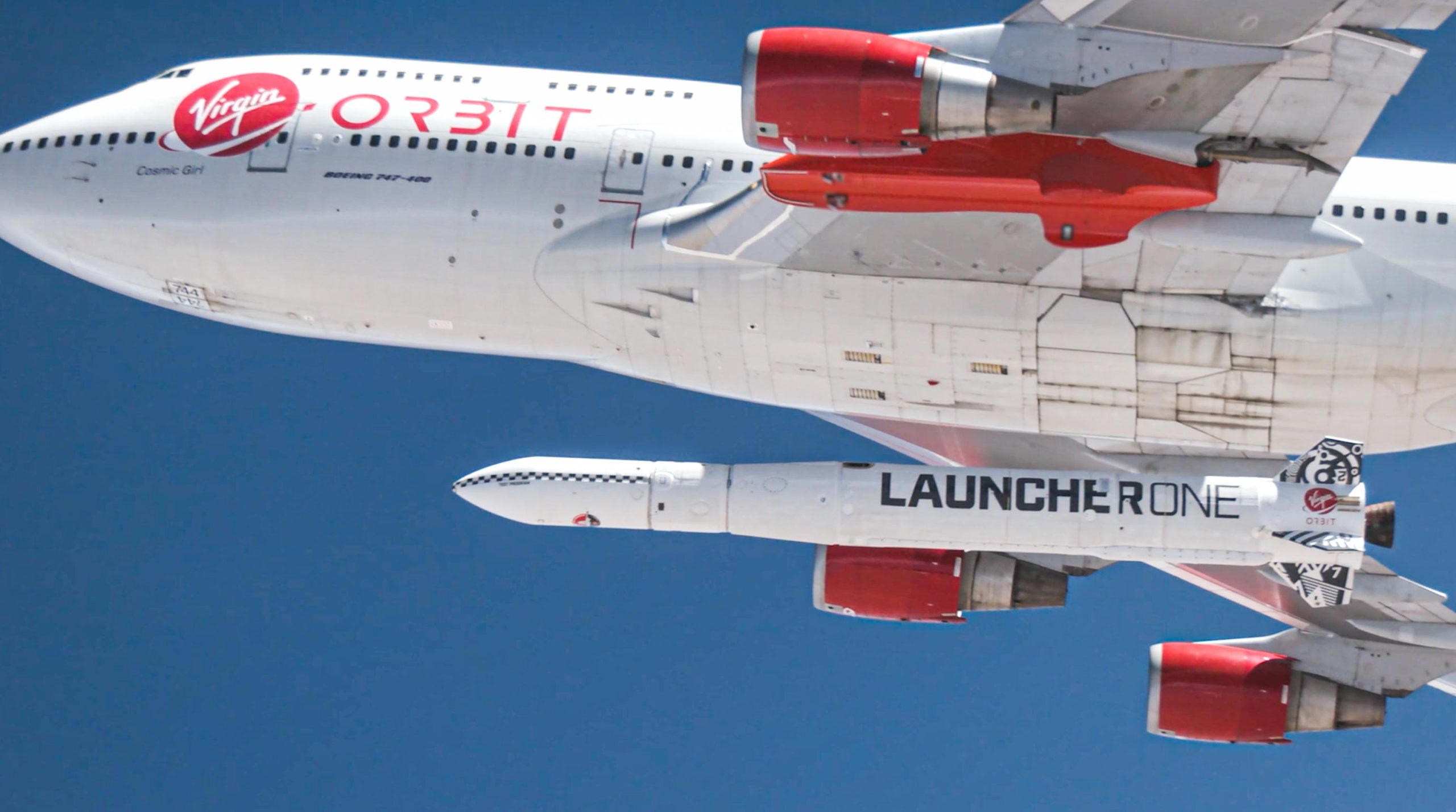
    Cosmic Girl Releases LauncherOne
    Cosmic Girl releases LauncherOne mid-air for the first time during a July 2019 drop test. Credit: Virgin Orbit/Greg Robinson

    Virgin Orbit’s LauncherOne rocket successfully deployed multiple CubeSats into low-Earth orbit on January 13, 2022, as part of NASA’s educational and research initiative. These satellites are testing advanced autonomous technologies and AI-driven systems to enhance future space missions and debris management.

    Virgin Orbit’s LauncherOne rocket detached from the company’s CosmicGirl aircraft at approximately 5:53 p.m. EST (2:53 p.m. PST) on January 13, 2022, launching NASA’s 29th Educational Launch of Nanosatellites (ELaNa) mission and the 13th CubeSat in the TechEdSat series. This launch, also known as STP-27VPB, lifted off at approximately 4:39 p.m. EST (1:39 p.m. PST) from Mojave Air and Space Port, California.

    Cornell’s Pathfinder for Autonomous Navigation (PAN), the 29th ELaNa mission, will launch two small research satellites known as CubeSats to low-Earth orbit to demonstrate autonomous rendezvous at a low cost. PAN is the first CubeSat mission to attempt docking between two CubeSats and will represent one of the most advanced autonomous CubeSat systems that has flown to date.
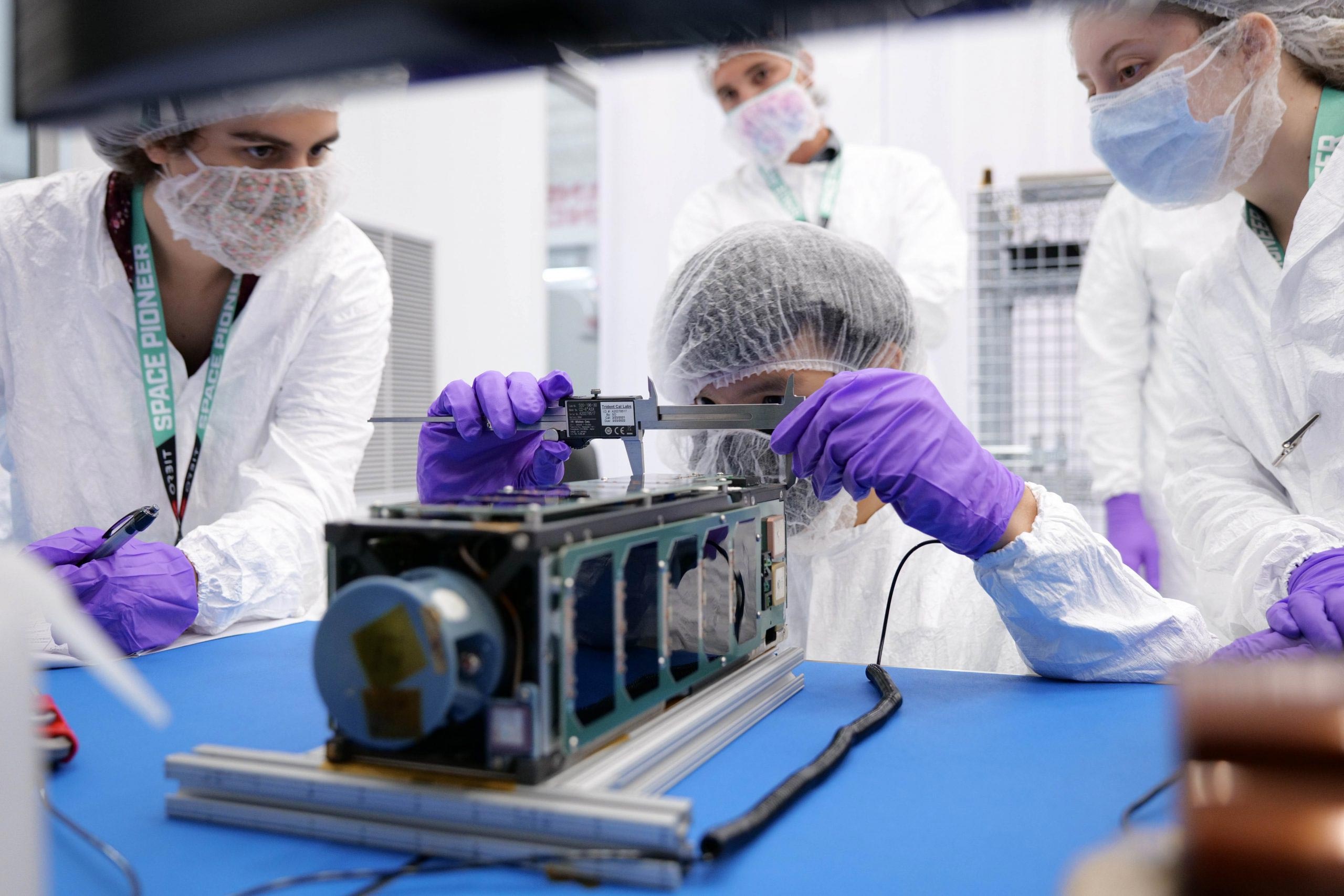
    Cornell University Students Pathfinder for Autonomous Navigation
    Cornell University students work with the Pathfinder for Autonomous Navigation (PAN), a CubeSat that is part of NASA’s 29th ELaNa mission. Credit: Virgin Orbit

    CubeSats are a class of research spacecraft called nanosatellites, built to standard units, or “U,” of 4 inches (10 cm) cubed. Often included as secondary payloads, CubeSats can be 1U, 2U, 3U, or 6U in size, typically weighing less than 3 pounds per unit and designed to carry out unique tasks once deployed into low-Earth orbit.

    The PAN CubeSats, each measuring approximately 8 inches x 12 inches (20 cm x 30 cm), feature a cold gas propulsion system, reaction wheel-based attitude control, and GPS navigation. A few months after launch, the satellites will match each other’s orbits and rendezvous to demonstrate future capabilities for on-orbit assembly.
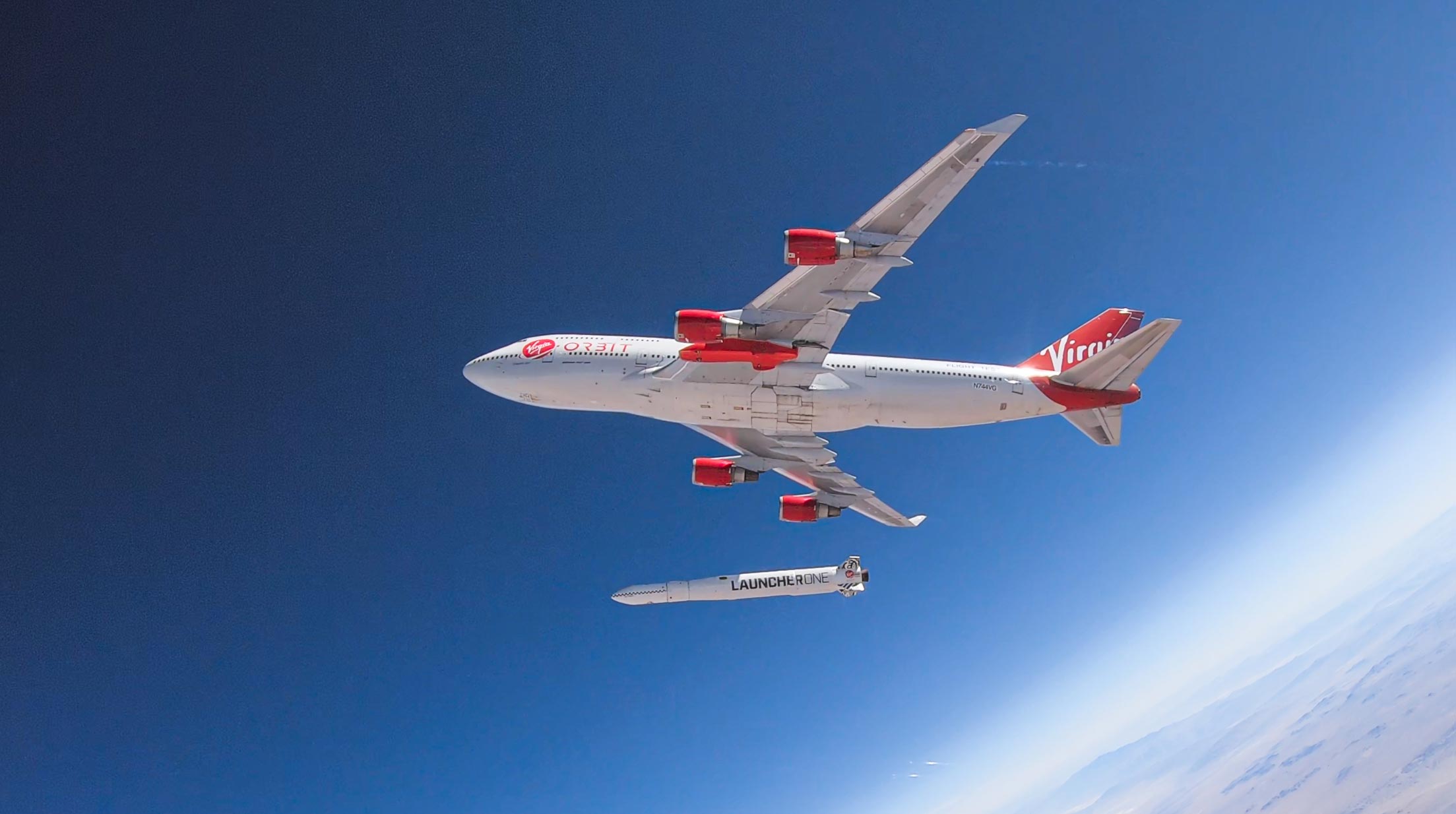
    Cosmic Girl Releases LauncherOne Rocket
    Cosmic Girl releases LauncherOne mid-air for the first time during a July 2019 drop test. Credit: Virgin Orbit/Greg Robinson

    The nanosatellites will use carrier-differential GPS to autonomously conduct rendezvous and docking operations. This method allows position measurement accurate to within several centimeters. If successful, the technology demonstrated by PAN will reduce the mass and complexity associated with traditional rendezvous and docking systems.

    PAN was selected through NASA’s CubeSat Launch Initiative (CSLI) and assigned to this mission by the agency’s Launch Services Program (LSP) based at Kennedy Space Center in Florida. CSLI enables the launch of CubeSat projects designed, built, and operated by students, teachers, faculty, NASA centers, and nonprofit organizations. Managed by LSP, ELaNa missions provide a deployment opportunity or ride-share launches to space for the selected CubeSats.
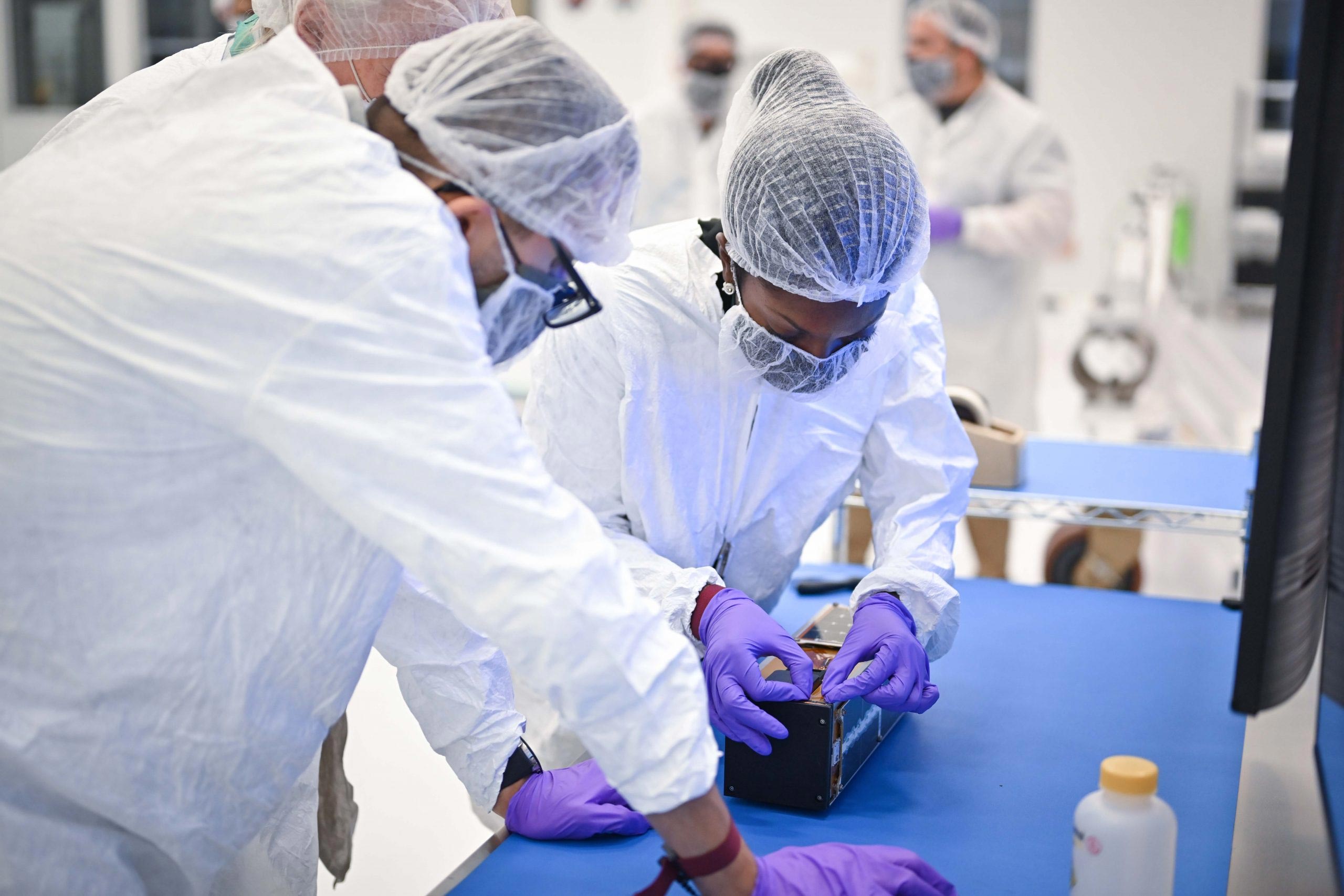
    TechEdSat-13 Team Prepares Spacecraft
    The TechEdSat-13 team prepares the spacecraft for flight at Virgin Orbit’s payload processing facility in Long Beach, California. Credit: Virgin Orbit

    TechEdSat-13, from NASA’s Ames Research Center in California’s Silicon Valley, is a 3U nanosatellite that carries a unique artificial intelligence/machine learning (AI/ML) module featuring the first orbital flight of a neuromorphic processor. This processor, the Intel Loihi, permits fast and efficient execution of AI/ML algorithms through a unique architecture that, in some ways, mimics the human brain.

    In addition, there is a unique exo-atmospheric brake that will help rapidly de-orbit this and future nanosatellites. With this exo-brake technology, TechEdSat-13 will help address the accumulation and efficient disposal of orbital debris. This effort also helps to set the stage for autonomous navigation for nanosatellites to drop from orbit and reach their planned destination on Earth.

    Cosmic Girl LauncherOne Above the Clouds
    Cosmic Girl and LauncherOne above the clouds. Credit: Virgin Orbit

    The TechEdSat flight series involves university interns and early career aerospace professionals. TechEdSat-13 was funded by various research groups within NASA, and the neuromorphic processor was provided by the Air Force Research Laboratory Information Directorate.

    Never miss a breakthrough: Join the SciTechDaily newsletter.
    Follow us on Google and Google News.

    NASA Virgin Orbit
    Share. Facebook Twitter Pinterest LinkedIn Email Reddit

    Related Articles

    NASA SpaceX Crew-12 Enters Isolation Ahead of Launch

    NASA Powers Up a Massive Solar Engine for the Moon

    A Massive Rocket Is Rolling and NASA’s Return to the Moon Is Getting Real

    Don’t Miss: Jupiter at Its Biggest and Brightest

    Hubble’s Newest Discovery Isn’t a Star, It’s a Window Into the Dark Universe

    A “Dead” Star Comes Alive in a Stunning NASA X-Ray View

    Astronomers Finally Solve Betelgeuse’s Biggest Mystery

    Space Rings in the New Year With the Champagne Cluster

    A Cosmic Christmas Tree Lights Up the Milky Way

    Leave A Reply Cancel Reply

    • Facebook
    • Twitter
    • Pinterest
    • YouTube

    Don't Miss a Discovery

    Subscribe for the Latest in Science & Tech!

    Trending News

    Tyrannosaurus Tooth Found Embedded in Dinosaur Skull Reveals Brutal Prehistoric Attack

    This Supervolcano Is Refilling With Magma After 7,300 Years

    New Study Reveals Hidden Trade-Off in Popular Weight Loss Treatments

    Scientists “Bottle the Sun” With Revolutionary Liquid Battery

    This Ancient Ape Fossil Could Change Where Humans Came From

    This Simple Eating Habit May Help You Lose More Weight

    “Hulk Lizards” Are Wiping Out Millions of Years of Evolution

    Vitamin B2’s Dark Side: The Nutrient That May Help Cancer Cells Survive

    Follow SciTechDaily
    • Facebook
    • Twitter
    • YouTube
    • Pinterest
    • Newsletter
    • RSS
    SciTech News
    • Biology News
    • Chemistry News
    • Earth News
    • Health News
    • Physics News
    • Science News
    • Space News
    • Technology News
    Recent Posts
    • This Deadly Parasite Stays Invisible by Shredding Its Own Genes
    • Researchers Uncover Hidden Genetic World Beneath Antarctic Seas
    • Scientists Capture Elusive Sodium Pump in Action, Solving a Long-Standing Biological Mystery
    • Scientists Say Washing Dishes With a Sponge Has a Concerning Side Effect
    • Scientists Break 50-Year-Old Bottleneck To Supercharge Cancer Drug Production
    Copyright © 1998 - 2026 SciTechDaily. All Rights Reserved.
    • Science News
    • About
    • Contact
    • Editorial Board
    • Privacy Policy
    • Terms of Use

    Type above and press Enter to search. Press Esc to cancel.