
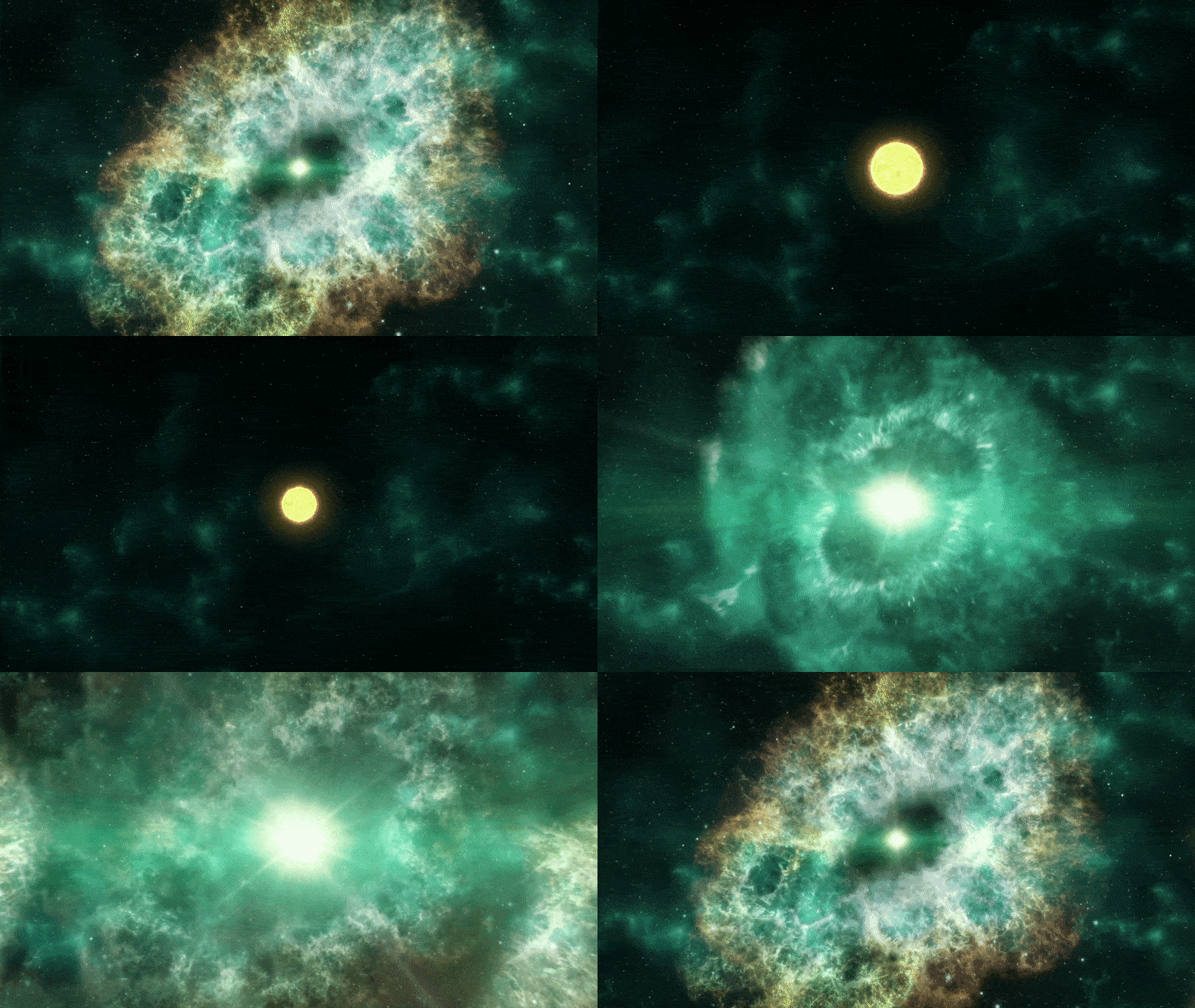
Four mission proposals submitted to NASA’s Explorers Program have been selected for further study. The proposals include missions that would study exploding stars, distant clusters of galaxies, as well as nearby galaxies and stars.
Two Explorer Missions of Opportunity and two Astrophysics Medium Explorer missions have been selected to conduct mission concept studies. In 2024, after a detailed evaluation of these studies, NASA plans to select one Mission of Opportunity and one Medium Explorer to proceed with implementation. The selected missions will be targeted for launch in 2027 and 2028, respectively.
“NASA’s Explorers Program has a proud tradition of supporting innovative approaches to exceptional science, and these selections hold that same promise,” said Thomas Zurbuchen, associate administrator for NASA’s Science Mission Directorate at NASA Headquarters in Washington. “From studying the evolution of galaxies to explosive, high-energy events, these proposals are inspiring in their scope and creativity to explore the unknown in our universe.”
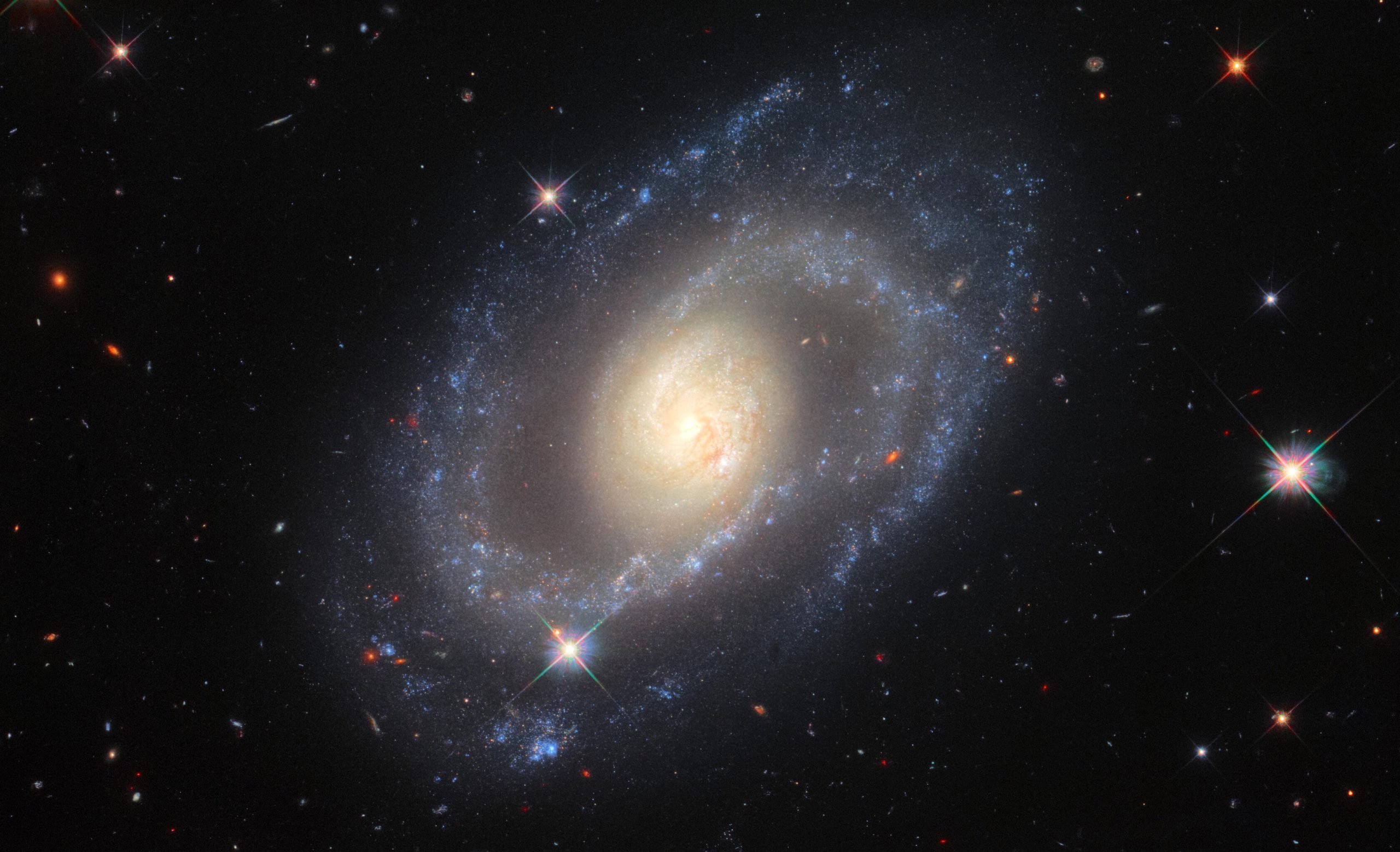
NASA Explorer missions conduct focused scientific investigations and develop instruments that fill scientific gaps between the agency’s larger space science missions. The proposals were competitively selected based on the potential science value and feasibility of development plans.
Each of the two Medium Explorer teams selected at this stage will receive $3 million to conduct a nine-month mission concept study. Astrophysics Medium Explorer mission costs are capped at $300 million each, excluding the launch vehicle. The selected proposals are:
UltraViolet EXplorer (UVEX)
- UVEX would conduct a deep survey of the whole sky in two bands of ultraviolet light, providing new insights into galaxy evolution and the lifecycle of stars. The spacecraft would have the ability to repoint rapidly to capture ultraviolet light from the explosion that follows a burst of gravitational waves caused by merging neutron stars. UVEX would carry an ultraviolet spectrograph for the detailed study of massive stars and stellar explosions.
- Principal investigator: Fiona Harrison at Caltech in Pasadena, California
Survey and Time-domain Astrophysical Research Explorer (STAR-X)
- The STAR-X spacecraft would be able to turn rapidly to point a sensitive wide-field X-ray telescope and an ultraviolet telescope at transient cosmic sources, such as supernova explosions and active galaxies. Deep X-ray surveys would map hot gas trapped in distant clusters of galaxies; combined with infrared observations from NASA’s upcoming Roman Space Telescope, these observations would trace how massive clusters of galaxies built up over cosmic history.
- Principal investigator: William Zhang at NASA’s Goddard Space Flight Center in Greenbelt, Maryland
Each of the two Mission of Opportunity teams selected at this stage will receive $750,000 to conduct a nine-month implementation concept study. NASA Mission of Opportunity costs are capped at $80 million each. The selected proposals are:
Moon Burst Energetics All-sky Monitor (MoonBEAM)
- In its orbit between Earth and the Moon, MoonBEAM would see almost the whole sky at any time, watching for bursts of gamma rays from distant cosmic explosions and rapidly alerting other telescopes to study the source. MoonBEAM would see gamma rays earlier or later than telescopes on Earth or in low orbit, and astronomers could use that time difference to pinpoint the gamma-ray source in the sky.
- Principal investigator: Chiumun Michelle Hui at NASA’s Marshall Space Flight Center in Huntsville, Alabama
A LargE Area burst Polarimeter (LEAP)
- Mounted on the International Space Station, LEAP would study gamma-ray bursts from the energetic jets launched during the formation of a black hole after the explosive death of a massive star, or in the merger of compact objects. The high-energy gamma-ray radiation can be polarized, or vibrate in a particular direction, which can distinguish between competing theories for the nature of the jets.
- Principal investigator: Mark McConnell at the University of New Hampshire in Durham
The Explorers Program is the oldest continuous NASA program. The program is designed to provide frequent, low-cost access to space using principal investigator-led space science investigations relevant to the Science Mission Directorate’s astrophysics and heliophysics programs.
Since the launch of Explorer 1 in 1958, which discovered the Earth’s radiation belts, the Explorers Program has launched more than 90 missions, including the Uhuru and Cosmic Background Explorer (COBE) missions that led to Nobel prizes for their investigators.
The program is managed by NASA Goddard for NASA’s Science Mission Directorate in Washington, which conducts a wide variety of research and scientific exploration programs for Earth studies, space weather, the solar system, and the universe.
Never miss a breakthrough: Join the SciTechDaily newsletter.
Follow us on Google and Google News.