
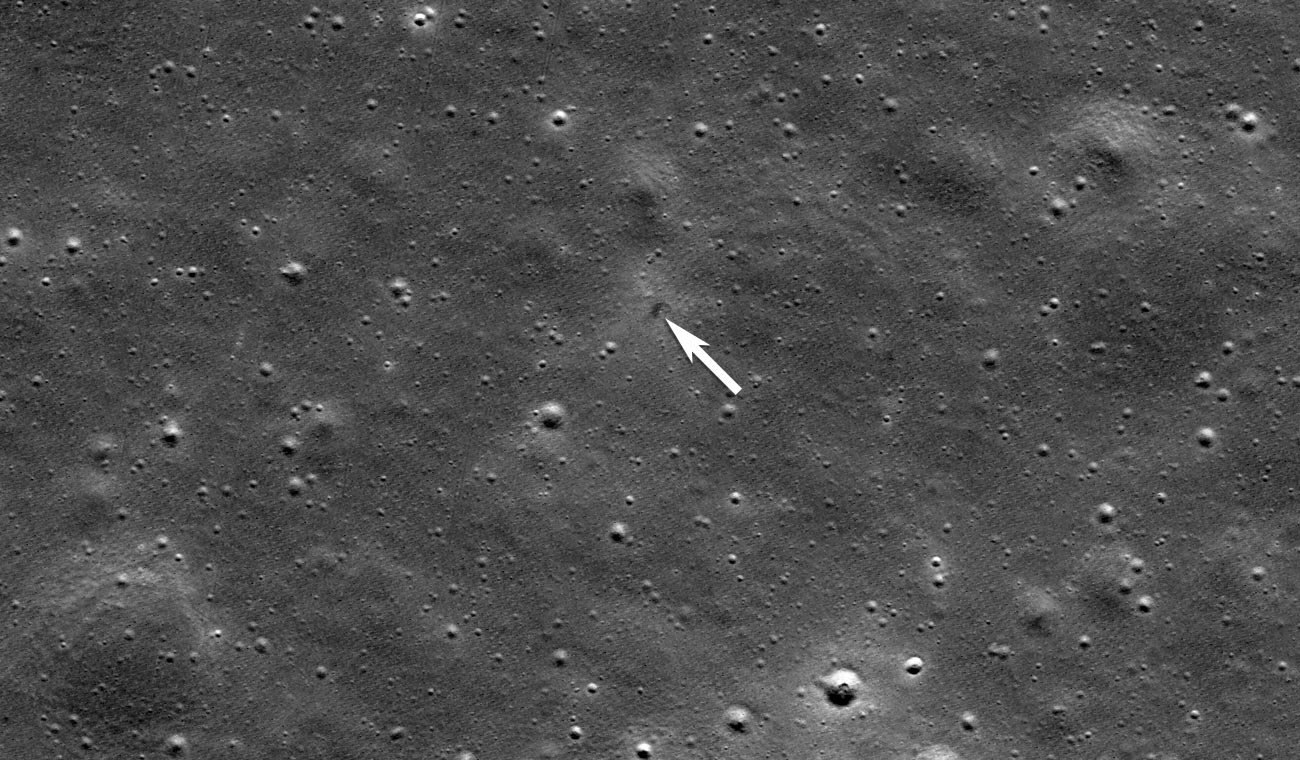
RESILIENCE, a privately funded spacecraft, crash-landed on the Moon on January 15, leaving a visible mark on the lunar surface.
NASA’s Lunar Reconnaissance Orbiter captured detailed images of the impact site, revealing a dark smudge and a bright halo caused by regolith being disturbed. These visuals highlight the raw beauty and violence of space exploration on our nearest celestial neighbor.
NASA Spots Moon Crash Site From Orbit
On June 11, NASA’s Lunar Reconnaissance Orbiter (LRO) captured dramatic images of the impact site where the ispace Mission 2 SMBC x HAKUTO-R Venture Moon lander, named RESILIENCE, made a hard landing just days earlier on June 5, 2025 (UTC).
RESILIENCE launched on January 15 aboard a privately funded spacecraft, part of Japan’s ongoing efforts to explore the Moon through commercial missions.
From about 50 miles above the lunar surface, LRO’s powerful Narrow Angle Camera—part of the Lunar Reconnaissance Orbiter Camera suite (LROC)—snapped the photos over a region called Mare Frigoris, a broad volcanic plain crossed by natural ridges and faults known as wrinkle ridges.
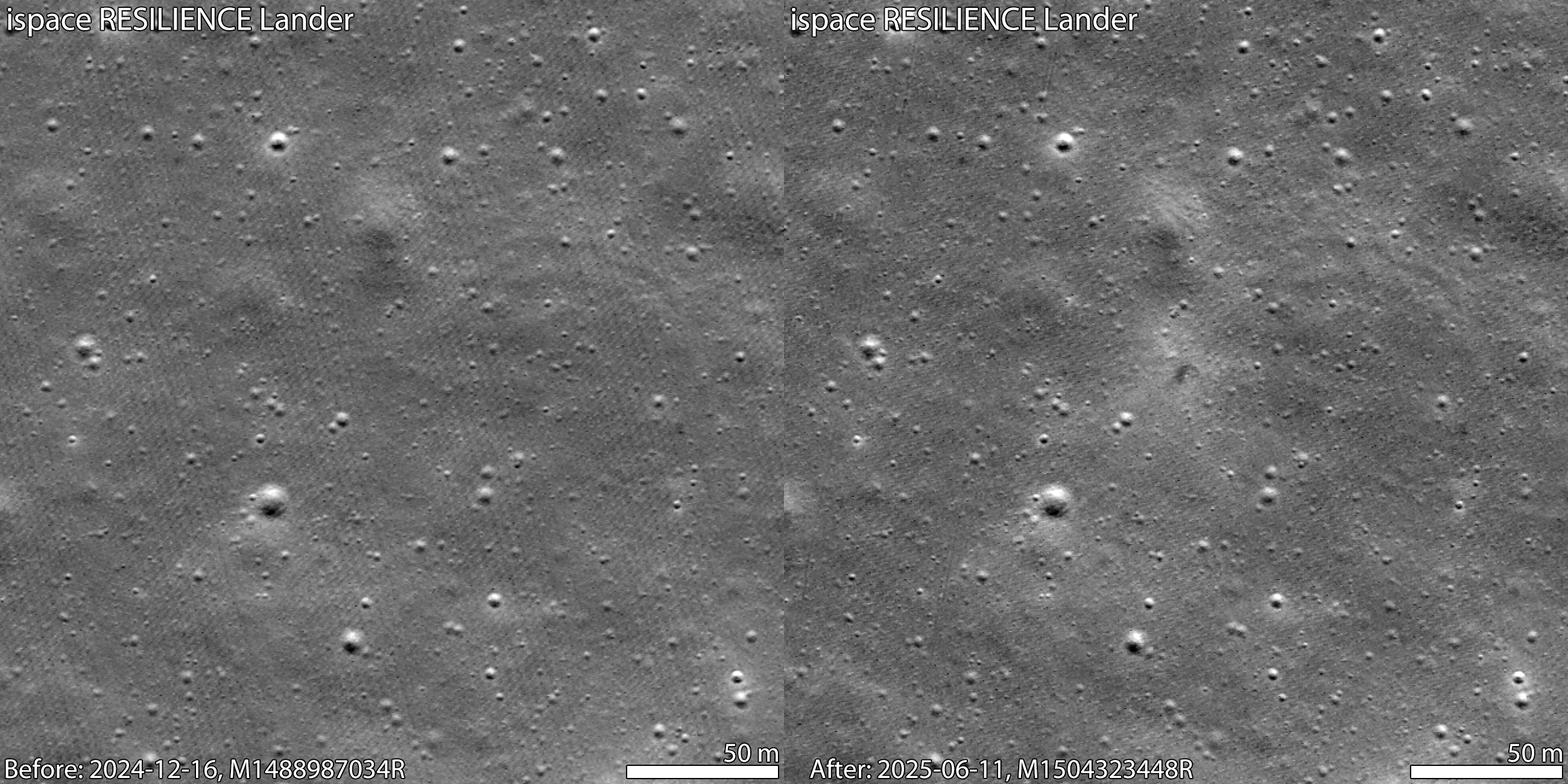
In the image, a dark smudge marks the spot where the lander hit, stirring up regolith, the layer of loose rock and dust that covers the Moon. Surrounding the smudge is a faint bright halo, created when fine particles were blasted outward and skimmed the surface, subtly scouring the terrain in every direction.
This striking scene is more than just a picture—it’s a testament to the precision of orbital observation and the challenges of landing on another world.
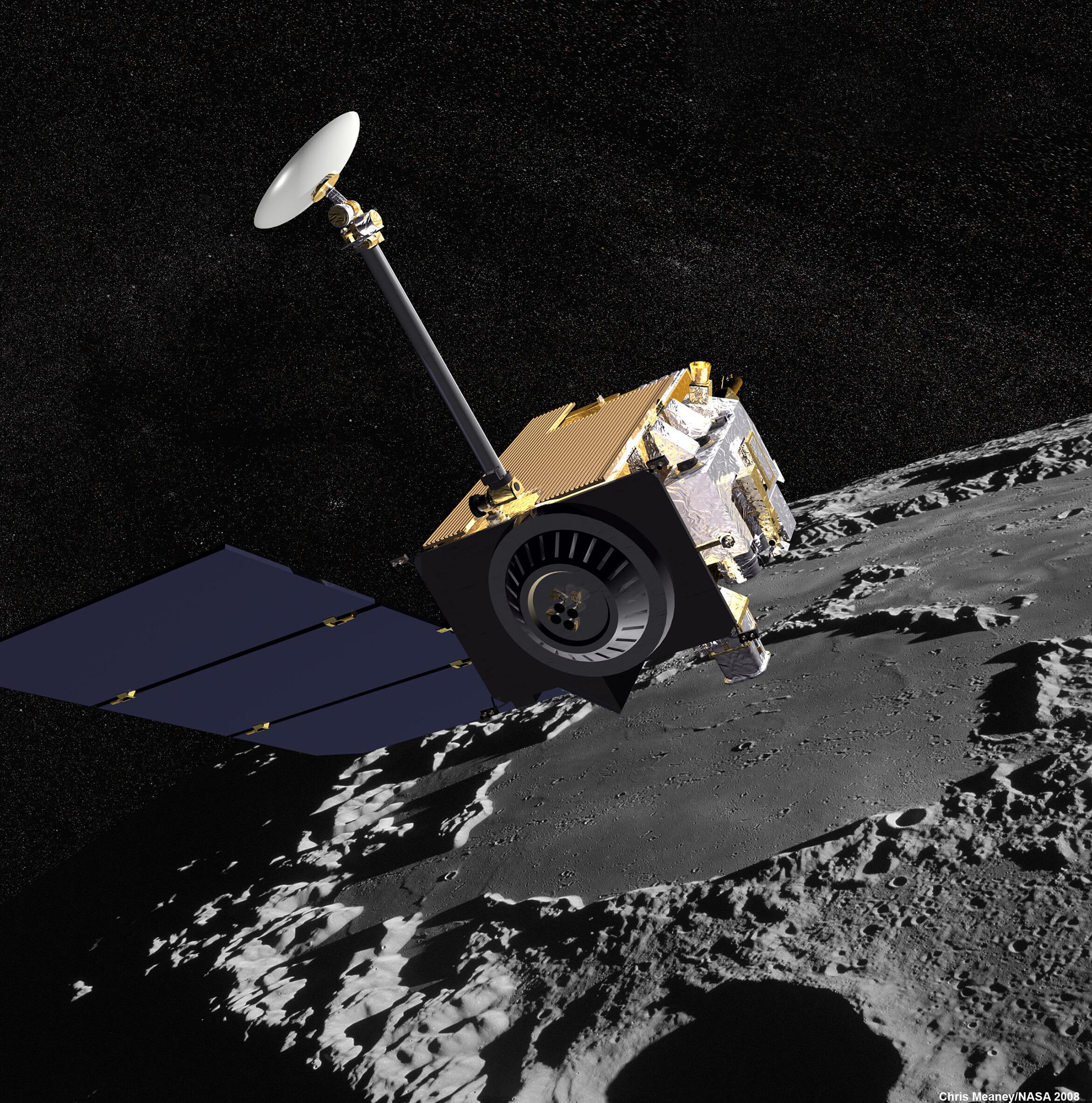
NASA’s Lunar Reconnaissance Orbiter (LRO) is a long-running, data-rich mission designed to map and study the Moon in unprecedented detail. Launched on June 18, 2009, LRO has remained in orbit around the Moon for over a decade, becoming one of the most productive lunar missions in history.
Equipped with seven advanced instruments, LRO has gathered a vast repository of high-resolution images, topographic maps, temperature readings, and surface composition data, forming a “treasure trove” that has dramatically deepened our understanding of the lunar environment. Its observations have been vital for identifying potential landing sites, studying lunar resources, and understanding the Moon’s geological evolution.
The mission is managed by NASA’s Goddard Space Flight Center in Greenbelt, Maryland, on behalf of the Science Mission Directorate at NASA Headquarters in Washington. As NASA sets its sights on returning to the Moon through the Artemis program—this time with commercial and international partners—LRO continues to play a critical role in preparing for a sustained human and robotic presence on the lunar surface.
Never miss a breakthrough: Join the SciTechDaily newsletter.
Follow us on Google and Google News.