
Close Menu
    Facebook X (Twitter) Instagram
    SciTechDaily
    • Biology
    • Chemistry
    • Earth
    • Health
    • Physics
    • Science
    • Space
    • Technology
    Facebook X (Twitter) Pinterest YouTube RSS
    SciTechDaily
    Home»Space»NASA’s Lunar Reconnaissance Orbiter Captures an Image of Earth from the Moon
    Space

    NASA’s Lunar Reconnaissance Orbiter Captures an Image of Earth from the Moon

    By NASA; Arizona State UniversityMay 8, 2014No Comments3 Mins Read
    Facebook Twitter Pinterest Telegram LinkedIn WhatsApp Email Reddit
    Share
    Facebook Twitter LinkedIn Pinterest Telegram Email Reddit
    NASAs Lunar Reconnaissance Orbiter Views Earth
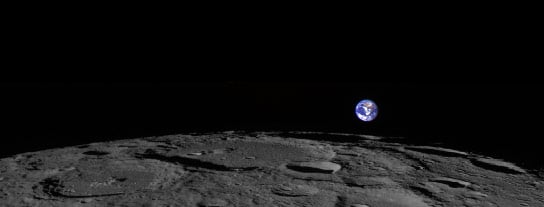
    This image, captured February 1, 2014, shows a colorized view of Earth from the moon-based perspective of NASA’s Lunar Reconnaissance Orbiter. Credit: NASA/Goddard/Arizona State University

    NASA’s Lunar Reconnaissance Orbiter captures a rare view of Earth from the moon.

    NASA’s Lunar Reconnaissance Orbiter (LRO) experiences 12 “earthrises” every day, however, LROC (short for LRO Camera) is almost always busy imaging the lunar surface so only rarely does an opportunity arise such that LROC can capture a view of Earth. On February 1, 2014, LRO pitched forward while approaching the moon’s north pole allowing the LROC Wide Angle Camera to capture Earth rising above Rozhdestvenskiy crater (112 miles, or 180 km, in diameter).

    The LROC WAC is very different than most digital cameras. Typically resolution is reported as the number of pixels in a single image; a cell phone camera today has more than 5 million pixels (5 megapixels). A single WAC frame has only 9,856 pixels, however, the WAC builds up a much larger image by exposing a series of images (or frames) as LRO progresses in its orbit; this type of imaging is called “push-frame.” Over a full month as the LRO orbit track progresses around the moon, the WAC builds up a collection of images that covers the entire globe.

    Occasionally LRO points off into space to acquire observations of the moon’s exosphere and perform instrument calibration measurements. During these slews sometimes Earth (and other planets) pass through the WAC’s field of view and dramatic images such as the one shown here are acquired. In the image above, the moon is a grayscale composite of the first six frames of the WAC observation (while the spacecraft was still actively slewing), using visible bands 604 nm (nanometers), 643 nm, and 689 nm. Earth is a color composite of later frames, using the 415 nm, 566 nm, and 604 nm bands as blue, green, and red, respectively. These wavelengths were picked as they match well the response of the human eye, so the colors are very close to true, that is what the average person might see. Also, in this image the relative brightness between Earth and the moon is correct. Note how much brighter Earth is relative to the moon.
    Animation of LRO Viewing Earth
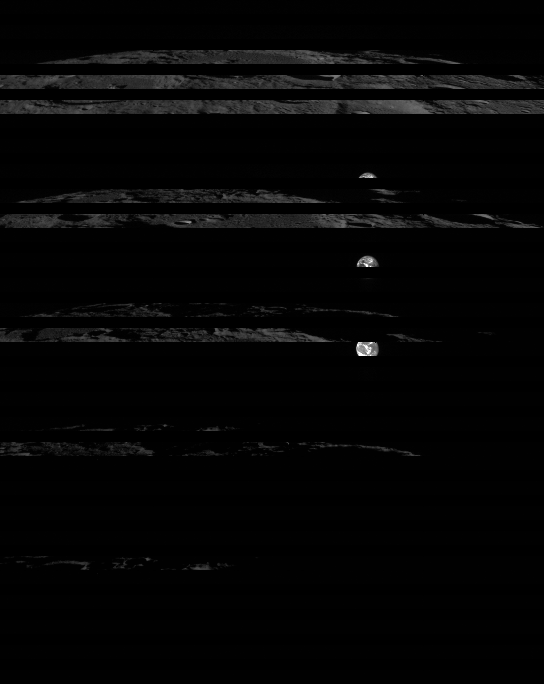
    This animation of LROC WAC observations shows an apparent rising Earth from the moon’s limb. Credit: NASA/Goddard/Arizona State University

    In the animation, the “venetian blind” banding demonstrates how a WAC image is built up frame-by-frame. The gaps between the frames are due to the real separation of the WAC filters on the CCD. The longest wavelength (689 nm) band is at the bottom of the scene, and the shortest (415 nm) is at the top; note how Earth is brighter when it enters the top band due to the blue from the ocean. The frames were acquired at two-second intervals, so the total time to collect the sequence was five minutes. The video is about 20 times faster than reality.

    Never miss a breakthrough: Join the SciTechDaily newsletter.
    Follow us on Google and Google News.

    Arizona State University Moon NASA NASA's Lunar Reconnaissance Orbiter
    Share. Facebook Twitter Pinterest LinkedIn Email Reddit

    Related Articles

    NASA’s Lunar Reconnaissance Orbiter Spots Mystery Rocket Impact Site on Moon

    New Research on Lunar Ice Deposits Examines When and How It Got There

    LRO Spacecraft Reveals Earth’s Moon Hit by Surprising Number of Meteoroids

    Lunar Reconnaissance Orbiter Moves Closer to the Lunar Surface

    LRO Spacecraft Finds New Impact Craters on The Moon

    LRO Spacecraft Captures Image of LADEE’s Lunar Impact Crater

    LRO Reveals Lunar Pits Could Support Human Activity on the Lunar Surface

    LRO Radar Data Indicates That the Walls of Shackleton Crater on the Moon May Hold Ice

    NASA LRO Spacecraft Reveals Geological Activity on the Moon’s Surface

    Leave A Reply Cancel Reply

    • Facebook
    • Twitter
    • Pinterest
    • YouTube

    Don't Miss a Discovery

    Subscribe for the Latest in Science & Tech!

    Trending News

    1.4-Million-Year-Old Footprints Reveal a Giant Human Relative

    Astronomers May Have Found the First Moon Beyond Our Solar System

    Underwater Cameras Expose the Secret Lives of Whale Sharks

    Why Dreaming Leaves the Brain Running Low on Energy

    CERN Experiments Detect Signs of the Universe’s Primordial Matter

    Study Finds a Surprising Link Between Gut Microbes and Aging

    Frequent Cannabis Users Wake Up With More “Stress Hormone”

    Scientists Reveal Hidden DNA Traces in the Shroud of Turin

    Follow SciTechDaily
    • Facebook
    • Twitter
    • YouTube
    • Pinterest
    • Newsletter
    • RSS
    SciTech News
    • Biology News
    • Chemistry News
    • Earth News
    • Health News
    • Physics News
    • Science News
    • Space News
    • Technology News
    Recent Posts
    • World’s First Photonic Time Crystal Can Reshape Light in Trillionths of a Second
    • Meteorite That Smashed Through a New Jersey Roof Hid an Ancient Chemical Secret
    • Astronomers Find Ancient Black Holes Shining With the Power of a Trillion Suns
    • These “Good” Immune Cells Could Hold the Key to Spinal Cord Regeneration
    • New Research Questions Decades of Low-Fat Dairy Advice
    Copyright © 1998 - 2026 SciTechDaily. All Rights Reserved.
    • Science News
    • About
    • Contact
    • Editorial Board
    • Privacy Policy
    • Terms of Use

    Type above and press Enter to search. Press Esc to cancel.