
Close Menu
    Facebook X (Twitter) Instagram
    SciTechDaily
    • Biology
    • Chemistry
    • Earth
    • Health
    • Physics
    • Science
    • Space
    • Technology
    Facebook X (Twitter) Pinterest YouTube RSS
    SciTechDaily
    Home»Space»NASA’s Mars Reconnaissance Orbiter Completes 40,000 Mars Orbits
    Space

    NASA’s Mars Reconnaissance Orbiter Completes 40,000 Mars Orbits

    By Guy Webster, Jet Propulsion LaboratoryFebruary 10, 2015No Comments3 Mins Read
    Facebook Twitter Pinterest Telegram LinkedIn WhatsApp Email Reddit
    Share
    Facebook Twitter LinkedIn Pinterest Telegram Email Reddit
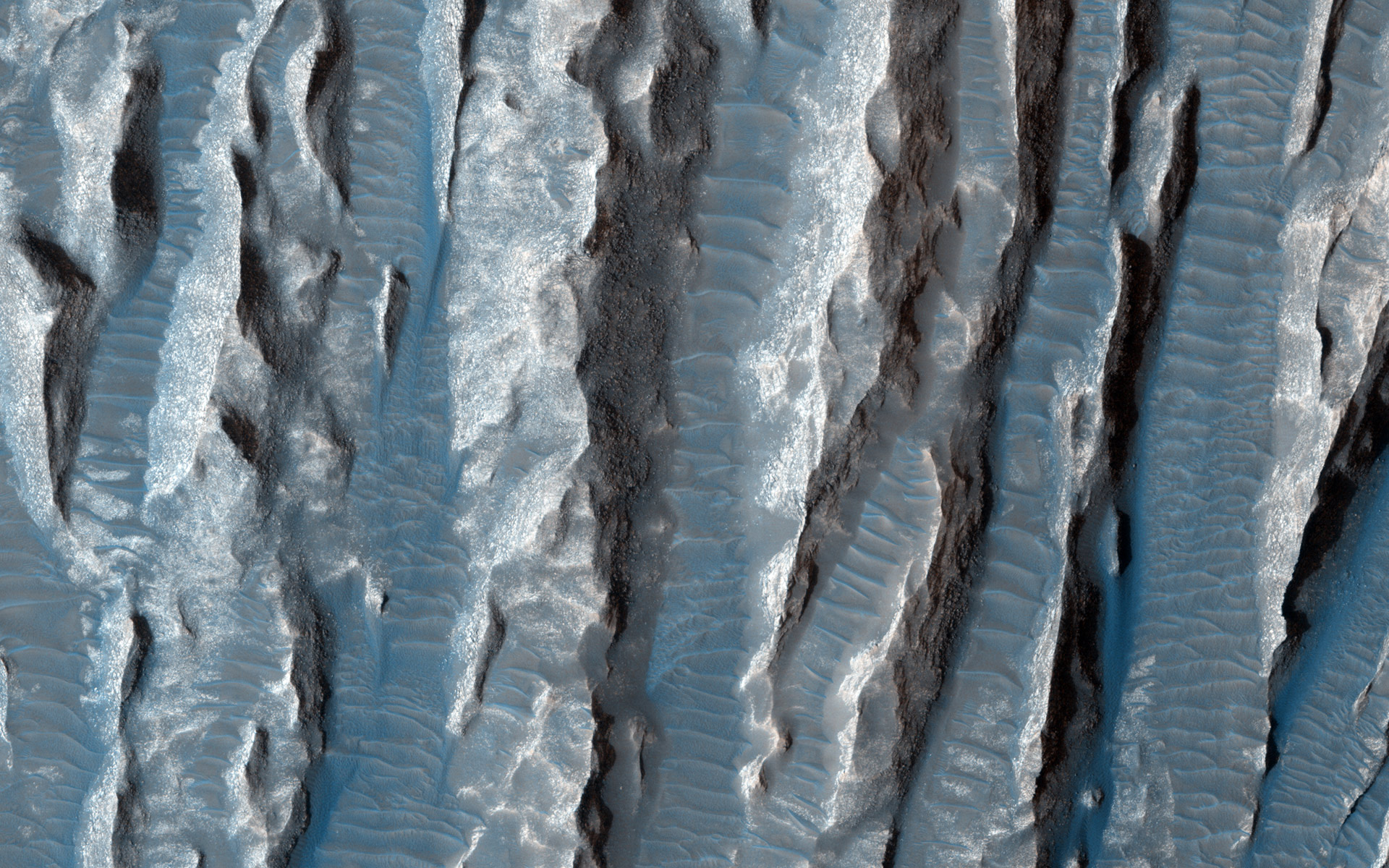
    NASA Mars Reconnaissance Orbiter Completes 40,000 Mars Orbits
    This view of Martian surface features shaped by the effects of winds was captured by the HiRISE camera on NASA’s Mars Reconnaissance Orbiter on January 4, 2015. Credit: NASA/JPL-Caltech/University of Arizona

    Launched in 2005, the Mars Reconnaissance Orbiter has now orbited the Red Planet more than 40,000 times.

    NASA’s Mars Reconnaissance Orbiter passed a mission milestone of 40,000 orbits on February 7, 2015, in its ninth year of returning information about the atmosphere, surface, and subsurface of Mars, from equatorial to polar latitudes.

    The mission’s potent science instruments and extended lifespan have revealed that Mars is a world more dynamic and diverse than was previously realized. Now in its fourth mission extension after a two-year prime mission, the orbiter is investigating seasonal and longer-term changes, including some warm-season flows that are the strongest evidence so far for liquid water on Mars today.

    The orbiter has returned 247 terabits of data, which is more than the combined total from every other mission that has ever departed Earth to visit another planet.

    It circles Mars at an altitude of about 186 miles (300 kilometers), on a near-polar pattern, about 12 times a day. In its 40,000 orbits, the spacecraft has flown nearly twice as far as the 310 million miles (500 million kilometers) it flew during its 2006 journey from Earth to Mars.

    The mission has illuminated three very different periods of Mars’s history. Its observations of the heavily cratered terrains of Mars, the oldest on the planet, show that different types of ancient watery environments formed water-related minerals. Some of these environments would have been more favorable for life than others.

    In more recent times, water appears to have cycled as a gas between polar ice deposits and lower-latitude deposits of ice and snow. Extensive layering in ice or rock probably took at least hundreds of thousands, and possibly millions of years to form. Like ice ages on Earth, the layering is linked to cyclic changes in the tilt of the planet’s rotation axis and the changing intensity of sunlight near the poles.

    Mars’ present climate is also dynamic, with volatile carbon dioxide and, just possibly, summertime liquid water modifying gullies and forming new streaks. With observations of new craters, avalanches and dust storms, the orbiter has shown a partially frozen world, but not frozen in time, as change continues today.

    In addition to accomplishing its own science achievements, the Mars Reconnaissance Orbiter mission provides communication relay for missions on the surface of Mars and evaluates potential landing site candidates for surface missions.

    Two other active NASA spacecraft are currently orbiting Mars — Mars Odyssey since 2001, and MAVEN (Mars Atmosphere and Volatile Evolution) since last year. Two NASA rovers — Opportunity and Curiosity — are active on the surface. These robotic missions and others in development are paving the way for human-crew Mars missions in the 2030s and beyond as part of NASA’s Journey to Mars strategy.

    NASA’s Jet Propulsion Laboratory, a division of the California Institute of Technology, Pasadena, manages the Mars Reconnaissance Orbiter for NASA’s Science Mission Directorate, Washington. Lockheed Martin Space Systems, Denver, built the orbiter and collaborates with JPL to operate it.

    Never miss a breakthrough: Join the SciTechDaily newsletter.
    Follow us on Google and Google News.

    Astronomy Mars Mars Reconnaissance Orbiter NASA Planetary Science
    Share. Facebook Twitter Pinterest LinkedIn Email Reddit

    Related Articles

    NASA’s Mars Reconnaissance Orbiter Confirms Evidence That Liquid Water Flows on Mars

    Ten Years and Counting, Mars Orbiter Still Going Strong

    New NASA Image of the Northern Plains of Mars

    Mars Orbiter Preparing for Mars InSight Lander’s 2016 Arrival

    Orbiter Examines Clues to Possible Water Flows on Mars

    Mars Reconnaissance Orbiter Examines a New Impact Crater

    Scientists Find Evidence for Granite on Mars

    Data Indicates Temperatures Rise and Fall Twice a Day on Mars

    Mars Orbiter Shows McLaughlin Crater May Have Once Held a Groundwater-Fed Lake

    Leave A Reply Cancel Reply

    • Facebook
    • Twitter
    • Pinterest
    • YouTube

    Don't Miss a Discovery

    Subscribe for the Latest in Science & Tech!

    Trending News

    Scientists Discover 132-Million-Year-Old Dinosaur Tracks on South Africa’s Coast

    Scientists Uncover the Secret Ingredient Behind the Spark That May Have Started Life on Earth

    Physicists Observe Matter in Two Places at Once in Mind-Bending Quantum Experiment

    Stanford Scientists Discover Hidden Brain Circuit That Fuels Chronic Pain

    New Study Reveals Why Ozempic Works Better for Some People Than Others

    Climate Change Is Altering a Key Greenhouse Gas in a Way Scientists Didn’t Expect

    New Study Suggests Gravitational Waves May Have Created Dark Matter

    Scientists Discover Why the Brain Gets Stuck in Schizophrenia

    Follow SciTechDaily
    • Facebook
    • Twitter
    • YouTube
    • Pinterest
    • Newsletter
    • RSS
    SciTech News
    • Biology News
    • Chemistry News
    • Earth News
    • Health News
    • Physics News
    • Science News
    • Space News
    • Technology News
    Recent Posts
    • 320 Light-Years Away, a Planet Confirms a Fundamental Cosmic Assumption
    • Astronomers Solve Decades-Long Mystery About Saturn’s Spin – “Something Strange Was Happening”
    • Scientists Uncover Strange New State of Matter Inside Uranus and Neptune
    • The Crown Jewel of Dentistry? Breakthrough Tech Could Transform Tooth Repair
    • The Surprising Non-Medical Factor That Determines Cancer Survival
    Copyright © 1998 - 2026 SciTechDaily. All Rights Reserved.
    • Science News
    • About
    • Contact
    • Editorial Board
    • Privacy Policy
    • Terms of Use

    Type above and press Enter to search. Press Esc to cancel.