
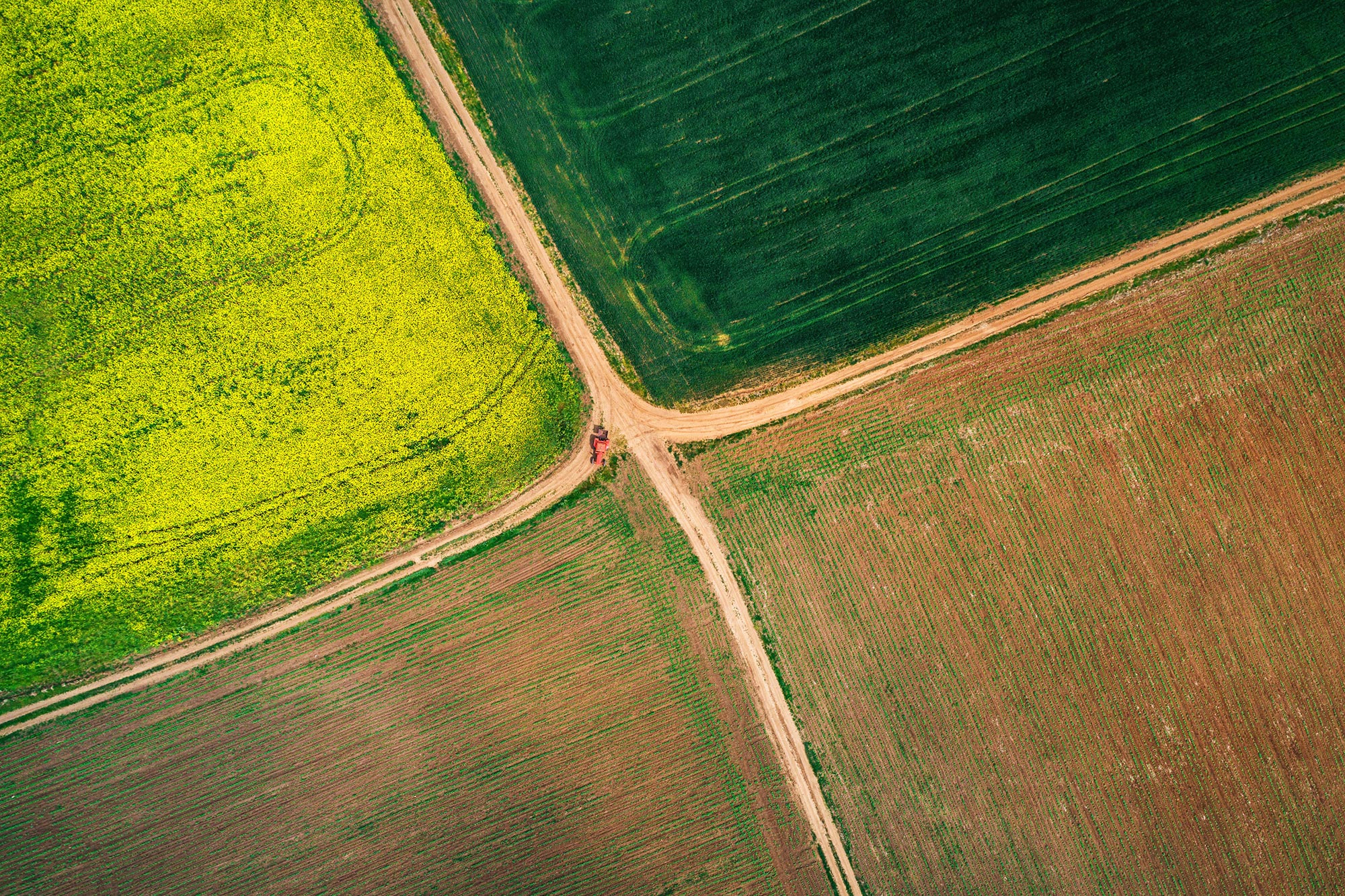
The NISAR satellite is set to revolutionize global agriculture by providing high-resolution, frequently updated radar data on crops and soil moisture.
This breakthrough will allow farmers and policymakers to optimize planting schedules, irrigation, and resource allocation with unprecedented precision. Unlike traditional satellites, NISAR’s dual-frequency radar can penetrate clouds and crop canopies, offering deeper insights into biomass, soil moisture, and plant health.
A New Era for Farming Intelligence
When it launches this year, the NISAR (NASA-ISRO Synthetic Aperture Radar) satellite will deliver a powerful stream of data to support farmers in the U.S. and worldwide. Developed by NASA and the Indian Space Research Organisation (ISRO), this mission will track crop growth from planting to harvest, offering key insights to help farmers optimize planting schedules, improve irrigation, and make the most of their time.
Equipped with synthetic aperture radar, NISAR will analyze the physical characteristics of crops and measure moisture levels in both plants and soil. While it has the precision to monitor small farmland plots, its greatest advantage lies in its ability to provide frequent, large-scale coverage of agricultural regions.
NISAR will provide maps of croplands on a global basis every two weeks. Observations will be uninterrupted by weather and provide up-to-date information on the large-scale trends that affect international food security. Credit: NASA/JPL-Caltech
Precision Agriculture at Scale
The satellite will capture images of nearly all of Earth’s land twice every 12 days, with a resolution capable of detecting plots as small as 30 feet (10 meters) wide. This level of detail will allow users to track week-to-week changes on individual farms or zoom out to observe trends across entire regions. Such a comprehensive view will be invaluable for policymakers and agricultural managers making decisions about crop production and resource allocation.
Tapping NISAR data, decision-makers could, for example, estimate when rice seedlings were planted across a region and track their height and blooming through the season while also monitoring the wetness of the plants and paddies over time. An unhealthy crop or drier paddies may signal the need to shift management strategies.
“It’s all about resource planning and optimizing, and timing is very important when it comes to crops: When is the best time to plant? When is the best time to irrigate? That is the whole game here,” said Narendra Das, a NISAR science team member and agricultural engineering researcher at Michigan State University in East Lansing.
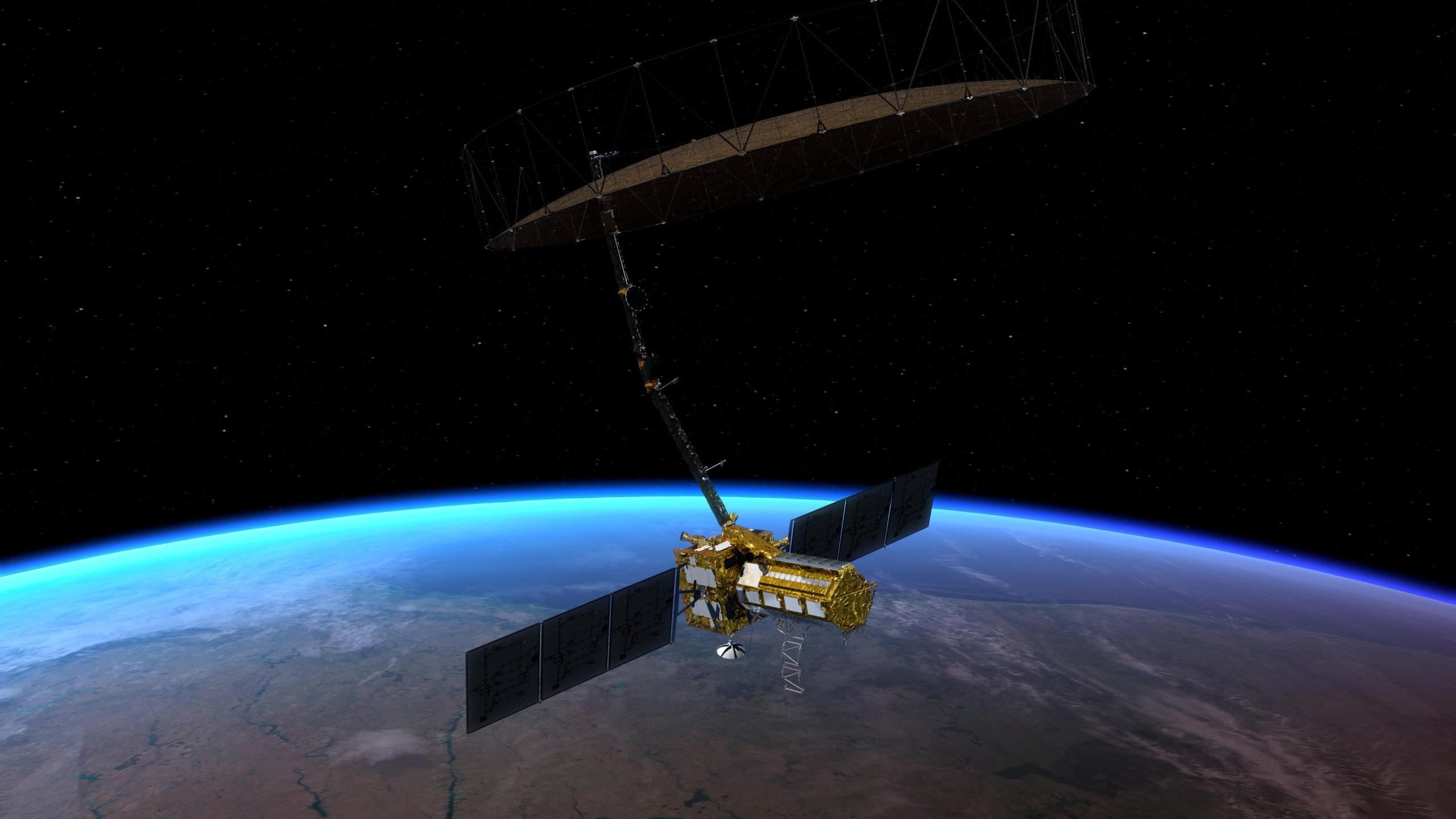
Mapping Crops with Advanced Radar
NISAR is set to launch this year from ISRO’s Satish Dhawan Space Centre on India’s southeastern coast. Once in operation, it will produce about 80 terabytes of data products per day for researchers and users across numerous areas, including agriculture.
Satellites have been used for large-scale crop monitoring for decades. Because microwaves pass through clouds, radar can be more effective at observing crops during rainy seasons than other technologies such as thermal and optical imaging. The NISAR satellite will be the first radar satellite to employ two frequencies, L- and S-band, which will enable it to observe a broader range of surface features than a single instrument working at one frequency.

Credit: ESA; processing and visualization by Earth Big Data LLC
Cutting-Edge Techniques for Crop Identification
Microwaves from the mission’s radars will be able to penetrate the canopies of crops such as corn, rice, and wheat, then bounce off the plant stalks, soil, or water below, and then back to the sensor. This data will enable users to estimate the mass of the plant matter (biomass) that’s aboveground in an area. By interpreting the data over time and pairing it with optical imagery, users will be able to distinguish crop types based on growth patterns.
Additionally, NISAR’s radars will measure how the polarization, or vertical and horizontal orientation of signals, changes after they bounce back to the satellite from the surface. This will enable a technique called polarimetry that, when applied to the data, will help identify crops and estimate crop production with better accuracy.
“Another superpower of NISAR is that when its measurements are integrated with traditional satellite observations, especially vegetation health indexes, it will significantly enhance crop information,” added Brad Doorn, who oversees NASA’s water resources and agriculture research program.
Enhancing Crop Forecasts with NISAR Data
The NISAR satellite’s high-resolution data on which crops are present and how well they are growing could feed into agricultural productivity forecasts.
“The government of India — or any government in the world — wants to know the crop acreage and the production estimates in a very precise way,” said Bimal Kumar Bhattacharya, the agricultural applications lead at ISRO’s Space Applications Centre in Ahmedabad. “The high-repeat time-series data of NISAR will be very, very helpful.”
Tracking Soil Moisture for Smarter Farming
The NISAR satellite can also help farmers gauge the water content in soil and vegetation. In general, wetter soils tend to return more signals and show up brighter in radar imagery than drier soils. There is a similar relationship with plant moisture.
These capabilities mean that NISAR can estimate the water content of crops over a growing season to help determine if they are water-stressed, and it can use signals that have scattered back from the ground to estimate soil moisture.
The soil moisture data could potentially inform agriculture and water managers about how croplands respond to heat waves or droughts, as well as how quickly they absorb water and then dry out following rain — information that could support irrigation planning.
“Resource managers thinking about food security and where resources need to go are going to be able to use this sort of data to have a holistic view of their whole region,” said Rowena Lohman, an Earth sciences researcher at Cornell University in Ithaca, New York, and soil moisture lead on the NISAR science team.
More About NISAR
The NASA-ISRO Synthetic Aperture Radar (NISAR) satellite is a groundbreaking Earth-observing mission, marking the first collaboration between NASA and ISRO on flight hardware. Designed to monitor changes in Earth’s land and ice surfaces with unparalleled precision, NISAR features dual-frequency L-band and S-band radar to capture detailed images of environmental changes, natural disasters, and climate impacts.
NASA’s Jet Propulsion Laboratory (JPL) leads the U.S. component of the project, providing the L-band SAR, radar reflector antenna, deployable boom, high-rate communication subsystem, GPS receivers, solid-state recorder, and payload data subsystem. NASA’s Goddard Space Flight Center manages the Near Space Network, which will receive L-band data.
India’s ISRO Space Applications Centre developed the S-band SAR, while the U R Rao Satellite Centre provided the spacecraft bus. The mission will launch aboard a Vikram Sarabhai Space Centre launch vehicle, with launch services conducted at Satish Dhawan Space Centre. Once in orbit, operations will be managed by the ISRO Telemetry, Tracking, and Command Network (ISTRAC), with National Remote Sensing Centre (NRSC) handling S-band data reception and distribution.
By combining advanced radar technology from both agencies, NISAR will provide valuable insights into Earth’s changing surface, supporting disaster response, environmental monitoring, and climate research.
Never miss a breakthrough: Join the SciTechDaily newsletter.
Follow us on Google and Google News.