
Close Menu
    Facebook X (Twitter) Instagram
    SciTechDaily
    • Biology
    • Chemistry
    • Earth
    • Health
    • Physics
    • Science
    • Space
    • Technology
    Facebook X (Twitter) Pinterest YouTube RSS
    SciTechDaily
    Home»Earth»Cool Coating for a Hot Mission: NISAR’s Final Preparations
    Earth

    Cool Coating for a Hot Mission: NISAR’s Final Preparations

    By NASAMarch 31, 2024No Comments2 Mins Read
    Facebook Twitter Pinterest Telegram LinkedIn WhatsApp Email Reddit
    Share
    Facebook Twitter LinkedIn Pinterest Telegram Email Reddit
    NASA NISAR Orbit Illustration
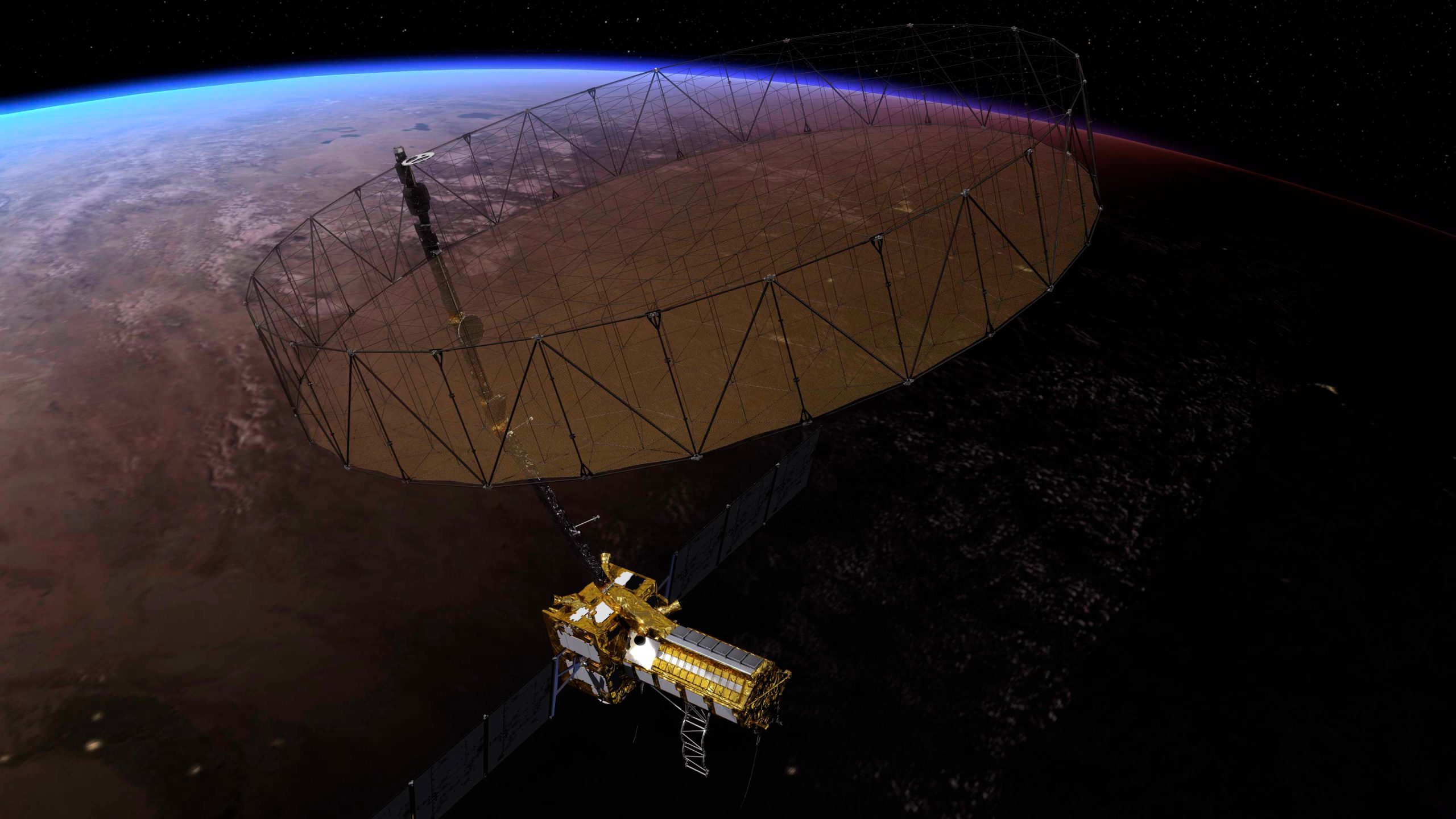
    Pictured in this artist’s concept, NISAR will use two radar systems to monitor change in nearly all of Earth’s land and ice surfaces. The satellite marks the first time the U.S. and Indian space agencies have cooperated on hardware development for an Earth-observing mission. Credit: NASA-JPL/Caltech

    NISAR, nearing its launch, will undergo final enhancements for temperature management. This NASA-ISRO mission will advance Earth observation, studying surface changes globally.

    The NISAR (NASA ISRO Synthetic Aperture Radar) satellite – a joint NASA-Indian Space Research Organisation (ISRO) Earth-observing mission – is nearly complete, and a launch readiness date will be determined at the end of April. The spacecraft will launch from the Satish Dhawan Space Centre on India’s southeastern coast.

    Final Preparations and Technical Enhancements

    Work to be finished before launch includes applying a special coating to hardware components on the satellite’s 39-foot-diameter (12-meter) radar antenna reflector, which is among NASA’s primary contributions to the mission. The addition of the special coating is a precautionary step to mitigate any temperature increases that could potentially affect the deployment of the reflector. Testing and analysis identified a potential for the reflector to experience higher-than-previously-anticipated temperatures in its stowed configuration in flight.

    Operational Details and Science Goals

    During science operations, the massive reflector will transmit and receive microwave signals to and from Earth’s surface, enabling NISAR to scan nearly all the planet’s land and ice surfaces twice every 12 days to collect science data.

    The special coating being added will limit the temperature by reflecting more solar radiation off the reflector hardware. Due to the reflector’s size and complexity, it is being shipped from the ISRO site in India where the satellite is being assembled to a specialized facility in California for the application of the coating.

    Once the thermal performance of the coating has been fully verified, a launch readiness date will be set. When the reflector returns to India, teams from NASA’s Jet Propulsion Laboratory and ISRO will integrate it onto the satellite.

    NISAR’s Significance and Capabilities

    NISAR, the first hardware collaboration between NASA and ISRO on an Earth-observing mission, is a uniquely powerful and trailblazing satellite. By combining two kinds of synthetic aperture radars, it will offer measurements of Earth’s evolving surface – including changes in ice sheets and glaciers, wetlands and forests, and land around volcanoes and earthquake faults.

    Never miss a breakthrough: Join the SciTechDaily newsletter.
    Follow us on Google and Google News.

    JPL NASA NISAR
    Share. Facebook Twitter Pinterest LinkedIn Email Reddit

    Related Articles

    Full ‘Bloom’: NASA’s Record-Breaking Radar Antenna Just Unfurled in Orbit

    NASA’s New Satellite Could Change the Way We Farm Forever

    Meet NISAR: The Satellite That Will Watch Every Inch of Our Changing Planet

    NISAR’s Dual Radar Eyes: Watching Earth Like Never Before

    NISAR Satellite Set To Revolutionize Earth Monitoring in 2025

    NISAR: The Powerful New Satellite That Will Track Earth’s Secret Shifts

    NISAR’s Odyssey: Pioneering Earth-Observing Satellite Clears Crucial Test

    Global Climate Watchdog: NISAR Radar Mission To Provide Dynamic View of Forests & Wetlands

    NISAR Spacecraft: Major New Earth Satellite to Track Disasters, Effects of Climate Change

    Leave A Reply Cancel Reply

    • Facebook
    • Twitter
    • Pinterest
    • YouTube

    Don't Miss a Discovery

    Subscribe for the Latest in Science & Tech!

    Trending News

    Mezcal “Worm” in a Bottle Mystery: DNA Testing Reveals a Surprise

    New Research Reveals That Your Morning Coffee Activates an Ancient Longevity Switch

    This Is What Makes You Irresistible to Mosquitoes

    Shockingly Powerful Giant Octopuses Ruled the Seas 100 Million Years Ago

    Scientists Stunned by New Organic Molecules Found on Mars

    Rewriting Dinosaur Evolution: Scientists Unearth Remarkable 150-Million-Year-Old Stegosaur Skull

    Omega-3 Supplements Linked to Cognitive Decline in Surprising New Study

    First-of-Its-Kind Discovery: Homer’s Iliad Found Embedded in a 1,600-Year-Old Egyptian Mummy

    Follow SciTechDaily
    • Facebook
    • Twitter
    • YouTube
    • Pinterest
    • Newsletter
    • RSS
    SciTech News
    • Biology News
    • Chemistry News
    • Earth News
    • Health News
    • Physics News
    • Science News
    • Space News
    • Technology News
    Recent Posts
    • Male Birth Control Breakthrough: Scientists Find Way To Turn Sperm Production Off and Back On
    • A Common Vitamin Could Hold the Key to Treating Fatty Liver Disease
    • New Research Shows Vitamin B12 May Hold the Key to Healthy Aging
    • Scientists Map Thousands of Brain Connections With RNA Barcodes
    • This Gene Tweak Turns Strawberries Into Healthier, Tastier Superfruit
    Copyright © 1998 - 2026 SciTechDaily. All Rights Reserved.
    • Science News
    • About
    • Contact
    • Editorial Board
    • Privacy Policy
    • Terms of Use

    Type above and press Enter to search. Press Esc to cancel.