
Adaptability in the face of limited genetic diversity could be a good sign for threatened species
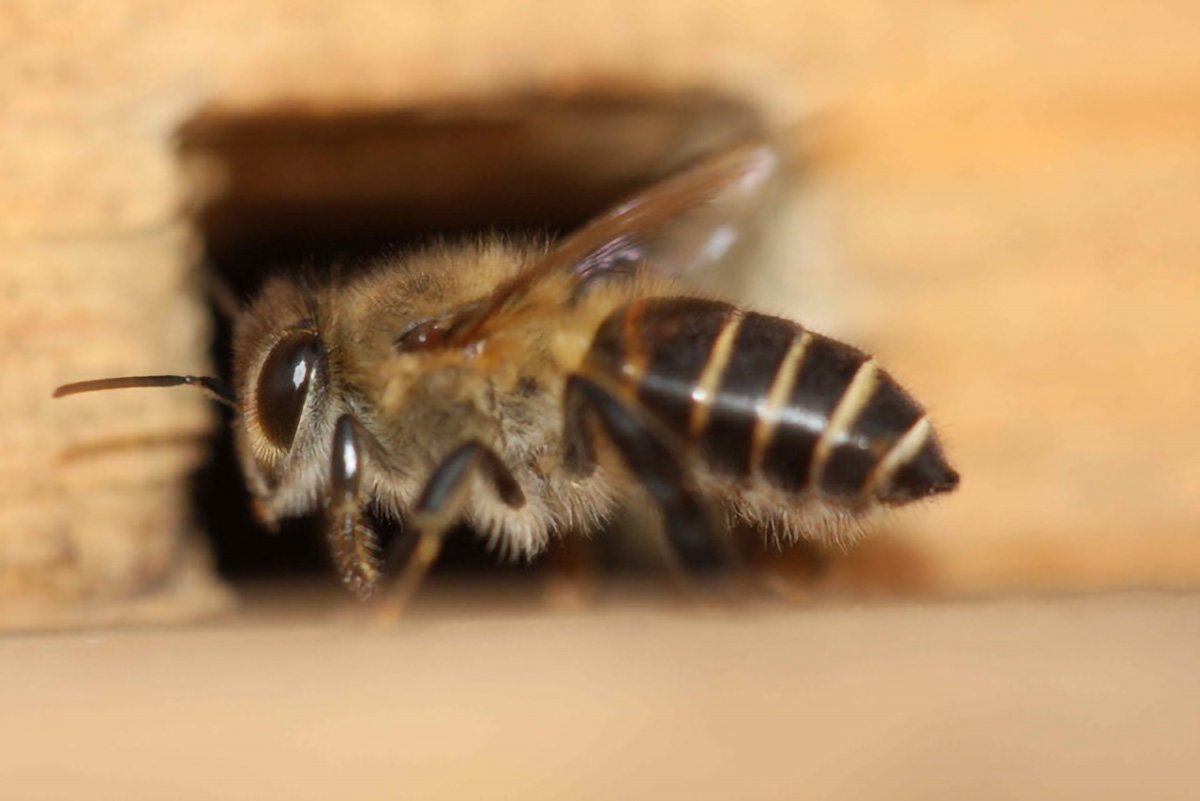
For over ten years, invasive Asian honeybees have defied evolutionary expectations and established a thriving population in North Queensland, much to the annoyance of the honey industry and biosecurity officials.
New research published in Current Biology has shown the species, Apis cerana, has overcome what is known as a genetic bottleneck to grow from a single swarm into a population of more than 10,000 colonies over a 10,000 square kilometre area – which is about the size of Greater Sydney.
Co-lead author Dr Rosalyn Gloag from the University of Sydney School of Life and Environmental Sciences said: “Our study of this bee population shows that some species can quickly adjust to new environments despite starting with very low genetic diversity relative to their native-range populations.”
Dr. Gloag said that high genetic diversity is generally assumed to be important for a population to quickly adapt to changing environmental conditions, such as when a species is translocated or experiences rapid environmental change caused by natural or climate change disasters.
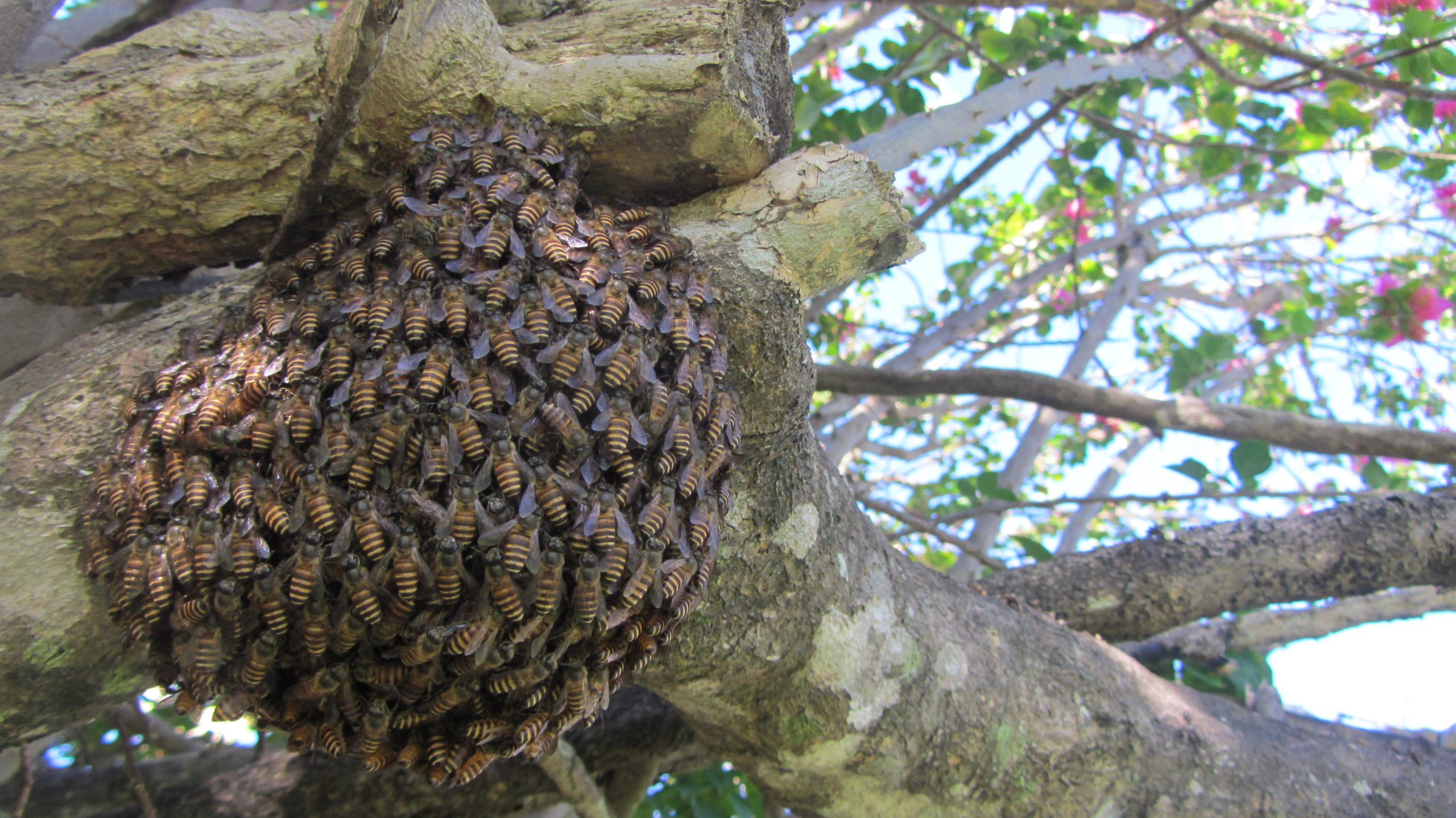
Swarm of invasive Apis cerana in Cairns, North Queensland. Credit: Dr Ros Gloag
“However, we have shown that this invasive population of honeybees has rapidly adapted since its arrival, despite having suffered a steep loss in genetic diversity,” she said.
The research team highlights the importance of this case study for understanding population resilience in general.
“This is even more important as we observe many species dealing with anthropogenic climate change,” Dr Gloag said.
Importance of the Study
Studying the invasive population in Queensland gave the research team a rare complete genetic timeline of a natural invasion, beginning from soon after the bees arrived.
The arrival of the colony in 2007, likely from Papua New Guinea, was of concern to Australian biosecurity because of the parasites the bees can carry. Ultimately these bees were found not to be carrying the most feared of its parasites, the varroa mite, which has since arrived in Australia by an unknown route, threatening the domestic honey industry.
“We were lucky to have a complete sample timeline of this invasive population thanks to the incredible efforts of the Queensland Department of Agriculture and Fisheries, which sampled the population extensively during the early years of the incursion as part of an eradication attempt,” Dr. Gloag said.
“Although that attempt was unsuccessful, the biological material collected has been incredibly valuable for understanding how these invasions proceed. And that in turn helps us prepare better for future invasions,” she said.
Access to this comprehensive sample set allowed the scientists to re-sequence entire genomes of 118 individual bees collected over 10 years.
“We could essentially observe natural selection acting over time in a population that started with low genetic diversity,” Dr Gloag said. “From this unique vantage point, we could see that selection was acting on the variation in genomes that had arrived with the handful of original bees. It wasn’t variation that arose later by mutations.
“In other words, some species with very low genetic diversity can adapt very quickly,” she said.
“While this might be bad news for environments coping with newly arrived invasive species, it’s potentially good news for populations that have temporary crashes in the face of climate change or other natural or human-induced disasters, such as bushfires.”
Reference: “Post-invasion selection acts on standing genetic variation despite a severe founding bottleneck” by Kathleen A. Dogantzis, Rika Raffiudin, Ramadhani Eka Putra, Ismail Shaleh, Ida M. Conflitti, Mateus Pepinelli, John Roberts, Michael Holmes, Benjamin P. Oldroyd, Amro Zayed and Rosalyn Gloag, 29 February 2024, Current Biology.
DOI: 10.1016/j.cub.2024.02.010
The study was done in collaboration with scientists at York University (Canada), IPB University (Indonesia), Bandung Institute of Technology (Indonesia) and the CSIRO (Australia).
Never miss a breakthrough: Join the SciTechDaily newsletter.
Follow us on Google and Google News.
1 Comment
“have defied evolutionary expectations.”
So there are evolutionary expectations.