
Close Menu
    Facebook X (Twitter) Instagram
    SciTechDaily
    • Biology
    • Chemistry
    • Earth
    • Health
    • Physics
    • Science
    • Space
    • Technology
    Facebook X (Twitter) Pinterest YouTube RSS
    SciTechDaily
    Home»Earth»NISAR Satellite Set To Revolutionize Earth Monitoring in 2025
    Earth

    NISAR Satellite Set To Revolutionize Earth Monitoring in 2025

    By SciTechDaily.comDecember 24, 2024No Comments2 Mins Read
    Facebook Twitter Pinterest Telegram LinkedIn WhatsApp Email Reddit
    Share
    Facebook Twitter LinkedIn Pinterest Telegram Email Reddit
    NISAR Illustration
    The NASA-ISRO SAR (NISAR) Mission will measure Earth’s changing ecosystems, dynamic surfaces, and ice masses providing information about biomass, natural hazards, sea level rise, and groundwater, and will support a host of other applications. Credit: JPL/NASA

    NASA and the Indian Space Research Organisation (ISRO) are preparing to launch the NISAR satellite in March 2025. NISAR, which stands for NASA-ISRO Synthetic Aperture Radar, is designed to monitor nearly all of Earth’s land and ice surfaces every 12 days. It will track changes in ecosystems, land, and sea ice, and the solid Earth. The satellite is scheduled to lift off from the Satish Dhawan Space Centre, located on India’s southeastern coast.
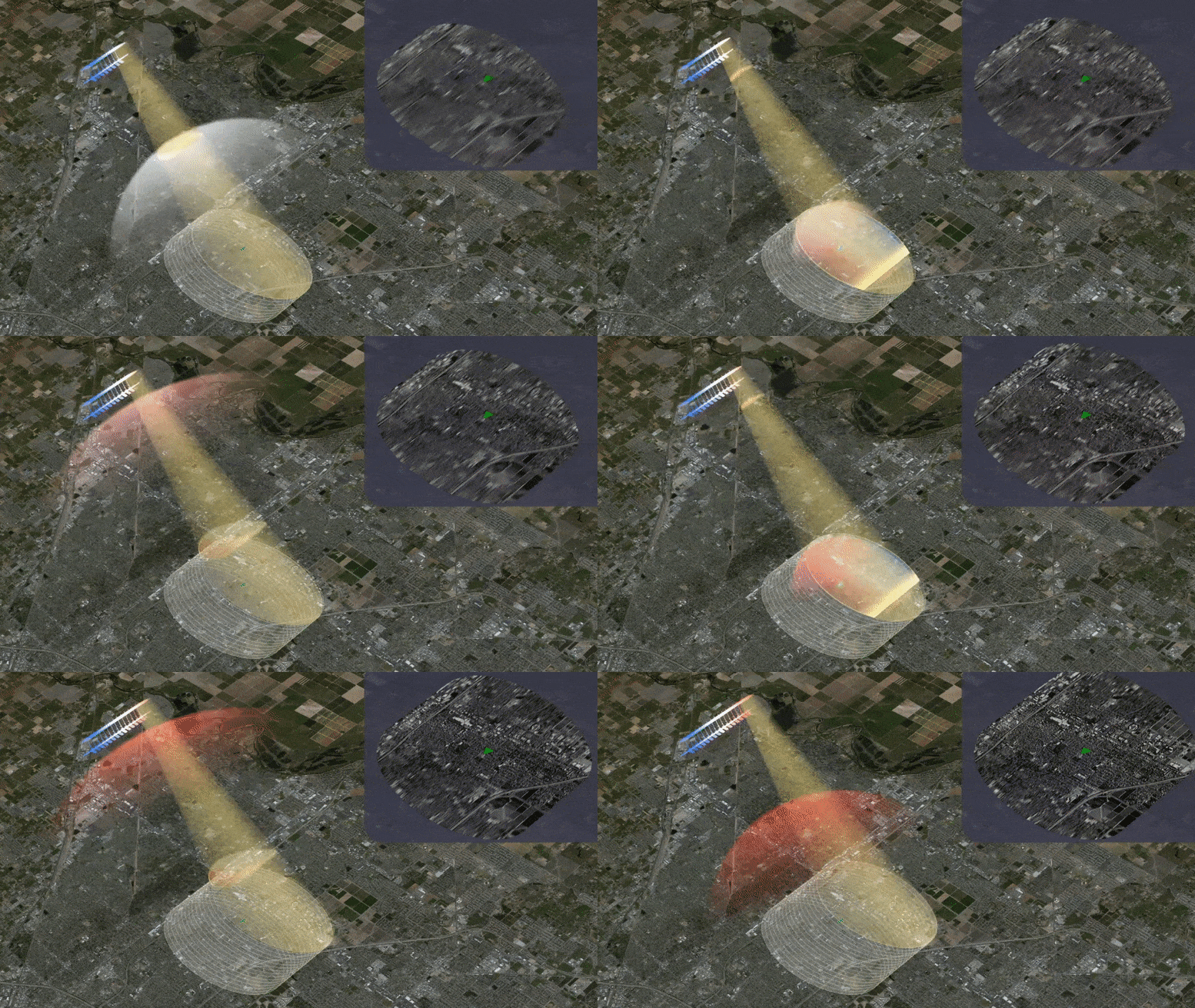
    NISAR Imaging Animation
    Animation of how NISAR will use Synthetic Aperture Radar to create high spatial resolution images of the Earth’s surface. Credit: JPL/NASA

    The NASA-ISRO Synthetic Aperture Radar (NISAR) mission is a groundbreaking collaboration between NASA and the Indian Space Research Organisation (ISRO) designed to monitor and better understand changes on Earth’s surface. Scheduled for launch in March 2025 from the Satish Dhawan Space Centre in India, NISAR will use advanced radar imaging to provide detailed and reliable data about Earth’s ecosystems, ice masses, and geological processes.

    Equipped with a sophisticated dual-frequency radar system, NISAR will scan nearly all of Earth’s land and ice surfaces every 12 days. The mission aims to track changes in vegetation, measure ice sheet dynamics, monitor natural hazards like earthquakes and landslides, and study long-term shifts in the planet’s structure and climate. By observing these changes at unprecedented resolution, NISAR will play a crucial role in improving environmental management and disaster response, while also advancing our understanding of the complex interactions shaping Earth’s systems.

    The satellite represents a significant technological and scientific partnership between NASA and ISRO. It combines NASA’s expertise in space observation with ISRO’s advanced radar technology, highlighting the power of international collaboration in addressing global challenges.

    Never miss a breakthrough: Join the SciTechDaily newsletter.
    Follow us on Google and Google News.

    JPL NASA NISAR
    Share. Facebook Twitter Pinterest LinkedIn Email Reddit

    Related Articles

    Full ‘Bloom’: NASA’s Record-Breaking Radar Antenna Just Unfurled in Orbit

    NASA’s New Satellite Could Change the Way We Farm Forever

    Meet NISAR: The Satellite That Will Watch Every Inch of Our Changing Planet

    NISAR’s Dual Radar Eyes: Watching Earth Like Never Before

    NISAR: The Powerful New Satellite That Will Track Earth’s Secret Shifts

    Cool Coating for a Hot Mission: NISAR’s Final Preparations

    NISAR’s Odyssey: Pioneering Earth-Observing Satellite Clears Crucial Test

    Global Climate Watchdog: NISAR Radar Mission To Provide Dynamic View of Forests & Wetlands

    NISAR Spacecraft: Major New Earth Satellite to Track Disasters, Effects of Climate Change

    Leave A Reply Cancel Reply

    • Facebook
    • Twitter
    • Pinterest
    • YouTube

    Don't Miss a Discovery

    Subscribe for the Latest in Science & Tech!

    Trending News

    Even Occasional Binge Drinking May Triple Liver Damage Risk

    Liftoff! NASA’s Artemis II Launch Sends Astronauts Around the Moon for First Time in 50 Years

    Scientists Discover New Way To Eliminate “Zombie Cells” Driving Aging

    This New Quantum Theory Could Change Everything We Know About the Big Bang

    This One Vitamin May Help Protect Your Brain From Dementia Years Later

    Stopping Weight-Loss Drugs Like Ozempic Can Quickly Erase Heart Benefits

    A 500-Million-Year-Old Surprise Is Forcing Scientists to Rethink Spider Evolution

    Coffee and Blood Pressure: What You Need To Know Before Your Next Cup

    Follow SciTechDaily
    • Facebook
    • Twitter
    • YouTube
    • Pinterest
    • Newsletter
    • RSS
    SciTech News
    • Biology News
    • Chemistry News
    • Earth News
    • Health News
    • Physics News
    • Science News
    • Space News
    • Technology News
    Recent Posts
    • Tiny 436-Million-Year-Old Fish Fossil Rewrites the Origins of Vertebrates
    • 1,800 Miles Down: Scientists Uncover Mysterious Movements at the Edge of Earth’s Core
    • Scientists Uncover Earth’s Hidden “Gold Kitchen” Beneath the Ocean Floor
    • You Don’t Need To Be Rich: New Study Reveals a Simple Life Is the Real Secret to Happiness
    • “Crazy Dice” Help Scientists Prove Only One 150-Year-Old Theory About Randomness Works
    Copyright © 1998 - 2026 SciTechDaily. All Rights Reserved.
    • Science News
    • About
    • Contact
    • Editorial Board
    • Privacy Policy
    • Terms of Use

    Type above and press Enter to search. Press Esc to cancel.