
Close Menu
    Facebook X (Twitter) Instagram
    SciTechDaily
    • Biology
    • Chemistry
    • Earth
    • Health
    • Physics
    • Science
    • Space
    • Technology
    Facebook X (Twitter) Pinterest YouTube RSS
    SciTechDaily
    Home»Space»NASA’s Perseverance Mars Rover Spots Bizarre Helmet-Shaped Rock and Mysterious Megaripples
    Space

    NASA’s Perseverance Mars Rover Spots Bizarre Helmet-Shaped Rock and Mysterious Megaripples

    By NASAAugust 22, 2025No Comments4 Mins Read
    Facebook Twitter Pinterest Telegram LinkedIn WhatsApp Email Reddit
    Share
    Facebook Twitter LinkedIn Pinterest Telegram Email Reddit
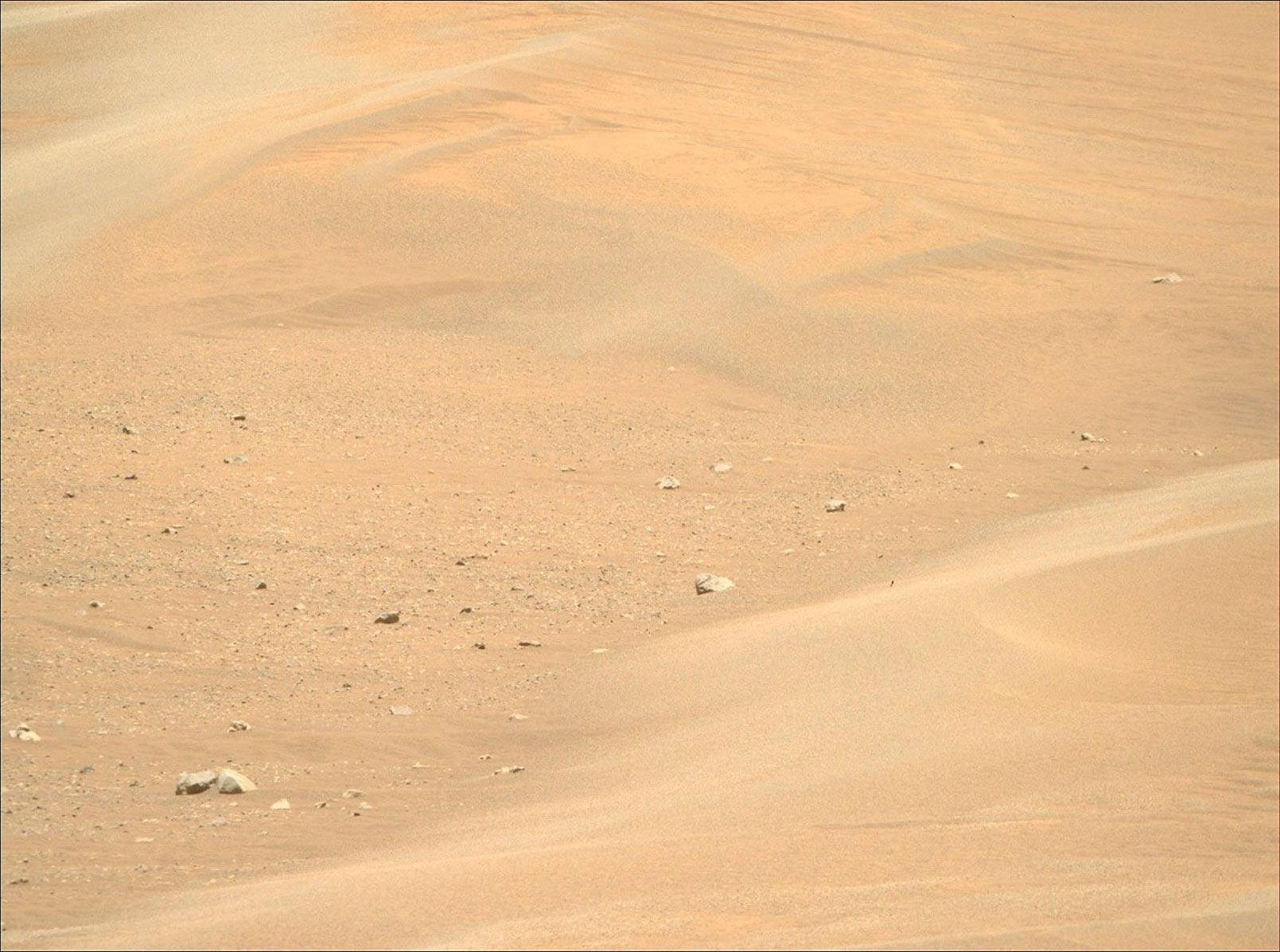
    Kerrlaguna Megaripples
    NASA’s Mars Perseverance rover acquired this image of inactive megaripples at “Kerrlaguna,” Perseverance’s latest target of exploration, on August 13, 2025. The rover acquired the image using its Right Mastcam-Z camera, one of a pair of cameras located high on the rover’s mast, on Sol 1593 — or, Martian day 1,593 of the Mars 2020 mission — at the local mean solar time of 12:05:13. Credit: NASA/JPL-Caltech/ASU

    Perseverance left rocky slopes for sandy megaripples at “Kerrlaguna,” where it’s studying how wind continues to shape Mars today. These inactive ripples may reveal both environmental secrets and resources useful for future astronauts.

    Shifting Sands on the Red Planet

    On Mars, the story of the past is preserved in solid rock, but the planet’s present is being shaped in shifting sand. Just last week, NASA’s Perseverance rover studied a set of inactive megaripples to better understand how winds continue to sculpt the Martian surface today.

    After finishing its examination of the boundary between clay and olivine-rich rocks at a site named “Westport,” Perseverance began moving south again. The rover had previously tried to climb uphill toward a rock outcrop called “Midtoya,” but the steep incline combined with loose, rubble-filled ground made progress nearly impossible. Following several attempts, the team redirected the rover to smoother terrain. Even so, the effort proved worthwhile, since Perseverance collected data on unusual spherule-rich rocks that likely rolled down from “Midtoya.” Among them was “Horneflya,” a witch hat or helmet-shaped rock that has drawn a surge of attention online.

    Mars Perseverance Horneflya Helmet Rock
    NASA’s Mars Perseverance rover acquired this image of a witch hat or helmet-shaped rock “Horneflya” on August 5, 2025 (Sol 1585) at the local mean solar time of 12:34:35. Credit: NASA/JPL-Caltech/ASU

    Discovering the Megaripples of Kerrlaguna

    More recently, Perseverance explored a site called “Kerrlaguna,” where the steep slopes give way to a field of megaripples: large windblown sand formations up to 1 meter (about 3 feet) tall. The science team chose to perform a mini-campaign to make a detailed study of these features. Why such interest? While often the rover’s attention is focused on studying processes in Mars’ distant past that are recorded in ancient rocks, we still have much to learn about the modern Martian environment.

    Almost a decade ago, Perseverance’s forerunner Curiosity studied an active sand dune at “Namib Dune” on the floor of Gale crater, where it took a memorable selfie. (See image below.) However, the smaller megaripples — and especially dusty, apparently no longer active ones like at “Kerrlaguna” — are also common across the surface of Mars. These older immobile features could teach us new insights about the role that wind and water play on the modern Martian surface.
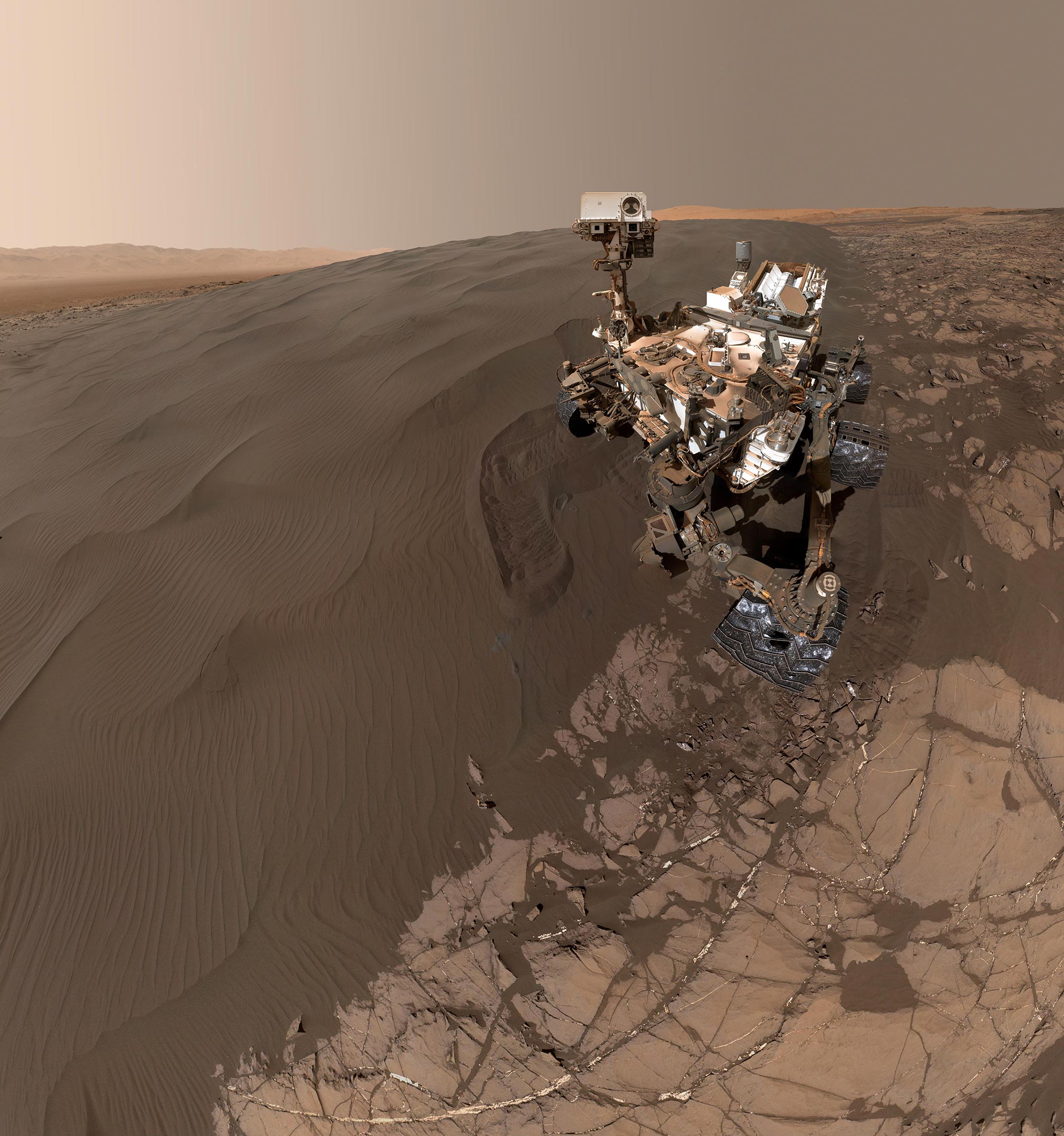
    Curiosity Self Portrait at Martian Sand Dune
    This self-portrait of NASA’s Curiosity Mars rover shows the vehicle at “Namib Dune,” where the rover’s activities included scuffing into the dune with a wheel and scooping samples of sand for laboratory analysis. The scene combines 57 images taken on January 19, 2016, during the 1,228th Martian day, or sol, of Curiosity’s work on Mars. The camera used for this is the Mars Hand Lens Imager (MAHLI) at the end of the rover’s robotic arm. Credit: NASA/JPL-Caltech/MSSS

    Probing Mars’ Surface with Rover Instruments

    After arriving near several of these inactive megaripples, Perseverance performed a series of measurements using its SuperCam, Mastcam-Z, and MEDA science instruments in order to characterize the surrounding environment, the size and chemistry of the sand grains, and any salty crusts that may have developed over time.

    Besides furthering our understanding of the Martian environment, documenting these potential resources could help us prepare for the day when astronauts explore the Red Planet and need resources held within Martian soils to help them survive. It is hoped that this investigation at “Kerrlaguna” can provide a practice run for a more comprehensive campaign located at a more extensive field of larger bedforms at “Lac de Charmes,” further along the rover traverse.

    Written by Athanasios Klidaras, Ph.D. candidate at Purdue University

    Never miss a breakthrough: Join the SciTechDaily newsletter.
    Follow us on Google and Google News.

    Mars Mars 2020 Perseverance Rover NASA Purdue University
    Share. Facebook Twitter Pinterest LinkedIn Email Reddit

    Related Articles

    NASA’s Perseverance Mars Rover: The Triple-Junction Trek to Jurabi Point

    Scientists Obtain First-Ever Sound Recording of Dust Devils on Mars

    NASA’s Mars Perseverance Rover: Laser Marking on Mars

    A River Runs Through It: NASA’s Mars Perseverance Rover Onward to the Delta

    That’s One Small Step for a Mars Rover – Mars 2020 Stands on Its Own Six Wheels for the First Time

    NASA Engineers and Technicians Test Mars 2020 Rover Descent-Stage Separation

    Rover McRoverface: NASA Invites Students to Name Mars 2020 Rover

    NASA’s Exploration Campaign: Back to the Moon and on to Mars

    Phobos May Provide Evidence of Life on Mars

    Leave A Reply Cancel Reply

    • Facebook
    • Twitter
    • Pinterest
    • YouTube

    Don't Miss a Discovery

    Subscribe for the Latest in Science & Tech!

    Trending News

    Your Blood Pressure Reading Could Be Wrong Because of One Simple Mistake

    Astronomers Stunned by Ancient Galaxy With No Spin

    Physicists May Be on the Verge of Discovering “New Physics” at CERN

    Scientists Solve 320-Million-Year Mystery of Reptile Skin Armor

    Scientists Say This Daily Walking Habit May Be the Secret to Keeping Weight Off After Dieting

    New Therapy Rewires the Brain To Restore Joy in Depression Patients

    Giant Squid Detected off Western Australia in Stunning Deep-Sea Discovery

    Popular Sugar-Free Sweetener Linked to Liver Disease, Study Warns

    Follow SciTechDaily
    • Facebook
    • Twitter
    • YouTube
    • Pinterest
    • Newsletter
    • RSS
    SciTech News
    • Biology News
    • Chemistry News
    • Earth News
    • Health News
    • Physics News
    • Science News
    • Space News
    • Technology News
    Recent Posts
    • New Stroke Study Challenges Decades-Old Medical Beliefs
    • These Simple Plant Foods Are Linked to Lower Blood Pressure
    • Common Blood Pressure Drug Supercharges Cancer Treatment in Surprising New Study
    • Key Magic Mushroom Ingredient Increases Laziness and Reduces Aggression
    • Researchers Solve 15-Year Mystery Behind Cancer-Causing Gut Toxin
    Copyright © 1998 - 2026 SciTechDaily. All Rights Reserved.
    • Science News
    • About
    • Contact
    • Editorial Board
    • Privacy Policy
    • Terms of Use

    Type above and press Enter to search. Press Esc to cancel.