
Close Menu
    Facebook X (Twitter) Instagram
    SciTechDaily
    • Biology
    • Chemistry
    • Earth
    • Health
    • Physics
    • Science
    • Space
    • Technology
    Facebook X (Twitter) Pinterest YouTube RSS
    SciTechDaily
    Home»Space»NASA’s Perseverance Rover Completes Mars Sample Depot – Captures Amazing Variety of Martian Geology
    Space

    NASA’s Perseverance Rover Completes Mars Sample Depot – Captures Amazing Variety of Martian Geology

    By Jet Propulsion LaboratoryJanuary 31, 2023No Comments6 Mins Read
    Facebook Twitter Pinterest Telegram LinkedIn WhatsApp Email Reddit
    Share
    Facebook Twitter LinkedIn Pinterest Telegram Email Reddit
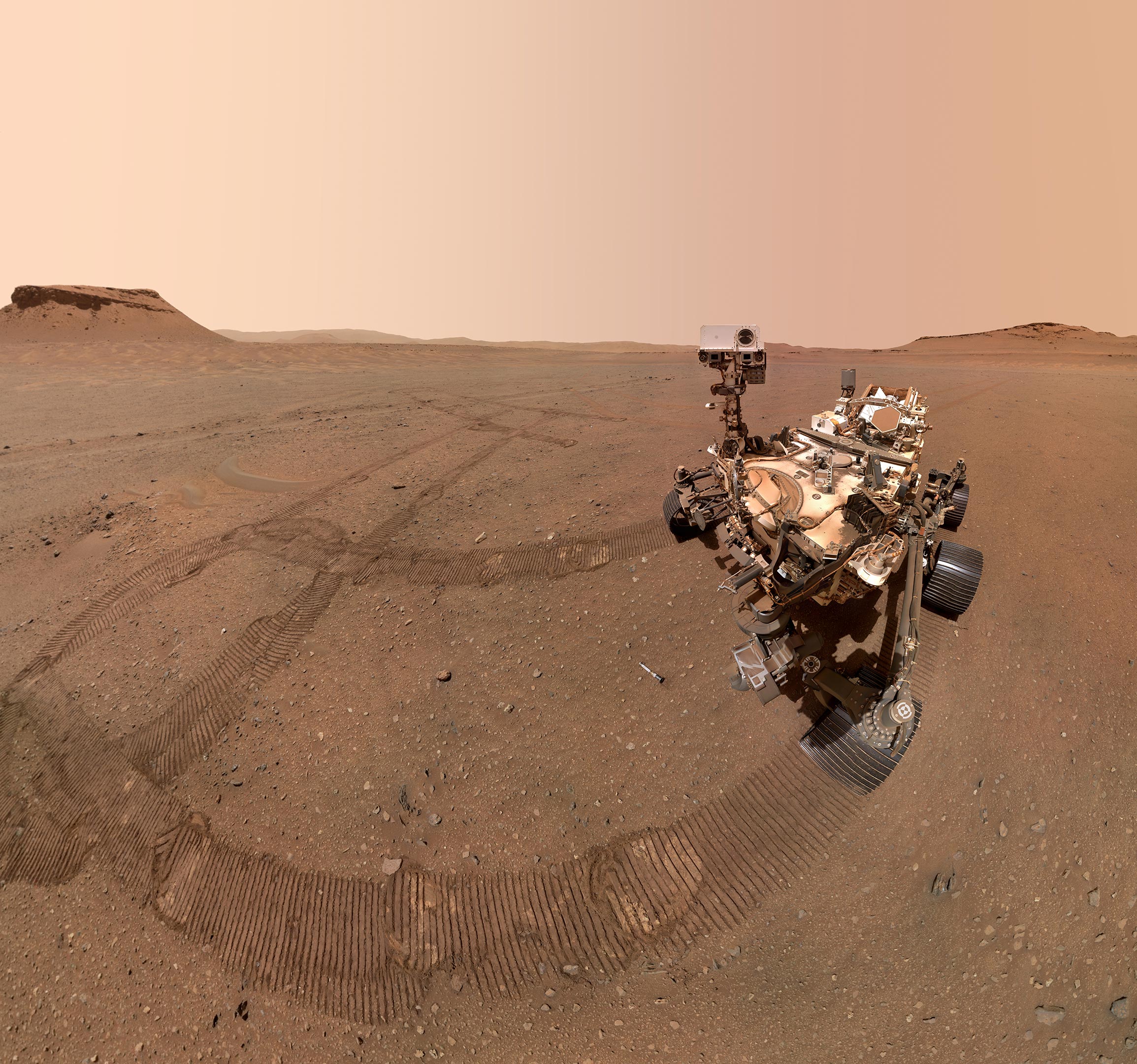
    NASA Perseverance Rover Three Forks Sample Depot Selfie
    Perseverance’s Three Forks Sample Depot Selfie: NASA’s Perseverance Mars rover took a selfie with several of the 10 sample tubes it deposited at a sample depot it is creating within an area of Jezero Crater nicknamed “Three Forks.” Credits: NASA/JPL-Caltech/MSSS

    Ten sample tubes, capturing an amazing variety of Martian geology, have been deposited on Mars’ surface so they could be studied on Earth in the future.

    Less than six weeks after it began, construction of the first sample depot on another world is complete. Confirmation that NASA’s Perseverance Mars rover successfully dropped the 10th and final tube planned for the depot was received around 5 p.m. PST (8 p.m. EST) on Sunday, January 29, by mission controllers at the agency’s Jet Propulsion Laboratory in Southern California. This major milestone involved precision planning and navigation to ensure the tubes could be safely recovered in the future by the NASA-ESA (European Space Agency) Mars Sample Return campaign, which aims to bring Mars samples to Earth for closer study.

    Throughout its science campaigns, the rover has been taking a pair of samples from rocks the mission team deems scientifically significant. One sample from each pair taken so far now sits in the carefully arranged depot in the “Three Forks” region of Jezero Crater. The depot samples will serve as a backup set while the other half remain inside Perseverance, which would be the primary means to convey samples to a Sample Retrieval Lander as part of the campaign.
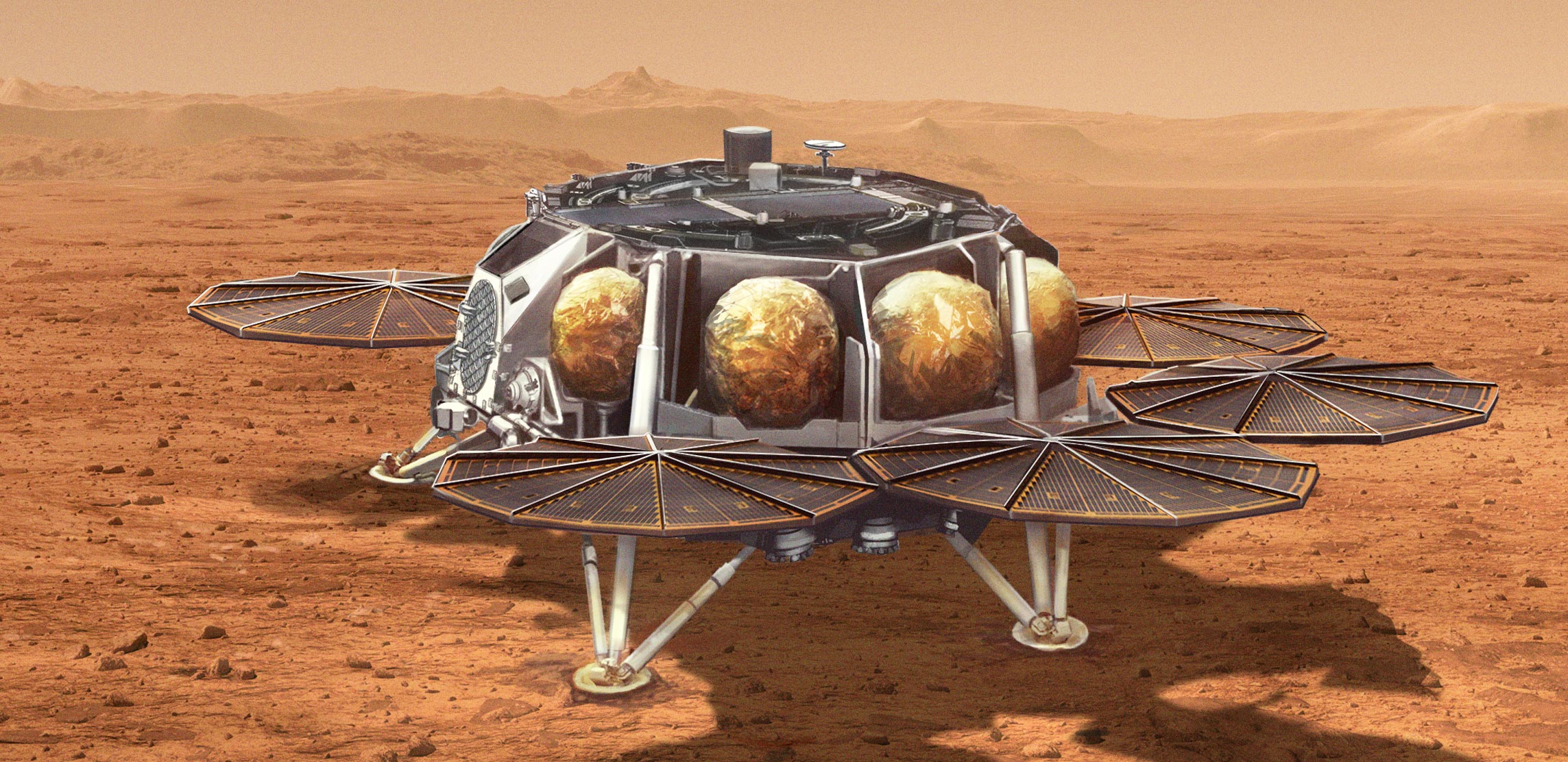
    Mars Sample Retrieval Lander Concept Illustration
    NASA Sample Retrieval Lander: This illustration shows a concept for a proposed NASA Sample Retrieval Lander that would carry a small rocket (about 10 feet, or 3 meters, tall) called the Mars Ascent Vehicle to the Martian surface. After being loaded with sealed tubes containing samples of Martian rocks and soil collected by NASA’s Perseverance rover, the rocket would launch into Mars orbit. The samples would then be ferried to Earth for detailed analysis. Credit: NASA/JPL-Caltech

    Mission scientists believe the igneous and sedimentary rock cores provide an excellent cross-section of the geologic processes that took place in Jezero shortly after the crater’s formation almost 4 billion years ago. The rover also deposited an atmospheric sample and what’s called a “witness” tube, which is used to determine if samples being collected might be contaminated with materials that traveled with the rover from Earth.

    The titanium tubes were deposited on the surface in an intricate zigzag pattern, with each sample about 15 to 50 feet (5 to 15 meters) apart from one another to ensure they could be safely recovered. Adding time to the depot-creation process, the team needed to precisely map the location of each 7-inch-long (18.6-centimeter-long) tube and glove (adapter) combination so that the samples could be found even if covered with dust. The depot is on flat ground near the base of the raised, fan-shaped ancient river delta that formed long ago when a river flowed into a lake there.

    “With the Three Forks depot in our rearview mirror, Perseverance is now headed up the delta,” said Rick Welch, Perseverance’s deputy project manager at JPL. “We’ll make our ascent via the ‘Hawksbill Gap’ route we previously explored. Once we pass the geologic unit the science team calls ‘Rocky Top,’ we will be in new territory and begin exploring the Delta Top.”
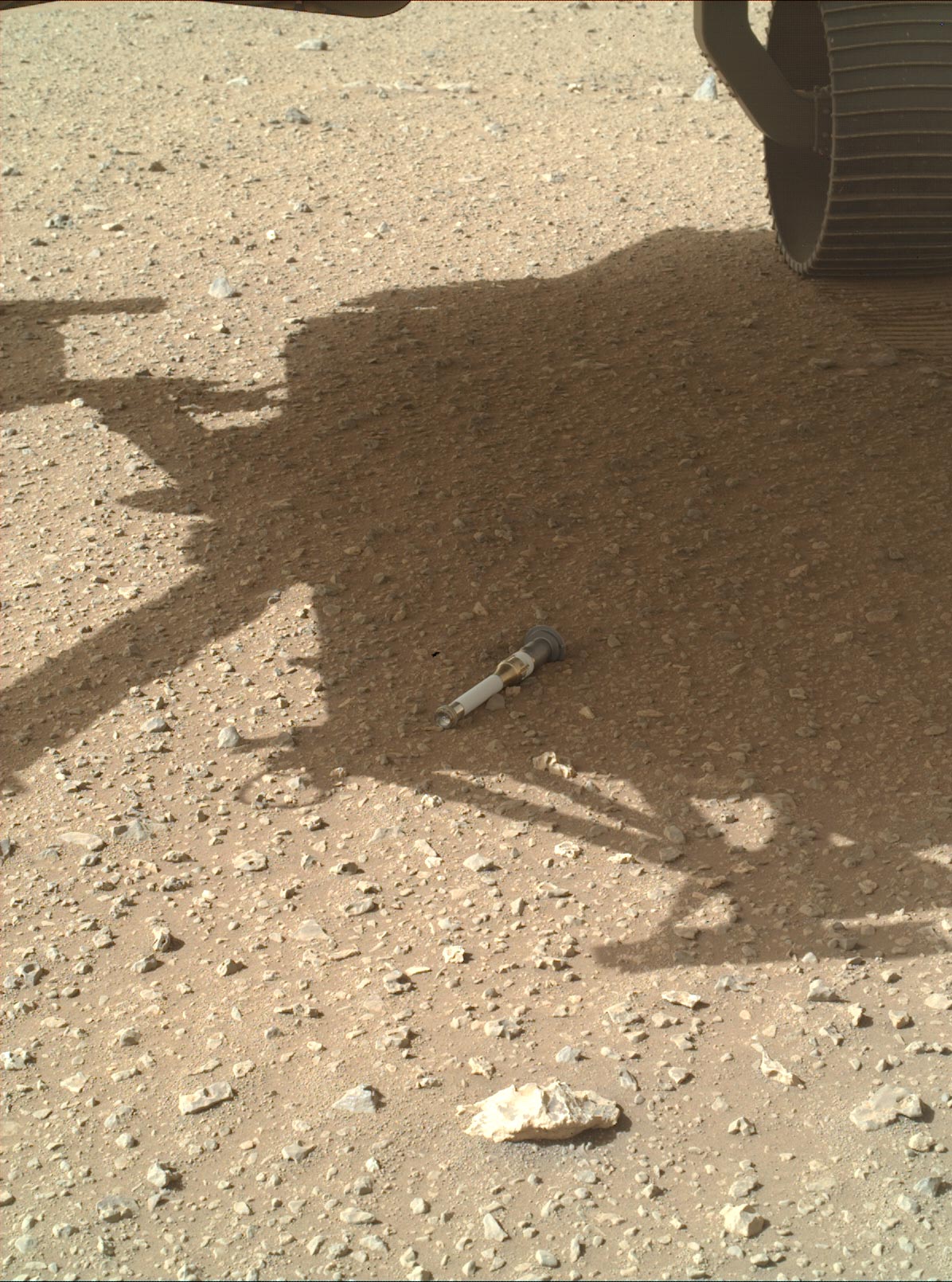
    WATSON Documents Final Tube Dropped at Three Forks Sample Depot
    WATSON Documents Final Tube Dropped at ‘Three Forks’ Sample Depot: NASA’s Perseverance Mars rover dropped the last of 10 tubes at the “Three Forks” sample depot on Jan. 28, 2023, the 690th Martian day, or sol, of the mission. Credits: NASA/JPL-Caltech/MSSS

    Next Science Campaign

    Passing the Rocky Top outcrop represents the end of the rover’s Delta Front Campaign and the beginning of the rover’s Delta Top Campaign because of the geologic transition that takes place at that level.

    “We found that from the base of the delta up to the level where Rocky Top is located, the rocks appear to have been deposited in a lake environment,” said Ken Farley, Perseverance project scientist at Caltech. “And those just above Rocky Top appear to have been created in or at the end of a Martian river flowing into the lake. As we ascend the delta into a river setting, we expect to move into rocks that are composed of larger grains – from sand to large boulders. Those materials likely originated in rocks outside of Jezero, eroded and then washed into the crater.”
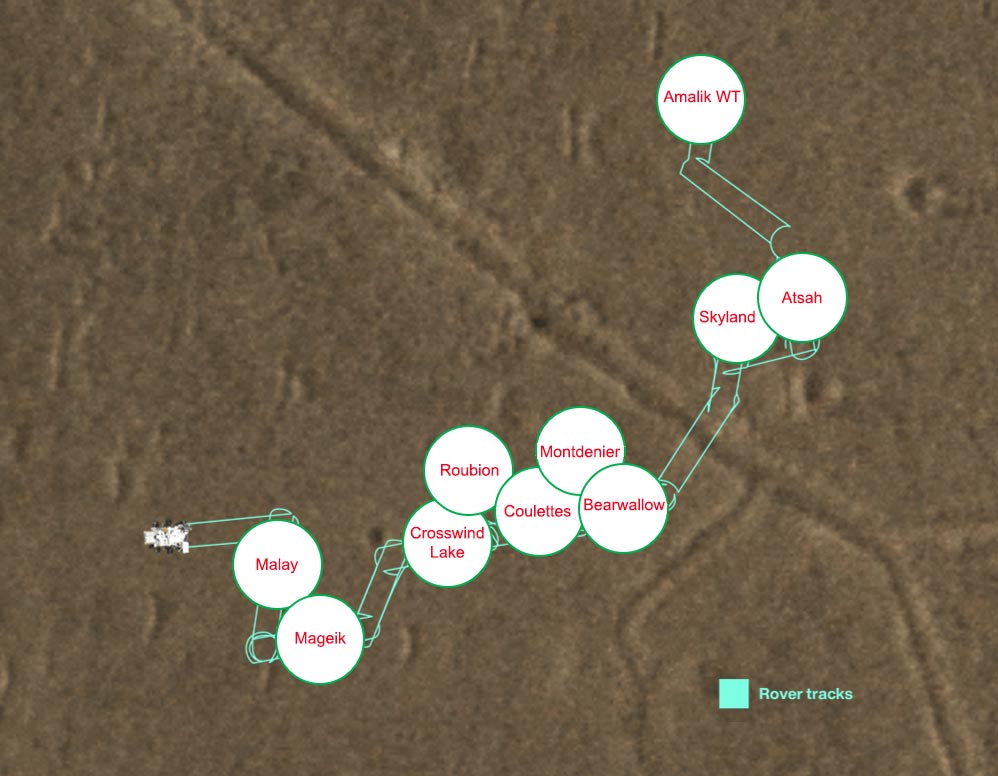
    NASA Perseverance Rover Three Forks Sample Depot Map
    Perseverance’s ‘Three Forks’ Sample Depot Map: This map shows where NASA’s Perseverance Mars rover dropped each of its 10 samples – one half of every pair taken so far – so that a future mission could pick them up. After five weeks of work, the sample depot was completed Jan. 24, 2023, the 687th day, or sol, of the mission. Credits: NASA/JPL-Caltech

    One of the first stops the rover will make during the new science campaign is at a location the science team calls the “Curvilinear Unit.” Essentially a Martian sandbar, the unit is made of sediment that eons ago was deposited in a bend in one of Jezero’s inflowing river channels. The science team believes the Curvilinear Unit will be an excellent location to hunt for intriguing outcrops of sandstone and perhaps mudstone, and to get a glimpse at the geological processes beyond the walls of Jezero Crater.

    More About the Mission

    One of the key objectives for Perseverance’s mission on Mars is astrobiology, including caching samples that may contain signs of ancient microbial life. The rover will analyze the planet’s geology and past climate, lay the foundation for human exploration of the Red Planet, and be the first mission to gather Martian rock and soil samples.

    Later NASA missions, in cooperation with ESA, will send spacecraft to Mars to collect these sealed samples from the surface and return them to Earth for in-depth analysis.

    The Mars 2020 Perseverance mission is part of NASA’s Moon to Mars exploration approach, which includes Artemis missions to the Moon that will help pave the way for human exploration of the Red Planet.

    JPL, which is managed for NASA by Caltech, built and manages operations of the Perseverance rover.

    Never miss a breakthrough: Join the SciTechDaily newsletter.
    Follow us on Google and Google News.

    JPL Mars Mars 2020 Perseverance Rover NASA Popular
    Share. Facebook Twitter Pinterest LinkedIn Email Reddit

    Related Articles

    NASA’s Mars Perseverance Rover Now Selects Its Own Targets To Zap With Its Laser

    NASA’s Ingenuity Mars Helicopter in Contact With Perseverance Rover After Communications Dropout

    NASA’s Ingenuity Mars Helicopter Scouts Ridgeline for Perseverance Science Team

    NASA Ingenuity Helicopter Spots Spacecraft Wreckage on Mars – Perseverance’s Cone-Shaped Backshell

    We’ve Arrived! NASA’s Mars Perseverance Rover Starts the Delta Front Campaign

    Incredible Video of Solar Eclipse on Mars – Captured by NASA’s Perseverance Rover

    NASA’s Mars Perseverance Rover Arrives at Ancient Delta for New Science Campaign

    NASA Perseverance Rover’s Self-Driving Capabilities Put to the Test in Rush to Martian Delta

    NASA’s Mars Perseverance Rover Picks Up an Unwanted Hitchhiker

    Leave A Reply Cancel Reply

    • Facebook
    • Twitter
    • Pinterest
    • YouTube

    Don't Miss a Discovery

    Subscribe for the Latest in Science & Tech!

    Trending News

    Scientists Uncover Potential Brain Risks of Popular Fish Oil Supplements

    Scientists Discover a Surprising Way To Make Bread Healthier and More Nutritious

    After 60 Years, Scientists Uncover Unexpected Brain Effects of Popular Diabetes Drug Metformin

    New Research Uncovers Hidden Side Effects of Popular Weight-Loss Drugs

    Scientists Rethink Extreme Warming After Surprising Ocean Discovery

    Landmark Study Links Never Marrying to Significantly Higher Cancer Risk

    Researchers Discover Unknown Beetle Species Just Steps From Their Lab

    Largest-Ever Study Finds Medicinal Cannabis Ineffective for Anxiety, Depression, PTSD

    Follow SciTechDaily
    • Facebook
    • Twitter
    • YouTube
    • Pinterest
    • Newsletter
    • RSS
    SciTech News
    • Biology News
    • Chemistry News
    • Earth News
    • Health News
    • Physics News
    • Science News
    • Space News
    • Technology News
    Recent Posts
    • Scientists Finally Crack Decades-Old Mystery of “Breathing” Lasers
    • “Like Liquid Metal”: Scientists Create Strange Shape-Shifting Material
    • Early Warning Signals of Esophageal Cancer May Be Hiding in Plain Sight
    • Researchers Have Discovered a THC-Free Cannabis Compound That May Replace Opioids
    • Common Blood Pressure Drug Shows Surprising Power Against Deadly Antibiotic-Resistant Superbug
    Copyright © 1998 - 2026 SciTechDaily. All Rights Reserved.
    • Science News
    • About
    • Contact
    • Editorial Board
    • Privacy Policy
    • Terms of Use

    Type above and press Enter to search. Press Esc to cancel.