
Close Menu
    Facebook X (Twitter) Instagram
    SciTechDaily
    • Biology
    • Chemistry
    • Earth
    • Health
    • Physics
    • Science
    • Space
    • Technology
    Facebook X (Twitter) Pinterest YouTube RSS
    SciTechDaily
    Home»Space»NASA’s Planetary Defense Mission NEO Surveyor Successfully Passes Key Milestone
    Space

    NASA’s Planetary Defense Mission NEO Surveyor Successfully Passes Key Milestone

    By NASADecember 13, 2022No Comments2 Mins Read
    Facebook Twitter Pinterest Telegram LinkedIn WhatsApp Email Reddit
    Share
    Facebook Twitter LinkedIn Pinterest Telegram Email Reddit
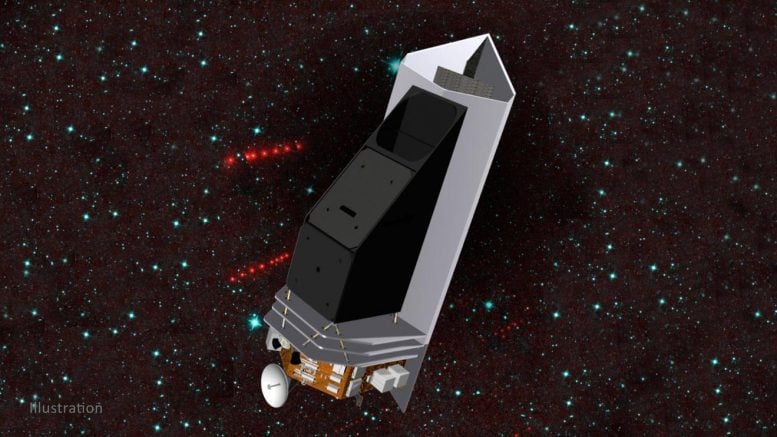
    NEO Surveyor
    Illustration of NEO Surveyor, which is a mission designed to discover and characterize most of the potentially hazardous asteroids that are near the Earth. Credit: NASA/JPL-Caltech

    NEO Surveyor, an infrared telescope launching by 2028, will enhance NASA’s ability to detect hazardous near-Earth objects, advancing planetary defense.

    NASA officials have confirmed NASA’s Near-Earth Object Surveyor space telescope (NEO Surveyor) – the next flight mission out of the agency’s Planetary Defense Coordination Office (PDCO) – after completing a rigorous technical and programmatic review, known as Key Decision Point C (KDP-C). This establishes NASA’s commitment to the mission’s technical, cost, and schedule baseline.

    As a result of this decision, NASA is committed to a development cost baseline of $1.2 billion and to be ready for a launch no later than June 2028. The cost and schedule commitments outlined at KDP-C align the NEO Surveyor mission with program management best practices that account for potential technical risks and budgetary uncertainty beyond the development project’s control.

    NEO Surveyor is an infrared space telescope designed to help advance NASA’s planetary defense efforts. It does this by expediting the agency’s ability to discover and characterize at least 90% of the potentially hazardous asteroids and comets that come within 30 million miles of Earth’s orbit. These are collectively known as near-earth objects, or NEOs. NEO Surveyor’s successful completion of this review furthers NASA’s commitment to planetary defense and the search for NEOs that could one day pose an impact threat to Earth.

    NEO Surveyor will consist of a single scientific instrument: a 50-centimeter (nearly 20-inch) diameter telescope that operates in two heat-sensing infrared wavelengths. It will be capable of detecting both bright and dark asteroids, which are the most difficult type to find.

    The flight mission, which falls under the agency’s Planetary Science Division within the Science Mission directorate, is being developed by NASA’s Jet Propulsion Laboratory (JPL) in Southern California, and the survey investigation is led by the University of Arizona. NASA’s Planetary Missions Program Office at Marshall Space Flight Center provides NEO Surveyor program management, and program oversight is provided by the PDCO, which was established in 2016 to manage the agency‘s ongoing efforts in Planetary Defense.

    Never miss a breakthrough: Join the SciTechDaily newsletter.
    Follow us on Google and Google News.

    Asteroid NASA NASA NEO Surveyor Planetary Defense
    Share. Facebook Twitter Pinterest LinkedIn Email Reddit

    Related Articles

    NASA’s Heat-Seeking Space Telescope Is Almost Ready to Spot Killer Asteroids

    NEO Surveyor: NASA’s Next Leap in Asteroid Defense

    NASA Confronts 72% Asteroid Impact Probability: A Planetary Defense Test

    Defying Disaster: NASA’s Innovative Strategies in Planetary Defense

    Goodnight NEOWISE: NASA’s Asteroid-Hunting Space Telescope Shut Down After 10 Years

    NASA Analysis: Earth Is Safe From Asteroid Apophis Impact for at Least 100 Years

    NASA’s Planetary Defense: “Potentially Hazardous Asteroid” Predicted to Safely Pass by Earth on March 21

    Asteroid Deflection Planetary Defense Mission Target: “Dimorphos”

    NASA Double Asteroid Redirection Test: First Planetary Defense Mission Target Gets a New Name

    Leave A Reply Cancel Reply

    • Facebook
    • Twitter
    • Pinterest
    • YouTube

    Don't Miss a Discovery

    Subscribe for the Latest in Science & Tech!

    Trending News

    Popular Sugar-Free Sweetener Linked to Liver Disease, Study Warns

    What Is Hantavirus? The Deadly Disease Raising Alarm Worldwide

    Scientists Just Discovered How the Universe Builds Monster Black Holes

    Scientists Unveil New Treatment Strategy That Could Outsmart Cancer

    A Simple Vitamin May Hold the Key to Treating Rare Genetic Diseases

    Scientists Think the Real Fountain of Youth May Be Hiding in Your Gut

    Ravens Don’t Follow Wolves, They Predict Them

    This Common Knee Surgery May Be Doing More Harm Than Good

    Follow SciTechDaily
    • Facebook
    • Twitter
    • YouTube
    • Pinterest
    • Newsletter
    • RSS
    SciTech News
    • Biology News
    • Chemistry News
    • Earth News
    • Health News
    • Physics News
    • Science News
    • Space News
    • Technology News
    Recent Posts
    • Popular Supplement Ingredient Linked to Shorter Lifespan in Men
    • Scientists May Have Found a Way To Repair Nerve Damage in Multiple Sclerosis
    • GLP-1 Weight Loss Linked To Dramatically Lower Risk of Sleep Apnea, Kidney Disease and More
    • Scientists Uncover the Surprising Source of Strange Clouds Near the Milky Way’s Supermassive Black Hole
    • This Dazzling Green Snake Was Hiding in Plain Sight for Decades
    Copyright © 1998 - 2026 SciTechDaily. All Rights Reserved.
    • Science News
    • About
    • Contact
    • Editorial Board
    • Privacy Policy
    • Terms of Use

    Type above and press Enter to search. Press Esc to cancel.