
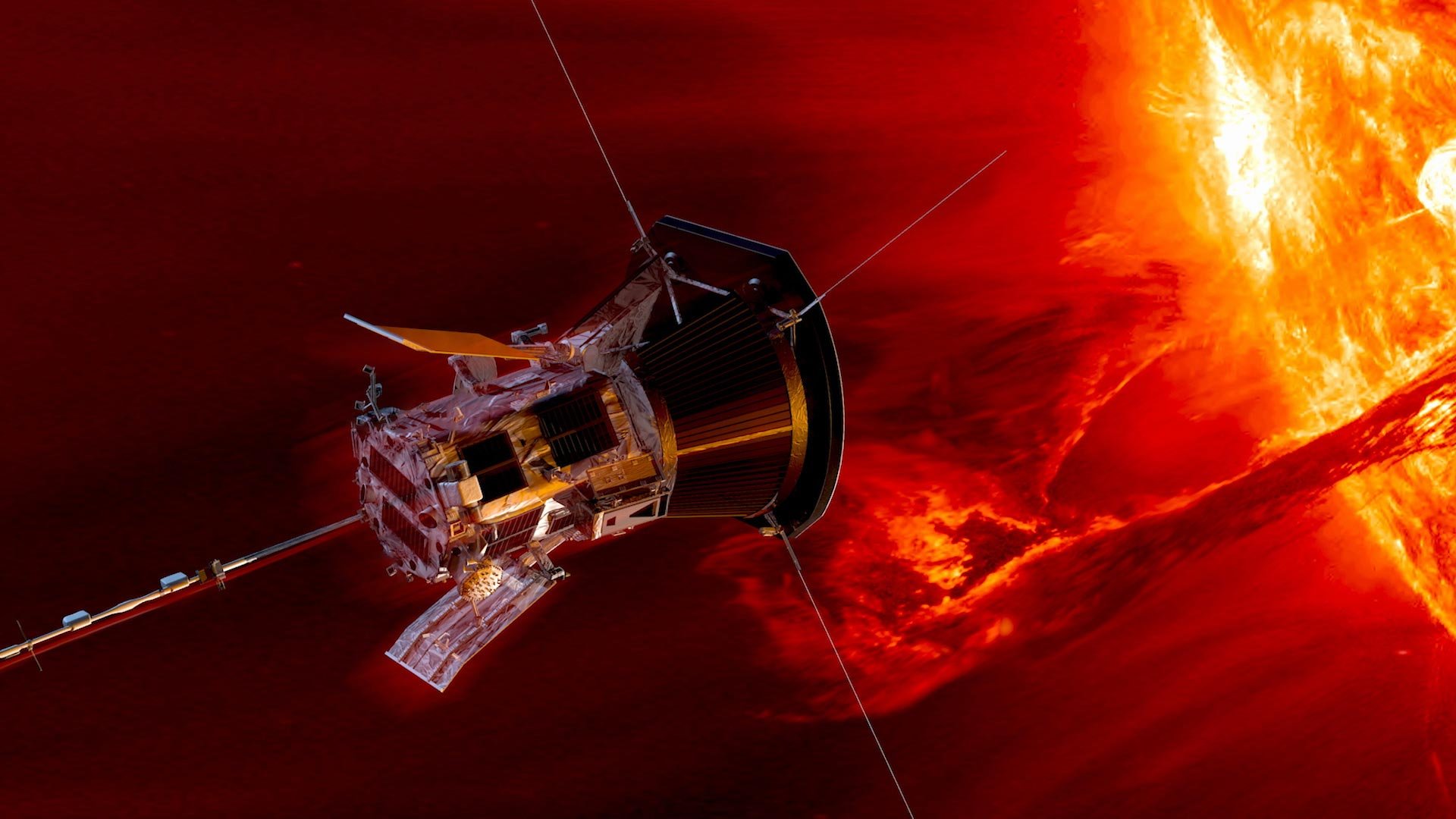
NASA’s Parker Solar Probe team won the 2024 Collier Trophy for boldly venturing into the Sun’s atmosphere. With revolutionary heat protection and autonomous systems, the probe is uncovering the Sun’s mysteries and redefining space exploration.
The Parker Solar Probe team, made up of engineers and scientists from NASA, the Johns Hopkins Applied Physics Laboratory in Laurel, Maryland, and more than 40 partner organizations across the U.S., has been awarded the 2024 Robert J. Collier Trophy by the National Aeronautic Association (NAA). This prestigious annual award honors the most outstanding achievement in American aeronautics or astronautics, recognizing improvements in the performance, efficiency, and safety of air or space vehicles over the past year.
First Mission to Touch the Sun
“Congratulations to the entire Parker Solar Probe team for this well-earned recognition,” said NASA acting Administrator Janet Petro. “This mission’s trailblazing research is rewriting the textbooks on solar science by going to a place no human-made object has ever been and advancing NASA’s efforts to better understand our solar system and the Sun’s influence, with lasting benefits for us all. As the first to touch the Sun and fastest human-made object ever built, Parker Solar Probe is a testament to human ingenuity and discovery.”
A Record-Breaking Close Encounter
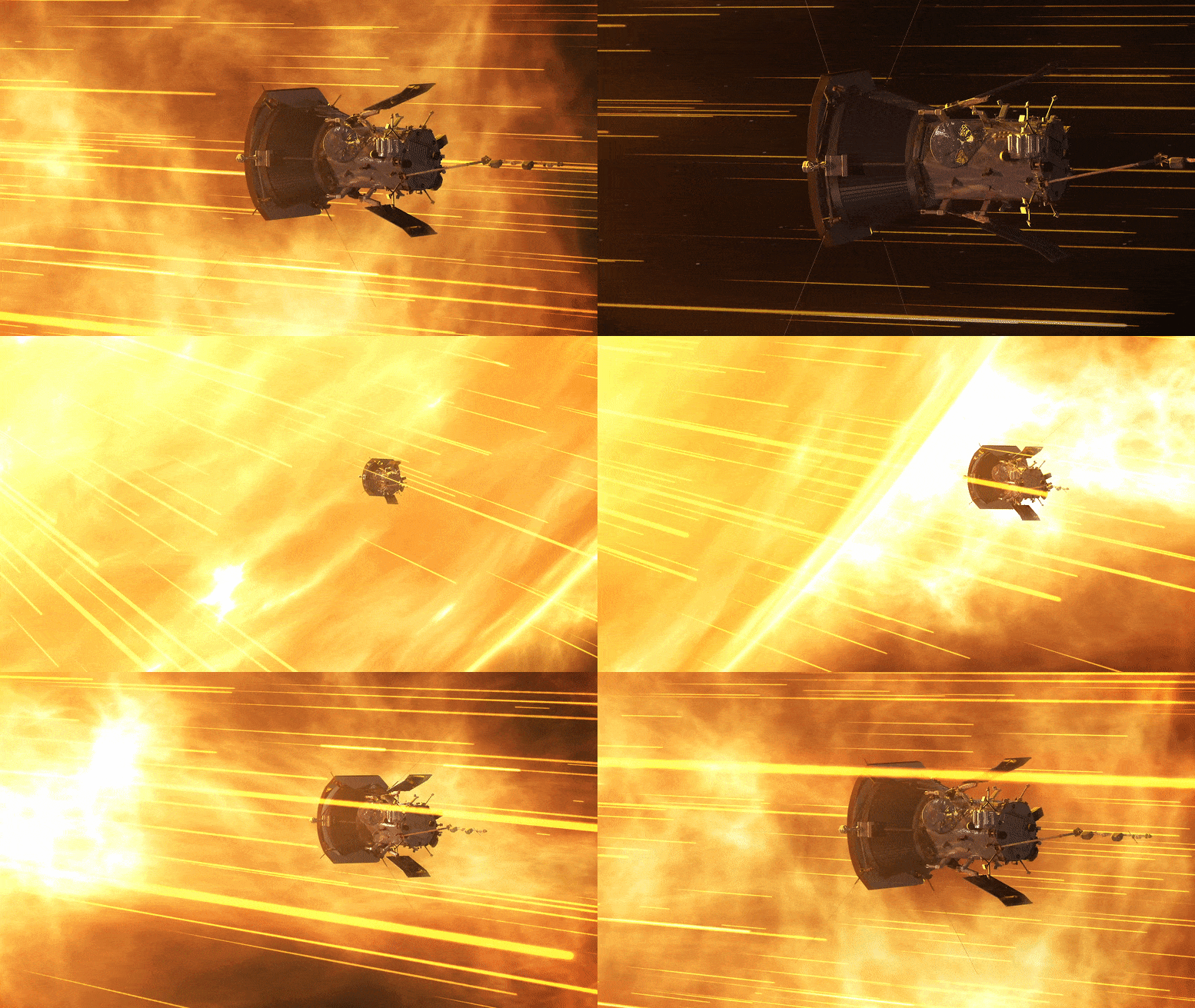
On December 24, 2024, Parker Solar Probe made its closest pass to the Sun yet, flying deep into the solar corona – just 3.8 million miles above the Sun’s surface – at nearly 430,000 miles per hour, marking a historic milestone in space exploration and solar science.
“This award is a recognition of the unrelenting dedication and hard work of the Parker Solar Probe team. I am so proud of this team and honored to have been a part of it,” said Nicky Fox, associate administrator, Science Mission Directorate, NASA Headquarters in Washington. “By studying the Sun closer than ever before, we continue to advance our understanding of not only our closest star, but also stars across our universe. Parker Solar Probe’s historic close approaches to the Sun are a testament to the incredible engineering that made this record-breaking journey possible.”
Groundbreaking Engineering Behind the Probe
Three novel aerospace technology advancements were critical to enabling this record performance: The first is the Thermal Protection System, or heat shield, that protects the spacecraft and is built to withstand brutal temperatures as high as 2,500 degrees Fahrenheit. The Thermal Protection System allows Parker’s electronics and instruments to operate close to room temperature.
Additional Parker innovations included first-of-their-kind actively cooled solar arrays that protect themselves from overexposure to intense solar energy while powering the spacecraft, and a fully autonomous spacecraft system that can manage its own flight behavior, orientation, and configuration for months at a time. Parker has relied upon all of these vital technologies every day since its launch almost seven years ago, in August 2018.
Unlocking the Secrets of the Sun
“I am thrilled for the Parker Solar Probe team on receiving this well-deserved award,” said Joe Westlake, director of the Heliophysics Division at NASA Headquarters. “The new information about the Sun made available through this mission will improve our ability to prepare for space weather events across the solar system, as well as better understand the very star that makes life possible for us on Earth.”
Parker’s close-up observations of solar events, such as coronal mass ejections and solar particle events, are critical to advancing our understanding of the science of our Sun and the phenomena that drive high-energy space weather events that pose risks to satellites, air travel, astronauts, and even power grids on Earth. Understanding the fundamental physics behind events which drive space weather will enable more reliable predictions and lower astronaut exposure to hazardous radiation during future deep space missions to the Moon and Mars.
Making the “Impossible” Possible
“This amazing team brought to life an incredibly difficult space science mission that had been studied, and determined to be impossible, for more than 60 years. They did so by solving numerous long-standing technology challenges and dramatically advancing our nation’s spaceflight capabilities,” said APL Director Ralph Semmel. “The Collier Trophy is well-earned recognition for this phenomenal group of innovators from NASA, APL, and our industry and research partners from across the nation.”
First awarded in 1911, the Robert J. Collier Trophy winner is selected by a group of aviation leaders chosen by the NAA. The Collier Trophy is housed in the Smithsonian’s National Air and Space Museum in Washington.
A Legacy of Innovation and Teamwork
“Traveling three times closer to the Sun and seven times faster than any spacecraft before, Parker’s technology innovations enabled humanity to reach inside the Sun’s atmosphere for the first time,” said Bobby Braun, head of APL’s Space Exploration Sector. “We are all immensely proud that the Parker Solar Probe team will join a long legacy of prestigious aerospace endeavors that redefined technology and changed history.”
“The Parker Solar Probe team’s achievement in earning the 2024 Collier is a shining example of determination, genius, and teamwork,” said NAA President and CEO Amy Spowart. “It’s a distinct honor for the NAA to acknowledge and celebrate the remarkable team that turned the impossible into reality.”
NASA’s Parker Solar Probe
The Parker Solar Probe is a NASA mission designed to study the Sun up close and unlock the mysteries of its outer atmosphere. Developed under NASA’s Living With a Star program, which focuses on understanding the Sun’s impact on Earth and human life, the mission aims to improve our ability to predict space weather that can affect satellites, power grids, and astronauts. The spacecraft was designed, built, and is operated by the Johns Hopkins Applied Physics Laboratory, which also manages the mission for NASA. The Living With a Star program is led by NASA’s Goddard Space Flight Center for the agency’s Science Mission Directorate.
Never miss a breakthrough: Join the SciTechDaily newsletter.
Follow us on Google and Google News.