
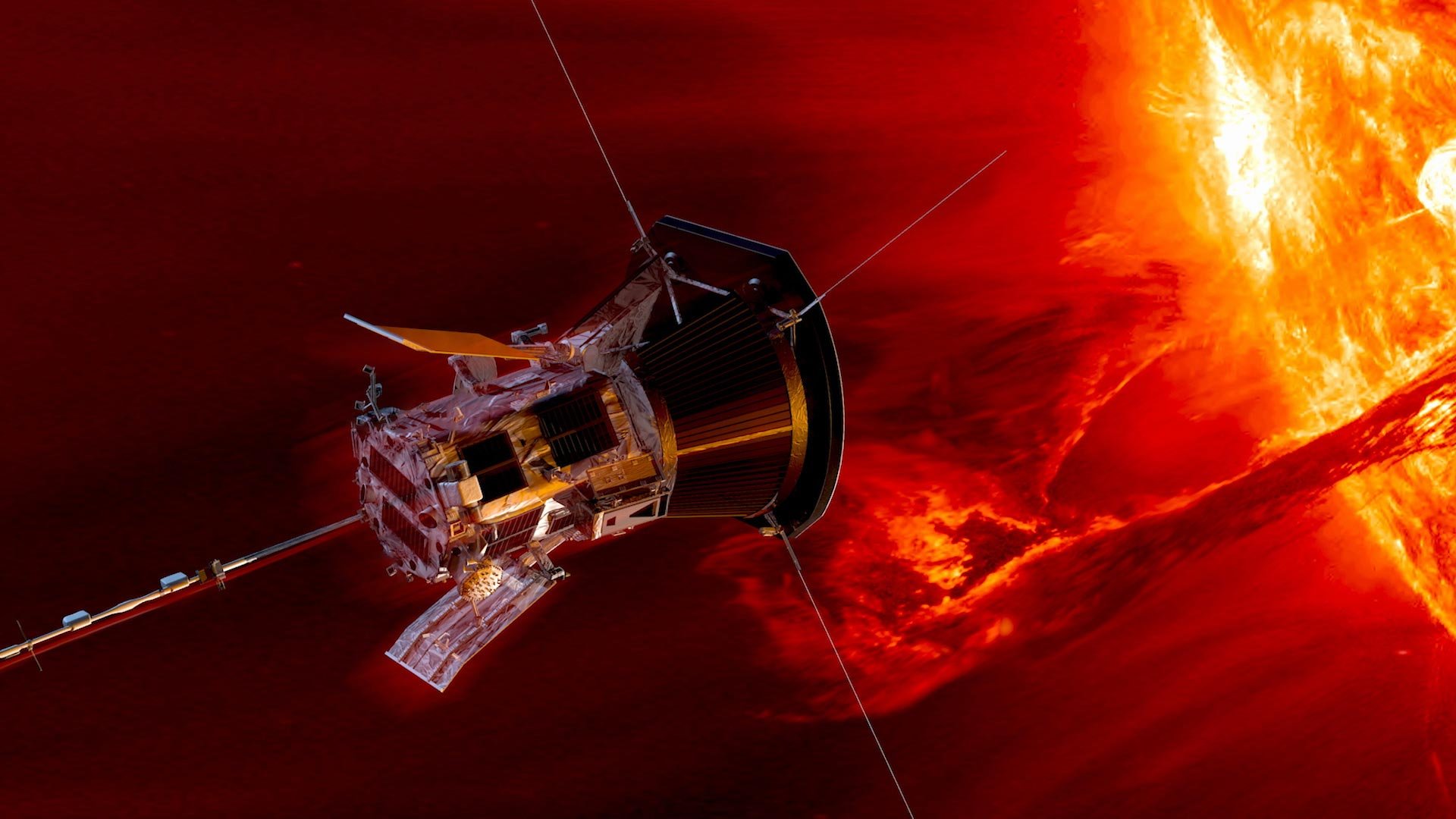
NASA’s Parker Solar Probe has shattered records by venturing closer to the Sun than ever before, reaching blazing speeds of 430,000 mph.
Equipped with groundbreaking technology, it braved extreme temperatures to collect invaluable data, promising to reshape our understanding of solar phenomena and even influence how we explore other stars.
Parker Solar Probe’s Record-Breaking Solar Encounter
NASA operations teams have confirmed the Parker Solar Probe mission to “touch” the Sun survived its record-breaking closest approach to the solar surface, achieving a historic milestone on December 24, 2024.
Flying a mere 3.8 million miles above the Sun’s surface, the probe shattered its previous record while traveling at an astonishing speed of 430,000 miles per hour — faster than any human-made object in history. A beacon signal received on December 26 confirmed that the spacecraft had emerged unscathed from its fiery journey and continues to operate as expected.
This groundbreaking flyby is just the first of several planned at this proximity. By venturing so close to the Sun, Parker Solar Probe can collect unprecedented data, promising to reshape our understanding of our star and its impact on the solar system.
“Flying this close to the Sun is a historic moment in humanity’s first mission to a star.”
Nicky Fox, NASA Associate Administrator, Science Mission Directorate
Why Studying the Sun Matters
“Flying this close to the Sun is a historic moment in humanity’s first mission to a star,” said Nicky Fox, who leads the Science Mission Directorate at NASA Headquarters in Washington. “By studying the Sun up close, we can better understand its impacts throughout our solar system, including on the technology we use daily on Earth and in space, as well as learn about the workings of stars across the universe to aid in our search for habitable worlds beyond our home planet.”
NASA’s Parker Solar Probe survived its record-breaking closest approach to the solar surface on Dec. 24, 2024. Breaking its previous record by flying just 3.8 million miles above the surface of the Sun, the spacecraft hurtled through the solar atmosphere at a blazing 430,000 miles per hour — faster than any human-made object has ever moved. Credit: NASA
Six Years of Preparation for a Historic Milestone
Parker Solar Probe has spent the last six years setting up for this moment. Launched in 2018, the spacecraft used seven flybys of Venus to gravitationally direct it ever closer to the Sun. With its last Venus flyby on Nov. 6, 2024, the spacecraft reached its optimal orbit. This oval-shaped orbit brings the spacecraft an ideal distance from the Sun every three months — close enough to study our Sun’s mysterious processes but not too close to become overwhelmed by the Sun’s heat and damaging radiation. The spacecraft will remain in this orbit for the remainder of its primary mission.
“Parker Solar Probe is braving one of the most extreme environments in space and exceeding all expectations,” said Nour Rawafi, the project scientist for Parker Solar Probe at the Johns Hopkins Applied Physics Laboratory (APL), which designed, built, and operates the spacecraft from its campus in Laurel, Maryland. “This mission is ushering a new golden era of space exploration, bringing us closer than ever to unlocking the Sun’s deepest and most enduring mysteries.”
Engineering Marvels: Surviving Extreme Heat
Close to the Sun, the spacecraft relies on a carbon foam shield to protect it from the extreme heat in the upper solar atmosphere called the corona, which can exceed 1 million degrees Fahrenheit. The shield was designed to reach temperatures of 2,600 degrees Fahrenheit — hot enough to melt steel — while keeping the instruments behind it shaded at a comfortable room temperature. In the hot but low-density corona, the spacecraft’s shield is expected to warm to 1,800 degrees Fahrenheit.

“It’s monumental to be able to get a spacecraft this close to the Sun,” said John Wirzburger, the Parker Solar Probe mission systems engineer at APL. “This is a challenge the space science community has wanted to tackle since 1958 and had spent decades advancing the technology to make it possible.”
Unlocking the Sun’s Secrets: Scientific Discoveries
By flying through the solar corona, Parker Solar Probe can take measurements that help scientists better understand how the region gets so hot, trace the origin of the solar wind (a constant flow of material escaping the Sun), and discover how energetic particles are accelerated to half the speed of light.
“The data is so important for the science community because it gives us another vantage point,” said Kelly Korreck, a program scientist at NASA Headquarters and heliophysicist who worked on one of the mission’s instruments. “By getting firsthand accounts of what’s happening in the solar atmosphere, Parker Solar Probe has revolutionized our understanding of the Sun.”
Redefining Solar Science Through Data
Previous passes have already aided scientists’ understanding of the Sun. When the spacecraft first passed into the solar atmosphere in 2021, it found the outer boundary of the corona is wrinkled with spikes and valleys, contrary to what was expected. Parker Solar Probe also pinpointed the origin of important zig-zag-shaped structures in the solar wind, called switchbacks, at the visible surface of the Sun — the photosphere.
Since that initial pass into the Sun, the spacecraft has been spending more time in the corona, where most of the critical physical processes occur.
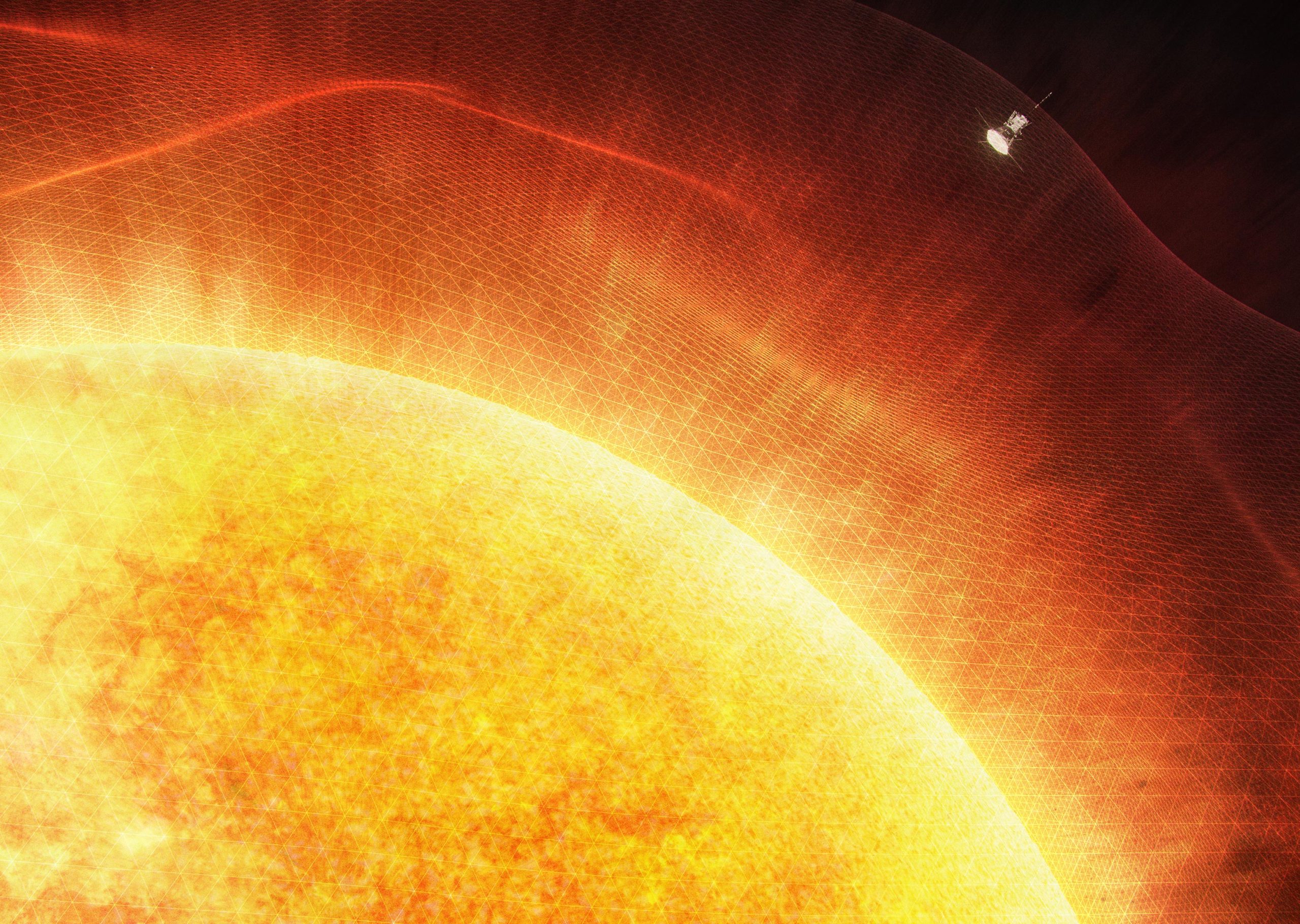
“We now understand the solar wind and its acceleration away from the Sun,” said Adam Szabo, the Parker Solar Probe mission scientist at NASA’s Goddard Space Flight Center in Greenbelt, Maryland. “This close approach will give us more data to understand how it’s accelerated closer in.”
Beyond the Sun: Additional Discoveries Across the Solar System
Parker Solar Probe has also made discoveries across the inner solar system. Observations showed how giant solar explosions called coronal mass ejections vacuum up dust as they sweep across the solar system, and other observations revealed unexpected findings about solar energetic particles. Flybys of Venus have documented the planet’s natural radio emissions from its atmosphere, as well as the first complete image of its orbital dust ring.
Preparing for the Next Solar Encounters
So far, the spacecraft has only transmitted that it’s safe, but soon it will be in a location that will allow it to downlink the data it collected on this latest solar pass.
“The data that will come down from the spacecraft will be fresh information about a place that we, as humanity, have never been.”
Joe Westlake, Heliophysics Division Director, NASA Headquarters
“The data that will come down from the spacecraft will be fresh information about a place that we, as humanity, have never been,” said Joe Westlake, the director of the Heliophysics Division at NASA Headquarters. “It’s an amazing accomplishment.”
The spacecraft’s next planned close solar passes come on March 22, 2025, and June 19, 2025.
NASA’s Parker Solar Probe is a groundbreaking spacecraft designed to study the Sun up close, making history as the first mission to “touch” our star. Launched in 2018, it has ventured closer to the Sun than any spacecraft before, enduring extreme conditions to gather unprecedented data about the solar corona, the source of the solar wind, and the mechanisms driving energetic particles. Using seven Venus flybys to fine-tune its orbit, Parker reaches speeds of up to 430,000 miles per hour while braving temperatures exceeding 1,800 degrees Fahrenheit. Equipped with a cutting-edge heat shield, the probe provides insights that are transforming our understanding of solar phenomena and their effects across the solar system, aiding in the development of technologies and models that protect Earth and space-based assets.
Never miss a breakthrough: Join the SciTechDaily newsletter.
Follow us on Google and Google News.
7 Comments
This achievement is yo me so exciting regardless of being beyond my understanding of such a phenomenal achievement by mankind. Congratulations from my heart.
GO HUMANS GO !!!
Doesn’t sound like they learned that much.
NASA is full of snakes, full of lies and delusional thinkers who are followed by delusional fans
Kudos to the person traveling behind this probe who gets these great photos of the probe in action.
And after millions of dollars and years of study …we now know, the sun is hot.
Whatever happened to Sun Spots? Are they cooler than the rest of the Sun and can be observed by this Parker probe?