
Close Menu
    Facebook X (Twitter) Instagram
    SciTechDaily
    • Biology
    • Chemistry
    • Earth
    • Health
    • Physics
    • Science
    • Space
    • Technology
    Facebook X (Twitter) Pinterest YouTube RSS
    SciTechDaily
    Home»Space»NASA’s Parker Solar Probe Survives Fiery Sun Flyby at 430,000 MPH
    Space

    NASA’s Parker Solar Probe Survives Fiery Sun Flyby at 430,000 MPH

    By Michael Buckley, Johns Hopkins Applied Physics LaboratoryDecember 28, 20244 Comments3 Mins Read
    Facebook Twitter Pinterest Telegram LinkedIn WhatsApp Email Reddit
    Share
    Facebook Twitter LinkedIn Pinterest Telegram Email Reddit
    Parker Solar Probe Close to Sun
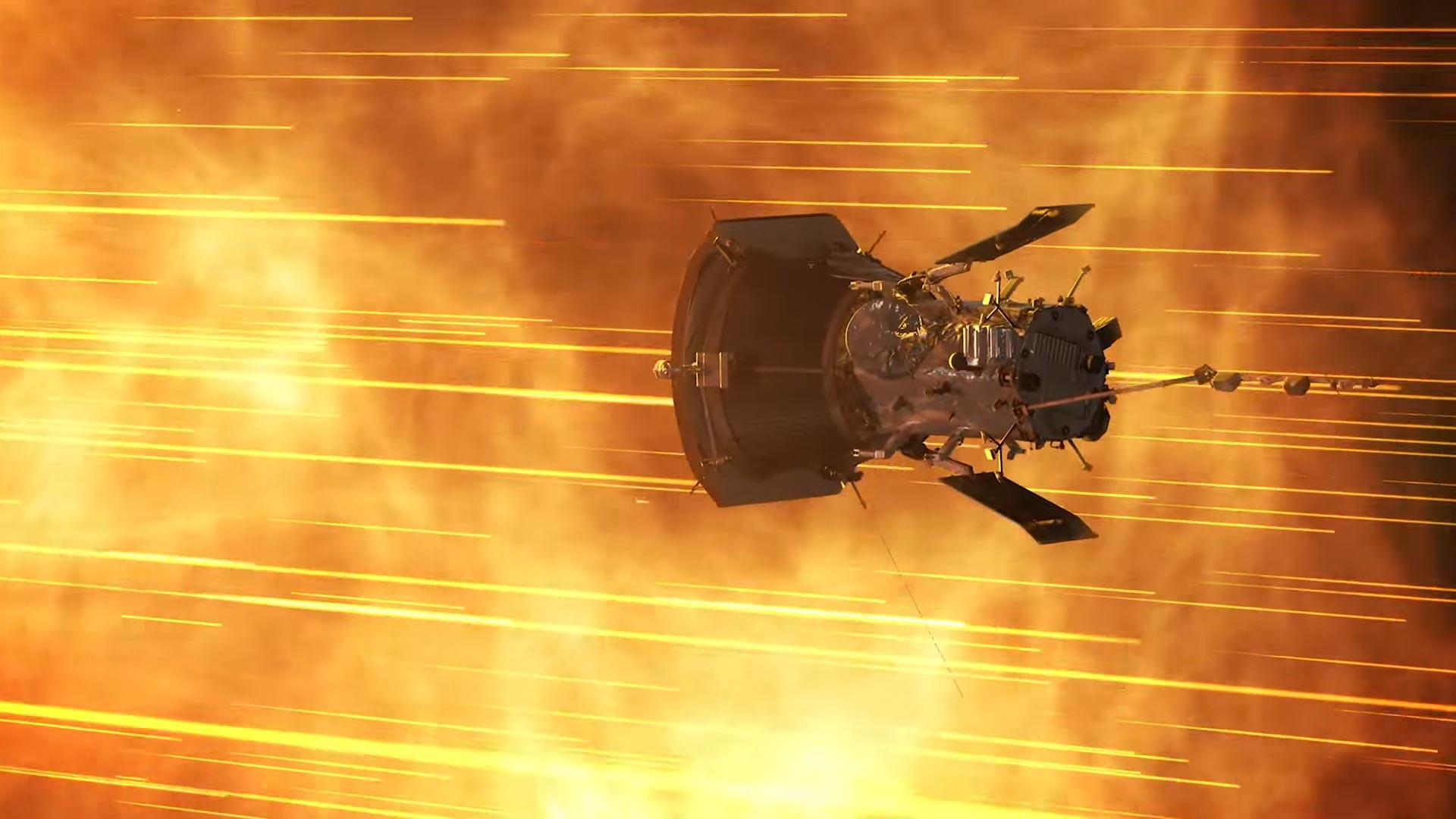
    NASA’s Parker Solar Probe achieved a daring approach, flying within 3.8 million miles of the Sun at 430,000 mph. Its groundbreaking mission continues to decode the Sun’s outer mysteries while staying resilient in extreme conditions. Credit: NASA GSFC/CIL/Brian Monroe

    Racing closer to the Sun than ever before, the Parker Solar Probe is unlocking the secrets of our solar system’s fiery heart.

    NASA’s Parker Solar Probe has successfully transmitted a beacon signal back to Earth, confirming it is in good health and functioning normally after its record-breaking close approach to the Sun.

    The mission operations team at Johns Hopkins Applied Physics Laboratory (APL) in Laurel, Maryland, received the signal just before midnight EST on December 26. During its closest approach on December 24, the spacecraft traveled at an astonishing 430,000 miles per hour and came within 3.8 million miles of the Sun’s surface, making it the closest any human-made object has ever been to our star.

    Detailed telemetry data on the spacecraft’s status is expected to arrive on January 1.

    This close-up study of the Sun allows Parker Solar Probe to take measurements that help scientists better understand how material in this region gets heated to millions of degrees, trace the origin of the solar wind (a continuous flow of material escaping the Sun), and discover how energetic particles are accelerated to near light speed. Previous close passes have helped scientists pinpoint the origins of structures in the solar wind and map the outer boundary of the Sun’s atmosphere.
    NASA Parker Solar Probe Artist's Concept
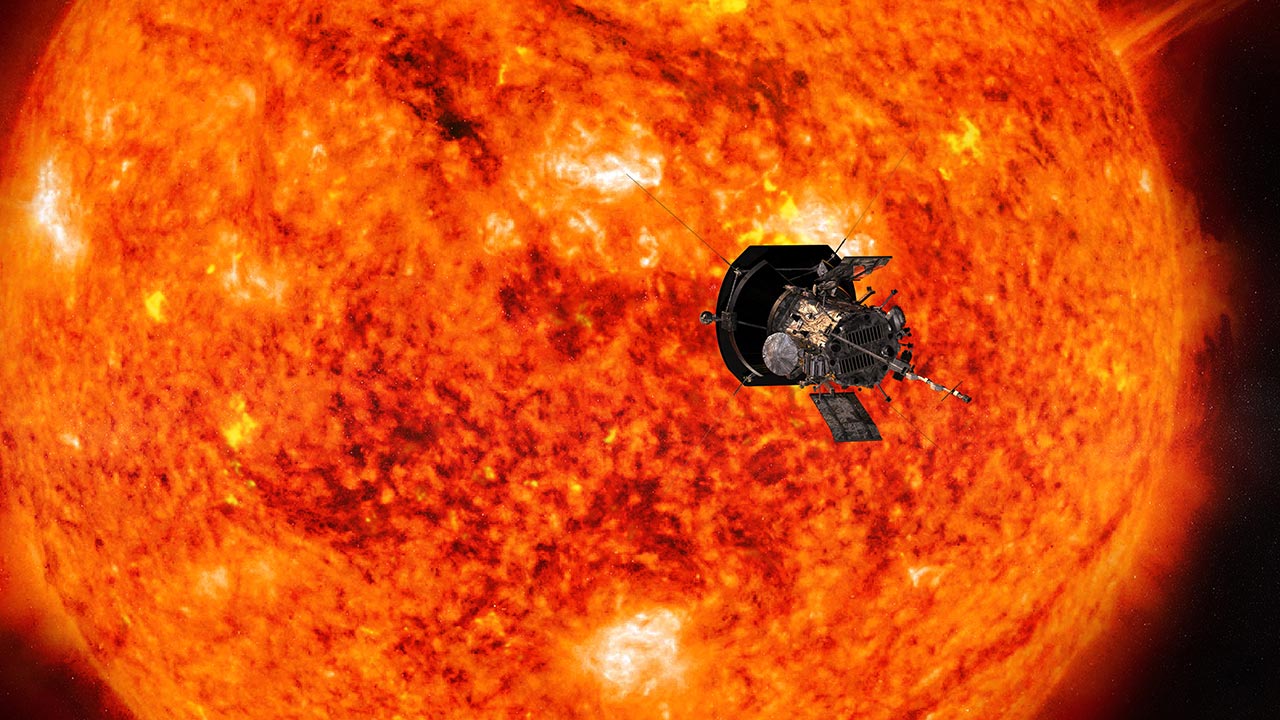
    Artist’s concept of NASA’s Parker Solar Probe. Credit: NASA/Johns Hopkins APL

    The Parker Solar Probe is a groundbreaking NASA mission developed under the Living With a Star program, designed to study the Sun and its effects on the Sun-Earth system. Its primary goal is to advance our understanding of solar phenomena, such as solar wind and energetic particles, which have direct impacts on life and technology on Earth.

    Managed by NASA’s Goddard Space Flight Center for the Science Mission Directorate, the program aims to address how solar activity influences space weather and planetary systems. The spacecraft was designed, built, and is operated by the Johns Hopkins Applied Physics Laboratory (APL), which also manages the mission. By venturing closer to the Sun than any spacecraft before it, Parker Solar Probe is unlocking critical insights into the dynamics of our star and its interactions with the solar system.

    Never miss a breakthrough: Join the SciTechDaily newsletter.
    Follow us on Google and Google News.

    Johns Hopkins APL NASA Parker Solar Probe Popular Sun
    Share. Facebook Twitter Pinterest LinkedIn Email Reddit

    Related Articles

    NASA’s Parker Solar Probe Shatters Records: The Closest & Fastest Sun Flyby Ever

    Eclipsing Theories: Parker Soars Through Powerful Coronal Mass Ejection “Vacuuming Up” Interplanetary Dust

    Gravity Assist: Venus Flyby Sends Parker Solar Probe Toward Record-Setting Flights Around the Sun

    5 Years, 430,000 MPH, and Counting: How NASA’s Parker Solar Probe Is Making History

    Spacecraft Enters the Sun’s Blistering Hot Corona for the First Time in History

    Parker Solar Probe: For the First Time in History, a Spacecraft Has Touched the Sun

    NASA’s Parker Solar Probe Touches the Sun for the First Time – Bringing New Discoveries

    NASA’s Parker Solar Probe Completes a Record-Setting Swing by the Sun

    5 Astonishing New Discoveries From NASA’s Parker Solar Probe [Video]

    4 Comments

    1. Vernon Johnson on December 28, 2024 6:23 pm

      Awesome, and the math calculations telling the probe it’s function while we sleep. Android and robots to ease our load,a helping hand. I fear what becomes of we the people. I can imagine robot soldiers knowing the history of man. Back to the event, it’s wonderful and fearful but be fearless and let’s get out there and touch the hand of God. ” Remember that end of the TV ” for all night!

      Reply
      • ItsAlive on December 31, 2024 4:45 am

        @Vernon Johnson: This story is about a probe which visits our sun of 4,5b years old, already 4,499,994,000 years in existence before the story of god was written. No sun, no story of god.

        Reply
        • Wolf on July 12, 2025 10:56 pm

          Soo, the story was perhaps far fetched and even all made up?

          Reply
          • Cyndi palen on July 13, 2025 3:29 pm

            Do you think cause I also am calling bs.

            Reply
    Leave A Reply Cancel Reply

    • Facebook
    • Twitter
    • Pinterest
    • YouTube

    Don't Miss a Discovery

    Subscribe for the Latest in Science & Tech!

    Trending News

    Even Occasional Binge Drinking May Triple Liver Damage Risk

    Liftoff! NASA’s Artemis II Launch Sends Astronauts Around the Moon for First Time in 50 Years

    Scientists Discover New Way To Eliminate “Zombie Cells” Driving Aging

    This New Quantum Theory Could Change Everything We Know About the Big Bang

    This One Vitamin May Help Protect Your Brain From Dementia Years Later

    Stopping Weight-Loss Drugs Like Ozempic Can Quickly Erase Heart Benefits

    A 500-Million-Year-Old Surprise Is Forcing Scientists to Rethink Spider Evolution

    Coffee and Blood Pressure: What You Need To Know Before Your Next Cup

    Follow SciTechDaily
    • Facebook
    • Twitter
    • YouTube
    • Pinterest
    • Newsletter
    • RSS
    SciTech News
    • Biology News
    • Chemistry News
    • Earth News
    • Health News
    • Physics News
    • Science News
    • Space News
    • Technology News
    Recent Posts
    • This Nearby Earth-Sized Planet Could Answer Big Questions About Alien Worlds
    • A Fiery Finale: How NASA’s Artemis II Moon Mission Returns to Earth
    • NASA Artemis II Skips Burn As Astronaut Captures Stunning View of Earth
    • NASA’s Artemis II: Humans Just Left Earth Orbit for the First Time Since 1972
    • What Causes Chronic Pain? Scientists Identify Key Culprit in the Brain
    Copyright © 1998 - 2026 SciTechDaily. All Rights Reserved.
    • Science News
    • About
    • Contact
    • Editorial Board
    • Privacy Policy
    • Terms of Use

    Type above and press Enter to search. Press Esc to cancel.