
Close Menu
    Facebook X (Twitter) Instagram
    SciTechDaily
    • Biology
    • Chemistry
    • Earth
    • Health
    • Physics
    • Science
    • Space
    • Technology
    Facebook X (Twitter) Pinterest YouTube RSS
    SciTechDaily
    Home»Space»NASA’s Parker Solar Probe Dares To Dance With the Sun
    Space

    NASA’s Parker Solar Probe Dares To Dance With the Sun

    By Michael Buckley, Johns Hopkins Applied Physics LaboratoryDecember 22, 2024No Comments3 Mins Read
    Facebook Twitter Pinterest Telegram LinkedIn WhatsApp Email Reddit
    Share
    Facebook Twitter LinkedIn Pinterest Telegram Email Reddit
    NASA Parker Solar Probe CME
    Solar Limb Sensors all over NASA’s Parker Solar Probe spacecraft can tell if it’s getting too much sunlight. If one of the sensors gets too much Sun, the spacecraft determines how best to maneuver itself into a safer position. Credit: Johns Hopkins University/APL/Steve Gribben

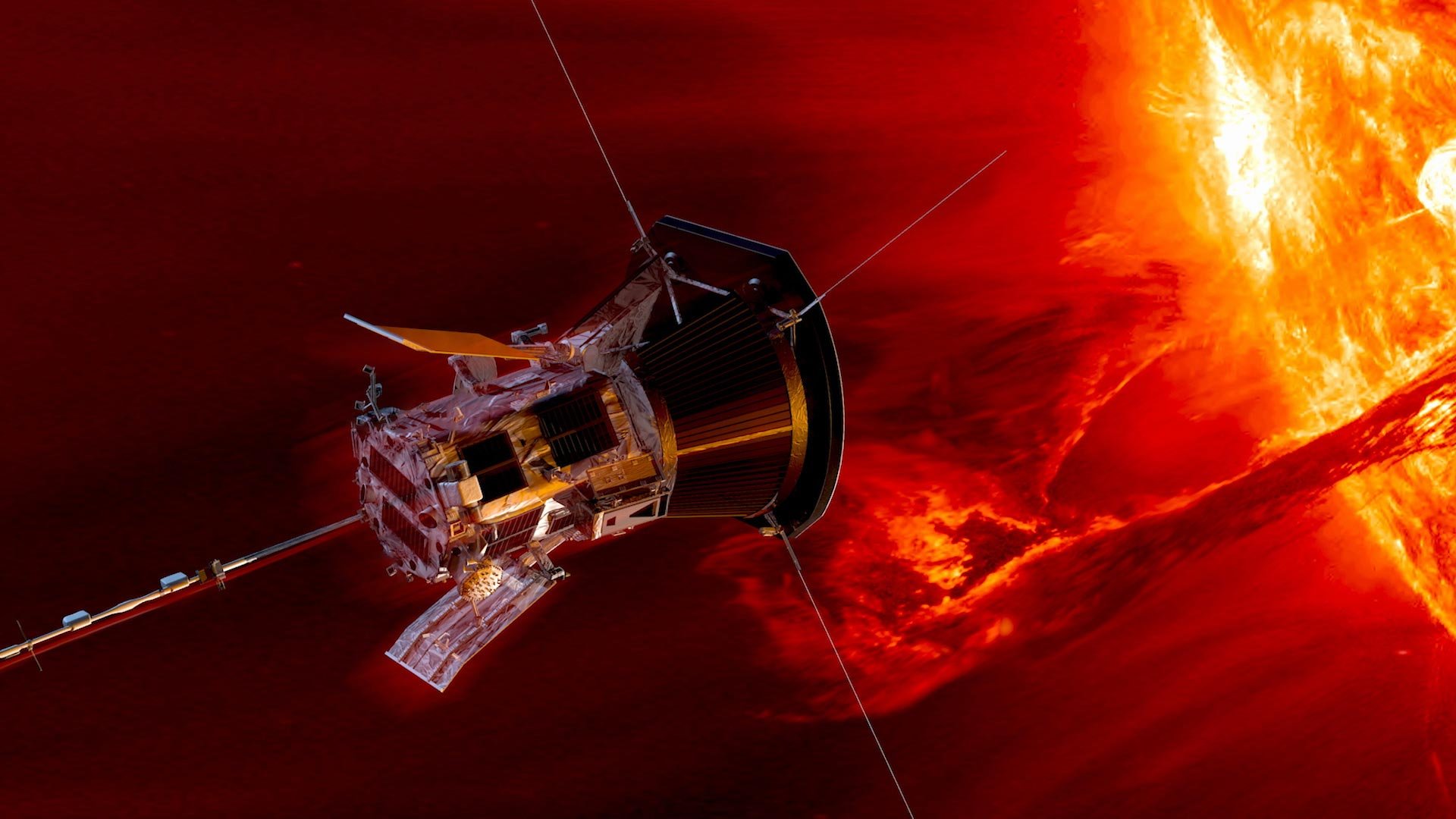
    NASA’s Parker Solar Probe is poised for its closest approach to the Sun on December 24.

    By December 27, following its perilous journey near the Sun, Parker is expected to transmit data, offering new insights into solar phenomena.

    Heading into the Sun: Parker Solar Probe’s Historic Journey

    NASA’s Parker Solar Probe is healthy and functioning as expected as it prepares for its closest-ever approach to the Sun, scheduled for Christmas Eve.

    At 7:20 p.m. EST on December 20, mission operators at the Johns Hopkins Applied Physics Laboratory (APL) in Laurel, Maryland, confirmed the spacecraft’s status through a beacon transmission received via NASA’s Deep Space Network in Canberra, Australia. The transmission indicated that all systems were operating normally.

    “This is one example of NASA’s bold missions, doing something that no one else has ever done before to answer longstanding questions about our universe,” said Arik Posner, Parker Solar Probe program scientist at NASA Headquarters in Washington. “We can’t wait to receive that first status update from the spacecraft and start receiving the science data in the coming weeks.”

    Parker Solar Probe Touches Sun
    Parker Solar Probe will make its closest approach to the Sun on December 24, providing crucial data on the Sun and showcasing NASA’s innovative capabilities in space exploration. Credit: NASA GSFC/CIL/Brian Monroe

    Approaching the Perihelion: A Milestone for Space Exploration

    Parker is now on course to fly just 3.8 million miles (around 6.1 million kilometers) from the surface of the Sun on Tuesday, December 24, at 6:53 a.m. EST. During closest approach, or perihelion, mission operations will be out of contact with the spacecraft, and Parker will transmit another beacon tone on Friday, December 27, to confirm its health following the close flyby.

    “No human-made object has ever passed this close to a star, so Parker will truly be returning data from uncharted territory,” said Nick Pinkine, Parker Solar Probe mission operations manager at APL. “We’re excited to hear back from the spacecraft when it swings back around the Sun.”

    The Parker Solar Probe, part of NASA’s Living With a Star program, is a groundbreaking mission designed to study the Sun and its impact on the Sun-Earth system. This mission aims to uncover critical information about solar activity and its direct effects on life and society. Managed by NASA’s Goddard Space Flight Center in Greenbelt, Maryland, for the Science Mission Directorate in Washington, the Parker Solar Probe is operated by the Johns Hopkins Applied Physics Laboratory (APL) in Laurel, Maryland. APL also designed and built the spacecraft, which is on a historic journey to explore the Sun up close, providing insights that will advance our understanding of solar phenomena.

    Never miss a breakthrough: Join the SciTechDaily newsletter.
    Follow us on Google and Google News.

    Johns Hopkins APL NASA Parker Solar Probe Sun
    Share. Facebook Twitter Pinterest LinkedIn Email Reddit

    Related Articles

    NASA’s Spacecraft That Touched the Sun Just Won Aerospace’s Biggest Prize

    NASA’s Parker Solar Probe: The Fastest Human-Made Object Just “Touched” the Sun and Shattered Records

    NASA’s Parker Solar Probe Survives Fiery Sun Flyby at 430,000 MPH

    Parker Solar Probe: For the First Time in History, a Spacecraft Has Touched the Sun

    NASA’s Parker Solar Probe Touches the Sun for the First Time – Bringing New Discoveries

    NASA’s Parker Solar Probe Completes a Record-Setting Swing by the Sun

    Celestial Geometry Posed a Special Opportunity During Parker Solar Probe’s 7th Solar Encounter

    NASA’s Parker Solar Probe Teams Up With Observatories Around Solar System

    5 Astonishing New Discoveries From NASA’s Parker Solar Probe [Video]

    Leave A Reply Cancel Reply

    • Facebook
    • Twitter
    • Pinterest
    • YouTube

    Don't Miss a Discovery

    Subscribe for the Latest in Science & Tech!

    Trending News

    Scientists Discover Bizarre 100-Million-Year-Old Insect With Giant Claws

    Scientists Discover “Good” Gut Microbes That Could Protect Against Autism and ADHD

    Scientists Reveal That Eating Almonds Every Day Could Transform Your Gut, Metabolism, and Appetite

    Scientists May Have Solved Two of Fusion Energy’s Biggest Problems at Once

    Scientists Discover Hidden “Switch” That Burns Fat and Could Treat Bone Disease

    After 50 Years of Mystery, Researchers Identify New Human Blood Group

    Beyond Pain Relief: Scientists Discover a Protein That Could Stop Osteoarthritis in Its Tracks

    Scientists Discover Why Alcohol Prevents the Liver From Healing, Even After You Quit

    Follow SciTechDaily
    • Facebook
    • Twitter
    • YouTube
    • Pinterest
    • Newsletter
    • RSS
    SciTech News
    • Biology News
    • Chemistry News
    • Earth News
    • Health News
    • Physics News
    • Science News
    • Space News
    • Technology News
    Recent Posts
    • Children of Centenarians Share One Surprising Habit That May Boost Longevity
    • Scientists Discover Cheap, Natural Remedy for High Blood Pressure
    • Archaeologists Discover Prehistoric Mountain Cave Packed With Mysterious Green Mineral
    • This Common Houseplant Is Secretly Using Advanced Geometry
    • Earth’s Upper Atmosphere Is Cooling Fast and Scientists Finally Know Why
    Copyright © 1998 - 2026 SciTechDaily. All Rights Reserved.
    • Science News
    • About
    • Contact
    • Editorial Board
    • Privacy Policy
    • Terms of Use

    Type above and press Enter to search. Press Esc to cancel.