
Close Menu
    Facebook X (Twitter) Instagram
    SciTechDaily
    • Biology
    • Chemistry
    • Earth
    • Health
    • Physics
    • Science
    • Space
    • Technology
    Facebook X (Twitter) Pinterest YouTube RSS
    SciTechDaily
    Home»Space»NASA’s Swift Views a New Outburst from V404 Cygni
    Space

    NASA’s Swift Views a New Outburst from V404 Cygni

    By Francis Reddy, NASA's Goddard Space Flight CenterJuly 10, 2015No Comments3 Mins Read
    Facebook Twitter Pinterest Telegram LinkedIn WhatsApp Email Reddit
    Share
    Facebook Twitter LinkedIn Pinterest Telegram Email Reddit
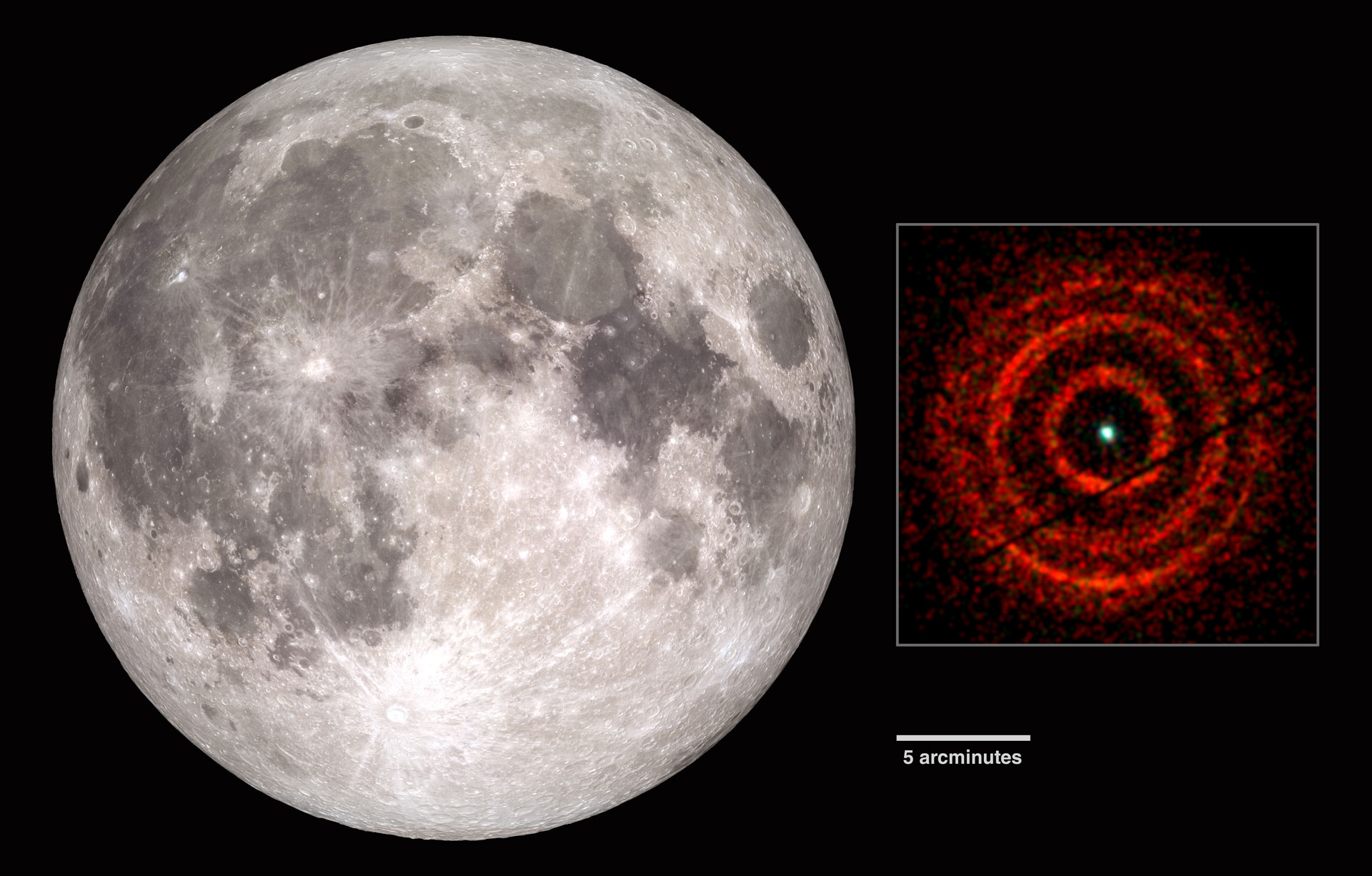
    Swift X-Ray Image of V404 Cygni
    The Swift X-ray image of V404 Cygni covers a patch of the sky equal to about half the apparent diameter of the full moon. This image shows the rings as they appeared on June 30. Credit: NASA’s Scientific Visualization Studio (left), Andrew Beardmore (Univ. of Leicester); NASA/Swift (right)

    Since June 15, astronomers have been monitoring the ongoing light show detected by NASA’s Swift satellite. This new outburst is from V404 Cygni, a binary system where a black hole and a sun-like star orbit each other.

    What looks like a shooting target is actually an image of nested rings of X-ray light centered on an erupting black hole.

    On June 30, a team led by Andrew Beardmore at the University of Leicester, U.K., imaged the system using the X-ray Telescope aboard Swift, revealing a series of concentric rings extending about one-third the apparent size of a full moon. A movie made by combining additional observations acquired on July 2 and 4 shows the expansion and gradual fading of the rings.

    Astronomers say the rings result from an “echo” of X-ray light. The black hole’s flares emit X-rays in all directions. Dust layers reflect some of these X-rays back to us, but the light travels a longer distance and reaches us slightly later than light traveling a more direct path. The time delay creates the light echo, forming rings that expand with time.
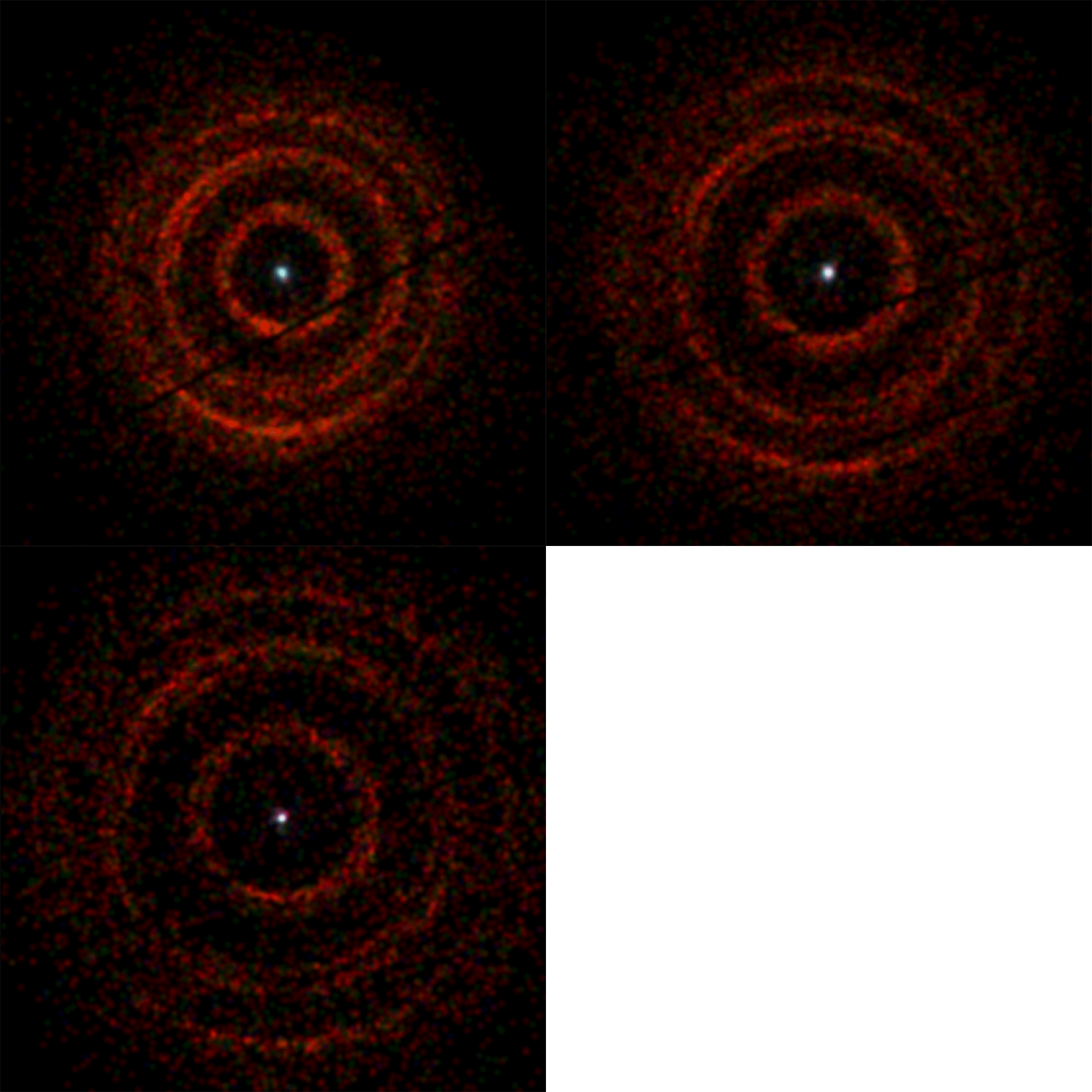
    Swift Reveals Rings of X-Ray Light on V404 Cygni
    Rings of X-ray light centered on V404 Cygni, a binary system containing an erupting black hole (dot at center), were imaged by the X-ray Telescope aboard NASA’s Swift satellite from June 30 to July 4. A narrow gap splits the middle ring in two. Color indicates the energy of the X-rays, with red representing the lowest (800 to 1,500 electron volts, eV), green for medium (1,500 to 2,500 eV), and the most energetic (2,500 to 5,000 eV) shown in blue. For comparison, visible light has energies ranging from about 2 to 3 eV. The dark lines running diagonally through the image are artifacts of the imaging system. Credit: Andrew Beardmore (Univ. of Leicester) and NASA/Swift

    Detailed analysis of the expanding rings shows that they all originate from a large flare that occurred on June 26 at 1:40 p.m. EDT. There are multiple rings because there are multiple reflecting dust layers between 4,000 and 7,000 light-years away from us. Regular monitoring of the rings and how they change as the eruption continues will allow astronomers to better understand their nature.

    “The flexible planning of Swift observations has given us the best dust-scattered X-ray ring images ever seen,” Beardmore said. “With these observations we can make a detailed study of the normally invisible interstellar dust in the direction of this black hole.”

    V404 Cygni is located about 8,000 light-years away. Every couple of decades the black hole fires up in an outburst of high-energy light. Its previous eruption ended in 1989.

    The investigating team includes scientists from the Universities of Leicester, Southampton, and Oxford in the U.K., the University of Alberta in Canada, and the European Space Agency in Spain.

    Never miss a breakthrough: Join the SciTechDaily newsletter.
    Follow us on Google and Google News.

    Astronomy Astrophysics Black Hole NASA Swift Satellite Popular
    Share. Facebook Twitter Pinterest LinkedIn Email Reddit

    Related Articles

    Twin Titans: NASA Tracks Two Monster Black Holes Tearing Up a Distant Galaxy [Video]

    Black Hole Snack Attack: NASA’s Swift Spies Sun-Like Star Being Consumed Bite by Bite

    Black Hole at Center of Milky Way Is Unpredictable and Chaotic – Mysterious Flares Erupt Every Day

    NASA’s NuSTAR Telescope Shows Merging Galaxies Have Enshrouded Black Holes

    NASA’s Swift Reveals a Star’s Plunge into a Black Hole

    Astronomers Link the Launching of the Corona to a Black Hole Flare

    ASASSN-14li Provides an Excellent Opportunity to Study the Environment around a Black Hole

    NASA Telescopes Reveal That Sagittarius A* May Be Producing Neutrinos

    Scientists Convene to Take a Picture of the Supermassive Black Hole at the Center of the Milky Way

    Leave A Reply Cancel Reply

    • Facebook
    • Twitter
    • Pinterest
    • YouTube

    Don't Miss a Discovery

    Subscribe for the Latest in Science & Tech!

    Trending News

    Scientists Uncover Potential Brain Risks of Popular Fish Oil Supplements

    Scientists Discover a Surprising Way To Make Bread Healthier and More Nutritious

    After 60 Years, Scientists Uncover Unexpected Brain Effects of Popular Diabetes Drug Metformin

    New Research Uncovers Hidden Side Effects of Popular Weight-Loss Drugs

    Scientists Rethink Extreme Warming After Surprising Ocean Discovery

    Landmark Study Links Never Marrying to Significantly Higher Cancer Risk

    Researchers Discover Unknown Beetle Species Just Steps From Their Lab

    Largest-Ever Study Finds Medicinal Cannabis Ineffective for Anxiety, Depression, PTSD

    Follow SciTechDaily
    • Facebook
    • Twitter
    • YouTube
    • Pinterest
    • Newsletter
    • RSS
    SciTech News
    • Biology News
    • Chemistry News
    • Earth News
    • Health News
    • Physics News
    • Science News
    • Space News
    • Technology News
    Recent Posts
    • Researchers Uncover Source of Strange Deformation in Earth’s Largest Continental Rift
    • Scientists Solve Mystery of Where the Colorado River Vanished Millions of Years Ago
    • Not Just Alzheimer’s: Scientists Uncover Clues to a Second, Overlooked Disorder
    • Scientists Uncover Dangerous Connection Between Serotonin and Heart Valve Disease
    • Scientists Discover a “Protector” Protein That Could Help Reverse Hair Loss
    Copyright © 1998 - 2026 SciTechDaily. All Rights Reserved.
    • Science News
    • About
    • Contact
    • Editorial Board
    • Privacy Policy
    • Terms of Use

    Type above and press Enter to search. Press Esc to cancel.