
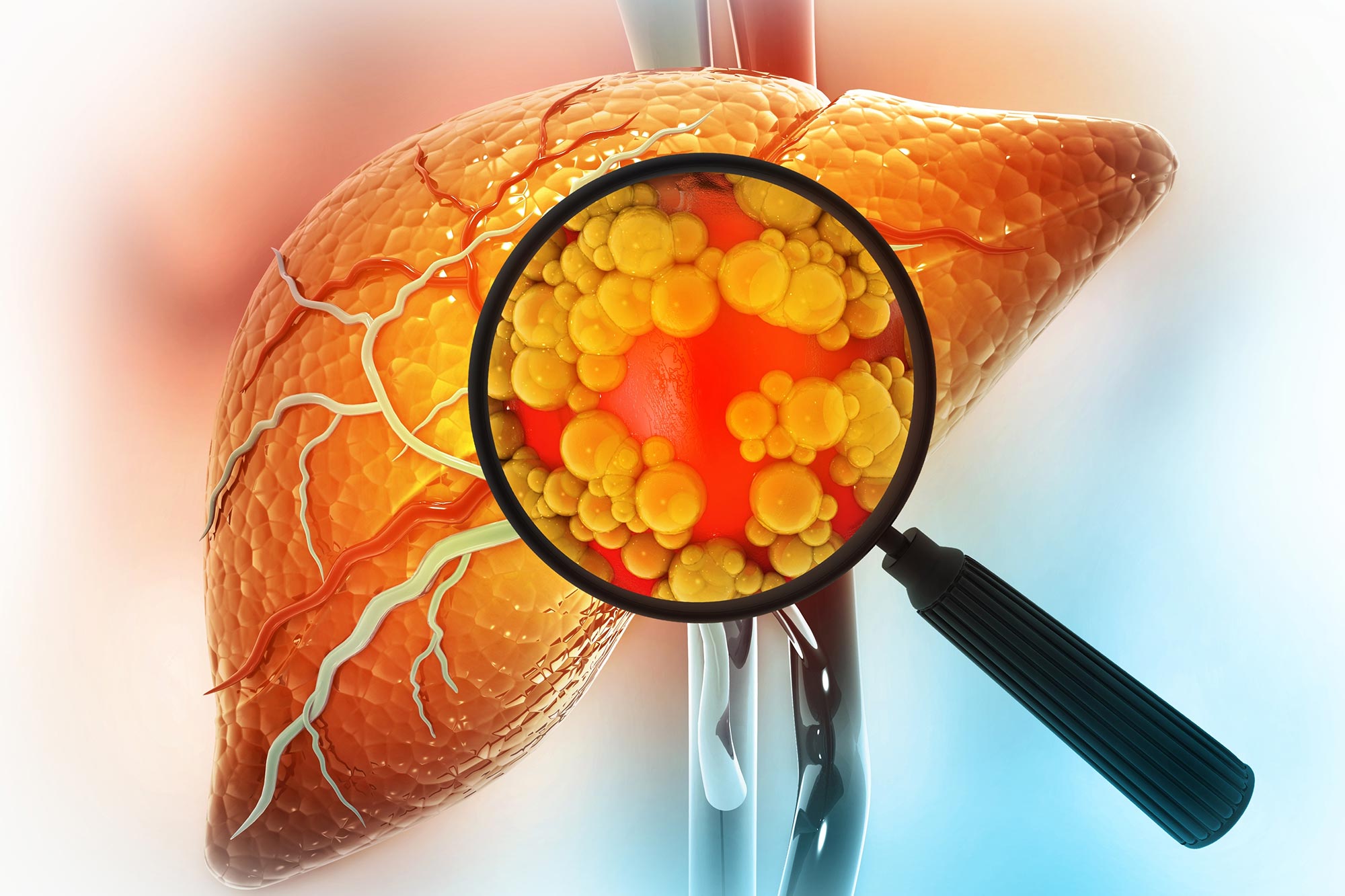
A new study suggests that a naturally occurring compound made by healthy gut bacteria may help protect children from developing fatty liver disease later in life.
Children whose mothers eat diets high in fat and sugar during pregnancy and breastfeeding are more likely to develop fatty liver disease later in life. New findings from the University of Oklahoma indicate that this risk may not be inevitable. In a recent study, researchers showed that giving pregnant and nursing mice a naturally occurring compound made by beneficial gut bacteria led to much lower rates of fatty liver disease in their offspring as they grew older.
The compound, known as indole, is produced when healthy gut bacteria break down tryptophan, an amino acid found in foods such as turkey and nuts. The results add momentum to ongoing efforts to prevent metabolic dysfunction-associated steatotic liver disease (MASLD), a form of fatty liver disease. Although MASLD occurs in both adults and children, it often worsens more quickly in children and is closely associated with diabetes.
“The prevalence of MASLD in children is about 30% in those with obesity and about 10% in children without obesity,” said Jed Friedman, Ph.D., director of the OU Health Harold Hamm Diabetes Center and professor of biochemistry and physiology in the OU College of Medicine. “Unfortunately, the risk is higher if a mother is obese or consumes a poor diet. The disease in children is silent and typically isn’t discovered until a parent seeks help for their child for liver-related symptoms.”

Testing the Role of the Microbiome
Friedman served as a lead author on the study, which was published in the journal eBioMedicine, alongside Karen Jonscher, Ph.D., an associate professor of biochemistry and physiology in the OU College of Medicine. The research team proposed that gut bacteria, collectively referred to as the microbiome, may play a significant role in how fatty liver disease develops.
To explore this possibility, the scientists fed female mice a high-fat, high-sugar (Western-style) diet throughout pregnancy and lactation. A subset of these mice also received indole. After weaning, the offspring were maintained on a standard diet and later switched to a Western-style diet to encourage the development of fatty liver disease.
“Because offspring inherit their microbiome from their mother, a poor maternal diet can shape the infant’s microbiome in harmful ways,” Friedman said.
The offspring of mothers that received indole showed multiple signs of improved metabolic health. These mice had healthier livers, gained less weight, displayed lower blood sugar levels, and developed smaller fat cells, even after consuming a Western-style diet later in life. The researchers also identified activation of a protective gut signaling pathway involving the acyl hydrocarbon receptor (AHR).
The analysis revealed additional benefits at the molecular level. Levels of harmful liver fats called long-chain ceramides did not increase, while levels of beneficial very long-chain ceramides rose. In a further experiment, gut bacteria from these protected offspring were transferred to mice that had not received indole, and those animals also experienced less liver damage. This result provided additional evidence that the microbiome itself plays a central role in protecting against disease.
Implications for Early Prevention
While the findings are based on animal studies and more research is needed before applying them to humans, the study opens the door to new approaches for reducing the growing burden of MASLD through early prevention.
Except for weight loss, there currently are no approved drugs for the treatment of pediatric MASLD once it takes hold. “Anything we can do to improve the mother’s microbiome may help prevent the development of MASLD in the offspring,” Jonscher said. “That would be far better than trying to reverse the disease once it has already progressed.”
Reference: “Reprogramming offspring liver health: maternal indole supplementation as a preventive strategy against MASLD” by Ashok Mandala, Ram Babu Undi, Rachel C. Janssen, Kameron Y. Sugino, Wanke Zhao, Benjamin N. Nelson, April M. Teague, Nikhil Y. Patil, Karin Zemsky Berry, Rohan Varshney, Bryan C. Bergman, Michael C. Rudolph, Aditya D. Joshi, Raju V.S. Rajala, Karen R. Jonscher and Jacob E. Friedman, 7 January 2026, eBioMedicine.
DOI: 10.1016/j.ebiom.2025.106098
Funding: National Institute of Diabetes and Digestive and Kidney Diseases
Never miss a breakthrough: Join the SciTechDaily newsletter.
Follow us on Google and Google News.