
Close Menu
    Facebook X (Twitter) Instagram
    SciTechDaily
    • Biology
    • Chemistry
    • Earth
    • Health
    • Physics
    • Science
    • Space
    • Technology
    Facebook X (Twitter) Pinterest YouTube RSS
    SciTechDaily
    Home»Health»Nature’s Secret Weapon: BPD-9 Takes on Tuberculosis With Revolutionary Efficacy
    Health

    Nature’s Secret Weapon: BPD-9 Takes on Tuberculosis With Revolutionary Efficacy

    By American Society for MicrobiologyOctober 3, 2024No Comments4 Mins Read
    Facebook Twitter Pinterest Telegram LinkedIn WhatsApp Email Reddit
    Share
    Facebook Twitter LinkedIn Pinterest Telegram Email Reddit
    Natural Drug Plant Medicine Art Concept
    Researchers have developed a new semi-synthetic compound, derived from the natural compound sanguinarine, showing potent activity against Mycobacterium tuberculosis, including drug-resistant strains. This breakthrough could lead to effective new treatments for tuberculosis, a major bacterial disease worldwide. Credit: SciTechDaily.com

    A new compound called BPD-9, derived from the natural antimicrobial sanguinarine, has been shown to effectively target drug-resistant tuberculosis.

    • Mycobacterium tuberculosis, which causes tuberculosis (TB), is a significant threat to public health.
    • A new study identified that a semi-synthetic compound can be derived from natural compounds and shows potent activity against M. tuberculosis, including multi-drug resistant strains.
    • This is a promising step toward a new potent treatment for TB.

    Novel Anti-TB Compound

    New research published today (October 3) in the American Society for Microbiology journal Microbiology Spectrum demonstrates that a novel semi-synthetic compound can be derived from natural compounds to produce potent activity against Mycobacterium tuberculosis, including multi-drug resistant strains. The new compound provides a promising chemical scaffold to develop new potent anti-tuberculosis drugs.

    M. tuberculosis, the pathogen responsible for tuberculosis (TB), is the leading cause of bacterial disease-related death worldwide. Current antibiotic regimens for the treatment of TB are dated, require longer courses of treatment, and risk the development of drug resistance.
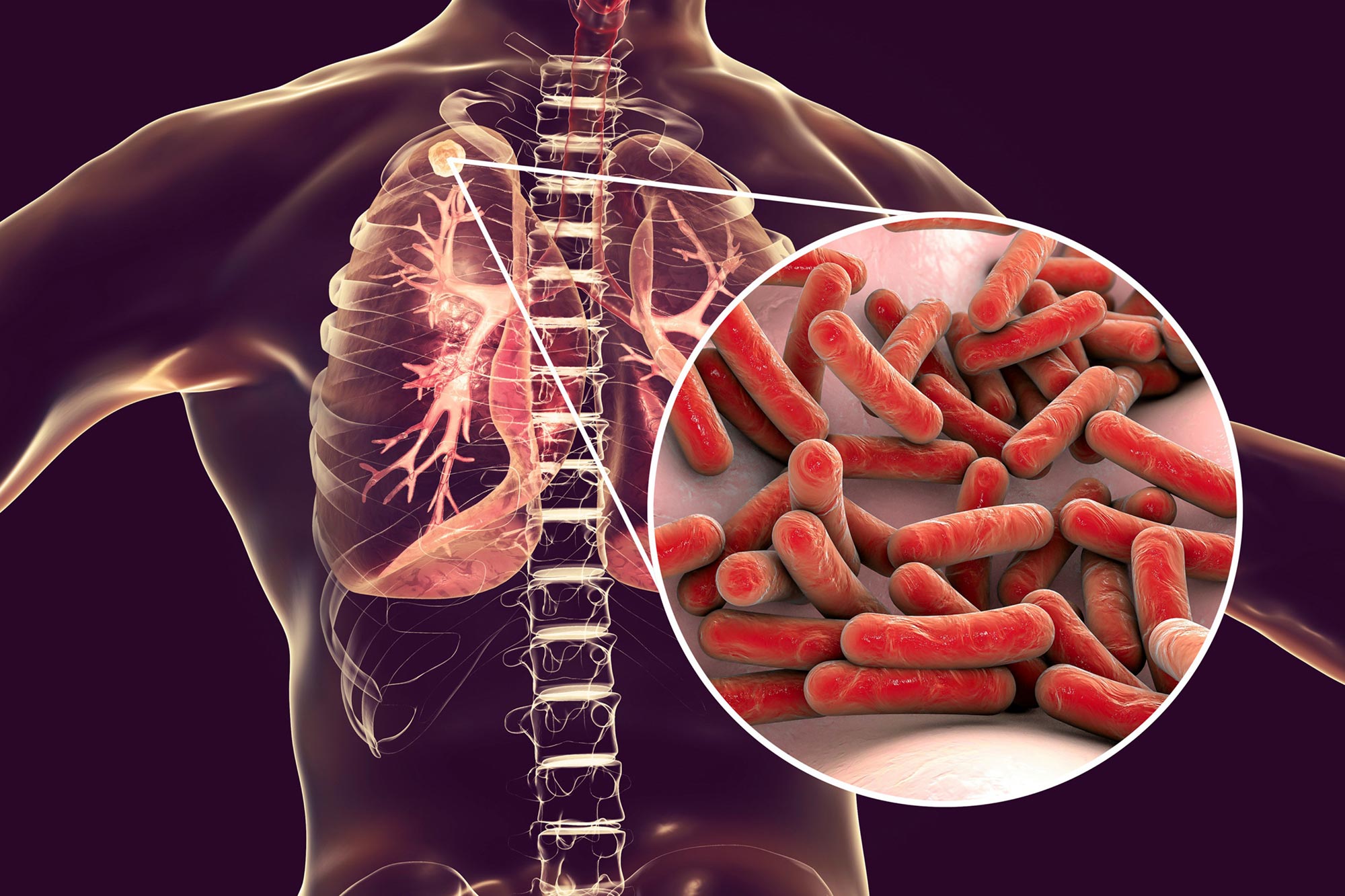
    Secondary Tuberculosis Infection Anatomy Image
    Tuberculosis (TB) is a highly infectious disease caused by the bacterium Mycobacterium tuberculosis. It primarily affects the lungs but can also impact other parts of the body. Characterized by symptoms such as persistent cough, fever, and weight loss, TB is spread through the air when infected individuals cough or sneeze.

    Innovative Antibiotic Discovery

    In the new study, researchers conducted a search for novel antibiotics targeting M. tuberculosis that could also be effective against drug-resistant strains. In drug discovery, a valuable place to start looking for new antibiotics is within the world of natural compounds produced by organisms such as plants, fungi and bacteria. Sanguinarine, a natural compound with known antimicrobial properties, is extracted from an herbaceous flowering plant native to North America. Sanguinarine has been used in traditional and alternative medicine for animals, but its toxicity makes it unfit to be used as a drug in humans.

    Mycobacterium Tuberculosis Bacteria Green
    Scanning electron micrograph of Mycobacterium tuberculosis bacteria, which cause TB. Credit: NIAID

    The group of researchers redesigned sanguinarine using principles of medicinal chemistry to produce a more potent antibacterial compound with reduced toxicity. In studies in test tubes and in mice, the improved version of sanguinarine, called BPD-9, was capable of killing strains of M. tuberculosis that are resistant to all front-line antibiotics used in the clinics to treat TB.

    Moreover, BPD-9 was effective against non-replicating (dormant) and intracellular M. tuberculosis, which are 2 key aspects that limit the effectiveness of current anti-TB drugs. The researchers also found that BPD-9 was only active against pathogenic bacteria from the same genus as M. tuberculosis, which may spare the microbiome and other beneficial bacteria that most antibiotics harm.

    Implications for Future TB Treatments

    “Our findings show a new chemical entity that has unique properties in combating Mycobacterium tuberculosis, which may be harnessed further for clinical translation,” said corresponding study author Jim Sun, Ph.D., Assistant Professor in the Department of Microbiology and Immunology at The University of British Columbia.

    “Our finding that the new compound is effective against other members of the Mycobacterium genus may also prove to be valuable in the fight against deadly lung infections caused by non-tuberculous mycobacteria, which are notoriously resistant to most antibiotics. It is also enticing to speculate that BPD-9 could be killing Mycobacterium tuberculosis in a way that is different than that of existing anti-TB drugs.”

    Reference: “Dietary zinc supplementation inhibits bacterial plasmid conjugation in vitro by regulating plasmid replication (rep) and transfer (tra) genes” by Logan Ott, Chloe Smith and Melha Mellata, 3 October 2024, Applied and Environmental Microbiology.
    DOI: 10.1128/aem.01480-24

    The study was conducted in collaboration with the medicinal chemistry team of Weibo Yang, Ph.D. at the Shanghai Institute of Materia and Medica (Chinese Academy of Sciences) and bacterial genetics team of Marcel Behr, M.D., and Andréanne Lupien, Ph.D. at McGill University. The research was supported by grants from the Canadian Institutes of Health Research and the National Sanitarium Association.

    Never miss a breakthrough: Join the SciTechDaily newsletter.
    Follow us on Google and Google News.

    American Society for Microbiology Antibiotics Bacteria Microbiology Public Health Tuberculosis
    Share. Facebook Twitter Pinterest LinkedIn Email Reddit

    Related Articles

    Hidden Epidemic: Drug-Resistant Bacteria Are Spreading Through Hospital Plumbing

    Superbugs on the Rise: How Diabetes Fuels the Evolution of Antibiotic Resistance

    Safety Warning: 35% of Tattoo Inks Tested Positive for Harmful Bacteria

    Tomato Juice Effectively Kills Salmonella and Other Harmful Bacteria

    New Technique Enables Quick Identification of Potential Drugs to Fight Antibiotic-Resistant Bacteria

    “Hidden” Genes in Bacteriophages Could Be Key in Development of New Antibiotics

    Copper Hospital Beds Are Real Killers, but That’s a Good Thing

    Warning: Antibiotic-Resistant Bacteria Spread by Washing Machines

    Warning: Dangerous Pathogens May Be Lurking in Your Energy-Efficient Washing Machine

    Leave A Reply Cancel Reply

    • Facebook
    • Twitter
    • Pinterest
    • YouTube

    Don't Miss a Discovery

    Subscribe for the Latest in Science & Tech!

    Trending News

    New “Nanozyme Hypothesis” Could Rewrite the Story of Life’s Origins

    Anatomy Isn’t Finished: The Human Body Still Holds Secrets

    “Pretty Close to Home”: The Hidden Earthquake Threat Beneath Seattle

    The Surprising Reason You Might Want To Sleep Without a Pillow

    Scientists Say This Natural Hormone Reverses Obesity by Targeting the Brain

    35-Million-Year-Old Mystery: Strange Arachnid Discovered Preserved in Amber

    Is AI Really Just a Tool? It Could Be Altering How You See Reality

    JWST Reveals a “Forbidden” Planet With a Baffling Composition

    Follow SciTechDaily
    • Facebook
    • Twitter
    • YouTube
    • Pinterest
    • Newsletter
    • RSS
    SciTech News
    • Biology News
    • Chemistry News
    • Earth News
    • Health News
    • Physics News
    • Science News
    • Space News
    • Technology News
    Recent Posts
    • The Ocean Current Stronger Than All Rivers Changed Earth Forever
    • NASA Artemis II Splashdown and Astronaut Recovery Operation [Image Gallery]
    • Splashdown! NASA Artemis II Returns From Record-Breaking Moon Mission
    • Scientists Freeze a Spinning Nanoparticle to Its Quantum Limit
    • A 100x Faster Breakthrough Could Fix Quantum Computers’ Biggest Problem
    Copyright © 1998 - 2026 SciTechDaily. All Rights Reserved.
    • Science News
    • About
    • Contact
    • Editorial Board
    • Privacy Policy
    • Terms of Use

    Type above and press Enter to search. Press Esc to cancel.