
An international team of scientists from Sweden, Norway, Japan, and Switzerland, has presented research findings that reveal a crucial role of biological particles, including pollen, spores, and bacteria, in the formation of ice within Arctic clouds. These findings, published today in Nature Communications, have far-reaching implications for climate science and our understanding of the rapidly changing Arctic climate.
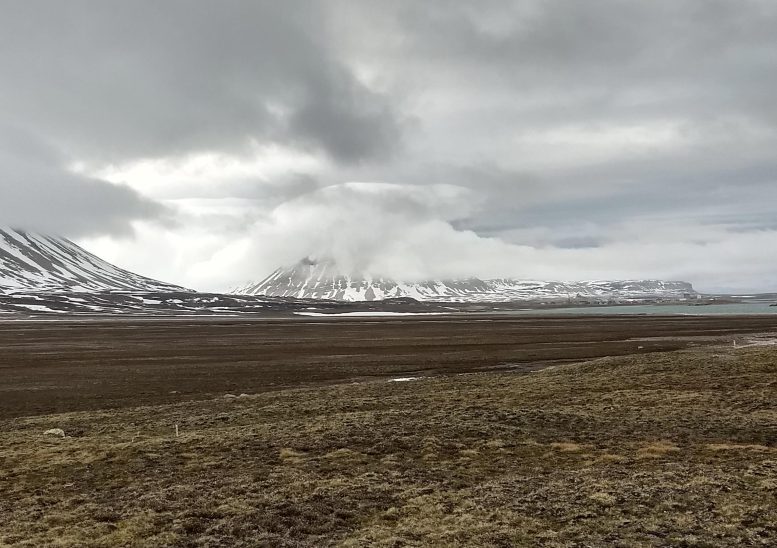
The research, whose outcomes have unveiled the connection between biological particles and the formation of ice in Arctic clouds, was conducted over multiple years at the Zeppelin Observatory, situated on the remote Norwegian archipelago of Svalbard, Norway, in the High Arctic.
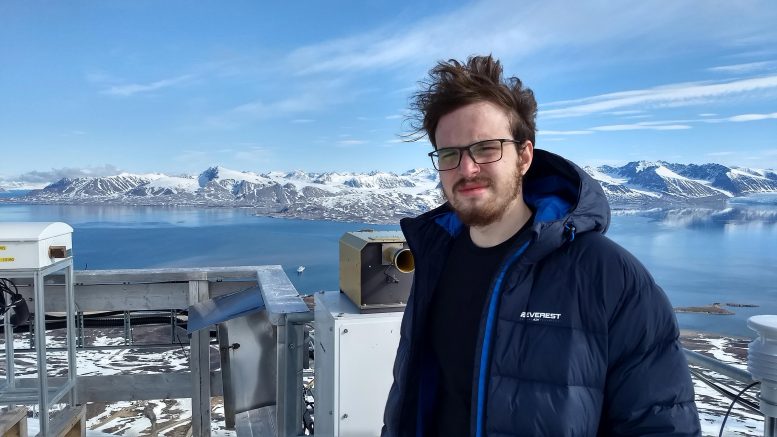
Gabriel Freitas, lead author and PhD student at Stockholm University, detailed their innovative approach: “We have individually identified and counted these biological particles using a sensitive optical technique reliant on light scattering and UV-induced fluorescence. This precision is essential as we navigate through the challenge of detecting these particles in minuscule concentrations, akin to finding a needle in a haystack.”
Sugar Alcohols and Fungal Spores
The study delved into the seasonal dynamics of biological particles, establishing correlations with variables such as snow cover, temperature, and meteorological parameters. Furthermore, the presence of biological particles was confirmed through various methodologies, including electron microscopy and the detection of specific substances, such as the sugar alcohol compounds arabitol and mannitol.
Karl Espen Yttri, senior scientist at the Climate and Environmental Research Institute NILU and a co-author of the study, underscored that: “While arabitol and mannitol are present in various microorganisms, their presence in air are related to fungal spores, and might originate both from local sources or from long range atmospheric transport.”
Understanding Ice Nucleation
The quantification of ice nucleating particles and understanding their properties proved to be a cumbersome challenge. Researchers employed two distinct methods, involving the collection of particles on filters over a week, followed by rigorous laboratory analysis.
Yutaka Tobo, Associate Professor at the National Institute of Polar Research in Japan and co-author of the study, described their strategy: “Our method can quantify the ice nucleating ability of aerosol particles immersed in water droplets at temperatures ranging from 0°C (32°F) down to about -30°C (-22°F), thereby revealing the concentration of ambient ice nucleating particles active in Arctic low-level clouds.”
Franz Conen, Research Fellow at the University of Basel, Switzerland, added, “By subjecting the filters to additional heating at 95°C (203°F), we could identify the proteinaceous component of ice nucleating particles, shedding light on their potential biological origin. Our findings unequivocally establish the prevalence of biological particles contributing to ice nucleation at Zeppelin Observatory.”

Implications for Climate Science
Paul Zieger, Associate Professor at Stockholm University and co-author, emphasized the important implication of these findings for climate science: “This research offers critical insights into the origin and properties of biological and ice nucleating particles in the Arctic that could enable climate model developers to improve the representation of aerosol-cloud interactions in models and reduce uncertainties related to anthropogenic radiative forcing estimates.”
Increases in open ocean areas and snow-free tundra, both sources of biological particles in the Arctic, are expected in the coming decades. Therefore, gaining a deeper understanding of the relationship between these particles and clouds may provide valuable insights into the ongoing and future transformations occurring in the Arctic.
Reference: “Regionally sourced bioaerosols drive high-temperature ice nucleating particles in the Arctic” by Gabriel Pereira Freitas, Kouji Adachi, Franz Conen, Dominic Heslin-Rees, Radovan Krejci, Yutaka Tobo, Karl Espen Yttri and Paul Zieger, 28 September 2023, Nature Communications.
DOI: 10.1038/s41467-023-41696-7
Never miss a breakthrough: Join the SciTechDaily newsletter.
Follow us on Google and Google News.