Close Menu
    Facebook X (Twitter) Instagram
    SciTechDaily
    • Biology
    • Chemistry
    • Earth
    • Health
    • Physics
    • Science
    • Space
    • Technology
    Facebook X (Twitter) Pinterest YouTube RSS
    SciTechDaily
    Home»Biology»Network of Imaging Centers Proposed to Drive Innovation in Biological Research
    Biology

    Network of Imaging Centers Proposed to Drive Innovation in Biological Research

    By Diana Kenney, Marine Biological LaboratoryAugust 21, 2019No Comments3 Mins Read
    Facebook Twitter Pinterest Telegram LinkedIn WhatsApp Email Reddit
    Share
    Facebook Twitter LinkedIn Pinterest Telegram Email Reddit
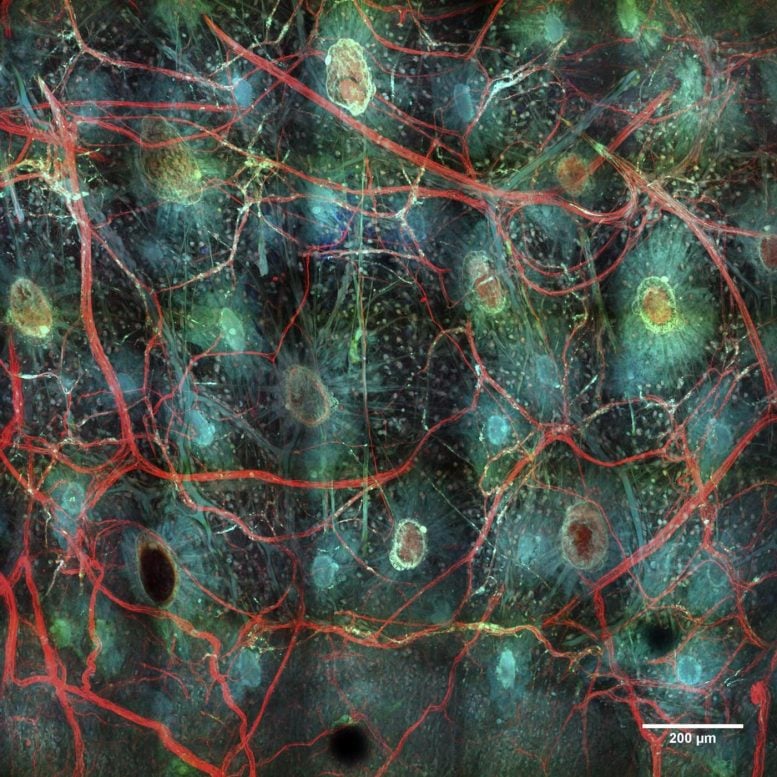
    Cuttlefish Sepia Officianalis Skin
    Cuttlefish (Sepia officianalis) skin; neurons in red. Credit: Trevor Wardill

    When sparks fly to innovate new technologies for imaging life at the microscopic scale, often diverse researchers are nudging each other with a kind of collegial one-upmanship.

    “Look at the resolution we obtain with this microscope I’ve designed,” the physicist says. “Great,” the biologist replies, “but my research organism moves fast. Can you boost the system’s speed?” “You’ll have terabytes of raw data coming off that microscope system,” says the computational scientist. “We’ll build in algorithms to manage the data and produce the most meaningful images.” Around they go, propelling a cycle of challenge and innovation that allows them to see more clearly into new dimensions of the microscopic world.

    Interdisciplinary interactions are essential for driving the innovation pipeline in biological imaging, yet collegial workspaces where they can spring up and mature are lacking in the United States. Last fall, the Marine Biological Laboratory (MBL) convened a National Science Foundation workshop to identify the bottlenecks that stymie innovation in microscopy and imaging, and recommend approaches for transforming how imaging technologies are developed and deployed. The conclusions of the 79 workshop participants are summarized in a Commentary in the August issue of Nature Methods.

    Bacteria in a model human gut microbiome
    Bacteria in a model human gut microbiome established in a germ-free mouse. Credit: Jessica Mark Welch and Yuko Hasegawa
    MBL Hibbitt Fellow Duygu Ozpolat
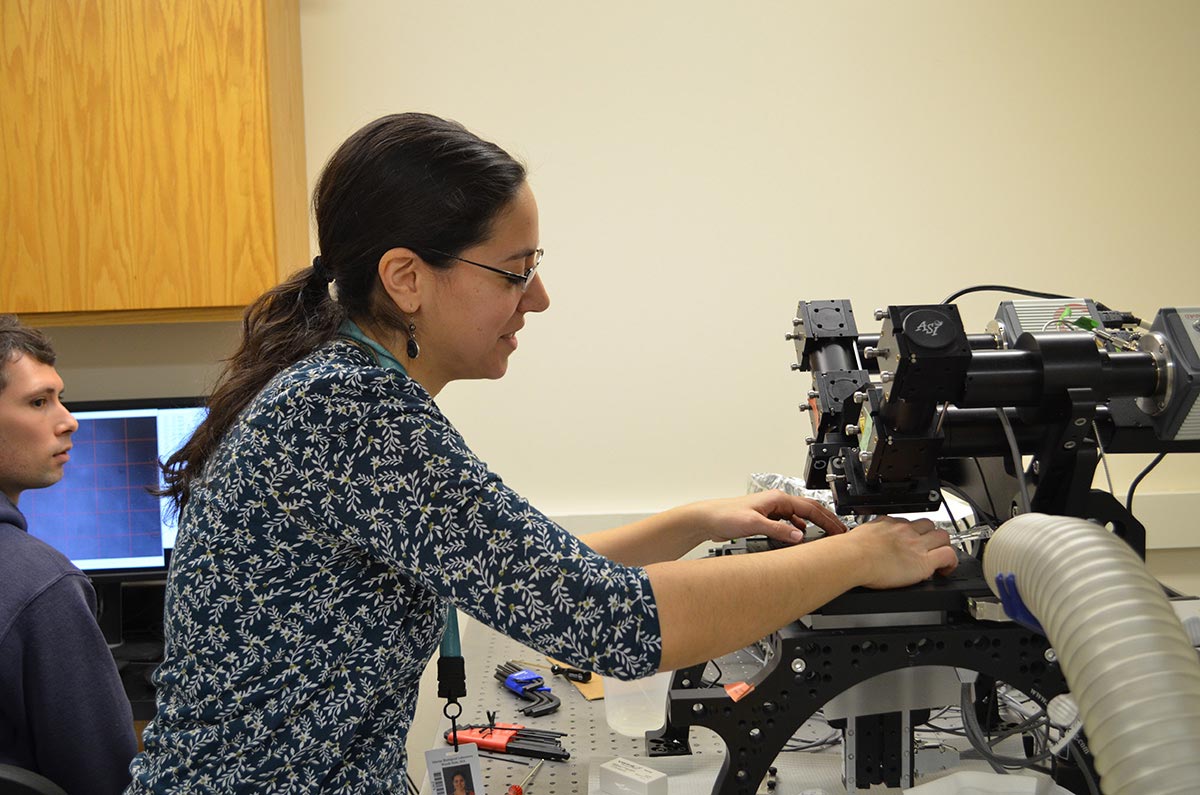
    MBL Hibbitt Fellow Duygu Ozpolat learns how to use the diSPIM imaging system at an MBL workshop. Credit: Diana Kenney
    Microtubule structures in Stentor
    Microtubule structures in Stentor. Credit: Victoria Yan, MBL Physiology course
    LC PolScope image of cell wall sacculi purified from Bacillus subtilis
    LC-PolScope image of cell wall sacculi purified from Bacillus subtilis with different levels of induction of mreBCD, the genes that build rod shape. Color indicates molecular orientation, brightness the degree of alignment. Credit: Dion, MF. et al (2019) Nature Microbiology.
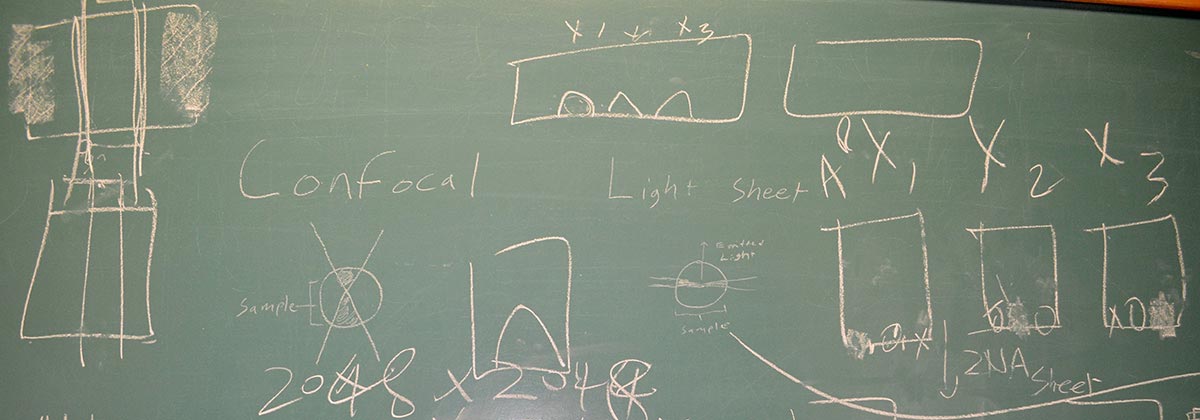
    MBL Whitman Center Lab Blackboard Notes
    Blackboard notes comparing imaging systems in a MBL Whitman Center lab.
    Mouse inner ear spiral ganglia culture
    Mouse inner ear spiral ganglia culture. Credit: Mirko Scheibinger, MBL Biology of Inner Ear course
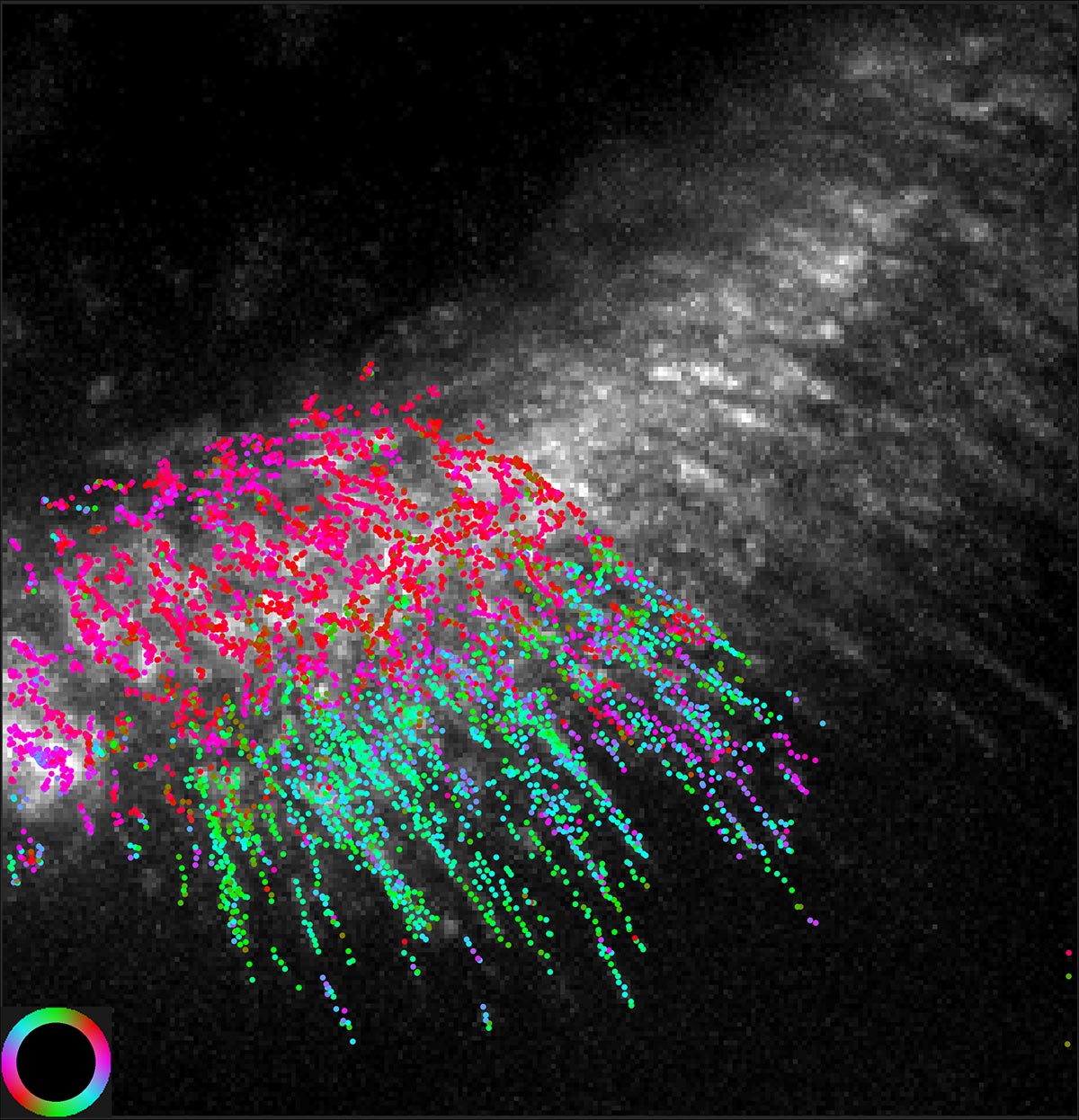
    Color coded actin filament orientation
    Color-coded actin filament orientation is overlaid on an image of fluorescence intensity. The orientation corresponds to the color wheel at bottom left. Credit: Shalin Mehta and Tomomi Tani
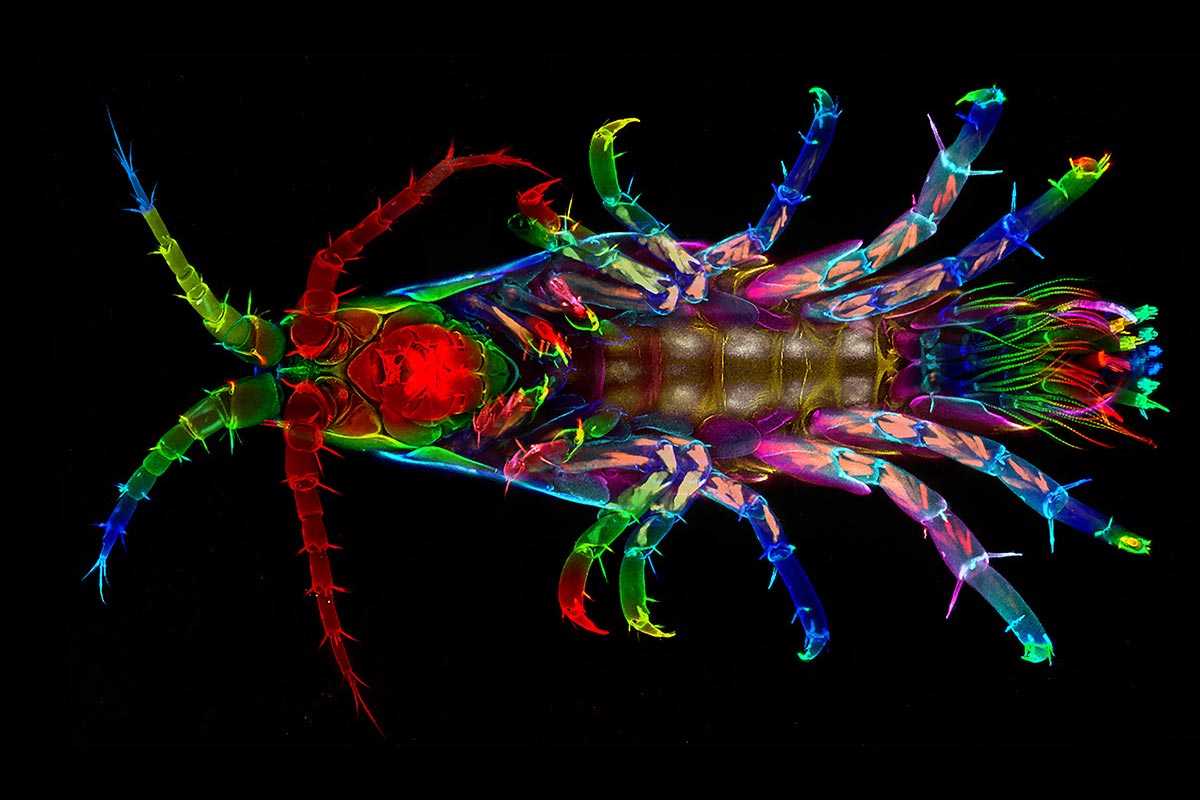
    Parhyale hawaiensis
    Parhyale hawaiensis, a model system for studying the evolution and development of body plans. Credit: Nipam Patel, MBL Embryology course

    “We propose a network of national imaging centers that provide collaborative, interdisciplinary spaces needed for the development, application, and teaching of advanced biological imaging techniques,” write the authors and workshop leaders, MBL Fellows Daniel A. Colón-Ramos of Yale University School of Medicine, Patrick La Riviere of the University of Chicago, Hari Shroff of the National Institute of Biomedical Imaging and Bioengineering, and MBL Senior Scientist Rudolf Oldenbourg.

    “Creating spaces for co-locating microscopists, computational scientists, and biologists, in our experience, is a key and missing ingredient in new and necessary ecosystems of innovation. Sometimes the seeds of innovation have to be planted in the same pot for them to flower and be fruitful,” Colón-Ramos says.

    For the proposed centers to optimally succeed, they need expert staff scientists who engage in and catalyze collaborations among the major players in the imaging ecosystem, the group concluded. The centers will provide space and expertise not only for teaching existing, high-end imaging techniques, but also for designing and testing new technologies with real-world biological applications and disseminating them promptly to staff and visiting scientists, faculty, and students. All can participate in an iterative innovation process, driving discovery while becoming interdisciplinary thinkers and project developers themselves.

    As a next step in transforming the vision of national imaging centers into a reality, a follow-up meeting with a variety of funding stakeholders will be scheduled in the spring of 2020.

    An Imaging Initiative is in progress at the MBL, with many elements of the proposed national imaging centers already in place and others under development.

    Reference: “Transforming the development and dissemination of cutting-edge microscopy and computation” by Daniel A. Colón-Ramos, Patrick La Riviere, Hari Shroff and Rudolf Oldenbourg,  30 July 2019,  Nature Methods.
    DOI: 10.1038/s41592-019-0475-y

    Never miss a breakthrough: Join the SciTechDaily newsletter.
    Follow us on Google and Google News.

    Marine Biological Laboratory Marine Biology
    Share. Facebook Twitter Pinterest LinkedIn Email Reddit

    Related Articles

    Unlike Humans, Cuttlefish Retain Sharp Memory of Specific Events in Old Age

    Ingenious Ocean Microbes Team Up Brilliantly To Gather Food When It’s Scarce

    Delayed Gratification: Quick-Learning Cuttlefish Pass “The Marshmallow Test”

    “Suction Thrust” – Many-Limbed Marine Organisms Don’t Actually Push Themselves Forward to Swim

    “Deep Biosphere” Microbes: Life Is Bubbling Up From Sediments Deep Below the Ocean Floor

    “Superpower” Discovered in Squids: They Can Massively Edit Their Own Genetics

    Revealed: The Mysterious, Legendary Giant Squid’s Genome

    Revealing the Structure of Bacterial Hitchhikers on Plastic Trash in the Ocean

    Marine Bacteria Are Not Homogenous Populations in the Ocean

    Leave A Reply Cancel Reply

    • Facebook
    • Twitter
    • Pinterest
    • YouTube

    Don't Miss a Discovery

    Subscribe for the Latest in Science & Tech!

    Trending News

    Popular Sugar-Free Sweetener Linked to Liver Disease, Study Warns

    What Is Hantavirus? The Deadly Disease Raising Alarm Worldwide

    Scientists Just Discovered How the Universe Builds Monster Black Holes

    Scientists Unveil New Treatment Strategy That Could Outsmart Cancer

    A Simple Vitamin May Hold the Key to Treating Rare Genetic Diseases

    Scientists Think the Real Fountain of Youth May Be Hiding in Your Gut

    Ravens Don’t Follow Wolves, They Predict Them

    This Common Knee Surgery May Be Doing More Harm Than Good

    Follow SciTechDaily
    • Facebook
    • Twitter
    • YouTube
    • Pinterest
    • Newsletter
    • RSS
    SciTech News
    • Biology News
    • Chemistry News
    • Earth News
    • Health News
    • Physics News
    • Science News
    • Space News
    • Technology News
    Recent Posts
    • Scientists Build a Living AI Device Using Real Brain Cells
    • Why Are So Many New Fathers Dying? Scientists Say the U.S. Has a Dangerous Blind Spot
    • Scientists Identify Simple Supplement That Greatly Reduces Alzheimer’s Damage
    • You May Have a Dangerous Type of Cholesterol Even if Your Tests Look Normal
    • Study Reveals Dangerous Flaw in AI Symptom Checkers
    Copyright © 1998 - 2026 SciTechDaily. All Rights Reserved.
    • Science News
    • About
    • Contact
    • Editorial Board
    • Privacy Policy
    • Terms of Use

    Type above and press Enter to search. Press Esc to cancel.