
A new discovery reveals how Daam2 and CK2α regulate myelin repair, opening doors to potential treatments for neurological disorders like MS and cerebral palsy.
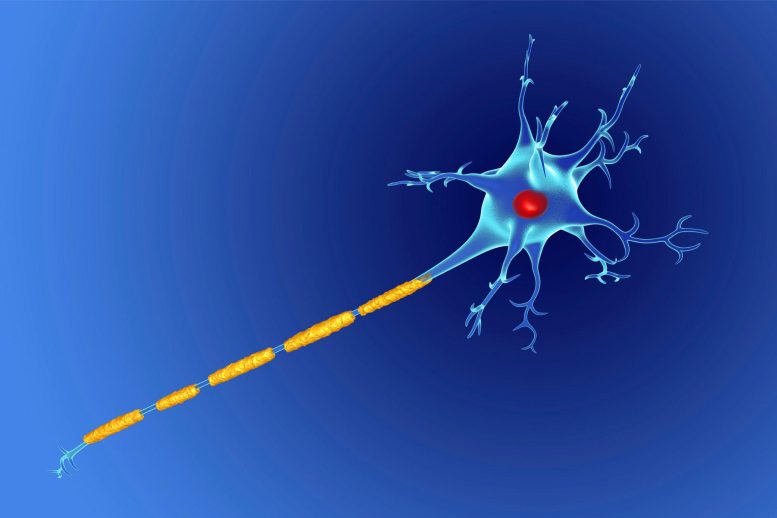
A study led by Dr. Hyun Kyoung Lee, associate professor at Baylor College of Medicine and investigator at the Jan and Dan Duncan Neurological Research Institute at Texas Children’s Hospital, has identified a previously unknown biological mechanism for repairing and regenerating myelin. Myelin is the insulating layer around nerve fibers that is crucial for the fast and precise transmission of neural signals.
The Duncan NRI team found novel roles for the Dishevelled associated activator of morphogenesis 2 (Daam2) protein and CK2α kinase in regulating myelin repair and regeneration. The study was recently published in the Proceedings of the National Academy of Science.
Myelin is produced by a type of glial precursor cells called oligodendrocytes (OLs) which are among the most numerous cells in the nervous system. Damage or loss of myelin sheath is the hallmark of various neurological diseases in adults (e.g. multiple sclerosis) and infants (e.g. cerebral palsy) and is common after brain injuries.
The Wingless (Wnt) signaling pathway is one of the key regulators of OL development and myelin regeneration. In certain diseased conditions and brain injury, its levels are elevated in the white matter, which impairs myelin production by forcing oligodendroctyes to remain in a “stalled/quiescent state”.
A few years back, Dr. Lee and others found that a glial protein, Daam2 inhibits the differentiation of oligodendrocytes during development as well as myelin regeneration and repair. However, until now precise mechanisms underlying this process have remained a mystery.
Deciphering Daam2’s Role in Myelin Formation
To understand how Daam2 inhibits myelination, the team first needed to determine the regulation of Daam2 itself. Using biochemical approaches, they found two amino acid residues (Ser704 and Thr705) of Daam2 protein undergo phosphorylation – a common post-translational regulatory mechanism that turns on or off the activity of the proteins.
To explore if Daam2 phosphorylation affected the progression of OL lineage, they analyzed differentially expressed genes (DEGs) in wild-type and mutant animals whose Daam2 is constitutively phosphorylated. DEGs downregulated in the mutant OLs were enriched in genes involved in lipid/cholesterol metabolism whereas DEGs upregulated in the mutant OLs were involved in multiple signaling processes, including the Wnt pathway.
Since Daam2 is a known positive modulator of canonical Wnt signaling, they examined whether these DEGs were due to perturbations in Wnt signaling. They undertook a thorough developmental stage-specific analysis which revealed dynamic changes in the machinery and function of Wnt/β-catenin signaling in early versus late stages of OL development, and established that this signaling pathway is affected by Daam2 phosphorylation.
“Intriguingly, we found Daam2 phosphorylation differentially impacts distinct stages of oligodendrocyte development – in early stages, it accelerates the conversion of precursor OLs to glial cells but in later stages, it slows down their maturation and their ability to produce myelin,” Dr. Lee said.
CK2α Identified as the Key Regulator of Daam2
To identify the kinase(s) responsible for Daam2 phosphorylation, they conducted a motif analysis which found CK2, a Wnt/β-catenin signaling Ser/Thr kinase that was also one of the candidates in their biochemical and genetic screen. They further confirmed that its catalytic subunit, CK2α, interacted with Daam2 in lab-cultured OLs and also phosphorylated it. Moreover, both Daam2 and CK2α were sequentially upregulated in a manner that was concomitant with the progression of OL lineage. Using in vitro cultured OLs and in vivo mouse models, they found compelling evidence suggesting that CK2α promotes OL differentiation by phosphorylating Daam2.
Further studies using an animal model of neonatal hypoxic injury model revealed a beneficial role for CK2α-mediated Daam2 phosphorylation. They found that it plays a protective role in developmental and behavioral recovery after neonatal hypoxia, a form of brain injury seen in cerebral palsy and other conditions, and additionally, it facilitates remyelination after white matter injury in adult animals.
Together, these findings have identified a novel regulatory node in the Wnt pathway that regulates stage-specific oligodendrocyte development and offers insights into a new biological mechanism to regenerate myelin.
“This study opens exciting therapeutic avenues we could develop in the future to repair and restore myelin, which has the potential to alleviate and treat several neurological that are currently untreatable,” Dr. Lee said.
Reference: “Daam2 phosphorylation by CK2α negatively regulates Wnt activity during white matter development and injury” by Chih-Yen Wang, Zhongyuan Zuo, Juyeon Jo, Kyoung In Kim, Christine Madamba, Qi Ye, Sung Yun Jung, Hugo J. Bellen and Hyun Kyoung Lee, 22 August 2023, Proceedings of the National Academy of Sciences.
DOI: 10.1073/pnas.2304112120
The first author, Chih-Yen Wang is now an assistant professor in the National Cheng Kung University. Others involved in the study were Zhongyuan Zuo, Juyeon Jo, Kyoung In Kim, Christine Madamba, Qi Ye, Sung Yun Jung, and Hugo J. Bellen. They are affiliated with one or more of the following institutions: Baylor College of Medicine and Jan and Dan Duncan Neurological Research Institute at Texas Children’s Hospital. This work was supported by grants from NIH/NINDS, the National Multiple Sclerosis Society, the Cynthia and Anthony G. Petrello Endowment, and the Mark A. Wallace Endowment, the Eunice Kennedy Shriver National Institute of Child Health & Human Development of the National Institutes of Health for the BCM IDDRC Neurobehavior and Neurovisualization Cores. GERM core at Baylor College of Medicine helped with mouse line generation, scRNA-sequencing was partially supported by the SCG core and GARP core.
Never miss a breakthrough: Join the SciTechDaily newsletter.
Follow us on Google and Google News.