
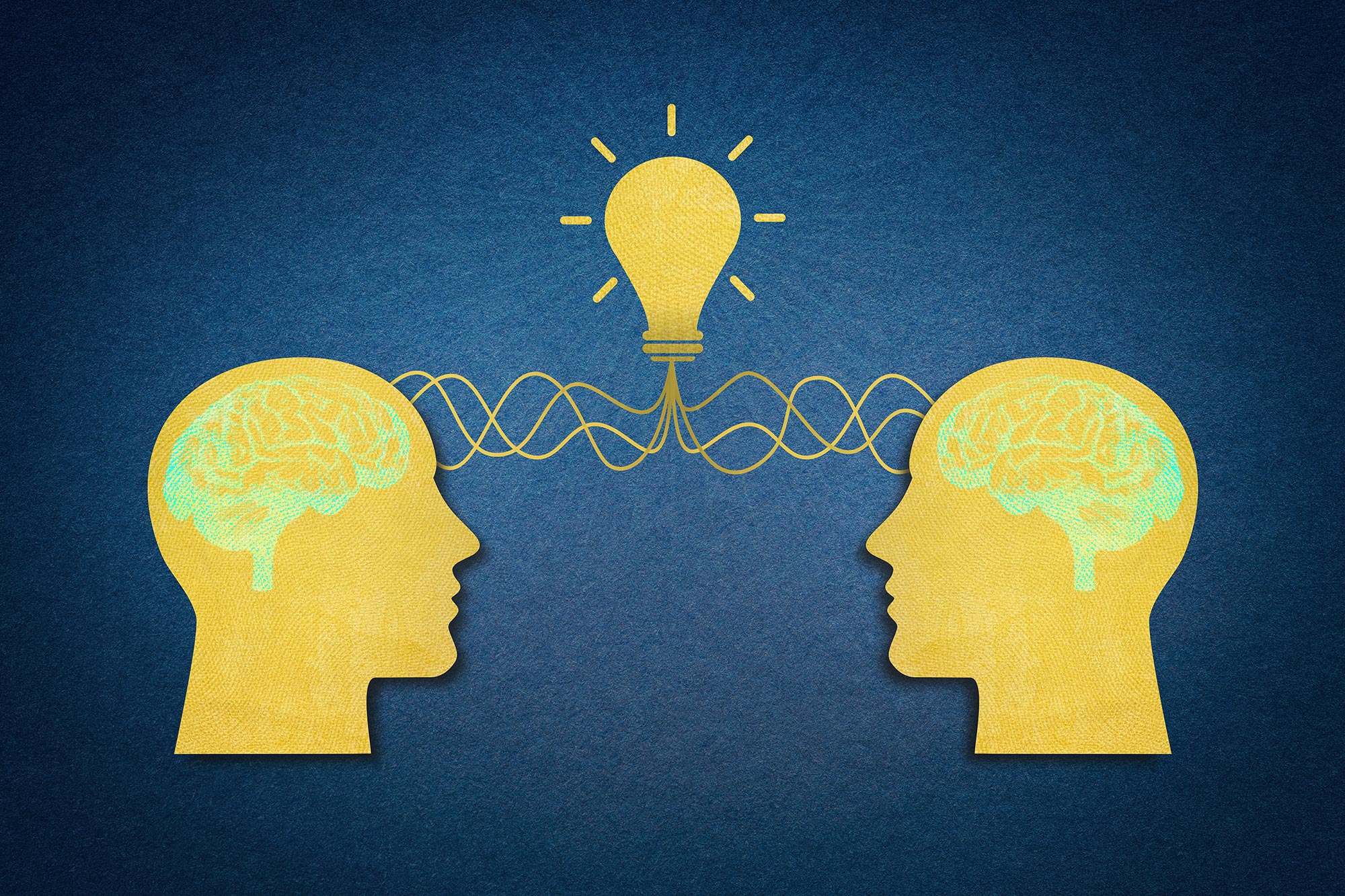
Optimists may be more alike than we thought—right down to their brainwaves.
A new study shows they imagine the future in surprisingly similar ways, while pessimists each think differently. This brain-sync could explain why optimists connect more easily.
The Social Lives of Optimists
People who are more optimistic often report greater satisfaction with their social lives and tend to have larger social circles. But what explains this connection between positivity and social success? According to Kobe University psychologist Kuniaki Yanagisawa , the answer might lie in the brain.
“Recent studies showed that the brains of people who occupy central social positions react to stimuli in similar ways,” he explains. “So it may be that people who share a similar attitude towards the future, too, truly envision it similarly in their brains and that this makes it easier for them to understand each other’s perspectives.”
To explore this idea further, Yanagisawa brought together experts from both social psychology and cognitive neuroscience. “The main reason why this question has remained untouched until now is that it exists in a gap between social psychology and neuroscience. However, the intersection of these two fields enabled us to open this black box.”
The research team recruited 87 participants, ranging from very pessimistic to very optimistic. Each person was asked to imagine a variety of future events, while their brain activity was tracked using a method known as functional magnetic resonance imaging (fMRI). This allowed the researchers to observe how thoughts about the future appeared as patterns of brain activity.
Bridging Psychology and Neuroscience
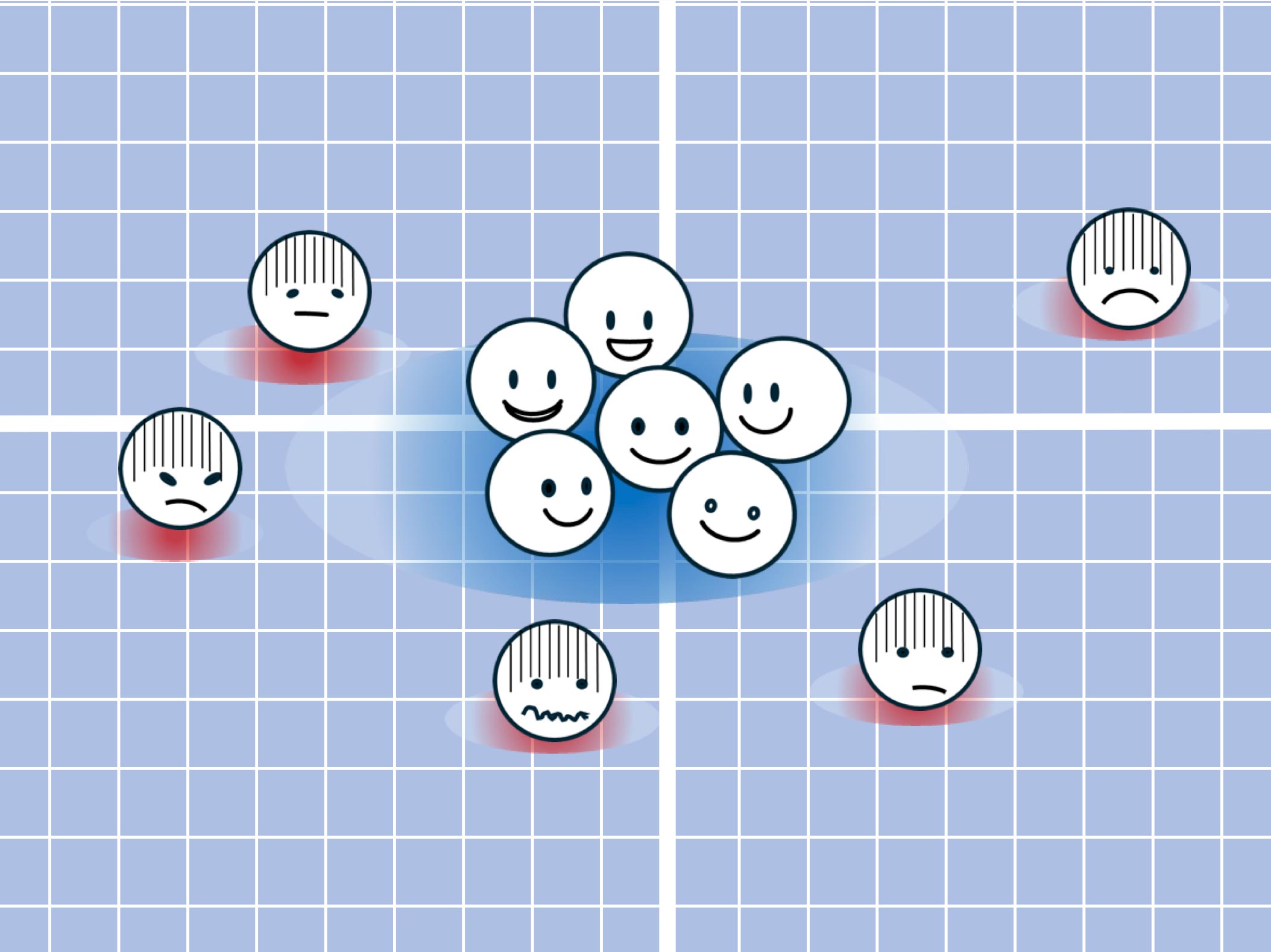
In the journal PNAS, the Kobe University team reports that when optimists think about future events, their neural activity patterns are in fact mutually similar. Pessimists’ patterns, on the other hand, showed much more diversity.
Inspired by the opening line of Leo Tolstoy’s “Anna Karenina,” the team summarizes its results, saying, “Optimistic individuals are all alike, but each less optimistic individual imagines the future in their own way.” Yanagisawa says, “What was most dramatic about this study is that the abstract notion of ‘thinking alike’ was literally made visible in the form of patterns of brain activity.”
Yanagisawa and his team also found that there is a more pronounced difference in neural patterns when thinking about positive events or negative events in optimists than in pessimists. “This means that more optimistic people perceive a clear distinction between good and bad futures in their brains. In other words, optimism does not involve positive reinterpretation of negative events. Instead, optimistic individuals typically process negative scenarios in a more abstract and psychologically distant manner, thus mitigating the emotional impact of such scenarios,” he explains.
Shared Reality and Connection
The psychologist sums up the study, saying: “The everyday feeling of ‘being on the same wavelength’ is not just a metaphor. The brains of optimists may, in a very physical sense, share a common concept of the future. But this raises new questions. Is this shared mechanism something they are born with or is it woven in later, for example, through experience and dialogue?”
Yanagisawa’s ultimate goal is to gain a deeper understanding of what causes loneliness and what enables people to communicate with each other. He says, “I believe that elucidating the process by which this shared reality emerges is a step towards a society where people can communicate better.”
Reference: “Optimistic people are all alike: Shared neural representations supporting episodic future thinking among optimistic individuals” by Kuniaki Yanagisawa, Ryusuke Nakai, Kohei Asano, Emiko S. Kashima, Hitomi Sugiura and Nobuhito Abe, 21 July 2025, Proceedings of the National Academy of Sciences.
DOI: 10.1073/pnas.2511101122
This work was supported by the Japan Society for the Promotion of Science (grants JP26780342, JP19H01747) and the Japan Science and Technology Agency (grant JPMJRX21K3). It was conducted in collaboration with researchers from Kyoto University, the Osaka University of Comprehensive Children Education, La Trobe University, and Kindai University.
Never miss a breakthrough: Join the SciTechDaily newsletter.
Follow us on Google and Google News.
1 Comment
Unhappily your article did not provide links to the original peer-review articles.