
Close Menu
    Facebook X (Twitter) Instagram
    SciTechDaily
    • Biology
    • Chemistry
    • Earth
    • Health
    • Physics
    • Science
    • Space
    • Technology
    Facebook X (Twitter) Pinterest YouTube RSS
    SciTechDaily
    Home»Technology»New Algorithm Optimally Divvies up Tasks for Human-Robot Teams
    Technology

    New Algorithm Optimally Divvies up Tasks for Human-Robot Teams

    By Carnegie Mellon UniversityMay 24, 2022No Comments4 Mins Read
    Facebook Twitter Pinterest Telegram LinkedIn WhatsApp Email Reddit
    Share
    Facebook Twitter LinkedIn Pinterest Telegram Email Reddit
    Human Robot Interaction Cooperation
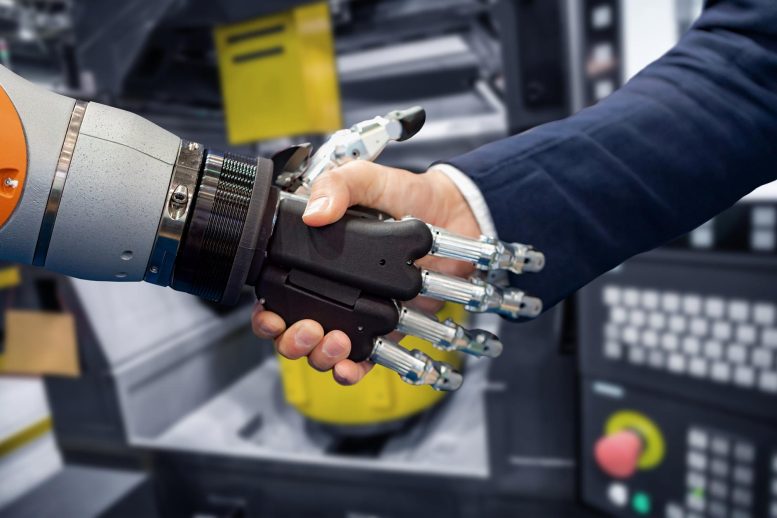
    A new algorithmic planner developed at Carnegie Mellon University’s Robotics Institute divides up tasks optimally between humans and robots.

    CMU’s ADL planner optimizes human-robot task sharing, integrating learning to reduce costs by up to 15%.

    As robots increasingly join people working on the factory floor, in warehouses, and elsewhere on the job, determining who will do which tasks increases in complexity and importance. People are better suited for some jobs, robots for others. And in some cases, it is advantageous to spend time teaching a robot to do a task now and reap the rewards later.

    Researchers at Carnegie Mellon University’s Robotics Institute (RI) have developed an algorithmic planner that helps delegate tasks to humans and robots. The planner, “Act, Delegate or Learn” (ADL), considers a list of duties and decides how best to assign them. The researchers asked three questions: When should a robot act to complete a task? When should a task be delegated to a human? And when should a robot learn a new task?

    “There are costs associated with the decisions made, such as the time it takes a human to complete a task or teach a robot to complete a task and the cost of a robot failing at a task,” said Shivam Vats, the lead researcher and a Ph.D. student in the RI. “Given all those costs, our system will give you the optimal division of labor.”

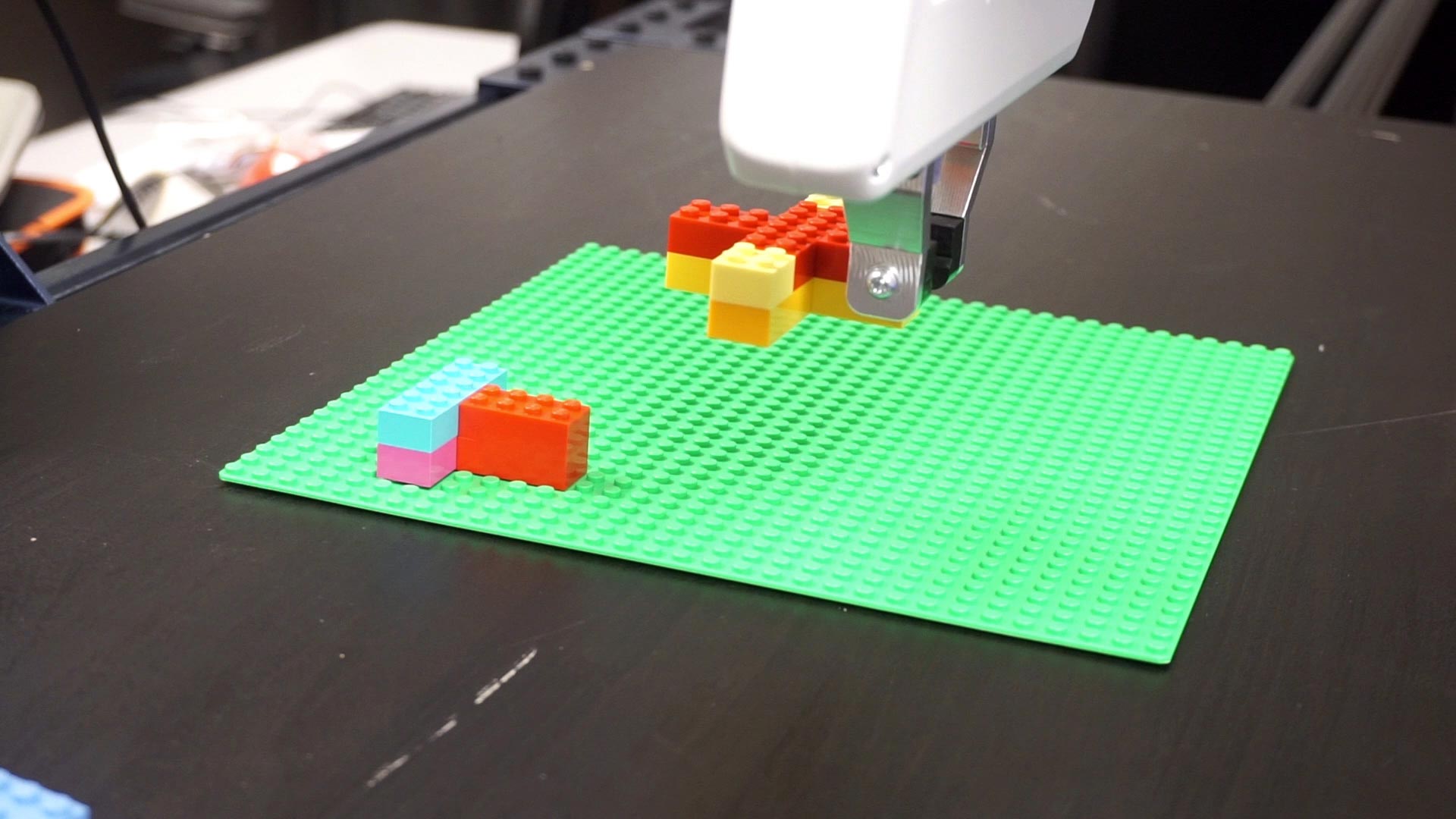
    The team’s work could be valuable in manufacturing and assembly plants, for sorting packages, or in any environment where humans and robots collaborate to complete several jobs. In order to test the planner, researchers set up scenarios where humans and robots had to insert blocks into a peg board and stack parts of different shapes and sizes made of LEGO bricks.
    ADL Robot Stacks LEGO Bricks
    A robot stacks LEGO bricks during simulations of the ADL planner. Robotics Institute researchers have developed an algorithmic planner that helps delegate tasks to humans and robots. Credit: Carnegie Mellon University

    Incorporating Robot Learning into Task Allocation

    Using algorithms and software to decide how to delegate and divide labor is not new, even when robots are part of the team. However, this work is among the first to include robot learning in its reasoning.

    “Robots aren’t static anymore,” Vats said. “They can be improved and they can be taught.”

    Often in manufacturing, a person will manually manipulate a robotic arm to teach the robot how to complete a task. Teaching a robot takes time and, therefore, has a high upfront cost. But it can be beneficial in the long run if the robot can learn a new skill. Part of the complexity is deciding when it is best to teach a robot versus delegating the task to a human. This requires the robot to predict what other tasks it can complete after learning a new task.

    Given this information, the planner converts the problem into a mixed integer program — an optimization program commonly used in scheduling, production planning, or designing communication networks — that can be solved efficiently by off-the-shelf software. The planner performed better than traditional models in all instances and decreased the cost of completing the tasks by 10% to 15%.

    Reference: “Synergistic Scheduling of Learning and Allocation of Tasks in Human-Robot Teams” by Shivam Vats, Oliver Kroemer and Maxim Likhachev, 14 March 2022, Computer Science > Robotics.
    arXiv:2203.07478

    Vats presented the work, “Synergistic Scheduling of Learning and Allocation of Tasks in Human-Robot Teams” at the International Conference on Robotics and Automation in Philadelphia, where it was nominated for the outstanding interaction paper award. The research team included Oliver Kroemer, an assistant professor in RI; and Maxim Likhachev, an associate professor in RI.

    The research was funded by the Office of Naval Research and the Army Research Laboratory.

    Never miss a breakthrough: Join the SciTechDaily newsletter.
    Follow us on Google and Google News.

    Algorithm Carnegie Mellon University Computer Science Robotics
    Share. Facebook Twitter Pinterest LinkedIn Email Reddit

    Related Articles

    MIT Unveils Advanced Algorithm To Keep Drones From Colliding in Midair

    New MIT Algorithm Gives Robots a Faster Grasp [Video]

    Machine-Learning Algorithms Could Help Debunk Twitter Rumors

    Algorithm Analyzes Information From Medical Images to Identify Disease

    Halide, A New and Improved Programming Language for Image Processing Software

    Algorithms Improve AUV Navigation and Detecting Capabilities

    Semiautonomous “Intelligent Co-Pilot” Helps Vehicles Avoid Collisions

    New Algorithm Enables Wi-Fi Connected Vehicles to Share Data

    Algorithm Enables Robots to Learn and Adapt to Help Complete Tasks

    Leave A Reply Cancel Reply

    • Facebook
    • Twitter
    • Pinterest
    • YouTube

    Don't Miss a Discovery

    Subscribe for the Latest in Science & Tech!

    Trending News

    Collapsing Plasma May Hold the Key to Cosmic Magnetism

    This Breakthrough Solar Panel Generates Power From Both Sunlight and Raindrops

    Scientists Uncover New Metabolic Effects Beyond Weight Loss of Mounjaro

    Scientists Discover Cancer Tumors Are “Addicted” to This Common Antioxidant

    1,800 Miles Down: Scientists Uncover Mysterious Movements at the Edge of Earth’s Core

    Scientists Discover Hidden “Good Fats” in Green Rice That Could Transform Nutrition

    Your Child’s Clothes Could Contain Toxic Lead, Study Finds

    Researchers Break a 150-Year-Old Math Law With a Surprising Donut Discovery

    Follow SciTechDaily
    • Facebook
    • Twitter
    • YouTube
    • Pinterest
    • Newsletter
    • RSS
    SciTech News
    • Biology News
    • Chemistry News
    • Earth News
    • Health News
    • Physics News
    • Science News
    • Space News
    • Technology News
    Recent Posts
    • This Is How Ovarian Cancer Spreads Before Doctors Can Detect
    • Scientists Discover Hidden Virus Linked to Colorectal Cancer
    • Hidden Danger: Widely Used Pesticides Linked to 150% Higher Cancer Risk
    • The Mystery of the Notes: Why No One Knows How This 120-Year-Old Song Should Sound
    • Scientists Discover 132-Million-Year-Old Dinosaur Tracks on South Africa’s Coast
    Copyright © 1998 - 2026 SciTechDaily. All Rights Reserved.
    • Science News
    • About
    • Contact
    • Editorial Board
    • Privacy Policy
    • Terms of Use

    Type above and press Enter to search. Press Esc to cancel.