
Scientists have reported the outcomes of the first multi-center randomized trial comparing the effects of two diets.
A clinical trial funded by the National Institutes of Health has found that eliminating just animal milk from the diet of adults with eosinophilic esophagitis (EoE) is as effective in treating the condition as eliminating animal milk and five other common foods. The researchers noted that for individuals with EoE whose disease persists even after avoiding animal milk, a stricter diet may assist them in achieving remission. These results were recently published in the journal The Lancet Gastroenterology & Hepatology.
“Diet-based therapy for eosinophilic esophagitis will be much easier to follow for many people if it involves cutting just one food from the diet rather than six,” said Hugh Auchincloss, M.D., acting director of the National Institute of Allergy and Infectious Diseases (NIAID), part of NIH.
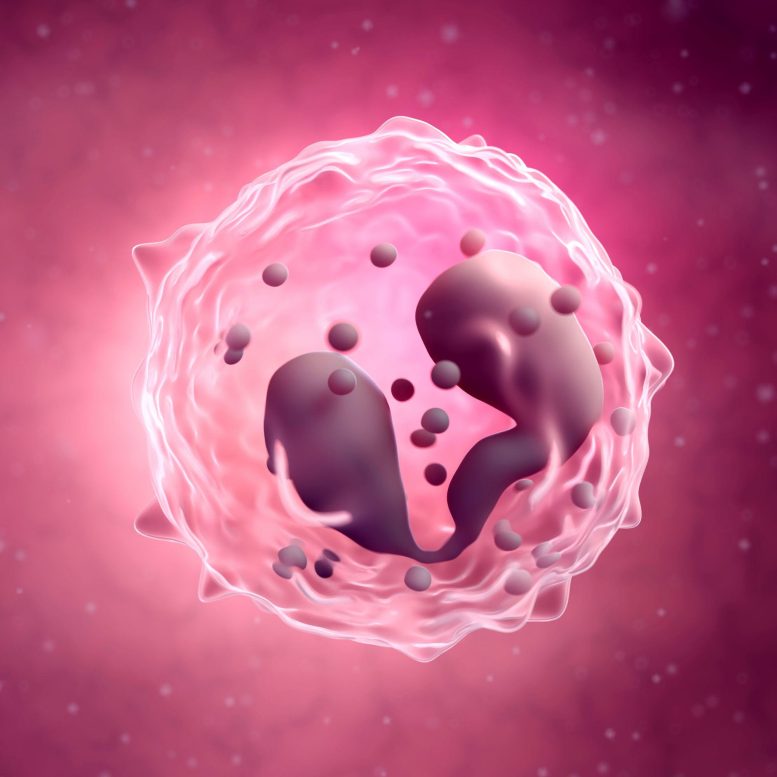
EoE is a chronic disease characterized by an overabundance of white blood cells called eosinophils in the esophagus. Allergic inflammation due to food drives the disease by damaging the esophagus and preventing it from working properly. For people with EoE, swallowing even small amounts of food can be a painful and stressful choking experience. About 160,000 people in the United States are living with EoE.
Excluding certain foods from the diet has been a cornerstone of EoE treatment. During the early 2000s, researchers found that eliminating six common food triggers of esophageal injury—milk, egg, wheat, soy, fish, and nuts—substantially reduced signs and symptoms of EoE. This six-food elimination diet (6FED) became a common approach to managing the disease.
In recent years, scientists have conducted small, non-randomized studies of removing one to four of the most common food antigens from the diet to treat EoE, with some success. However, the relative risks and benefits of eliminating many foods versus a few foods at the start of diet-based therapy remained unclear.
Comparing 1FED and 6FED
The new findings come from the first multi-site, randomized trial comparing the 6FED with a one-food elimination diet (1FED) in adults with EoE. The trial was co-funded by NIAID, the National Center for Advancing Translational Sciences, and the National Institute of Diabetes and Digestive and Kidney Diseases, all part of NIH. Marc E. Rothenberg, M.D., Ph.D., the senior author of the published study, is director of both the Division of Allergy and Immunology and the Cincinnati Center for Eosinophilic Disorders at Cincinnati Children’s.
The trial involved 129 adults ages 18 to 60 years with a confirmed EoE diagnosis, active EoE symptoms, and a high number of eosinophils in esophageal tissue. Volunteers enrolled in the trial at one of 10 U.S. medical centers that participate in the Consortium of Eosinophilic Gastrointestinal Disease Researchers, part of the NIH-funded Rare Diseases Clinical Research Network. Participants were assigned at random to either the 1FED, which eliminated only animal milk from the diet, or the 6FED.
They followed their assigned diet for six weeks, then underwent an upper endoscopy exam and an esophageal tissue biopsy. If the number of eosinophils in the tissue indicated that EoE was in remission, the participant exited the study. If EoE was not in remission, people who had been on 1FED could advance to 6FED, and people who had been on 6FED could take topical swallowed steroids, both for six weeks, followed by a repeat exam with tissue biopsy.
Equal Effectiveness of Diets
The investigators found that 34% of participants on 6FED and 40% of participants on 1FED achieved remission after six weeks of diet therapy, a difference that was not statistically significant. The two diets also had a similar impact across several other measures, including a reduction in EoE symptoms and an effect on quality of life. Thus, 1FED and 6FED were equally effective at treating EoE, an unexpected finding.
The researchers also discovered that nearly half of the people who did not respond to 1FED attained remission after treatment with the more restrictive 6FED, while more than 80% of the non-responders to 6FED achieved remission with oral steroids.
Taken together, the investigators conclude that 1FED is a reasonable first-line diet therapy option in adults with EoE, and that effective therapies are available for people who do not achieve remission after 1FED or 6FED.
Reference: “One-food versus six-food elimination diet therapy for the treatment of eosinophilic oesophagitis: a multicentre, randomised, open-label trial” by Kara L Kliewer, Nirmala Gonsalves, Evan S Dellon, David A Katzka, Juan P Abonia, Seema S Aceves, Nicoleta C Arva, John A Besse, Peter A Bonis, Julie M Caldwell, Kelley E Capocelli, Mirna Chehade, Antonella Cianferoni, Margaret H Collins, Gary W Falk, Sandeep K Gupta, Ikuo Hirano, Jeffrey P Krischer, John Leung, Lisa J Martin and Marc E Rothenberg, 28 February 2023, The Lancet Gastroenterology & Hepatology.
DOI: 10.1016/S2468-1253(23)00012-2
The study was funded by the National Institute of Allergy and Infectious Diseases.
Never miss a breakthrough: Join the SciTechDaily newsletter.
Follow us on Google and Google News.