
Close Menu
    Facebook X (Twitter) Instagram
    SciTechDaily
    • Biology
    • Chemistry
    • Earth
    • Health
    • Physics
    • Science
    • Space
    • Technology
    Facebook X (Twitter) Pinterest YouTube RSS
    SciTechDaily
    Home»Health»New Compounds Kill Breast Cancer Cells and Block Tumor Growth
    Health

    New Compounds Kill Breast Cancer Cells and Block Tumor Growth

    By University of Illinois at Urbana-ChampaignJanuary 7, 2020No Comments4 Mins Read
    Facebook Twitter Pinterest Telegram LinkedIn WhatsApp Email Reddit
    Share
    Facebook Twitter LinkedIn Pinterest Telegram Email Reddit
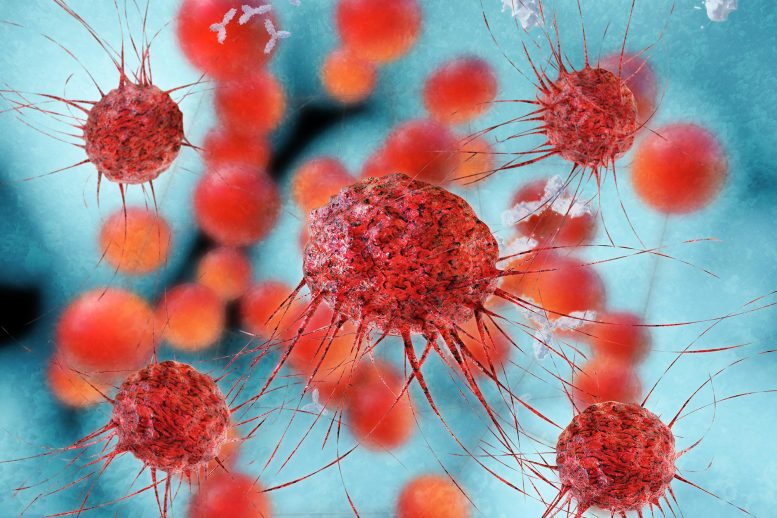
    Artists Illustration Cancer Cells
    Scientists have created new drug compounds that stop the pro-cancer activity of FOXM1, a transcription factor that controls many genes. 

    New Compounds Block Master Regulator of Cancer Growth, Metastasis

    Scientists have developed new drug compounds that thwart the pro-cancer activity of FOXM1, a transcription factor that regulates the activity of dozens of genes. The new compounds suppress tumor growth in human cells and in mouse models of several types of human breast cancer.

    The researchers report their findings in the journal NPJ Breast Cancer.

    FOXM1 is a naturally occurring protein that ramps up the expression of genes that are important to cell proliferation and development. It plays an important role during early development, but normally is present only at very low levels in adult tissues.

    The researchers focused on FOXM1 because it is found in higher abundance in cancer cells than in healthy human cells, said Benita Katzenellenbogen, a University of Illinois professor of molecular and integrative physiology who led the study with U. of I. chemistry professor John Katzenellenbogen and life sciences research specialist Yvonne Ziegler.

    “FOXM1 is a key factor that makes breast cancer and many other cancers more aggressive and more difficult to treat,” Benita Katzenellenbogen said. “Because it is a master regulator of cancer growth and metastasis, there has been great interest in developing compounds that would be effective in blocking it.”

    So far, no successful drug agents have been developed to reduce the effects of FOXM1, John Katzenellenbogen said.
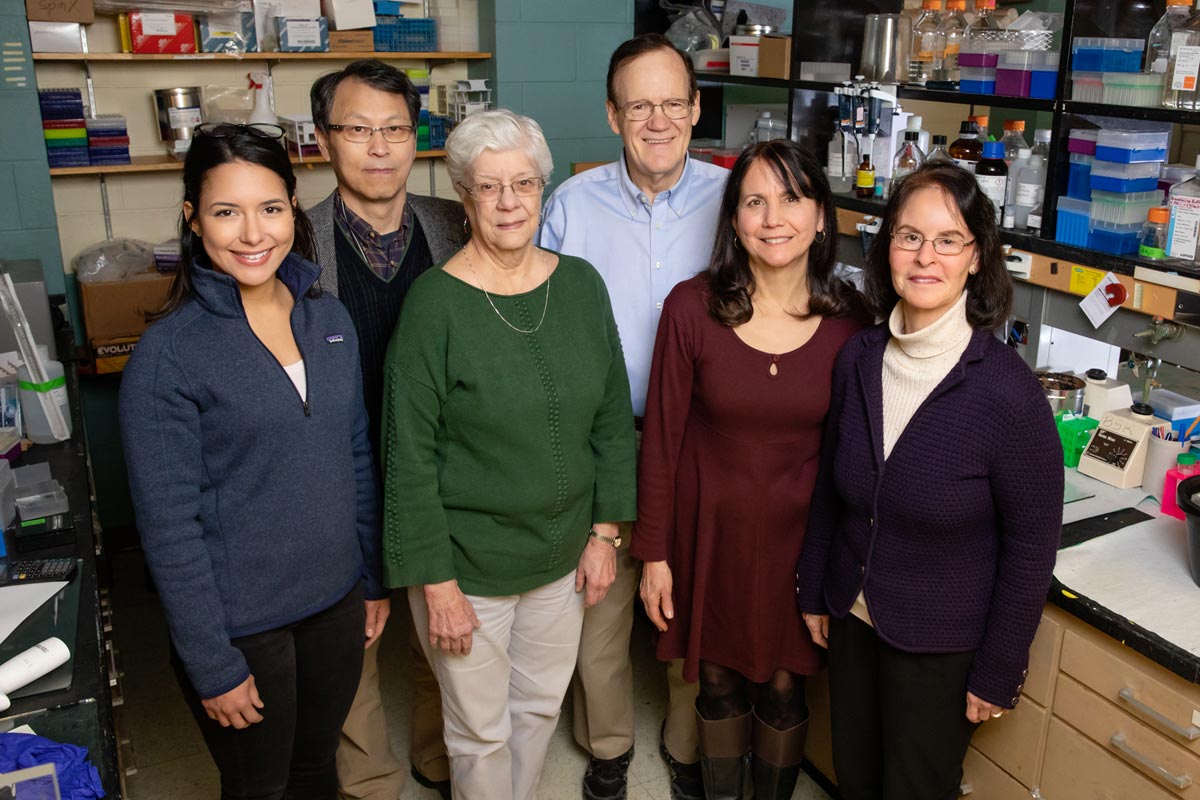
    Compounds Killed Cancer Cells Research Team
    Researchers including, from left, graduate student Valeria Sanabria Guillen, research scientist Sung Hoon Kim, researcher Kathy Carlson, chemistry professor John Katzenellenbogen, research specialist Yvonne Ziegler, and molecular and integrative physiology professor Benita Katzenellenbogen developed new drug agents to inhibit a pathway that contributes to cancer. The compounds killed cancer cells and reduced the growth of breast cancer tumors in mice. Credit: L. Brian Stauffer

    “There are reports of other inhibitors of FOXM1, but these are generally less potent and do not work well in the body,” he said. “Our compounds have good anti-tumor activity in animal models. They behave well in vivo and have long half-lives in the blood. Some work well when given orally, which is desirable for ultimate patient use.”

    The researchers developed the new drugs by analyzing the properties of various compounds in a chemical library of potential therapeutic agents. They selected those that reduced breast cancer cell proliferation and inhibited the expression of genes known to be regulated by FOXM1.

    The team then modified the compounds to enhance their inhibition of FOXM1 and increase their cellular potency. Three of the tested compounds performed best.

    “We found that these compounds inhibit the growth of breast cancer cells that represent the major subtypes of breast cancers, including estrogen receptor-positive, HER2-positive, and triple-negative breast cancers,” Benita Katzenellenbogen said. “They also block the growth of human breast tumors in mouse models.”

    The research is promising, but preliminary, the scientists said. Full development of new anti-cancer drug agents can take more than a decade from this stage of discovery.

    “Because cancers are often treated with a combination of drugs, we are exploring how our FOXM1 inhibitors might be combined with other standard-of-care agents to improve cancer treatment,” Benita Katzenellenbogen said.

    Reference: “Suppression of FOXM1 activities and breast cancer growth in vitro and in vivo by a new class of compounds” by Yvonne Ziegler, Mary J. Laws, Valeria Sanabria Guillen, Sung Hoon Kim, Parama Dey, Brandi P. Smith, Ping Gong, Noah Bindman, Yuechao Zhao, Kathryn Carlson, Mayuri A. Yasuda, Divya Singh, Zhong Li, Dorraya El-Ashry, Zeynep Madak-Erdogan, John A. Katzenellenbogen and Benita S. Katzenellenbogen, 29 November 2019, npj Breast Cancer.
    DOI: 10.1038/s41523-019-0141-7

    The Breast Cancer Research Foundation, the Julius and Mary Landfield Cancer Research Fund, the National Institutes of Health and the National Institute of Food and Agriculture at the U.S. Department of Agriculture supported this research.

    Never miss a breakthrough: Join the SciTechDaily newsletter.
    Follow us on Google and Google News.

    Breast Cancer Cancer Pharmaceuticals University of Illinois at Urbana-Champaign
    Share. Facebook Twitter Pinterest LinkedIn Email Reddit

    Related Articles

    Weight-Loss Drug Mounjaro Shrinks Breast Cancer Tumors in Mice

    Compound From Cardamom Spice Can Kill Aggressive Triple-Negative Breast Cancer Cells

    New Medicine Shows Promise in Treating Early-Stage Breast Cancer

    Discovery Could Help Improve Therapy and Prolong Survival for Patients With Triple-Negative Breast Cancer

    New Gene Therapy Developed That Could Be Effective Against Many Types of Cancer

    MRI May Lead to Overdiagnosis of Cancer

    Cavity Shaving Reduces the Risk of a Second Mastectomy

    Ultrasound Can Detect Cancers Missed by Mammography

    New Drug Combination Delays Breast Cancer Progression

    Leave A Reply Cancel Reply

    • Facebook
    • Twitter
    • Pinterest
    • YouTube

    Don't Miss a Discovery

    Subscribe for the Latest in Science & Tech!

    Trending News

    New Study Reveals Why Ozempic Works Better for Some People Than Others

    Climate Change Is Altering a Key Greenhouse Gas in a Way Scientists Didn’t Expect

    New Study Suggests Gravitational Waves May Have Created Dark Matter

    Scientists Discover Why the Brain Gets Stuck in Schizophrenia

    Scientists Engineer “Tumor-Eating” Bacteria That Devour Cancer From Within

    Even “Failed” Diets May Deliver Long-Term Health Gains, Study Finds

    NIH Scientists Discover Powerful New Opioid That Relieves Pain Without Dangerous Side Effects

    Collapsing Plasma May Hold the Key to Cosmic Magnetism

    Follow SciTechDaily
    • Facebook
    • Twitter
    • YouTube
    • Pinterest
    • Newsletter
    • RSS
    SciTech News
    • Biology News
    • Chemistry News
    • Earth News
    • Health News
    • Physics News
    • Science News
    • Space News
    • Technology News
    Recent Posts
    • Household Cats Could Hold the Secret to Fighting Breast Cancer
    • Scientists Say This Natural Hormone Reverses Obesity by Targeting the Brain
    • This 15,000-Year-Old Discovery Changes What We Know About Early Human Creativity
    • 35-Million-Year-Old Mystery: Strange Arachnid Discovered Preserved in Amber
    • Revolutionary Gas Turbine Generates Power Without Air Compression
    Copyright © 1998 - 2026 SciTechDaily. All Rights Reserved.
    • Science News
    • About
    • Contact
    • Editorial Board
    • Privacy Policy
    • Terms of Use

    Type above and press Enter to search. Press Esc to cancel.