
Close Menu
    Facebook X (Twitter) Instagram
    SciTechDaily
    • Biology
    • Chemistry
    • Earth
    • Health
    • Physics
    • Science
    • Space
    • Technology
    Facebook X (Twitter) Pinterest YouTube RSS
    SciTechDaily
    Home»Technology»New Desalination Membrane Technology Promises to Be More Efficient
    Technology

    New Desalination Membrane Technology Promises to Be More Efficient

    By SciTechDailyMay 30, 2012No Comments2 Mins Read
    Facebook Twitter Pinterest Telegram LinkedIn WhatsApp Email Reddit
    Share
    Facebook Twitter LinkedIn Pinterest Telegram Email Reddit
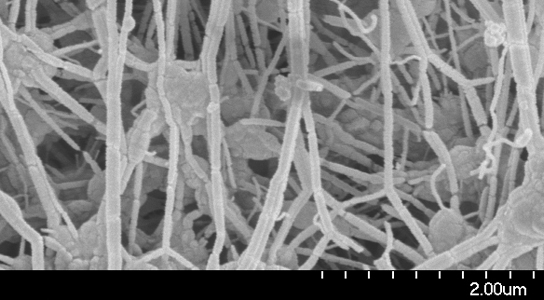
    desalination-membrane-microscope
    Membrane distillation system

    This year, more than a third of the world will suffer from shortages of potable water. This number is expected to rise by 50% by 2025 and that’s one of the reasons why the desalination techniques of seawater are so important, because they will allow coastal communities to address local shortfalls.

    The new technology was developed by Kamalesh Sirkar, a chemical engineer from the New Jersey Institute of Technology, and it’s comprised of a direct-contact membrane distillation system (DCMD) that will distill drinking water out of up to 20% salt-concentrated brine. After 25%, the salt precipitates out of the solution and could damage the system.
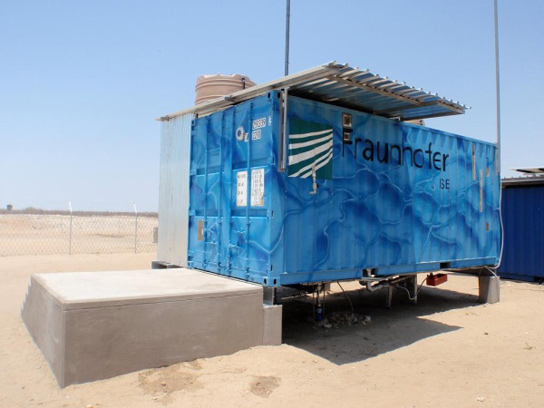
    desalination-self-contained-plant

    The salt concentration of normal seawater is 3.5%, meaning that the system can reprocess the same water several times. Heated seawater flows across a membrane strung between a series of hollow tubes that are made out of a porous yet hydrophobic fiber. This means that only water vapor can be osmotically transferred. Cold distillate water runs through each of the tubes in a direction that’s perpendicular to the seawater, allowing for a temperature gradient. This gradient causes the vapor to form on the tubes. The vapor diffuses through the pores and condenses inside of them, joining the flow of cold distillate water.

    desalination-sirkar-membraneThe salt is not able to penetrate the tubes. With each cycle, more fresh water is drawn away and the resulting brine is more concentrated. Sirkar’s patented system can deliver 80 L of drinking water from 100 L of seawater. Usual techniques yield about 41 L from the same amount of seawater. This membrane distillation requires a steady source of heat.

    Never miss a breakthrough: Join the SciTechDaily newsletter.
    Follow us on Google and Google News.

    Chemical Engineering Desalination Drinking Water Membrane Seawater
    Share. Facebook Twitter Pinterest LinkedIn Email Reddit

    Related Articles

    New Device Purifies Saltwater Over a 1000 Times Faster Than Standard Industrial Equipment

    Making Seawater Drinkable in Minutes: A New Alternative Desalination Membrane

    Engineers Develop New System to Provide Low-Cost Drinking Water

    MIT Engineers Develop a Shockwave-Based Process for Desalination of Water

    Safe Drinking Water Via Solar Power Desalination

    Stanford’s Self-Healing Plastic Skin Could Lead to Improved Prosthetics

    Graphene Membranes May be Used to Filter Water & Biological Samples

    Microorganisms Convert Renewable Electricity Into Carbon-Neutral Methane

    Desalination Technique Using Graphene Sheets Improves Permeability and Efficiency

    Leave A Reply Cancel Reply

    • Facebook
    • Twitter
    • Pinterest
    • YouTube

    Don't Miss a Discovery

    Subscribe for the Latest in Science & Tech!

    Trending News

    Largest-Ever Study Finds Medicinal Cannabis Ineffective for Anxiety, Depression, PTSD

    250-Million-Year-Old Egg Solves One of Evolution’s Biggest Mysteries

    Living With Roommates Might Be Changing Your Gut Microbiome Without You Knowing

    Century-Old Cleaning Chemical Linked to 500% Increased Risk of Parkinson’s Disease

    What if Your Memories Never Happened? Physicists Take a New Look at the Boltzmann Brain Paradox

    One of the Universe’s Largest Stars May Be Getting Ready To Explode

    Scientists Discover Enzyme That Could Supercharge Ozempic-Like Weight Loss Drugs

    Popular Sweetener Linked to DNA Damage – “It’s Something You Should Not Be Eating”

    Follow SciTechDaily
    • Facebook
    • Twitter
    • YouTube
    • Pinterest
    • Newsletter
    • RSS
    SciTech News
    • Biology News
    • Chemistry News
    • Earth News
    • Health News
    • Physics News
    • Science News
    • Space News
    • Technology News
    Recent Posts
    • Scientists Prove There Are Just Six Degrees of Separation in a Social Network
    • Bee Bacteria Could Fix a Major Flaw in Plant-Based Milk
    • Scientists Discover a Surprising Way To Make Bread Healthier and More Nutritious
    • Natural Compounds Boost Bone Implant Success While Killing Bacteria and Cancer Cells
    • After 60 Years, Scientists Uncover Unexpected Brain Effects of Popular Diabetes Drug Metformin
    Copyright © 1998 - 2026 SciTechDaily. All Rights Reserved.
    • Science News
    • About
    • Contact
    • Editorial Board
    • Privacy Policy
    • Terms of Use

    Type above and press Enter to search. Press Esc to cancel.