
Close Menu
    Facebook X (Twitter) Instagram
    SciTechDaily
    • Biology
    • Chemistry
    • Earth
    • Health
    • Physics
    • Science
    • Space
    • Technology
    Facebook X (Twitter) Pinterest YouTube RSS
    SciTechDaily
    Home»Biology»New Discovery on the Mysterious Family Life of Notorious Saber-Toothed Tiger
    Biology

    New Discovery on the Mysterious Family Life of Notorious Saber-Toothed Tiger

    By Royal Ontario MuseumJanuary 9, 2021No Comments4 Mins Read
    Facebook Twitter Pinterest Telegram LinkedIn WhatsApp Email Reddit
    Share
    Facebook Twitter LinkedIn Pinterest Telegram Email Reddit
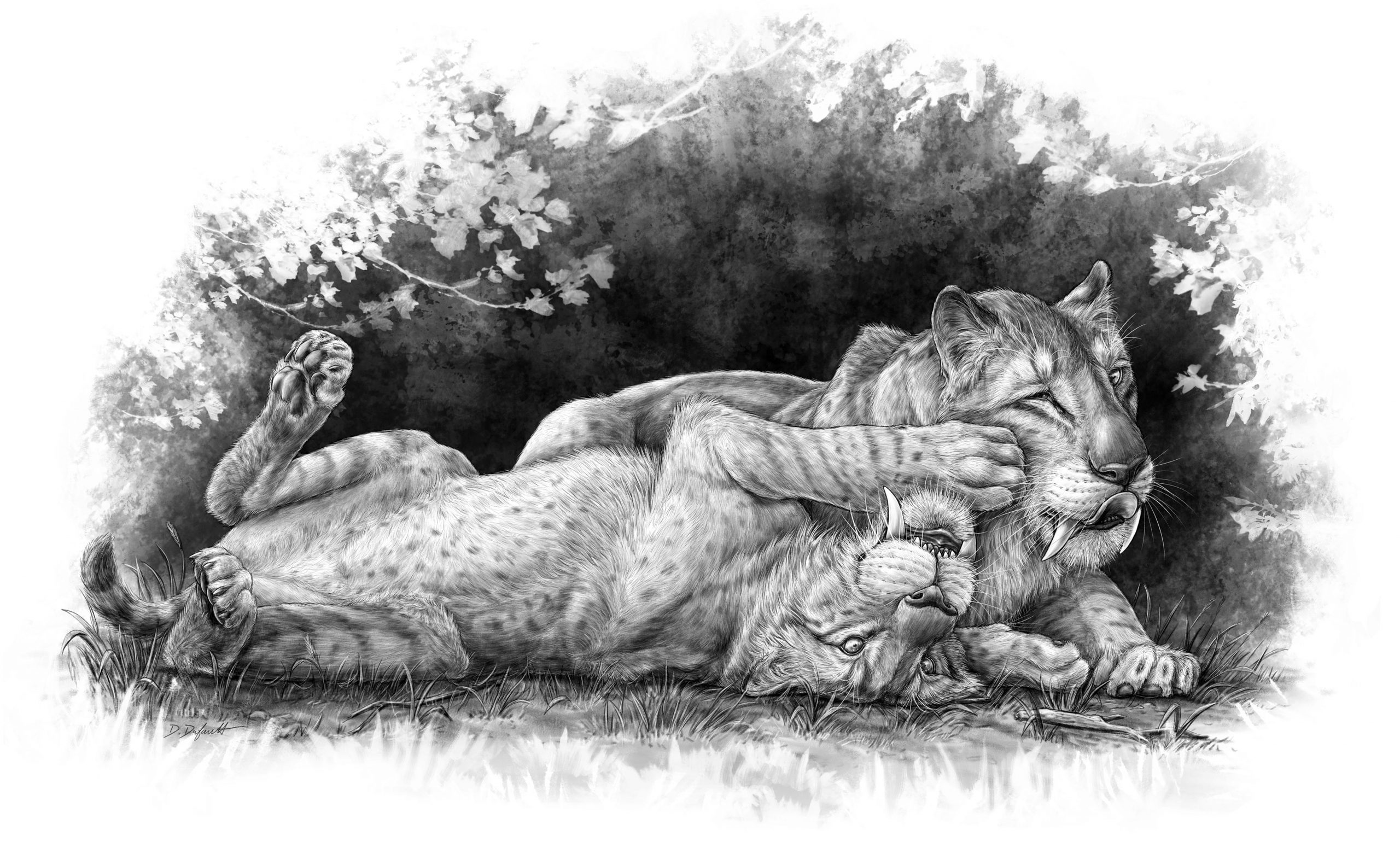
    Smilodon fatalis Cubs Illustration
    Saber-toothed cubs playing. Credit: Illustration by Danielle Dufault © Royal Ontario Museum

    Like many of today’s millennials, adolescent Sabre-Toothed Cats stayed with family longer than expected.

    A new study by scientists at the Royal Ontario Museum (ROM) and University of Toronto, published on January 7, 2021, in iScience, documents a family group of the saber-toothed cats whose remains were discovered in present-day Ecuador. By studying the fossils, collected for the ROM in the early 1960s, the scientists were able to show that while the supersized Ice Age cats grew quite quickly, they also appeared to stay with their mother for longer than some other large cats before forging their own path.

    “This study started out as a simple description of previously unpublished fossils,” says Ashley Reynolds, a graduate student based at the Royal Ontario Museum who led the study while completing her PhD research in Ecology & Evolutionary Biology at the University of Toronto. “But when we noticed the two lower jaws we were working on shared a type of tooth only found in about five percent of the Smilodon fatalis population, we knew the work was about to become much more interesting.”
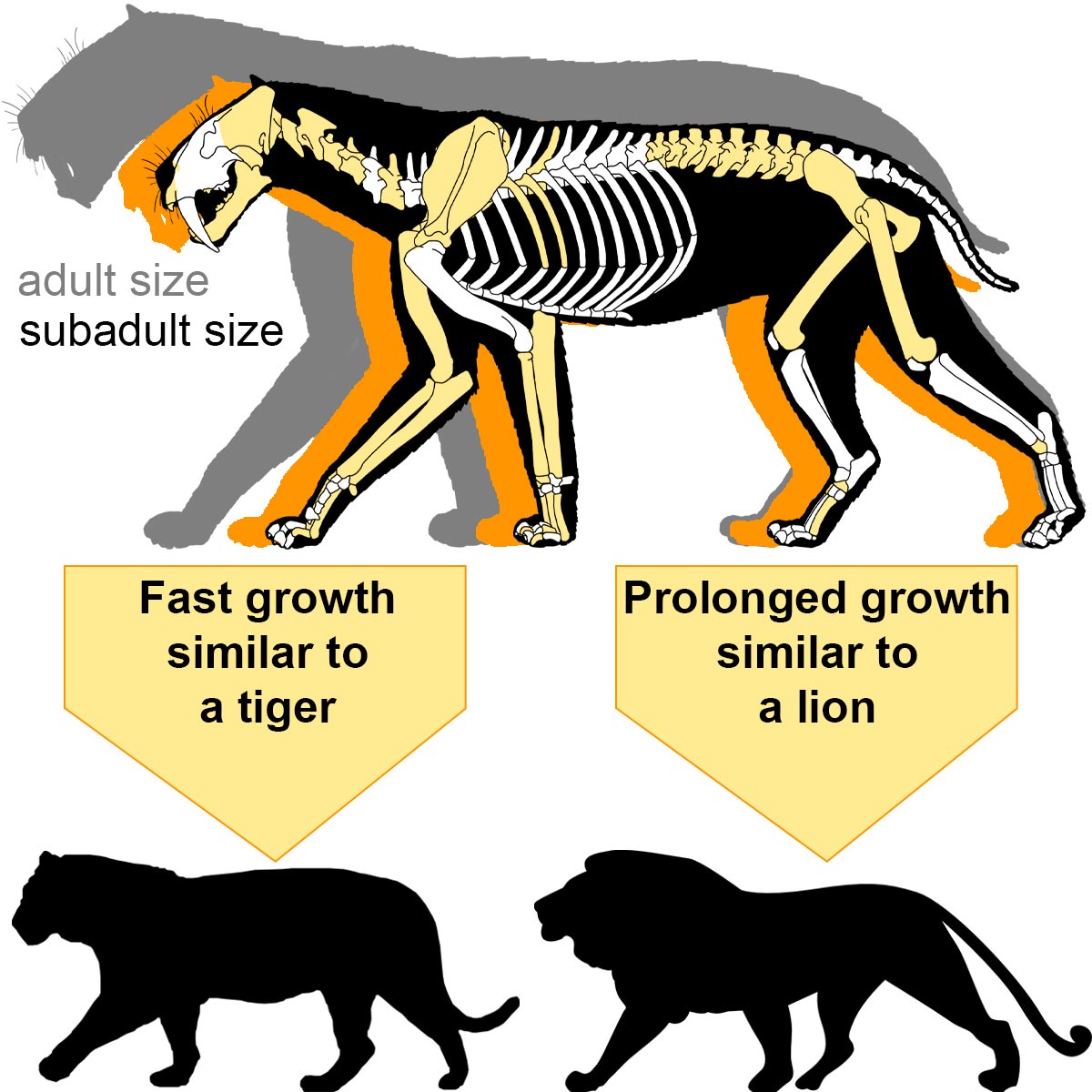
    Sabre-Toothed Cat Adult and Subadult Size Comparison
    Saber-toothed cat adult and subadult size comparison. Credit: Ashley Reynolds © Royal Ontario Museum

    Reconstructing a Saber-Toothed Family

    Encouraged by this new discovery, the researchers dug deeper and found that they were likely looking at three related individuals: one adult and two “teenaged” cats. What’s more, they were able to determine that the younger cats were at least two years old at the time of their death, an age at which some living big cats, such as tigers, are already independent.

    To support this conclusion, the team studied the preservation and formation of the Ecuadorian site (an area of study called taphonomy), based on historic collecting records and the suite of clues on the fossil bones themselves.

    Historically, Smilodon specimens have largely been collected from “predator trap” deposits, such as the famous La Brea Tar Pits in Los Angeles, California. But the Ecuador deposit, which formed on an ancient coastal plain, is likely derived from a catastrophic mass death event. This means that, unlike the “traps,” all the fossils in the deposit died at the same time. As this preserves a snapshot of an ecosystem, fossils like these can provide new and unique insights into the behavior of extinct species.
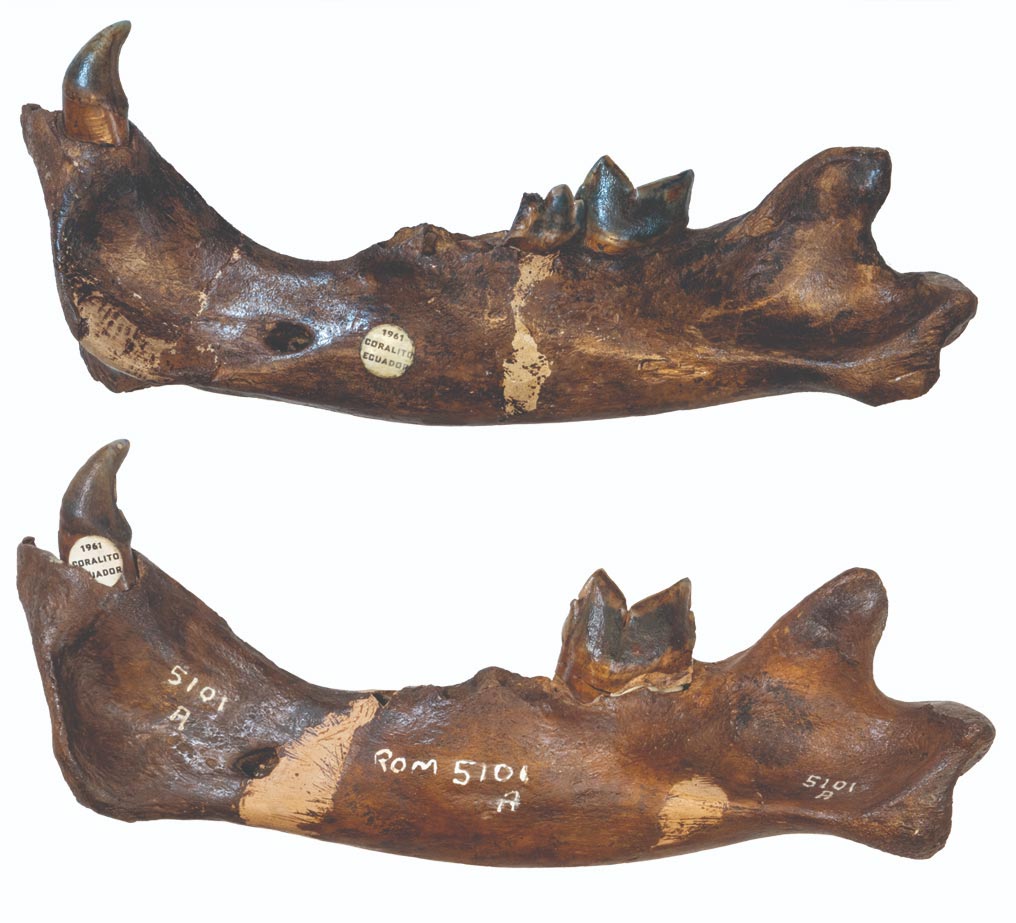
    Smilodon fatalis Jaws
    A comparison of the lower left jaw bones from the two young saber-toothed cats, S. fatalis, that were buried together. They show similar tooth formation, suggesting that the two were related. Comparison of the two left dentaries, ROMVP 5100 and ROMVP 5101. Credit: Ashley Reynolds © Royal Ontario Museum

    Clues to Saber-Toothed Social Behavior

    “The social lives of these iconic predators have been mysterious, in part because their concentration in tar seeps leaves so much room for interpretation,” says Dr. Kevin Seymour, Assistant Curator of Vertebrate Paleontology at the ROM and a co-author of this study, “This historic assemblage of saber-cat fossils from Ecuador was formed in a different way, allowing us to determine the two juveniles likely lived, and died, together—and were therefore probably siblings”

    The fossils were collected from Coralito, Ecuador in 1961 by A. Gordon Edmund, who was curator of Vertebrate Palaeontology at the ROM from 1954-1990, and Roy R. Lemon, who was curator of Invertebrate Palaeontology from 1957-1969. Together, Edmund and Lemon collected tonnes of tar-soaked sediment which was later prepared at the ROM.

    “These world-famous collections made 60 years ago have been studied for years, but a measure of their importance is that they continue to produce new insights into the lives of these extinct animals,” says Dr. David Evans, Temerty Chair of Vertebrate Palaeontology at the Royal Ontario Museum and Reynolds’s thesis supervisor.

    Reference: “Smilodon fatalis siblings reveal life history in a saber-toothed cat” by Ashley R. Reynolds, Kevin L. Seymour and David C. Evans, 7 January 2021, iScience.
    DOI: 10.1016/j.isci.2020.101916

    Never miss a breakthrough: Join the SciTechDaily newsletter.
    Follow us on Google and Google News.

    Paleontology Royal Ontario Museum Sabre-Toothed Cat Zoology
    Share. Facebook Twitter Pinterest LinkedIn Email Reddit

    Related Articles

    Complex Behavior of Armored Dinosaurs: Ankylosaurs Battled Each Other As Much as They Fought Off T. rex

    “Astonishing” 500-Million-Year-Old Fossilized Brains Prompt a Rethink of the Evolution of Insects and Spiders

    New Sabre-Tooth Predator Discovered That Precedes Cats by Millions of Years

    “Giant Cloud Rat” Fossils Discovered in Philippine Caves

    The Scimitar-Toothed Cat: DNA Reveals Insights About a Deadly Long-Distance Hunter

    “Wonderchicken” – Origin of Modern Birds Revealed by Fossil From the Age of Dinosaurs

    “Forbidden Phenotype” – Why Are There No Animals With Three Legs?

    Frightening 500-Million-Year-Old Predator Unveils the Rise of Scorpions and Spiders

    All Modern Birds Evolved From The Same Common Ancestor

    Leave A Reply Cancel Reply

    • Facebook
    • Twitter
    • Pinterest
    • YouTube

    Don't Miss a Discovery

    Subscribe for the Latest in Science & Tech!

    Trending News

    The Universe Is Expanding Too Fast and Scientists Can’t Explain Why

    “Like Liquid Metal”: Scientists Create Strange Shape-Shifting Material

    Early Warning Signals of Esophageal Cancer May Be Hiding in Plain Sight

    Common Blood Pressure Drug Shows Surprising Power Against Deadly Antibiotic-Resistant Superbug

    Scientists Uncover Dangerous Connection Between Serotonin and Heart Valve Disease

    Scientists Discover a “Protector” Protein That Could Help Reverse Hair Loss

    Bone-Strengthening Discovery Could Reverse Osteoporosis

    Scientists Uncover Hidden Trigger Behind Stem Cell Aging

    Follow SciTechDaily
    • Facebook
    • Twitter
    • YouTube
    • Pinterest
    • Newsletter
    • RSS
    SciTech News
    • Biology News
    • Chemistry News
    • Earth News
    • Health News
    • Physics News
    • Science News
    • Space News
    • Technology News
    Recent Posts
    • Scientists Stunned After Finding Plant Thought Extinct for 60 Years
    • A Common Diabetes Drug May Hold the Key to Stopping HIV From Coming Back
    • Ancient “Syphilis-Like” Disease in Vietnam Challenges Key Scientific Assumptions
    • Drinking Alcohol To Cope in Your 20s Could Damage Your Brain for Life
    • Scientists Crack Alfalfa’s Chromosome Mystery After Decades of Debate
    Copyright © 1998 - 2026 SciTechDaily. All Rights Reserved.
    • Science News
    • About
    • Contact
    • Editorial Board
    • Privacy Policy
    • Terms of Use

    Type above and press Enter to search. Press Esc to cancel.