
Close Menu
    Facebook X (Twitter) Instagram
    SciTechDaily
    • Biology
    • Chemistry
    • Earth
    • Health
    • Physics
    • Science
    • Space
    • Technology
    Facebook X (Twitter) Pinterest YouTube RSS
    SciTechDaily
    Home»Technology»Lack of Sleep Could Be a Problem for Artificial Intelligence
    Technology

    Lack of Sleep Could Be a Problem for Artificial Intelligence

    By Garrett Kenyon, Los Alamos National LaboratoryJanuary 9, 20214 Comments2 Mins Read
    Facebook Twitter Pinterest Telegram LinkedIn WhatsApp Email Reddit
    Share
    Facebook Twitter LinkedIn Pinterest Telegram Email Reddit
    AI Sleeping
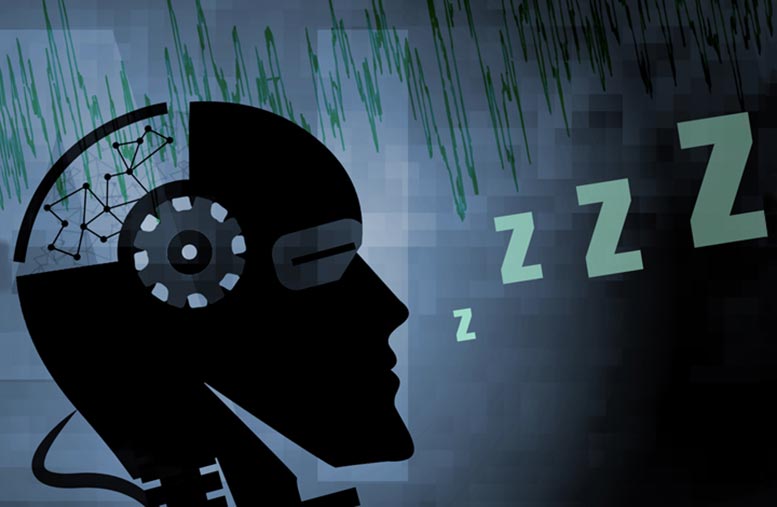
    Some types of artificial intelligence could start to hallucinate if they don’t get enough rest, just as humans do. Credit: Los Alamos National Laboratory

    Research at Los Alamos found that neural networks performing unsupervised learning benefit from rest periods to remain stable.

    One of the distinguishing features of machines is that they don’t need to sleep, unlike humans and any other creature with a central nervous system. Someday though, your toaster might need a nap from time to time, as may your car, fridge and anything else that is revolutionized with the advent of practical artificial intelligence technologies.

    The change will come when (and if) AI systems that mimic living brains are incorporated into the wide range of devices that currently rely on conventional computers and microprocessors to help us through the day. At least that’s the implication of new research that we are conducting in Los Alamos National Laboratory to understand systems that operate much like the neurons inside living brains.

    Our realization came about as we worked to develop neural networks that closely approximate how humans and other biological systems learn to see. We were investigating the way that these simulated networks respond to unsupervised dictionary training. In this sort of activity, networks set about classifying objects without having prior examples with which to compare them. Imagine handing many images of exotic animals to a child, and asking them to group similar ones together. The child might not know what an antelope is, but they would place them in a separate pile from the lions or penguins, for example.

    Read the rest of the story as it appeared in Scientific American.

    Never miss a breakthrough: Join the SciTechDaily newsletter.
    Follow us on Google and Google News.

    Artificial Intelligence DOE Los Alamos National Laboratory Sleep Science
    Share. Facebook Twitter Pinterest LinkedIn Email Reddit

    Related Articles

    AI’s New Frontier: Turning Sparse Sensor Data Into Gold

    A Leap in Performance – New Breakthrough Boosts Quantum AI

    New Method Exposes How Artificial Intelligence Works

    Breakthrough Proof Clears Path for Quantum AI – Overcoming Threat of “Barren Plateaus”

    New Atomtronic Device to Probe Weird Boundary Between Quantum and Everyday Worlds

    Artificial Brains Need Sleep Too – Desperate AI Researchers Discover Way to Stabilize Neuromorphic Processors

    Self-Powered X-Ray Detector to Revolutionize Medicine, Security and Research Imaging

    Reinventing the Mirror to Transform Antennas, Wireless and Cell Phone Communications

    Lawrence Livermore Lab Uses Artificial Intelligence and Supercomputers in Global Fight Against COVID-19

    4 Comments

    1. Joe Milosch on January 10, 2021 3:28 am

      Wow, what a great science fiction plot. AI’s start to wear out, because they need to sleep and dream. They need time to meditate on what they have observed, without the burden of sensory inputs. So turn off AI’s cameras, microphones and all other sensors, and just let the program mull things over. Ah…. sleep.

      Reply
    2. Cai on January 11, 2021 5:11 am

      What? Where’s the science behind that conclusion? This is my last time here! I just cant stand (or afford) an article with a catchy title that gives information that is more im line with science fiction… Oh well

      Reply
    3. Talk to Walle on January 12, 2021 5:57 am

      It’s hard to imagine that our household products might need a nap from time to time. But the fact is we worked to develop AI that closely approximate how humans learn to see.

      Reply
    4. Steve Barger on February 21, 2021 2:05 am

      Note: “Sleep” in this study is not simply turning an electronic device off; our brains do not *die* while we’re asleep, for Pete’s sake. What the researchers tested was introduction of periods of very rhythmic activity input. This was considered to be similar to the slow-wave patterns of neurological activity our brains exhibit while we sleep.

      Reply
    Leave A Reply Cancel Reply

    • Facebook
    • Twitter
    • Pinterest
    • YouTube

    Don't Miss a Discovery

    Subscribe for the Latest in Science & Tech!

    Trending News

    The Universe Is Expanding Too Fast and Scientists Can’t Explain Why

    “Like Liquid Metal”: Scientists Create Strange Shape-Shifting Material

    Early Warning Signals of Esophageal Cancer May Be Hiding in Plain Sight

    Common Blood Pressure Drug Shows Surprising Power Against Deadly Antibiotic-Resistant Superbug

    Scientists Uncover Dangerous Connection Between Serotonin and Heart Valve Disease

    Scientists Discover a “Protector” Protein That Could Help Reverse Hair Loss

    Bone-Strengthening Discovery Could Reverse Osteoporosis

    Scientists Uncover Hidden Trigger Behind Stem Cell Aging

    Follow SciTechDaily
    • Facebook
    • Twitter
    • YouTube
    • Pinterest
    • Newsletter
    • RSS
    SciTech News
    • Biology News
    • Chemistry News
    • Earth News
    • Health News
    • Physics News
    • Science News
    • Space News
    • Technology News
    Recent Posts
    • A Common Diabetes Drug May Hold the Key to Stopping HIV From Coming Back
    • Ancient “Syphilis-Like” Disease in Vietnam Challenges Key Scientific Assumptions
    • Drinking Alcohol To Cope in Your 20s Could Damage Your Brain for Life
    • Scientists Crack Alfalfa’s Chromosome Mystery After Decades of Debate
    • Ancient Ant-Plant Alliance Collapses As Predatory Wasps Move In
    Copyright © 1998 - 2026 SciTechDaily. All Rights Reserved.
    • Science News
    • About
    • Contact
    • Editorial Board
    • Privacy Policy
    • Terms of Use

    Type above and press Enter to search. Press Esc to cancel.