
Close Menu
    Facebook X (Twitter) Instagram
    SciTechDaily
    • Biology
    • Chemistry
    • Earth
    • Health
    • Physics
    • Science
    • Space
    • Technology
    Facebook X (Twitter) Pinterest YouTube RSS
    SciTechDaily
    Home»Science»New Engineering Strategy Makes Graphene-Based Supercapacitors Viable for Widespread Use
    Science

    New Engineering Strategy Makes Graphene-Based Supercapacitors Viable for Widespread Use

    By Monash UniversityAugust 2, 20133 Comments3 Mins Read
    Facebook Twitter Pinterest Telegram LinkedIn WhatsApp Email Reddit
    Share
    Facebook Twitter LinkedIn Pinterest Telegram Email Reddit
    A Completely New Strategy to Engineer Graphene Based Supercapacitors
    AResearchers have pioneered a novel method for engineering graphene-based supercapacitors, enabling their widespread use in renewable energy storage, portable electronics, and electric vehicles.

    In a newly published study, engineers from Monash University detail a new strategy to engineer graphene-based supercapacitors, making them viable for widespread use in renewable energy storage, portable electronics and electric vehicles.

    Monash University researchers have brought next generation energy storage closer with an engineering first – a graphene-based device that is compact, yet lasts as long as a conventional battery.

    Published today in Science, a research team led by Professor Dan Li of the Department of Materials Engineering has developed a completely new strategy to engineer graphene-based supercapacitors (SC), making them viable for widespread use in renewable energy storage, portable electronics, and electric vehicles.

    SCs are generally made of highly porous carbon impregnated with a liquid electrolyte to transport the electrical charge. Known for their almost indefinite lifespan and the ability to re-charge in seconds, the drawback of existing SCs is their low energy-storage-to-volume ratio – known as energy density. Low energy density of five to eight Watt-hours per liter, means SCs are unfeasibly large or must be re-charged frequently.

    Professor Li’s team has created an SC with energy density of 60 Watt-hours per liter – comparable to lead-acid batteries and around 12 times higher than commercially available SCs.

    “It has long been a challenge to make SCs smaller, lighter, and compact to meet the increasingly demanding needs of many commercial uses,” Professor Li said.

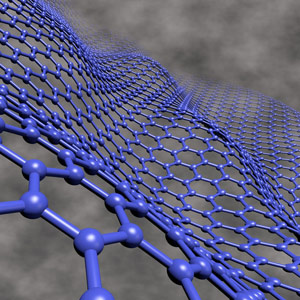
    Graphene, which is formed when graphite is broken down into layers one atom thick, is very strong, chemically stable, and an excellent conductor of electricity.

    To make their uniquely compact electrode, Professor Li’s team exploited an adaptive graphene gel film they had developed previously. They used liquid electrolytes – generally the conductor in traditional SCs – to control the spacing between graphene sheets on the sub-nanometer scale. In this way, the liquid electrolyte played a dual role: maintaining the minute space between the graphene sheets and conducting electricity.

    Unlike in traditional ‘hard’ porous carbon, where space is wasted with unnecessarily large ‘pores’, density is maximized without compromising porosity in Professor Li’s electrode.

    To create their material, the research team used a method similar to that used in traditional paper making, meaning the process could be easily and cost-effectively scaled up for industrial use.

    “We have created a macroscopic graphene material that is a step beyond what has been achieved previously. It is almost at the stage of moving from the lab to commercial development,” Professor Li said.

    The work was supported by the Australian Research Council.

    Reference: “Liquid-Mediated Dense Integration of Graphene Materials for Compact Capacitive Energy Storage” by Xiaowei Yang, Chi Cheng, Yufei Wang, Ling Qiu and Dan Li, 2 August 2013, Science.
    DOI: 10.1126/science.1239089

    Never miss a breakthrough: Join the SciTechDaily newsletter.
    Follow us on Google and Google News.

    Graphene Materials Science Monash University Nanotechnology Renewable Energy Supercapacitors
    Share. Facebook Twitter Pinterest LinkedIn Email Reddit

    Related Articles

    Rice Engineers Design Flexible and Stackable Laser Induced Graphene Supercapacitors

    Microbullets Demonstrate Graphene’s Energy Absorbing Strength

    Crumpled Graphene Forms Stretchable Supercapacitors to Power Flexible Electronic Devices

    Graphene Quantum Dots Outperform Platinum in Fuel Cells

    Graphene Nanoribbon Film Keeps Glass Ice-Free

    Experimental Evidence Shows New Boron Nanomaterial is Possible

    Scientists Develop Graphene-Coated Silicon Supercapacitor

    Combining Graphene and TMDC Could Lead to the Next Generation of Solar Cells

    A Cost-Effective Fabrication Method for Micro-Scale Graphene-Based Supercapacitors

    3 Comments

    1. Susan Marquez on August 3, 2013 12:28 pm

      Researchers have brought next generation energy storage closer with an engineering first — a graphene-based device that is compact, yet lasts as long as a conventional battery.

      Reply
    2. Bruce Miller on August 3, 2013 1:59 pm

      One science advance that will make relinquishing the Mustangs, Corvettes et al for Electric cars easier for the die hard American car lover!

      Reply
    3. Rob on August 5, 2013 7:34 am

      The obvious question: When will they be available across the market? Exciting news which hopefully will not be lost in commercial wrangling.

      Reply
    Leave A Reply Cancel Reply

    • Facebook
    • Twitter
    • Pinterest
    • YouTube

    Don't Miss a Discovery

    Subscribe for the Latest in Science & Tech!

    Trending News

    One of the Universe’s Largest Stars May Be Getting Ready To Explode

    Scientists Discover Enzyme That Could Supercharge Ozempic-Like Weight Loss Drugs

    Popular Sweetener Linked to DNA Damage – “It’s Something You Should Not Be Eating”

    Ancient “Rock” Microbes May Reveal How Complex Life Began

    Researchers Capture Quantum Interference in One of Nature’s Rarest Atoms

    “A Plague Is Upon Us”: The Mass Death That Changed an Ancient City Forever

    Scientists Discover Game-Changing New Way To Treat High Cholesterol

    This Small Change to Your Exercise Routine Could Be the Secret to Living Longer

    Follow SciTechDaily
    • Facebook
    • Twitter
    • YouTube
    • Pinterest
    • Newsletter
    • RSS
    SciTech News
    • Biology News
    • Chemistry News
    • Earth News
    • Health News
    • Physics News
    • Science News
    • Space News
    • Technology News
    Recent Posts
    • Natural Compounds Boost Bone Implant Success While Killing Bacteria and Cancer Cells
    • After 60 Years, Scientists Uncover Unexpected Brain Effects of Popular Diabetes Drug Metformin
    • New Research Uncovers Hidden Side Effects of Popular Weight-Loss Drugs
    • Scientists Rethink Extreme Warming After Surprising Ocean Discovery
    • The Surprising Role of Asteroids in the Origin of Life
    Copyright © 1998 - 2026 SciTechDaily. All Rights Reserved.
    • Science News
    • About
    • Contact
    • Editorial Board
    • Privacy Policy
    • Terms of Use

    Type above and press Enter to search. Press Esc to cancel.