
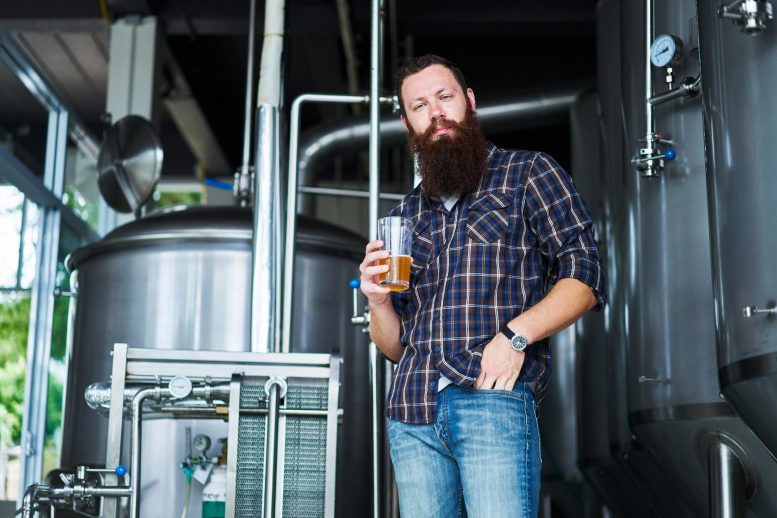
Scientists turned spent grain into protein-rich food ingredients and industrial chemicals, offering a sustainable solution for brewery waste.
Home brewing enthusiasts and major manufacturers alike experience the same result of the beer-making process: mounds of leftover grain. Once all the flavor has been extracted from barley and other grains, what’s left is a protein- and fiber-rich powder that is typically used in cattle feed or put in landfills. Today, scientists report a new way to extract the protein and fiber from brewer’s spent grain and use it to create new types of protein sources, biofuels and more.
The researchers will present their results today at the spring meeting of the American Chemical Society (ACS). ACS Spring 2021 is being held online April 5-30. Live sessions will be hosted April 5-16, and on-demand and networking content will continue through April 30. The meeting features nearly 9,000 presentations on a wide range of science topics.
A New Purpose for Spent Grain
“There is a critical need in the brewing industry to reduce waste,” says Haibo Huang, Ph.D., the project’s principal investigator. His team partnered with local breweries to find a way to transform leftover grain into value-added products.
“Spent grain has a very high percentage of protein compared to other agricultural waste, so our goal was to find a novel way to extract and use it,” says Yanhong He, a graduate student who is presenting the work at the meeting. Both Huang and He are at Virginia Polytechnic and State University (Virginia Tech).
Craft brewing has become more popular than ever in the U.S. This increased demand has led to an increase in production, generating a major uptick in waste material from breweries, 85% of which is spent grain. This byproduct comprises up to 30% protein and up to 70% fiber, and while cows and other animals may be able to digest spent grain, it is difficult for humans to digest it because of its high fiber content.
A Novel, Efficient Wet Milling Approach
In order to transform this waste into something more functional, Huang and He developed a novel wet milling fractionation process to separate the protein from the fiber. Compared to other techniques, the new process is more efficient because the researchers do not have to dry the grain first. They tested three commercially available enzymes — alcalase, neutrase and pepsin — in this process and found that alcalase treatment provided the best separation without losing large amounts of either component. After a sieving step, the result was a protein concentrate and a fiber-rich product.
Up to 83% of the protein in the spent grain was recaptured in the protein concentrate. Initially the researchers proposed using the extracted protein as a cheaper, more sustainable replacement for fishmeal to feed farmed shrimp. But more recently, Huang and He have started to explore using the protein as an ingredient in food products, catering to the consumer demand for alternate protein sources.
Finding New Uses for the Leftover Fiber
However, that still left the remaining fiber-rich product without a specific use. Last year, Huang’s postdoctoral researcher Joshua O’Hair, Ph.D., reported finding a new species of Bacillus lichenformis in a spring at Yellowstone National Park. In the paper, they noted that the bacteria could convert various sugars to 2,3-butanediol, a compound that is used to make many products, such as synthetic rubber, plasticizers and 2-butanol, a fuel. So, He pretreated the extracted fiber with sulfuric acid, then broke it down into sugars from cellulose and hemicellulose. She then fed the sugars to the microbe, producing 2,3-butanediol.
Next, the team plans to work on scaling up the process of separating the protein and fiber components in order to keep up with the volume of spent grain generated at breweries. They are also working with colleagues to determine the economic feasibility of the separation process, as the enzymes currently used to separate the protein and fiber components are expensive. Huang and He hope to find suitable enzymes and green chemicals to make this process even more sustainable, scalable and affordable.
Meeting: ACS Spring 2021
Title
Simultaneous production of protein concentrate and 2,3-butanediol from brewer’s spent grain
Abstract
Brewer’s spent grain (BSG) is the most abundant (85%) by-product generated from the beer-brewing process. Currently, BSG is predominantly used as cattle feed or buried in landfills, leading to substantial resource losses. The high fiber content (~70%) and protein content (14 ~ 30%) make BSG attractive as feedstock for the production of biofuels and protein-related products. In this study, an integrated approach was investigated to produce both protein concentrate and 2,3-butanediol (2,3-BDO) from BSG.
BSG was first subjected to a wet fractionation process to produce protein concentrate and fiber-rich product (FP) using three commercial proteases (Alcalase, Neutrase, and Pepsin) at different loadings. The FP obtained from the optimized process was pretreated with sulfuric acid (0.5 – 3%, v/v) for different times (15 – 60 min) and then hydrolyzed with cellulase (10 – 40 FPU/g biomass) for 72 hr to obtain reducing sugars. Finally, the reducing sugars obtained were fermented to 2,3-BDO by a newly isolated thermophilic and alkaliphilic B. licheniformis YNP5-TSU.
The results showed that the optimal wet fractionation condition for protein concentrate production was 20 μL Alcalase/g dry BSG enzyme loading, 4 h incubation time, 50 oC incubation temperature, pH 8.0. Under the optimal condition, up to 83% protein in BSG was separated and concentrated into protein product. The protein concentration in protein concentrate was 41%, which about doubled that in BSG (22%). The removal of protein from BSG significantly improved reducing sugar production. FP pretreated with 0.5% H2SO4 for 60 min at 121 oC can release 65% of xylose. The peaked glucose concentration (51 g/L) and glucose yield (80%) were achieved when the cellulase loading was 10 FPU/g biomass. B. licheniformis YNP5-TSU was able to ferment the hydrolyzed sugars into 2,3-BDO. The highest 2,3-BDO yield was 0.5g/g total reducing sugars and the productivity was 0.3g/L/h. Overall, this study demonstrated that BSG can be upcycled into multiple value-added products via an integrated biorefinery process.
Never miss a breakthrough: Join the SciTechDaily newsletter.
Follow us on Google and Google News.
1 Comment
I really enjoyed your article. Congrats on the content. 45502834