
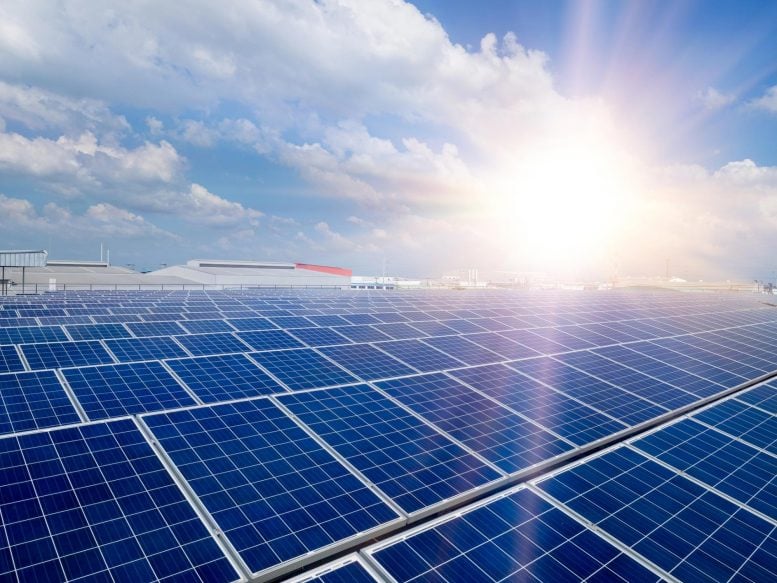
EPFL scientists improved DSC efficiency to over 30% under ambient light, paving the way for powering low-energy devices.
In the 1990s, mesoscopic dye-sensitized solar cells (DSCs) were invented by Brian O’Regan and Michael Grätzel, taking on the latter’s name – the world-famous Grätzel cells. DSCs convert light into electricity through photosensitizers. These are dye compounds that absorb light and inject electrons into an array of oxide nanocrystals which are subsequently collected as electric current.
In DSCs, photosensitizers are attached (“adsorbed”) to the surface of nanocrystalline mesoporous titanium dioxide films that are imbibed with redox-active electrolytes or a solid charge-transport material. The entire design aims to generate electric power by moving electrons from the photosensitizer toward an electrical output like a device or a storage unit.
Current Applications of Dye-Sensitized Solar Cells
DSCs are transparent, can be fabricated in multiple colors for low cost, and are already being used in skylights, greenhouses, as well as glass facades, such as those adorning the SwissTech Convention Center. In addition, lightweight flexible versions of DSCs are now commercially sold on a large scale for using ambient light to generate electrical power for portable electronic devices such as earphones and e-readers, as well as in the Internet of Things.
Recent advancements in photosensitizers and other components of DSCs have improved the performance of DSCs under both solar sunlight and ambient light conditions. But the key to enhancing DSC efficiency lies in understanding and controlling the assembly of dye molecules on the surface of titanium dioxide nanoparticle films that favor the generation of electrical charge.
One method is cosensitization, a chemical fabrication approach that produces DSCs with two or more different dyes that have complementary optical absorption. Cosensitization has moved the power-conversion efficiencies of DSCs towards world-record values because it can conceivably combine dyes that can absorb light from across the entire light spectrum. Nonetheless, cosensitization has also proved ineffective in some cases since finding the right pairs of dyes that can achieve high light absorption and power conversion efficiency requires painstaking molecular design, synthesis, and screening.
Now, scientists from the groups of Grätzel and Anders Hagfeldt at EPFL have developed a way of improving the packing of two newly designed photosensitizer dye molecules to enhance the DSC’s photovoltaic performance. Together, the new photosensitizers can harvest light quantitatively across the entire visible domain. The new technique involves pre-adsorbing a monolayer of a derivative of hydroxamic acid on the surface of nanocrystalline mesoporous titanium dioxide. This slows down the adsorption of the two sensitizers, enabling the formation of a well-ordered and densely packed layer of sensitizer at the titanium dioxide surface.
Record-Breaking Efficiency and Stability of DSCs
With this approach, the team was able to develop DSCs with a power conversion efficiency of 15.2% for the first time under standard global simulated sunlight, with long-term operational stability tested over 500 hours. By increasing the active area to 2.8 cm2, the power conversion efficiency spanned 28.4% – 30.2% over a wide range of ambient light intensities along with outstanding stability.
The authors write: “Our findings pave the way for facile access to high-performance DSCs and offer promising prospects for applications as power supply and battery replacement for low-power electronic devices that use ambient light as their energy source.”
Reference: “Hydroxamic acid preadsorption raises efficiency of cosensitized solar cells” by Yameng Ren, Dan Zhang, Jiajia Suo, Yiming Cao, Felix T. Eickemeyer, Nick Vlachopoulos, Shaik M. Zakeeruddin, Anders Hagfeldt and Michael Grätzel, 26 October 2022, Nature.
DOI: 10.1038/s41586-022-05460-z
Never miss a breakthrough: Join the SciTechDaily newsletter.
Follow us on Google and Google News.
1 Comment
What are we missing? Solar Panels with attached Battery dropped by each country into the ocean. Next country should collect the Battery…Attach more Solar Panels, and a New Battery. Once it is dropped into the ocean, next country collects them…Story repeats itself!